Kirjojen hintavertailu – 12 903 725 kirjaa ja 27 kauppaa

Kirjailija

Asa Briggs

Kirjat ja teokset yhdessä paikassa: 25 kirjaa, julkaisuja vuosilta 1975–2020, suosituimpiin kuuluu A History of the Royal College of Physicians of London. Vertaile teosten hintoja ja tarkista saatavuus suomalaisista kirjakaupoista.

25 kirjaa

Kirjojen julkaisuvuodet: 1975–2020.

The History of Broadcasting in the United Kingdom: Volume III: The War of Words
This is the third part of a five-volume history of broadcasting in the UK, giving an authoritative account of the rise of broadcasting in this country. This volume covering the period from 1939 to 1945, is concerned not only with the impact of the Second World War on the structure, organization, and programmes of the BBC, itself a fascinating subject; it also deals directly with the role of the BBC outside as well as inside Britain within the context of the general political and military history of the war; an exciting, complicated, sometimes controversial role, strangely neglected by historians.
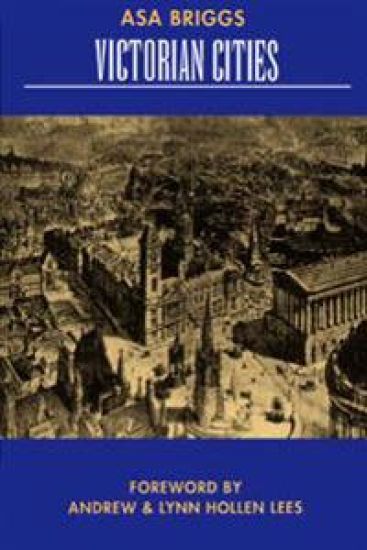
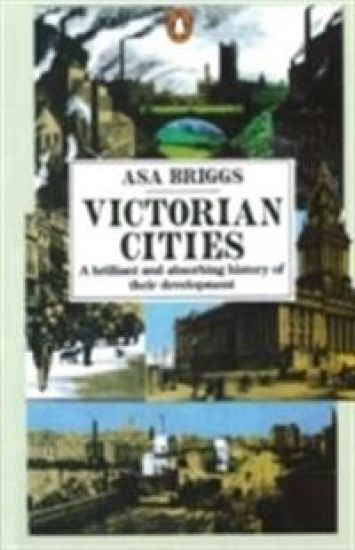
Victorian Cities

Victorian Cities

Asa Briggs

University of California Press
1993
pokkari
A comparative study in urban history, Victorian Cities examines the 19th-century history of four developing cities in England in a period of rapid growth, with chapters on London and Melbourne and references to Los Angeles and Chicago as well.
Victorian Cities

Victorian Cities

Asa Briggs

Penguin Books Ltd
1990
pokkari
In 1837, in England and Wales, there were only five provincial cities of more than 100,000 inhabitants. By 1891 there were twenty-three. Over the same period London’s population more than doubled. In this companion volume to Victorian People and Victorian Things, Lord Briggs focuses on the cities of Manchester, Leeds, Birmingham, Middlesbrough, Melbourne (an example of a Victorian community overseas) and London, comparing and contrasting their social, political and topographical development. Full of illuminating detail, Victorian Cities presents a unique social, political and economic bird's-eye view of the past.
The History of Broadcasting in the United Kingdom: Volume IV: Sound and Vision
The ten years following the end of the Second World War were critical years in the history of British broadcasting. They witnessed the rise of television and the end of the BBC's monopoly. This fourth volume of Asa Briggs's detailed study is based on a mass of hitherto unexplored documentary evidence, much, but not all of it, from the BBC's own voluminous archives. It examines in detail how and why some of the key decisions affecting broadcasting policy - domestic and external - were reached and what were their effects. Yet it is more than an institutional history. One long chapter deals with the changing arts and techniques of broadcasting news and views, politics, drama, features and variety, music, religion, education and sport. It describes a pattern of broadcasting - and a society and culture - already remote from our own. At every point the main contours of society and culture are explored. It ends with the first night of competitive television and with contemporary assessments of the likely impact of television on sound broadcasting and other media. It is profusely illustrated and can be read either as complete in itself or as one fascinating phase in the unfolding history of British broadcasting.
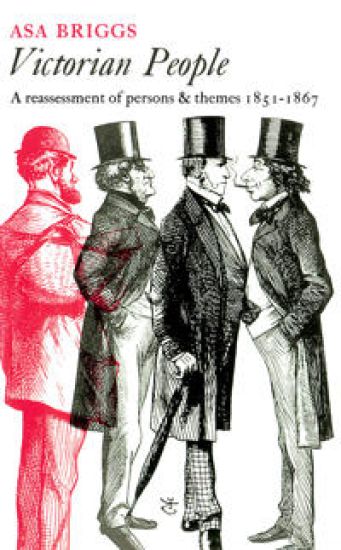
Victorian People

Victorian People

Asa Briggs

University of Chicago Press
1975
nidottu
This text looks at the people, ideas and events between the Great Exhibition of 1851 and the Second Reform Act of 1867. From "John Arthur Roebuck and the Crimean War", and "Samuel Smiles and the Gospel of Work" to "Thomas Hughes and the Public Schools" and "Benjanmin Disraeli and the Leap in the Dark", Asa Briggs provides an assessment of Victorian achievements; and in doing so conjures up an enviable picture of the progress and independence of the last century. "For expounding this theme, this interaction of event and personality, Mr. Briggs is abundantly and happily endowed. He is always readable, often amusing, never facetious. He is widely read and widely interested. He has a sound historic judgment, and an unfailing sense for what is significant in the historic sequence and what is merely topical. . . . Above all, he is in sympathy with the age of which he is writing."—Times Literary Supplement