

Kirjailija
Bart D. Ehrman
Kirjat ja teokset yhdessä paikassa: 33 kirjaa, julkaisuja vuosilta 1986–2027, suosituimpiin kuuluu Love Thy Stranger. Vertaile teosten hintoja ja tarkista saatavuus suomalaisista kirjakaupoista.
Nimi esiintyy myös muodoissa: Bart D Ehrman
33 kirjaa
Kirjojen julkaisuvuodet: 1986–2027.
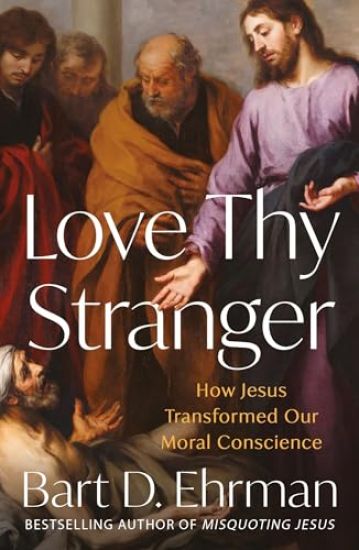
When you hear of a devastating earthquake thousands of miles away, you might reach into your pockets to make a donation. That’s the fault of an itinerant Jewish preacher from an obscure backwater of the Roman Empire, otherwise known as Jesus Christ. Early Christians, like their fellow Roman citizens, had much in common with us: a good life was one in which you could provide for your family, care for your friends and contribute to your community. Bart D. Ehrman asserts Jesus’s moral revolution was both simple and impossible: you should love strangers as much as you love your family. And you should forgive those who wrong you freely. Most of us will never live up to these ideals. But much of the good we do comes from the fact we feel we ought. By demanding we love, Jesus came to trouble our consciences, not to salve them.
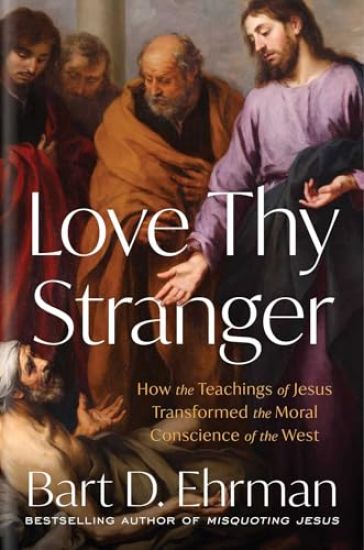
Love Thy Stranger: How the Teachings of Jesus Transformed the Moral Conscience of the West
Bart D. Ehrman
SIMON SCHUSTER
2026
sidottu
From the New York Times bestselling author of Misquoting Jesus comes a surprising history of Jesus' most radical commandment--a new kind of altruism--tracing how the extraordinary duty to love even those who are strangers to us has shaped our world and our lives. When we donate money to victims of natural disasters, or offer our forgiveness, or consider it a government's responsibility to provide some basic assistance to those in need--, we are (knowingly or not) demonstrating the enduring legacy of a particularly Christian kind of love. For centuries, Greek and Roman moral philosophers prioritized generosity towards friends and family. Even Old Testament exhortations to love your neighbor gave little reason to consider the suffering of those beyond your own community. Jesus changed all this, introducing a revolutionary new ethical obligation to love those you didn't even know--unconditionally--and to demonstrate that love through acts of care. The implications of this radical commandment would be debated, misunderstood, and resisted by early Christians. But by the fifth century, a new "common sense" began to transform the moral conscience--and the politics--of the West. In Love Thy Stranger, New Testament historian Bart D. Ehrman charts the causes and consequences of this ethical revolution with his signature sly humor and verve. For in this moment of renewed debate over the limitations of Christian love, Jesus' most demanding commandment remains a thrillingly provocative one, even two millennia on.
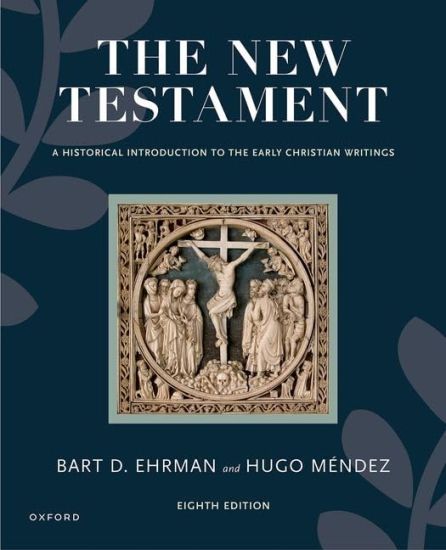
The New Testament
Bart D. Ehrman; Hugo Méndez
OXFORD UNIVERSITY PRESS INC
2025
nidottu
Halvin toimitettuna 98,20 €
Featuring vibrant full color throughout, the eighth edition of Bart D. Ehrman's highly successful introduction approaches the New Testament from a consistently historical and comparative perspective, emphasizing the rich diversity of the earliest Christian literature. New to this edition, Hugo Méndez has brought fresh perspectives to the text. Distinctive to this study is The New Testament's unique focus on the historical, literary, and religious milieux of the Greco-Roman world, including early Judaism. As part of its historical orientation, the book also discusses other Christian writings that were roughly contemporary with the New Testament, such as the Gospel of Thomas, the Apocalypse of Peter, and the letters of Ignatius.
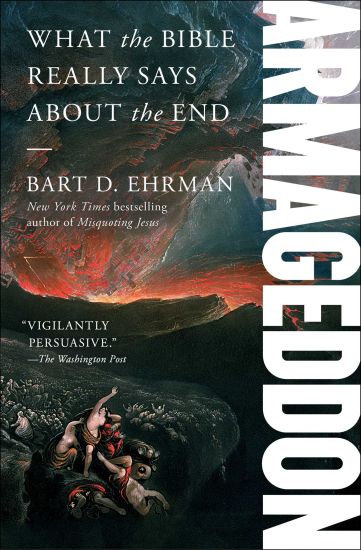
Armageddon: What the Bible Really Says about the End
Bart D. Ehrman
SIMON SCHUSTER
2024
nidottu
Halvin toimitettuna 20,30 €
A "humane, thoughtful, and intelligent" (The New York Times Book Review) bestselling Biblical scholar reveals why our popular understanding of the Apocalypse is all wrong--and why that matters. You'll find nearly everything the Bible says about the end in the Book of Revelation: a mystifying prophecy filled with bizarre symbolism, violent imagery, mangled syntax, confounding contradictions, and very firm ideas about the horrors that await us all. But no matter what you think Revelation reveals--whether you read it as a literal description of what will soon come to pass, interpret it as a metaphorical expression of hope for those suffering now, or only recognize its highlights from pop culture--you're almost certainly wrong. In Armageddon, acclaimed New Testament authority Bart D. Ehrman delves into the most misunderstood--and possibly most dangerous--book of the Bible, on a "vigilantly persuasive" (The Washington Post) tour through three millennia of Judeo-Christian thinking about how our world will end. With wit and verve, he explores the alarming social and political consequences of expecting an imminent apocalypse, considers whether the message of Revelation may be at odds with the teachings of Jesus, and offers inspiring insight into how to live in the face of an uncertain future. By turns hilarious, moving, troubling, and provocative, Armageddon is nothing short of revelatory in its account of what the Bible really says about the end.
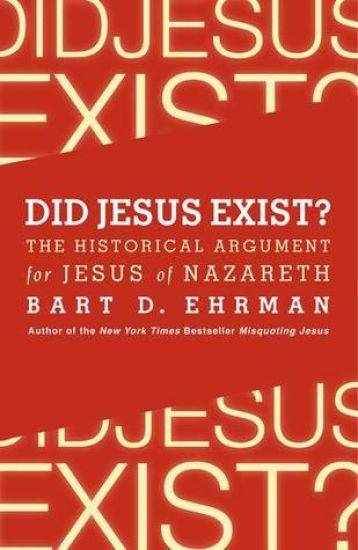
Did Jesus Exist? The Historical Argument for Jesus of Nazareth
Bart D. Ehrman
HarperOne
2023
nidottu
Halvin toimitettuna 27,10 €
In Did Jesus Exist? historian and Bible expert Bart Ehrman confronts the question, "Did Jesus exist at all?" Ehrman vigorously defends the historical Jesus, identifies the most historically reliable sources for best understanding Jesus' mission and message, and offers a compelling portrait of the person at the heart of the Christian tradition. Known as a master explainer with deep knowledge of the field, Bart Ehrman methodically demolishes both the scholarly and popular "mythicist" arguments against the existence of Jesus. Marshaling evidence from within the Bible and the wider historical record of the ancient world, Ehrman tackles the key issues that surround the mythologies associated with Jesus and the early Christian movement. In Did Jesus Exist?: The Historical Argument for Jesus of Nazareth, Ehrman establishes the criterion for any genuine historical investigation and provides a robust defense of the methods required to discover the Jesus of history.
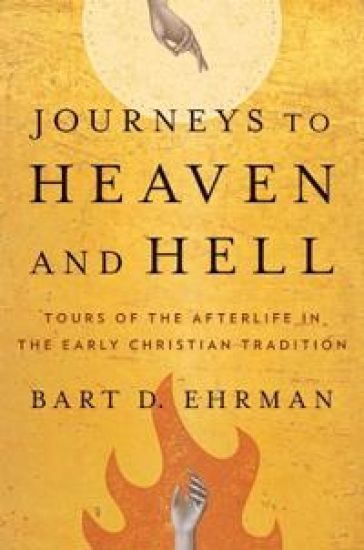
Journeys to Heaven and Hell
Bart D. Ehrman
YALE UNIVERSITY PRESS
2023
pokkari
Halvin toimitettuna 29,00 €
A New York Times bestselling scholar’s illuminating exploration of the earliest Christian narrated journeys to heaven and hell “[An] illuminating deep dive . . . An edifying origin story for contemporary Christian conceptions of the afterlife.”—Publishers Weekly From classics such as the Odyssey and the Aeneid to fifth-century Christian apocrypha, narratives that described guided tours of the afterlife played a major role in shaping ancient notions of morality and ethics. In this new account, acclaimed author Bart Ehrman contextualizes early Christian narratives of heaven and hell within the broader intellectual and cultural worlds from which they emerged. He examines how fundamental social experiences of the early Christian communities molded the conceptions of the afterlife that eventuated into the accepted doctrines of heaven, hell, and purgatory. Drawing on Greek and Roman epic poetry, early Jewish writings such as the Book of Watchers, and apocryphal Christian stories including the Acts of Thomas, the Gospel of Nicodemus, and the Apocalypse of Peter, Ehrman demonstrates that ancient tours of the afterlife promoted reflection on matters of ethics, faith, ambition, and life’s meaning, the fruit of which has been codified into Christian belief today.
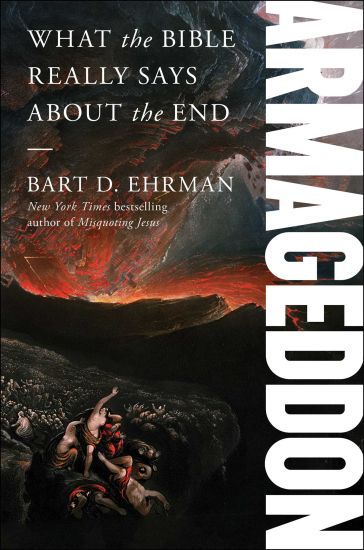
A "humane, thoughtful, and intelligent" (The New York Times Book Review) bestselling Biblical scholar reveals why our popular understanding of the Apocalypse is all wrong--and why that matters. You'll find nearly everything the Bible says about the end in the Book of Revelation: a mystifying prophecy filled with bizarre symbolism, violent imagery, mangled syntax, confounding contradictions, and very firm ideas about the horrors that await us all. But no matter what you think Revelation reveals--whether you read it as a literal description of what will soon come to pass, interpret it as a metaphorical expression of hope for those suffering now, or only recognize its highlights from pop culture--you're almost certainly wrong. In Armageddon, acclaimed New Testament authority Bart D. Ehrman delves into the most misunderstood--and possibly most dangerous--book of the Bible, on a "vigilantly persuasive" (The Washington Post) tour through three millennia of Judeo-Christian thinking about how our world will end. With wit and verve, he explores the alarming social and political consequences of expecting an imminent apocalypse, considers whether the message of Revelation may be at odds with the teachings of Jesus, and offers inspiring insight into how to live in the face of an uncertain future. By turns hilarious, moving, troubling, and provocative, Armageddon is nothing short of revelatory in its account of what the Bible really says about the end.
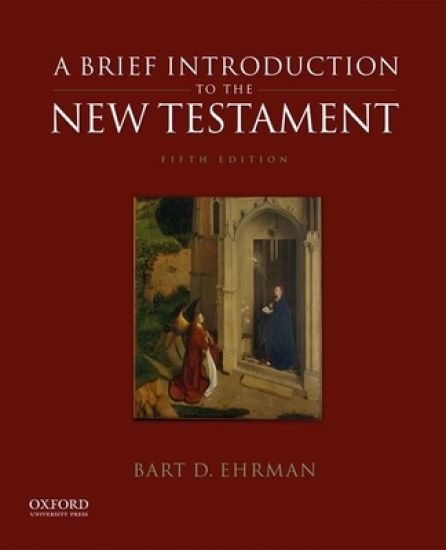
Featuring vibrant full color throughout, A Brief Introduction to the New Testament, Fifth Edition, is a concise version of Bart D. Ehrman's best-selling The New Testament: A Historical Introduction to the Early Christian Writings, Seventh Edition. Retaining the approach of the longer textbook while condensing and simplifying much of its material, this volume looks at the New Testament from a consistently historical and comparative perspective and emphasizes the rich diversity of the earliest Christian literature. Distinctive to this study is its emphasis on the historical, literary, and religious milieux of the Greco-Roman world, including early Judaism. The text incorporates a wealth of pedagogical resources including an extensive text box program, study questions, maps, timelines, and more than eighty photos (including three photo essays). A comprehensive glossary contains more than 200 key terms; these terms appear in boldface type the first time they are used in each chapter and are also listed at the end of each chapter in which they appear. Ideal for undergraduate and seminary classes in the New Testament, Biblical Studies, and Christian Origins, A Brief Introduction to the New Testament, Fifth Edition, is an engaging and accessible introduction that encourages students to consider the historical issues surrounding these writings.
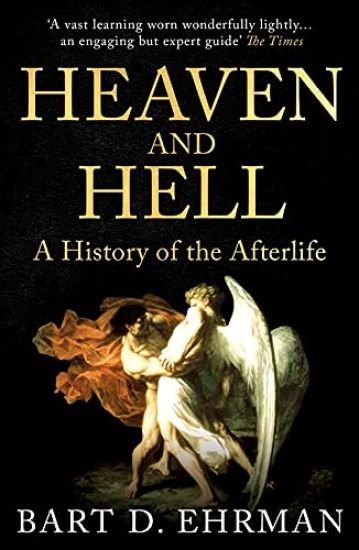
Where did the ideas of heaven and hell come from? 'An engaging but expert guide.' THE TIMES As strange as it may seem to us now, there was a time when no one thought they would go to heaven or hell after they died. In fact, there is no mention of them in the Old Testament, and Jesus did not believe the souls of the departed were bound for either realm. In this gripping history of the afterlife, Bart Ehrman reveals how the concepts of heaven and hell developed and took hold, and why they endure to this day. He examines the social, cultural and historical roots of competing views held by Greeks, Jews and Christians, and traces how beliefs changed over time. Ultimately, he shows that many of our ideas about heaven and hell emerged long after Jesus’s time, through the struggle to explain the injustices of the world. *** 'There’s no one I’d rather read on what Christians believe, and why they believe it, than Bart Ehrman.' TOM BISSELL, AUTHOR OF APOSTLE 'An impressively readable, clear and wide-ranging study.' SPECTATOR 'This elegant history explores the evolution of the concept of the afterlife in Western thought... presented with engaging clarity.' THE NEW YORKER
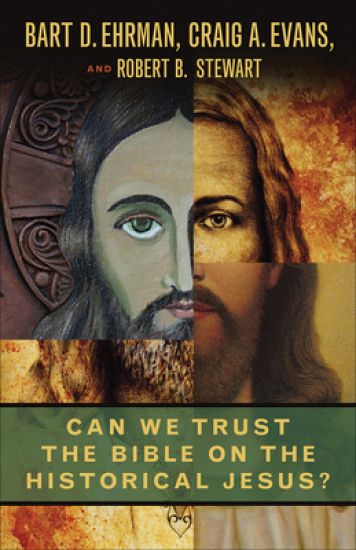
Can We Trust the Bible on the Historical Jesus?
Bart D. Ehrman; Craig A. Evans; Robert B. Stewart
Westminster/John Knox Press,U.S.
2020
nidottu
Halvin toimitettuna 28,20 €
This book features a learned and fascinating debate between two great Bible scholars about the New Testament as a reliable source on the historical Jesus. Bart Ehrman, an agnostic New Testament scholar, debates Craig Evans, an evangelical New Testament scholar, about the historical Jesus and what constitutes "history." Their interaction includes such compelling questions as: What are sound methods of historical investigation? What are reliable criteria for determining the authenticity of an ancient text? What roles do reason and inference play? And, of course, interpretation? Readers of this debate—regardless of their interpretive inclinations and biases—are sure to find some confirmation of their existing beliefs, but they will surely also find an honest and well-informed challenge to the way they think about the historical Jesus. The result? A more open, better informed, and questioning mind, which is better prepared for discovering both truth and contrivance. The debate between Ehrman and Evans along with Stewart's introductory framework make this book an excellent primer to the study of the historical Jesus, and readers will come away with a deeper appreciation for the ongoing quest for the historical Jesus.

I bogen viser Ehrman hvordan kristendommen, blev den o?cielle religion i Rom og kom til at stå for konverteringen af omkring 30 millioner mennesker på bare ?re århundreder. Det var ikke givet, at kristendommen skulle blive den dominerende religion i Vesten. Den kunne let være forblevet en sekt i jødedommen med ikke mere end samme historiske betydning som saddukæerne eller essæerne. I Kristendommens triumf viser Ehrman hvordan en religion, hvis første troende var cirka 20 uuddannede daglejere fra en fjern del af imperiet, blev den o?cielle religion i Rom og kom til at stå for konverteringen af omkring 30 millioner menne sker på bare ?re århundreder. Kristendommens triumf kombinerer stor faglig viden og omhyggelig forskning i en øjenåbnende, let læsbar fortælling, der udfordrer den måde, vi tænker på i forhold til den vigtigste kulturelle transformation, vores verden nogensinde har set – en transformation, der revolutionerede kunst, musik, litteratur, ?loso?, etik, økonomi og jura. Bogen er oversat til dansk af Lisbet Kjær Müller og Mogens Müller. Pressen skriver: "En velskrevet og velargumenteret bog." ???? - Kristeligt Dagblad
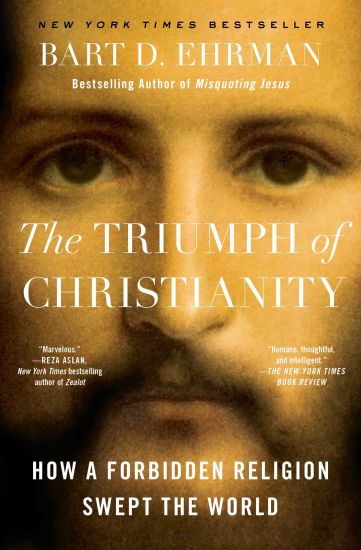
The Triumph of Christianity: How a Forbidden Religion Swept the World
Bart D. Ehrman
SIMON SCHUSTER
2019
nidottu
The "marvelous" (Reza Aslan, bestselling author of Zealot), New York Times bestselling story of how Christianity became the dominant religion in the West. How did a religion whose first believers were twenty or so illiterate day laborers in a remote part of the empire became the official religion of Rome, converting some thirty million people in just four centuries? In The Triumph of Christianity, early Christian historian Bart D. Ehrman weaves the rigorously-researched answer to this question "into a vivid, nuanced, and enormously readable narrative" (Elaine Pagels, National Book Award-winning author of The Gnostic Gospels), showing how a handful of charismatic characters used a brilliant social strategy and an irresistible message to win over hearts and minds one at a time. This "humane, thoughtful and intelligent" book (The New York Times Book Review) upends the way we think about the single most important cultural transformation our world has ever seen--one that revolutionized art, music, literature, philosophy, ethics, economics, and law.
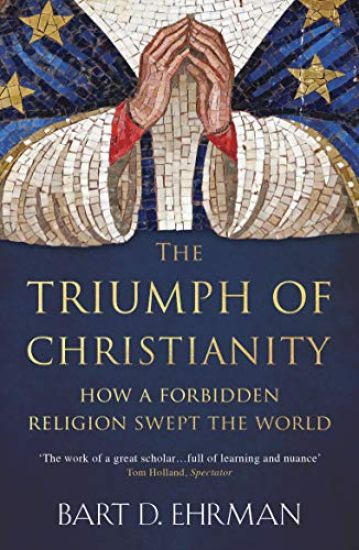
The Triumph of Christianity
Bart D. Ehrman
Oneworld Publications
2019
pokkari
Halvin toimitettuna 18,70 €
How did Christianity become the dominant religion in the West? In the early first century, a small group of peasants from the backwaters of the Roman Empire proclaimed that an executed enemy of the state was God’s messiah. Less than four hundred years later it had become the official religion of Rome with some thirty million followers. It could so easily have been a forgotten sect of Judaism. Through meticulous research, Bart Ehrman, an expert on Christian history, texts and traditions, explores the way we think about one of the most important cultural transformations the world has ever seen, one that has shaped the art, music, literature, philosophy, ethics and economics of modern Western civilisation.
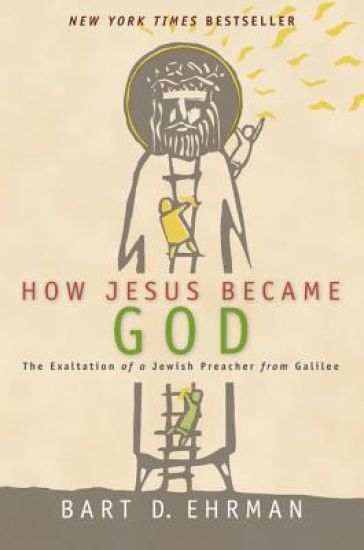
New York Times bestselling author and Bible expert Bart Ehrman reveals how Jesus's divinity became dogma in the first few centuries of the early church. The claim at the heart of the Christian faith is that Jesus of Nazareth was, and is, God. But this is not what the original disciples believed during Jesus's lifetime--and it is not what Jesus claimed about himself. How Jesus Became God tells the story of an idea that shaped Christianity, and of the evolution of a belief that looked very different in the fourth century than it did in the first. A master explainer of Christian history, texts, and traditions, Ehrman reveals how an apocalyptic prophet from the backwaters of rural Galilee crucified for crimes against the state came to be thought of as equal with the one God Almighty, Creator of all things. But how did he move from being a Jewish prophet to being God? In a book that took eight years to research and write, Ehrman sketches Jesus's transformation from a human prophet to the Son of God exalted to divine status at his resurrection. Only when some of Jesus's followers had visions of him after his death--alive again--did anyone come to think that he, the prophet from Galilee, had become God. And what they meant by that was not at all what people mean today. Written for secular historians of religion and believers alike, How Jesus Became God will engage anyone interested in the historical developments that led to the affirmation at the heart of Christianity: Jesus was, and is, God.
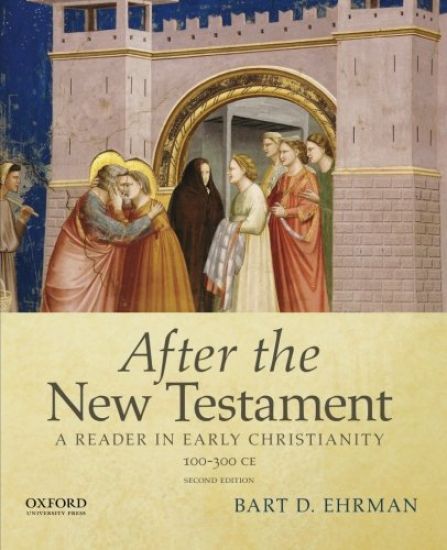
After the New Testament: 100-300 C.E.
Bart D. Ehrman
Oxford University Press Inc
2015
nidottu
Halvin toimitettuna 147,70 €
The remarkable diversity of Christianity during the formative years before the Council of Nicea has become a plain, even natural, "fact" for most ancient historians. Until After the New Testament, however, there had never been a sourcebook of primary texts that revealed the many varieties of Christian beliefs, practices, ethics, experiences, confrontations, and self-understandings. To help readers recognize and experience the rich diversity of the early Christian movement, After the New Testament, Second Edition, provides a wide range of texts from the second and third centuries, both "orthodox" and "heterodox," including such works as the Apostolic Fathers, the writings of Nag Hammadi, early pseudepigrapha, martyrologies, anti-Jewish tractates, heresiologies, canon lists, church orders, liturgical texts, and theological treatises. Rather than providing only fragments of texts, this collection prints large excerpts--entire documents wherever possible--organized under social and historical rubrics. This unique reader's concise and informative introductions and clear and up-to-date English translations make it ideal for courses on Early Christianity, Christian Origins, or Early Church History. It will also appeal to anyone--student, scholar, and general reader alike--interested in the entire range of early Christian literature from the period after the New Testament up to the writings of the so-called father of church history, Eusebius. The Second Edition includes new and updated translations as well as considerable additions to the roster of sources, including excerpts from the Gospel of Mary, the Gospel of Judas, and the correspondence between Jesus and Abgar. The book also includes two brand-new rubrics of texts, one focusing on the method and practice of interpreting scripture, and the other focusing on women and gender in early Christianity.
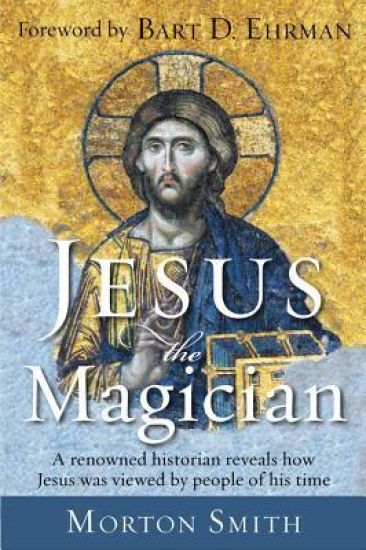
"A twentieth-century classic, uncannily smart, incredibly learned."--from the foreword by Bart EhrmanThis book challenges traditional Christian teaching about Jesus. While his followers may have seen him as a man from heaven, preaching the good news and working miracles, Smith asserts that the truth about Jesus is more interesting and rather unsettling. The real Jesus, only barely glimpsed because of a campaign of disinformation, obfuscation, and censorship by religious authorities, was not Jesus the Son of God. In actuality he was Jesus the Magician. Smith marshals all the available evidence including, but not limited to, the Gospels. He succeeds in describing just what was said of Jesus by "outsiders," those who did not believe him. He deals in fascinating detail with the inevitable questions. What was the nature of magic? What did people at that time mean by the term "magician"? Who were the other magicians, and how did their magic compare with Jesus' works? What facts led to the general assumption that Jesus practiced magic? And, most important, was that assumption correct? The ramifications of Jesus the Magician give new meaning to the word controversial. This book recovers a vision of Jesus that two thousand years of suppression and polemic could not erase. And--what may be the central point of the debate--Jesus the Magician strips away the myths and legends that have obscured Jesus, the man who lived.
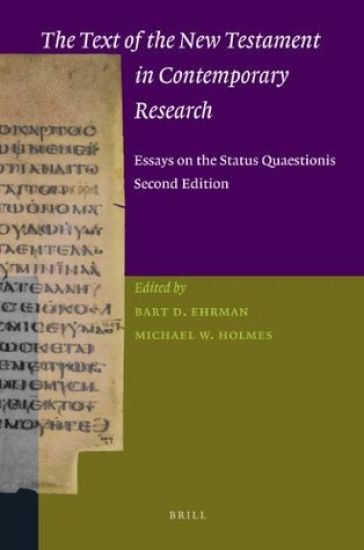
The Text of the New Testament in Contemporary Research
Bart D. Ehrman; Michael W. Holmes
BRILL
2014
nidottu
Halvin toimitettuna 116,30 €
The Text of the New Testament in Contemporary Research: Essays on the Status Quaestionis provides a thoroughly up-to-date assessment of every major aspect of New Testament textual criticism. The twenty-four essays in the volume, all written by internationally acknowledged experts in the field, cover every major aspect of the discipline, discussing the advances that have been made since the mid twentieth century. With full and informative bibliographies, these contributions will be essential reading for anyone interested in moving beyond the standard handbooks in order to see where the discipline now stands, a vade mecum for all students and text-critical scholars for a generation to come.
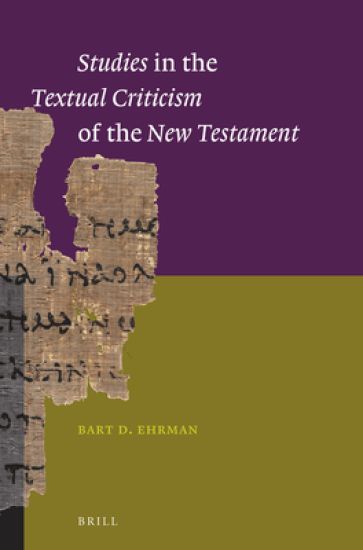
For the first time in one volume this book presents contributions to the textual criticism of the New Testament made over the past twenty years by Bart Ehrman, one of the premier textual scholars in North America. The collection includes fifteen previously published articles and six lectures (delivered at Duke University and Yale University) on a range of topics of central importance to the field. Following a general essay that gives an introduction to the field for beginners are several essays dealing with text-critical method, especially pertaining to the classification of the Greek manuscript witnesses. There then follow two articles on the history of the text, several articles on important specific textual problems, and three articles on the importance and use of patristic evidence for establishing the text and writing the history of its transmission. The volume concludes with six lectures designed to show the importance not only of reconstructing an allegedly “original” text but also of recognizing how that text was changed by scribes of the early Christian centuries. This book will be of vital interest to any scholar or advanced student of the New Testament and early Christianity. It will make an ideal companion volume for Bart Ehrman’s ground-breaking study, The Orthodox Corruption of Scripture: The Effects of Early Christological Controversies on the Text of the New Testament (Oxford, 1993) and the volume he co-edited with Michael Holmes, The Text of the New Testament in Contemporary Research: Essays on the Status Quaestionis (Eerdmans, 1995).
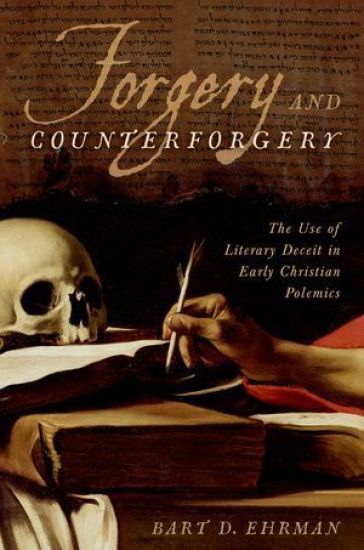
Forgery and Counter-Forgery: The Use of Literary Deceit in Early Christian Polemics by Bart Ehrman, the New York Times best-selling author of Misquoting Jesus and recognized authority on early Christianity, is the first major contemporary work on forgery in early Christian literature. It examines the motivation and function behind Christian literary forgeries. Ehrman guides readers through Christian literary forgeries of the first four centuries CE while providing coverage of other ancient texts. He asks why early Christians lied about themselves when writing polemical works; and then answers by showing how unknown Christian authors used forgeries to defend their own faith and attack other interpretations of early Christianity. He further asks why many scholars resist acknowledging their forgeries; and he answers that the forgeries uncomfortably call into question the authority of the New Testament. The book is essential reading for those interested in early Christianity and the New Testament.