Kirjojen hintavertailu – 12 903 725 kirjaa ja 27 kauppaa
Kirjailija
Bart D. Ehrman
Kirjat ja teokset yhdessä paikassa: 33 kirjaa, julkaisuja vuosilta 1986–2027, suosituimpiin kuuluu Love Thy Stranger. Vertaile teosten hintoja ja tarkista saatavuus suomalaisista kirjakaupoista.
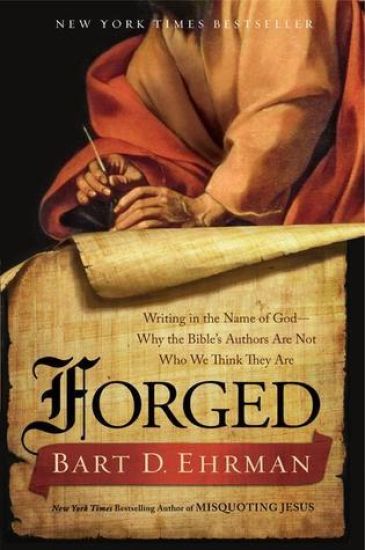
Bart D. Ehrman, the New York Times bestselling author of Jesus, Interrupted and God's Problem reveals which books in the Bible's New Testament were not passed down by Jesus's disciples, but were instead forged by other hands--and why this centuries-hidden scandal is far more significant than many scholars are willing to admit. A controversial work of historical reporting in the tradition of Elaine Pagels, Marcus Borg, and John Dominic Crossan, Ehrman's Forged delivers a stunning explication of one of the most substantial--yet least discussed--problems confronting the world of biblical scholarship.
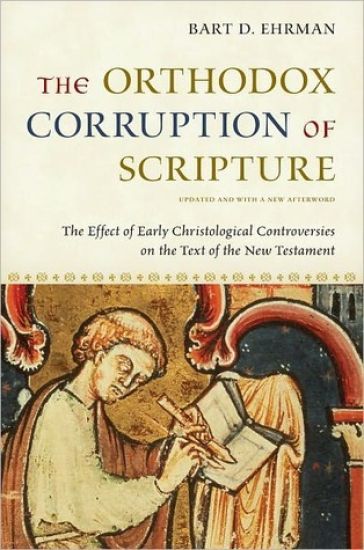
Victors not only write history: they also reproduce the texts. Bart Ehrman explores the close relationship between the social history of early Christianity and the textual tradition of the emerging New Testament, examining how early struggles between Christian "heresy" and "orthodoxy" affected the transmission of the documents over which many of the debates were waged. He makes a crucial contribution to our understanding of the social and intellectual history of early Christianity and raises intriguing questions about the relationship of readers to their texts, especially in an age when scribes could transform the documents they reproduced. This edition includes a new afterword surveying research in biblical interpretation over the past twenty years.
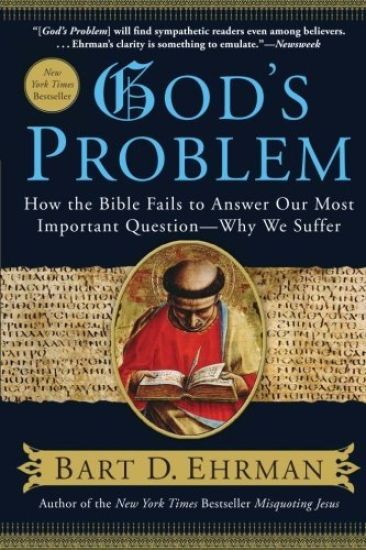
Just as with "Misquoting Jesus" where Ehrman revealed how the corruption of scripture by scribes caused him to reject his once-conservative Christian beliefs, in "God's Problem" Ehrman will discuss for the first time his personal anguish when he discovered the Bible's incoherent explanations for suffering and how that caused him to lose his faith altogether. In a fresh departure from Ehrman's recent focus on the New Testament, he expands his research to include much of the Hebrew Bible (Old Testament) in "God's Problem" and reveal the core responses to suffering proposed by the different biblical writers. The prophets: suffering is a punishment for sin; Job (two different answers): suffering is a test, for which you'll later be rewarded for passing; and that suffering is beyond comprehension, since we're just peons and God, after all, is GOD); "Ecclesiastes": it's just the nature of things, so suck it up; and, all apocalyptic texts ("Daniel", plus the Apostle Paul's letters and the book of "Revelation" in the New Testament): God will eventually make right all that is wrong.
The recent National Geographic special on the Gospel of Judas was a major media event, introducing to tens of millions of viewers one of the most important biblical discoveries of modern times. Now, a leading historian of the early church, Bart Ehrman, offers the first comprehensive account of the newly discovered Gospel of Judas, revealing what this legendary lost gospel contains and why it is so important for our understanding of Christianity. Ehrman, a featured commentator in the National Geographic special, describes how he first saw the Gospel of Judas - surprisingly, in a small room above a pizza parlor in a Swiss town near Lake Geneva - and he recounts the fascinating story of where and how this ancient papyrus document was discovered, how it moved around among antiquities dealers in Egypt, the United States, and Switzerland, and how it came to be restored and translated. More important, Ehrman gives the reader a complete and clear account of what the book teaches and he shows how it relates to other Gospel texts - both those inside the New Testament and those outside of it, most notably, the Gnostic texts of early Christianity. Finally, he describes what we now can say about the historical Judas himself as well as his relationship with Jesus, suggesting that one needs to read between the lines of the early Gospels to see exactly what Judas did and why he did it. The Gospel of Judas presents an entirely new view of Jesus, his disciples, and the man who allegedly betrayed him. It raises many questions and Bart Ehrman provides illuminating and authoritative answers, in a book that will interest anyone curious about the New Testament, the life of Jesus, and the history of Christianity after his death.
Bart Ehrman a leading biblical scholar reveals the many challenging and even disturbing, early variations of our cherished biblical stories. With the advent of the printing press and the subsequent publishing culture that reproduces exact copies of texts en masse, most people who read the Bible today assume that they are reading the very words that Jesus spoke or St. Paul wrote. And yet, for almost 1,500 years manuscripts were copied by hand by scribes - many of them untrained, especially in the early centuries of Christendom - who were deeply influenced by the theological and political disputes of their day. Mistakes and intentional changes abound in the competing manuscript versions that continue to plague biblical scholars who determine which words, phrases, or stories are the most reliable and, therefore, merit publication in modern Bibles." Whose Word Is It?" is the fascinating history of the words themselves. Biblical scholar Bart Ehrman shows us where and why changes were made in our earliest surviving manuscripts, changes that continue to have a dramatic impact on widely-held beliefs concerning the divinity of Jesus, the Trinity, and the divine origins of the Bible itself. Many books have been written about why some books made it into the New Testament and why others didn't (canonization) or about how the meaning of words change when translated from Aramaic to Greek to English. But this is the first time that a leading biblical scholar reveals for the general reader the many challenging - even disturbing - early variations of our cherished biblical stories and why only certain versions of those stories qualify for publication in the Bibles we read today.
The biblical scholar recounts the events surrounding the discovery and handling of the Gospel of Judas, and provides an overview of its content, in which Judas is portrayed as a faithful disciple.
With the advent of the printing press and the subsequent publishing culture that reproduces exact copies of texts en masse, most people who read the Bible today assume that they are reading the very words that Jesus spoke or St. Paul wrote. And yet, for almost 1,500 years manuscripts were copied by hand by scribes - many of them untrained, especially in the early centuries of Christendom - who were deeply influenced by the theological and political disputes of their day. Mistakes and intentional changes abound in the competing manuscript versions that continue to plague biblical scholars who determine which words, phrases, or stories are the most reliable and, therefore, merit publication in modern Bibles. Whose Word Is It? is the fascinating history of the words themselves. Biblical scholar Bart Ehrman shows us where and why changes were made in our earliest surviving manuscripts, changes that continue to have a dramatic impact on widely-held beliefs concerning the divinity of Jesus, the Trinity, and the divine origins of the Bible itself. Many books have been written about why some books made it into the New Testament and why others didn't (canonization) or about how the meaning of words change when translated from Aramaic to Greek to English. But this is the first time that a leading biblical scholar reveals for the general reader the many challenging - even disturbing - early variations of our cherished biblical stories and why only certain versions of those stories qualify for publication in the Bibles we read today.
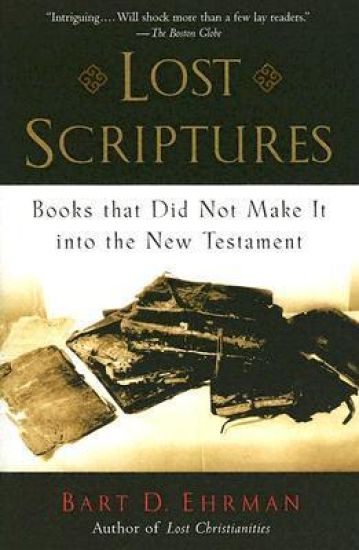
We may think of the twenty-seven books of the New Testament as the only sacred writings of the early Christians, but this is not at all the case. Lost Scriptures offers an anthology of up-to-date and readable translations of many non-canonical writings from the centuries after Christ--texts that have for the most part been neglected or lost for nearly two millennia. Here is an array of remarkably varied writings from early Christian groups whose visions of Jesus differ dramatically from our contemporary understanding. Readers will find Gospels supposedly authored by the apostle Philip, James the brother of Jesus, Mary Magdalen, and others. There are Acts originally ascribed to John and to Thecla, Paul's female companion; there are Epistles allegedly written by Paul to the Roman philosopher Seneca. And there is an apocalypse by Simon Peter that offers a guided tour of the afterlife, both the glorious ecstasies of the saints and the horrendous torments of the damned, and an Epistle by Titus, a companion of Paul, which argues page after page against sexual love, even within marriage, on the grounds that physical intimacy leads to damnation. In all, the anthology includes fifteen Gospels, five non-canonical Acts of the Apostles, thirteen Epistles, a number of Apocalypes and Secret Books, and several Canon lists. Ehrman has included a general introduction, plus brief introductions to each piece. Lost Scriptures gives readers a vivid picture of the range of beliefs that battled each other in the first centuries of the Christian era. It is an essential resource for anyone interested in the Bible or the early Church.
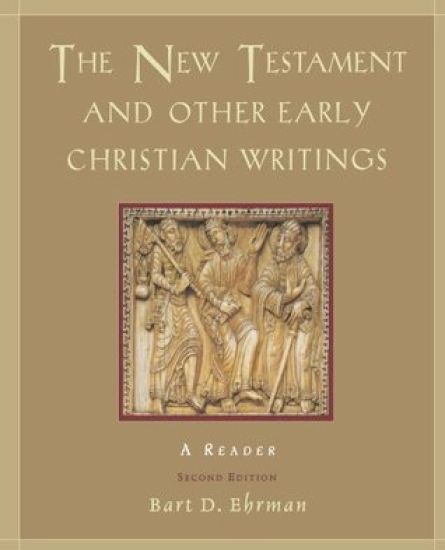
This is the second edition of the most comprehensive anthology available on early Christian writing, which includes virtually every piece produced during the first 100 years of Christian history. Ehrman provides an opening general introduction in which he shows how the canon of the New Testament was formulated and how other texts were excluded from the canon. He also provides brief up-to-date introductions to each of the texts, incorporating the most recent scholarship. For this edition the Martyrdom of Polycarp has been added and many of the older translations have been replaced with newer and more up-to-date versions.
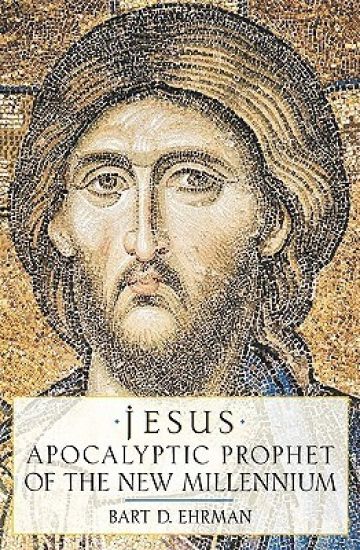
This controversial new book argues that Jesus, like many of his later followers, proclaimed that God was soon to intervene in human affairs and bring all of history to a screeching halt. Through a careful evaluation of the New Testament Gospels and other surviving sources, including the more recently discovered Gospels of Thomas and Peter, Ehrman shows why Jesus should be understood as an apocalyptic prophet who anticipated the destruction of evil, the end of the age, and beginning of a new world - not 2000 years after his lifetime, but in less than 30.
This controversial new book argues that Jesus, like many of his later followers, proclaimed that God was soon to intervene in human affairs and bring all of history to a screeching halt. Through a careful evaluation of the New Testament Gospels and other surviving sources, including the more recently discovered Gospels of Thomas and Peter, Ehrman shows why Jesus should be understood as an apocalyptic prophet who anticipated the destruction of evil, the end of the age, and beginning of a new world - not 2000 years after his lifetime, but in less than 30.