Kirjojen hintavertailu – 12 859 819 kirjaa ja 27 kauppaa

Kirjailija

Bernard Shaw

Kirjat ja teokset yhdessä paikassa: 669 kirjaa, julkaisuja vuosilta 1968–2026, suosituimpiin kuuluu Herra Byronin ammatti. Vertaile teosten hintoja ja tarkista saatavuus suomalaisista kirjakaupoista.

669 kirjaa

Kirjojen julkaisuvuodet: 1968–2026.

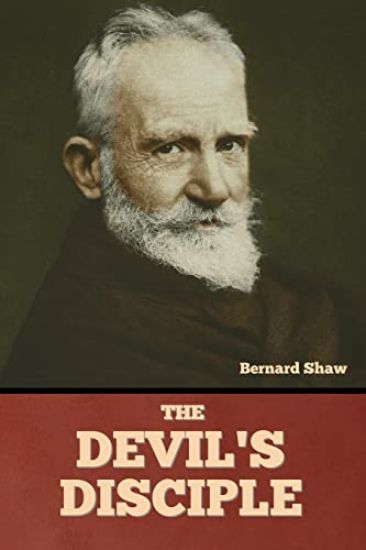
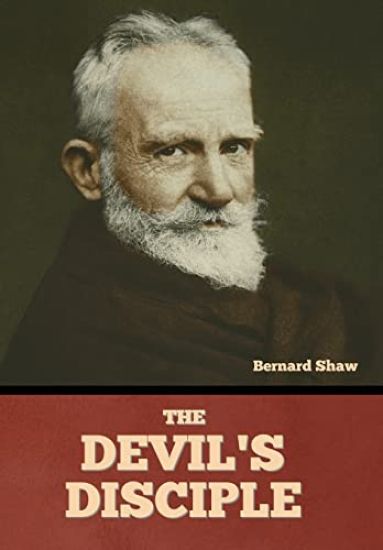
The Devil's Disciple

The Devil's Disciple

Bernard Shaw

Bibliotech Press
2022
pokkari
The Devil's Disciple is an 1897 play written by Irish dramatist George Bernard Shaw. The play is Shaw's eighth, and after Richard Mansfield's original 1897 American production it was his first financial success, which helped to affirm his career as a playwright. It was published in Shaw's 1901 collection Three Plays for Puritans together with Captain Brassbound's Conversion and Caesar and Cleopatra. Set in Colonial America during the Revolutionary era, the play tells the story of Richard Dudgeon, a local outcast and self-proclaimed "Devil's disciple". In a twist characteristic of Shaw's love of paradox, Dudgeon sacrifices himself in a Christ-like gesture despite his professed Infernal allegiance. (wikipedia.org)
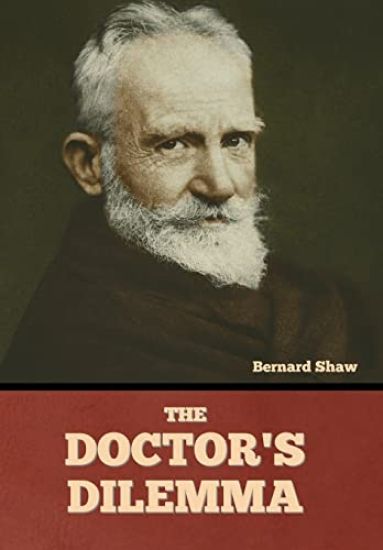
The Doctor's Dilemma

The Doctor's Dilemma

Bernard Shaw

Bibliotech Press
2022
sidottu
The Doctor's Dilemma is a play by George Bernard Shaw first staged in 1906. It is a problem play about the moral dilemmas created by limited medical resources, and the conflicts between the demands of private medicine as a business and a vocation. The eponymous dilemma of the play is that of the newly honoured doctor Sir Colenso Ridgeon, who has developed a revolutionary new cure for tuberculosis. However, his private medical practice, with limited staff and resources, can only treat ten patients at a time. From a group of fifty patients he has selected ten he believes he can cure and who, he believes, are most worthy of being saved. However, when he is approached by a young woman, Jennifer Dubedat, with a deadly ill husband, Louis Dubedat, he admits he can, at a stretch, save one more patient, but that the individual in question must be shown to be most worthy of being saved. However, the situation is complicated when an old friend and colleague reveals, he too, needs treatment. Sir Colenso must choose which patient he will save: a kindly, altruistic poor medical colleague, or an extremely gifted but also very unpleasant, womaniser, bigamist and amoral young artist. Sir Colenso falls instantly in love with the young and vivacious Mrs Dubedat and this makes it even harder for the doctor to separate his motives for the decision of who shall live. (wikipedia.org)
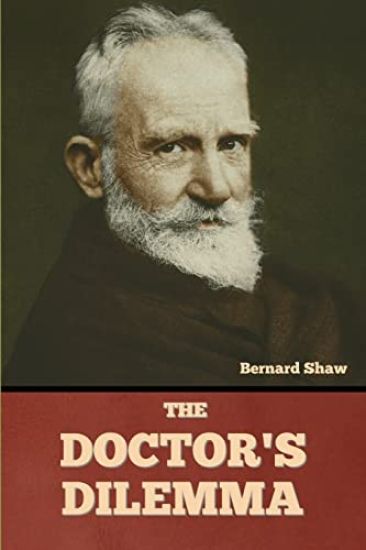
The Doctor's Dilemma

The Doctor's Dilemma

Bernard Shaw

Bibliotech Press
2022
pokkari
The Doctor's Dilemma is a play by George Bernard Shaw first staged in 1906. It is a problem play about the moral dilemmas created by limited medical resources, and the conflicts between the demands of private medicine as a business and a vocation. The eponymous dilemma of the play is that of the newly honoured doctor Sir Colenso Ridgeon, who has developed a revolutionary new cure for tuberculosis. However, his private medical practice, with limited staff and resources, can only treat ten patients at a time. From a group of fifty patients he has selected ten he believes he can cure and who, he believes, are most worthy of being saved. However, when he is approached by a young woman, Jennifer Dubedat, with a deadly ill husband, Louis Dubedat, he admits he can, at a stretch, save one more patient, but that the individual in question must be shown to be most worthy of being saved. However, the situation is complicated when an old friend and colleague reveals, he too, needs treatment. Sir Colenso must choose which patient he will save: a kindly, altruistic poor medical colleague, or an extremely gifted but also very unpleasant, womaniser, bigamist and amoral young artist. Sir Colenso falls instantly in love with the young and vivacious Mrs Dubedat and this makes it even harder for the doctor to separate his motives for the decision of who shall live. (wikipedia.org)
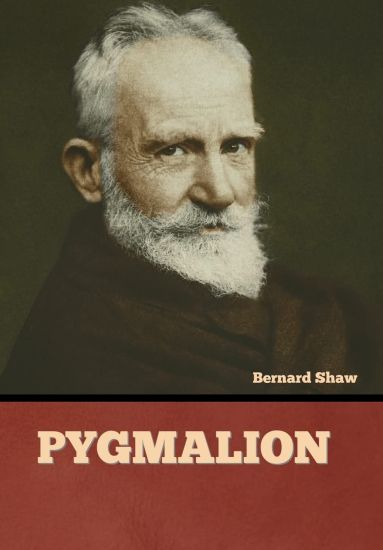
Pygmalion

Pygmalion

Bernard Shaw

Bibliotech Press
2022
sidottu
Pygmalion is a play by George Bernard Shaw, named after the Greek mythological figure. It premiered at the Hofburg Theatre in Vienna on 16 October 1913 and was first presented in English on stage to the public in 1913. Its English-language premiere took place at Her Majesty's Theatre in the West End in April 1914 and starred Herbert Beerbohm Tree as phonetics professor Henry Higgins and Mrs Patrick Campbell as Cockney flower girl Eliza Doolittle. In ancient Greek mythology, Pygmalion fell in love with one of his sculptures, which then came to life. The general idea of that myth was a popular subject for Victorian era British playwrights, including one of Shaw's influences, W. S. Gilbert, who wrote a successful play based on the story called Pygmalion and Galatea that was first presented in 1871. Shaw would also have been familiar with the musical Adonis and the burlesque version, Galatea, or Pygmalion Reversed. Shaw's play has been adapted numerous times, most notably as the 1938 film Pygmalion, the 1956 musical My Fair Lady and its 1964 film version. Shaw mentioned that the character of Professor Henry Higgins was inspired by several British professors of phonetics: Alexander Melville Bell, Alexander J. Ellis, Tito Pagliardini, but above all, the cantankerous Henry Sweet. (wikipedia.org)
The Devil's Disciple

The Devil's Disciple

Bernard Shaw

Bibliotech Press
2022
sidottu
The Devil's Disciple is an 1897 play written by Irish dramatist George Bernard Shaw. The play is Shaw's eighth, and after Richard Mansfield's original 1897 American production it was his first financial success, which helped to affirm his career as a playwright. It was published in Shaw's 1901 collection Three Plays for Puritans together with Captain Brassbound's Conversion and Caesar and Cleopatra. Set in Colonial America during the Revolutionary era, the play tells the story of Richard Dudgeon, a local outcast and self-proclaimed "Devil's disciple". In a twist characteristic of Shaw's love of paradox, Dudgeon sacrifices himself in a Christ-like gesture despite his professed Infernal allegiance. (wikipedia.org)
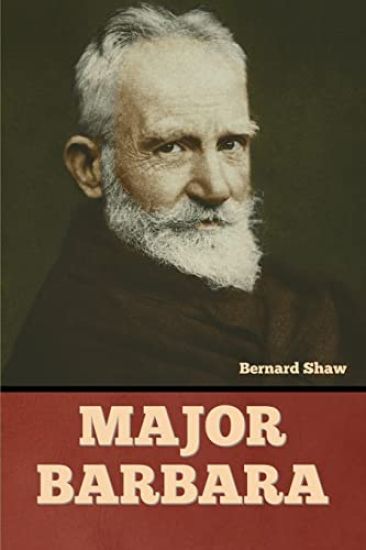
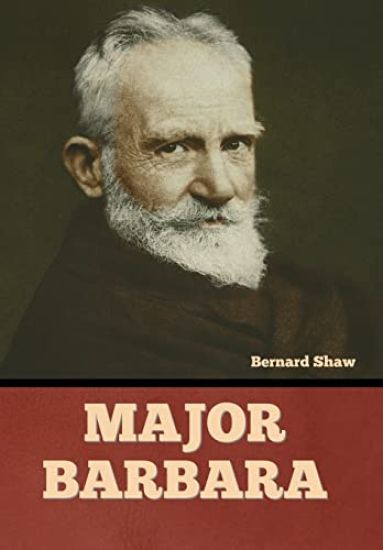
Major Barbara

Major Barbara

Bernard Shaw

Bibliotech Press
2022
pokkari
Major Barbara is a three-act English play by George Bernard Shaw, written and premiered in 1905 and first published in 1907. The story concerns an idealistic young woman, Barbara Undershaft, who is engaged in helping the poor as a Major in the Salvation Army in London. For many years, Barbara and her siblings have been estranged from their father, Andrew Undershaft, who now reappears as a rich and successful munitions maker. Undershaft, the father, gives money to the Salvation Army, offending Major Barbara, who does not want to be connected to his "tainted" wealth. However, the father argues that poverty is a worse problem than munitions, and claims that he is doing more to help society by giving his workers jobs and a steady income than Major Barbara is doing to help them by giving them bread and soup. The play script reprises several typical "Shavian" moves in lacking apostrophes on contractions and other punctuation, by having a didactic introductory essay explaining the play's themes, and by bending some rules of play scripting for literary purposes; for example, two characters are listed as "The Woman" and "The Man" before Shaw gives them names, for dramatic effect. As well, lines in dialect English are written phonetically (Bill Walker jeers, "Wot prawce selvytion nah?", "What price salvation now?"). (wikipedia.org)
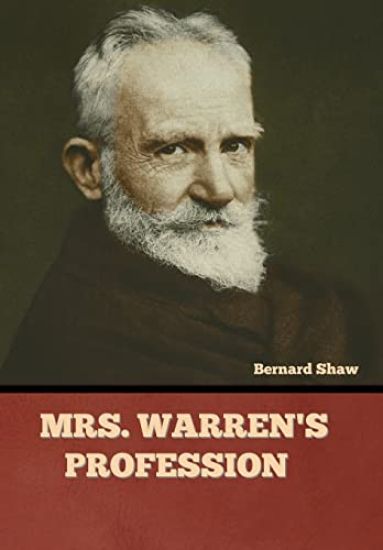
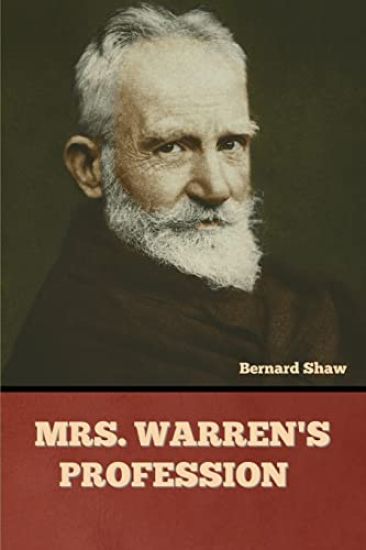
Mrs. Warren's Profession

Mrs. Warren's Profession

Bernard Shaw

Bibliotech Press
2022
pokkari
Mrs. Warren's Profession is a play written by George Bernard Shaw in 1893, and first performed in London in 1902. The play is about a former prostitute, now a madam (brothel proprietor), who attempts to come to terms with her disapproving daughter. It is a problem play, offering social commentary to illustrate Shaw's belief that the act of prostitution was not caused by moral failure but by economic necessity. Elements of the play were borrowed from Shaw's 1882 novel Cashel Byron's Profession, about a man who becomes a boxer due to limited employment opportunities. The story centres on the relationship between Mrs Kitty Warren and her daughter, Vivie. Mrs. Warren, a former prostitute and current brothel owner, is described as "on the whole, a genial and fairly presentable old blackguard of a woman." Vivie, an intelligent and pragmatic young woman who has just graduated from university, has come home to get acquainted with her mother for the first time in her life. 1] The play focuses on how their relationship changes when Vivie learns what her mother does for a living. It explains why Mrs. Warren became a prostitute, condemns the hypocrisies relating to prostitution, and criticises the limited employment opportunities available for women in Victorian Britain. (wikipedia.org)
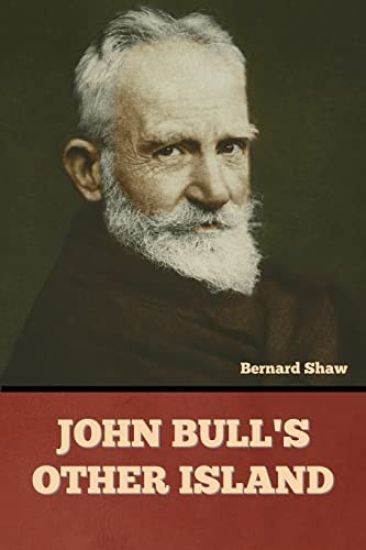
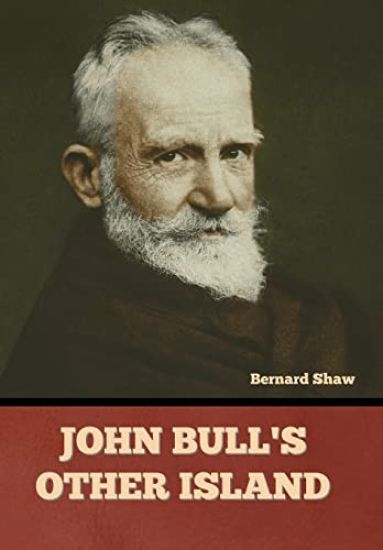
John Bull's Other Island

John Bull's Other Island

Bernard Shaw

Bibliotech Press
2022
pokkari
John Bull's Other Island is a comedy about Ireland, written by George Bernard Shaw in 1904. Shaw himself was born in Dublin, yet this is one of only two plays of his where he thematically returned to his homeland, the other being O'Flaherty V. C. The play was highly successful in its day, but is rarely revived, probably because so much of the dialogue is specific to the politics of the day. The play deals with Larry Doyle, originally from Ireland, but who has adopted English cultural customs and manners to fit in in England and Tom Broadbent, his English business partner. They are civil engineers who run a firm in London. They go to Roscullen, where Doyle was born, to develop some land. Doyle has no illusions about Ireland while Broadbent is taken with the romance of the place. Broadbent, a lively man who is seemingly not always aware of the impression he makes, becomes a favourite of the people. Before the play is over, it is clear he will marry Nora Reilly, the woman waiting for Doyle (who is more than happy to let her go) and become the area's candidate for Parliament after Doyle refuses to stand. Doyle has also 'called in' all his loans given "so easily" to the locals against their homes and intends (as he had planned all along) to make the village into an amusement park. Another major character is the defrocked priest Peter (Father) Keegan, the political and temperamental opposite of Broadbent, becomes suspicious of him upon his arrival and warns the locals against him. As popular as the play was originally, it is not one of Shaw's more revived pieces. Liz Kennedy reviewing a revival in 2004, during the New Labour government of Tony Blair, argued that the play was still relevant: "Shaw's vision from one hundred years ago was a far-seeing one... The drama has especial contemporary resonance in this continued period of political vacuum on our own shores" She particularly praised "Alan Cox, giving an appropriately mannered Blairite performance as Broadbent the Englishman...he might historically be a Liberal, but he sounded very New Labour." (wikipedia.org)
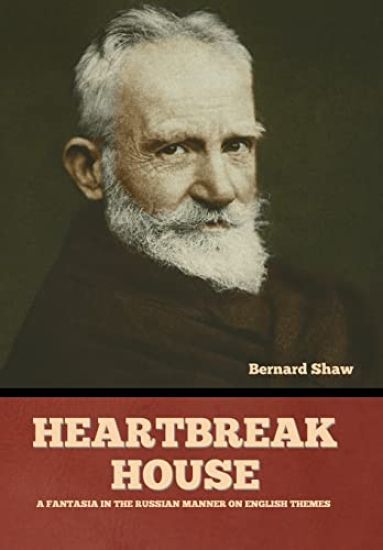
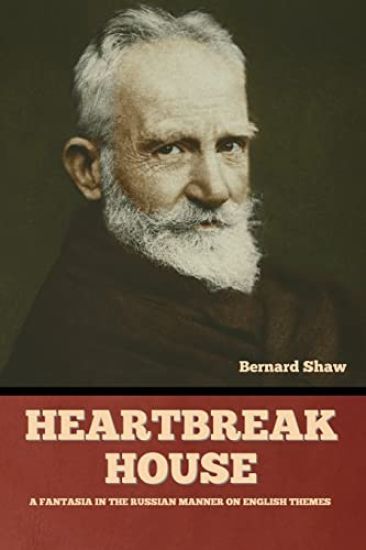
Heartbreak House

Heartbreak House

Bernard Shaw

Bibliotech Press
2022
pokkari
Heartbreak House: A Fantasia in the Russian Manner on English Themes is a play written by George Bernard Shaw, first published in 1919 and first played at the Garrick Theatre in November 1920. According to A. C. Ward, the work argues that "cultured, leisured Europe" was drifting toward destruction, and that "Those in a position to guide Europe to safety failed to learn their proper business of political navigation". The "Russian manner" of the subtitle refers to the style of Anton Chekhov, which Shaw adapts. In the preface to the play Shaw acknowledges his debt to Chekhov, in particular to The Cherry Orchard. He writes that in comparison to himself, Chekhov was "more of a fatalist, had no faith in these charming people extricating themselves. They would, he thought, be sold up and sent adrift by the bailiffs; therefore he had no scruple in exploiting and even flattering their charm." Critics have taken very different views about Shaw's adaptation of Chekhov. Louis Kronenberger says that Shaw "turns Chekhov into a sort of literary Hyde Park soapbox dialectic for the theatre... We should be brow-beaten indeed to accept the idea that in Heartbreak House there is more than the merest hint or tiny reflection of Chekhov's true method, none of that pure, pains-taking economy and drawing, none of that humility of vision, none of that shy certainty of intuition. And Mr. Shaw's play has none of the variety in emotional rhythm that Chekhov's has, either in tone or in profound self-revelation among the characters." Louis Crompton, in contrast, says that, Shaw's avowed literary strategy, as we have seen, was to appeal to the most highly developed taste of the intelligentsia he was attacking. Shaw knew that Captain Shotover, his spokesman in the play, must first of all, like Coleridge's Ancient Mariner, hold his audience spellbound if he was to strike home with his message. As Shaw himself put it, "The funny old captain, having lured them into his ship by his sallies, ties them up to the gangway and gives them a moral dozen." The result is Chekhov reorchestrated, so to speak, with tubas and drums added, to allow for the playing of a Dies Irae at the end. Heartbreak House is thus a redistillation of Chekhov and at the same time a passing beyond him, for Chekhov's world is static and directionless. Though his characters often talk grandly and eloquently about the future of humanity, it is obvious that they are not going to act on their convictions, and Chekhov records their orations with a sympathy that is undercut with humorous skepticism. His aim is to present men and women to us dramatically, not to point the way. As a result some critics have exalted his detachment into an end in itself and attacked Shaw as the perverter of the master. But this is to ignore the fact that Chekhov himself found the lack of commitment in contemporary writing its greatest failure and contemporary nihilism the age's bane. Thomas Whitaker says that Shaw differs markedly from Chekhov by presenting his characters as mercurial "rhetorical puppets" which gives them a "surprisingly rich vitality... a heartbroken adolescent can instantly become a cynic on the prowl, a maternal confidante can also be a seductive hostess and an emasculating wife, a philandering lapdog can be a shrewd judge of character and an offstage hero, and a mad hatter can be a mad Lear and a mad Shaw." (wikipedia.org)

John Bull's Other Island

John Bull's Other Island

Bernard Shaw

Bibliotech Press
2022
sidottu
John Bull's Other Island is a comedy about Ireland, written by George Bernard Shaw in 1904. Shaw himself was born in Dublin, yet this is one of only two plays of his where he thematically returned to his homeland, the other being O'Flaherty V. C. The play was highly successful in its day, but is rarely revived, probably because so much of the dialogue is specific to the politics of the day. The play deals with Larry Doyle, originally from Ireland, but who has adopted English cultural customs and manners to fit in in England and Tom Broadbent, his English business partner. They are civil engineers who run a firm in London. They go to Roscullen, where Doyle was born, to develop some land. Doyle has no illusions about Ireland while Broadbent is taken with the romance of the place. Broadbent, a lively man who is seemingly not always aware of the impression he makes, becomes a favourite of the people. Before the play is over, it is clear he will marry Nora Reilly, the woman waiting for Doyle (who is more than happy to let her go) and become the area's candidate for Parliament after Doyle refuses to stand. Doyle has also 'called in' all his loans given "so easily" to the locals against their homes and intends (as he had planned all along) to make the village into an amusement park. Another major character is the defrocked priest Peter (Father) Keegan, the political and temperamental opposite of Broadbent, becomes suspicious of him upon his arrival and warns the locals against him. As popular as the play was originally, it is not one of Shaw's more revived pieces. Liz Kennedy reviewing a revival in 2004, during the New Labour government of Tony Blair, argued that the play was still relevant: "Shaw's vision from one hundred years ago was a far-seeing one... The drama has especial contemporary resonance in this continued period of political vacuum on our own shores" She particularly praised "Alan Cox, giving an appropriately mannered Blairite performance as Broadbent the Englishman...he might historically be a Liberal, but he sounded very New Labour." (wikipedia.org)
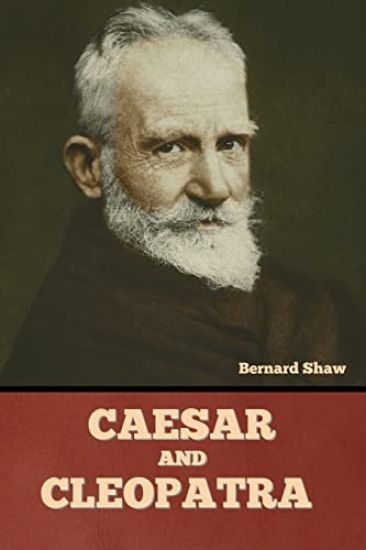
Caesar and Cleopatra

Caesar and Cleopatra

Bernard Shaw

Bibliotech Press
2022
pokkari
George Bernard Shaw (26 July 1856 - 2 November 1950), known at his insistence simply as Bernard Shaw, was an Irish playwright, critic, polemicist and political activist. His influence on Western theatre, culture and politics extended from the 1880s to his death and beyond. He wrote more than sixty plays, including major works such as Man and Superman (1902), Pygmalion (1912) and Saint Joan (1923). With a range incorporating both contemporary satire and historical allegory, Shaw became the leading dramatist of his generation, and in 1925 was awarded the Nobel Prize in Literature. Born in Dublin, Shaw moved to London in 1876, where he struggled to establish himself as a writer and novelist, and embarked on a rigorous process of self-education. By the mid-1880s he had become a respected theatre and music critic. Following a political awakening, he joined the gradualist Fabian Society and became its most prominent pamphleteer. Shaw had been writing plays for years before his first public success, Arms and the Man in 1894. Influenced by Henrik Ibsen, he sought to introduce a new realism into English-language drama, using his plays as vehicles to disseminate his political, social and religious ideas. By the early twentieth century his reputation as a dramatist was secured with a series of critical and popular successes that included Major Barbara, The Doctor's Dilemma and Caesar and Cleopatra. Shaw's expressed views were often contentious; he promoted eugenics and alphabet reform, and opposed vaccination and organised religion. He courted unpopularity by denouncing both sides in the First World War as equally culpable, and although not a republican, castigated British policy on Ireland in the postwar period. These stances had no lasting effect on his standing or productivity as a dramatist; the inter-war years saw a series of often ambitious plays, which achieved varying degrees of popular success. In 1938 he provided the screenplay for a filmed version of Pygmalion for which he received an Academy Award. His appetite for politics and controversy remained undiminished; by the late 1920s he had largely renounced Fabian Society gradualism and often wrote and spoke favourably of dictatorships of the right and left-he expressed admiration for both Mussolini and Stalin. In the final decade of his life he made fewer public statements, but continued to write prolifically until shortly before his death, aged ninety-four, having refused all state honours, including the Order of Merit in 1946. Since Shaw's death scholarly and critical opinion about his works has varied, but he has regularly been rated among British dramatists as second only to Shakespeare; analysts recognise his extensive influence on generations of English-language playwrights. The word Shavian has entered the language as encapsulating Shaw's ideas and his means of expressing them. (wikipedia.org)
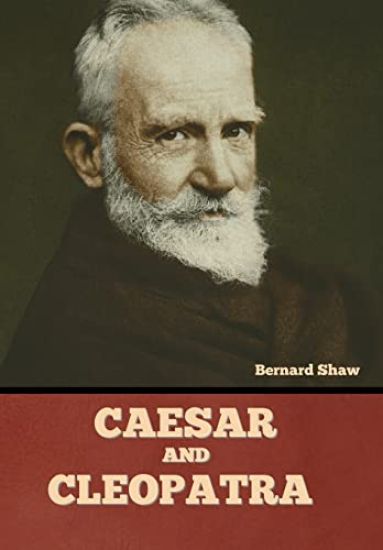
Caesar and Cleopatra

Caesar and Cleopatra

Bernard Shaw

Bibliotech Press
2022
sidottu
George Bernard Shaw (26 July 1856 - 2 November 1950), known at his insistence simply as Bernard Shaw, was an Irish playwright, critic, polemicist and political activist. His influence on Western theatre, culture and politics extended from the 1880s to his death and beyond. He wrote more than sixty plays, including major works such as Man and Superman (1902), Pygmalion (1912) and Saint Joan (1923). With a range incorporating both contemporary satire and historical allegory, Shaw became the leading dramatist of his generation, and in 1925 was awarded the Nobel Prize in Literature. Born in Dublin, Shaw moved to London in 1876, where he struggled to establish himself as a writer and novelist, and embarked on a rigorous process of self-education. By the mid-1880s he had become a respected theatre and music critic. Following a political awakening, he joined the gradualist Fabian Society and became its most prominent pamphleteer. Shaw had been writing plays for years before his first public success, Arms and the Man in 1894. Influenced by Henrik Ibsen, he sought to introduce a new realism into English-language drama, using his plays as vehicles to disseminate his political, social and religious ideas. By the early twentieth century his reputation as a dramatist was secured with a series of critical and popular successes that included Major Barbara, The Doctor's Dilemma and Caesar and Cleopatra. Shaw's expressed views were often contentious; he promoted eugenics and alphabet reform, and opposed vaccination and organised religion. He courted unpopularity by denouncing both sides in the First World War as equally culpable, and although not a republican, castigated British policy on Ireland in the postwar period. These stances had no lasting effect on his standing or productivity as a dramatist; the inter-war years saw a series of often ambitious plays, which achieved varying degrees of popular success. In 1938 he provided the screenplay for a filmed version of Pygmalion for which he received an Academy Award. His appetite for politics and controversy remained undiminished; by the late 1920s he had largely renounced Fabian Society gradualism and often wrote and spoke favourably of dictatorships of the right and left-he expressed admiration for both Mussolini and Stalin. In the final decade of his life he made fewer public statements, but continued to write prolifically until shortly before his death, aged ninety-four, having refused all state honours, including the Order of Merit in 1946. Since Shaw's death scholarly and critical opinion about his works has varied, but he has regularly been rated among British dramatists as second only to Shakespeare; analysts recognise his extensive influence on generations of English-language playwrights. The word Shavian has entered the language as encapsulating Shaw's ideas and his means of expressing them. (wikipedia.org)
Getting Married

Getting Married

Bernard Shaw

Bibliotech Press
2022
pokkari
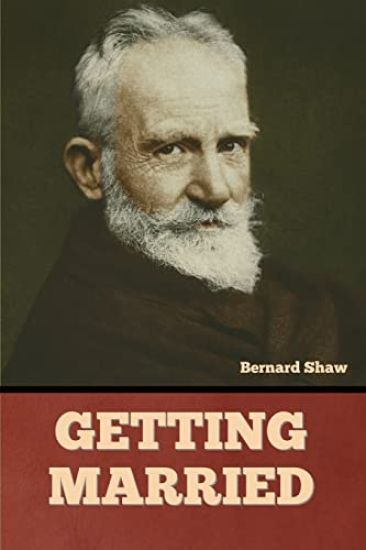
Getting Married is a play by George Bernard Shaw. First performed in 1908, it features a cast of family members who gather together for a marriage. The play analyses and satirises the status of marriage in Shaw's day, with a particular focus on the necessity of liberalising divorce laws. The preface to the published version of Getting Married is essentially a discussion of the future of marriage. Shaw takes the view that "Marriage remains practically inevitable", as the alternatives have too many disadvantages. In a future society, he argued, there could be no practicable replacement for marriage, neither individually negotiated deals or unconstrained "free love". Despite this, there was "a very pressing question of improving its conditions". Shaw went on to argue for sensible divorce laws to would protect the welfare of adults and children. Shaw notes that the form of the play adopts the classical unities, saying "the Greek form is inevitable when drama reaches a certain point in poetic and intellectual evolution." (wikipedia.org)
Getting Married

Getting Married

Bernard Shaw

Bibliotech Press
2022
sidottu
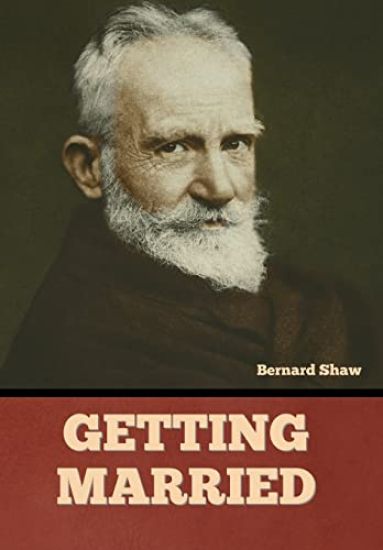
Getting Married is a play by George Bernard Shaw. First performed in 1908, it features a cast of family members who gather together for a marriage. The play analyses and satirises the status of marriage in Shaw's day, with a particular focus on the necessity of liberalising divorce laws. The preface to the published version of Getting Married is essentially a discussion of the future of marriage. Shaw takes the view that "Marriage remains practically inevitable", as the alternatives have too many disadvantages. In a future society, he argued, there could be no practicable replacement for marriage, neither individually negotiated deals or unconstrained "free love". Despite this, there was "a very pressing question of improving its conditions". Shaw went on to argue for sensible divorce laws to would protect the welfare of adults and children. Shaw notes that the form of the play adopts the classical unities, saying "the Greek form is inevitable when drama reaches a certain point in poetic and intellectual evolution." (wikipedia.org)
Arms and the Man

Arms and the Man

Bernard Shaw

ALPHA EDITION
2022
pokkari
This book has been considered important throughout the human history, and so that this work is never forgotten we have made efforts in its preservation by republishing this book in a modern format for present and future generations. This whole book has been reformatted, retyped and designed. These books are not made of scanned copies and hence the text is clear and readable.
Getting Married

Getting Married

Bernard Shaw

ALPHA EDITION
2022
pokkari
This book has been considered important throughout the human history, and so that this work is never forgotten we have made efforts in its preservation by republishing this book in a modern format for present and future generations. This whole book has been reformatted, retyped and designed. These books are not made of scanned copies and hence the text is clear and readable.