
Kirjailija
Bertolt Brecht
Kirjat ja teokset yhdessä paikassa: 212 kirjaa, julkaisuja vuosilta 1960–2026, suosituimpiin kuuluu Edward II. Vertaile teosten hintoja ja tarkista saatavuus suomalaisista kirjakaupoista.
212 kirjaa
Kirjojen julkaisuvuodet: 1960–2026.
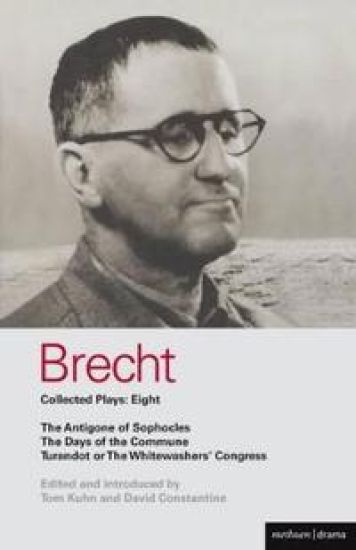
The latest volume in Methuen's Collected Brecht includes two plays previously untranslated into English Volume 8 of Brecht's collected plays contains his last completed plays, from the eight years between his return from America to Europe after the war and his death in 1956. Brecht's ANTIGONE (1948) is a bold adaptation of Holderlin's classic German translation of Sophocles' play. A reflection on resistance and dictatorship in the aftermath of Nazism, it was a radical new experiment in epic theatre. THE DAYS OF THE COMMUNE (1949) is a semi-documentary account of the Paris Commune, and Brecht's most serious and ambitious historical play. TURANDOT is Brecht's version of the classic Chinese story is a satire on the intelligentsia of the Weimar Republic, Nazi bureaucracy, and other targets.
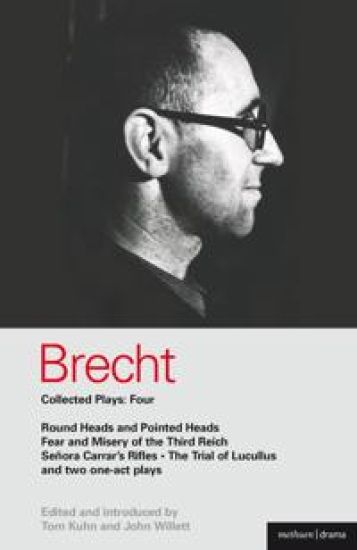
Now in paperback, the long-awaited volume of Brecht's classic plays from the 1930s Volume 4 of Brecht's Collected Plays contains works from the 1930s, straddling fateful years in German political and cultural history - as well as in Brecht's own life. Round Heads and Pointed Heads, based on Shakespeare's Measure for Measure, is a powerful political allegory on Nazi racial policy and conditions in the Germany Brecht had to leave in 1933. The Trial of Lucullus, a starkly pacifist text originally written in response to a commission from Swedish radio, portrays the Roman general tried by the Underworld for his military triumphs. Fear and Misery of the Third Reich, unique in Brecht's work, consists of some thirty short scenes of life under the Nazis between 1933 and 1938, designed for use by groups in exile. Senora Carrara's Rifles is based on J. M. Synge's Riders to the Sea, but relocated by Brecht in the Spanish Civil War. Also included are two one-act plays, Dansen and How Much is Your Iron?, minor works designed for amateurs in Scandinavia, where the Brechts lived till spring 1941. The volume includes an introduction and notes by Tom Kuhn and John Willett, as well as Brecht's own notes on the texts.
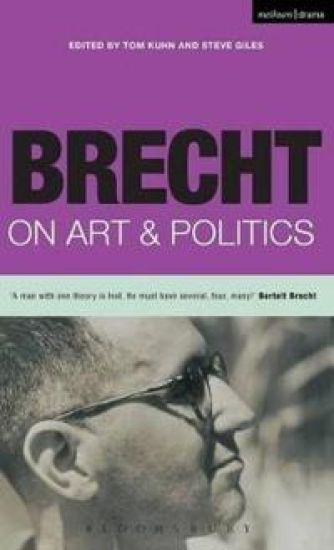
The first single-volume anthology of Brecht's writings on both art and politics This volume contains new translations to extend our image of one of the twentieth century's most entertaining and thought provoking writers on culture, aesthetics and politics. Here are a cross-section of Brecht's wide-ranging thoughts which offer us an extraordinary window onto the concerns of a modern world in four decades of economic and political disorder. The book is designed to give wider access to the experience of a dynamic intellect, radically engaged with social, political and cultural processes. Each section begins with a short essay by the editors introducing and summarising Brecht's thought in the relevant year.
Written between 1939-1942 "The Messingkauf Dialogues" are among the most concise, witty and light-hearted of all Brecht's theoretical discussions of theatre.
Also known as The Private Life of the Master Race, this is a sequence of twenty-four realistic sketches showing how "ordinary" life under the Nazis was subtly permeated by suspicion and anxiety. Written in exile in Denmark and first staged in 1938 it was inspired in part by his recent trip to Moscow where he had been researching tasks for the anti-Nazi effort.
Along with Mother Courage, the character of Galileo is one of Brecht's greatest creations, immensely live, human and complex. Unable to resist his appetite for scientific investigation, Galileo's heretical discoveries about the solar system bring him to the attention of the Inquisition. He is scared into publicly abjuring his theories but, despite his self-contempt, goes on working in private, eventually helping to smuggle his writings out of the country. As an examination of the problems that face not only the scientist but also the whole spirit of free inquiry when brought into conflict with the requirements of government or official ideology, Life of Galileo has few equals. Written in exile in 1937-9 and first performed in Zurich in 1943, Galileo was first staged in English in 1947 by Joseph Losey in a version jointly prepared by Brecht and Charles Laughton, who played the title role. Printed here is the complete translation by Brecht scholar John Willett. The much shorter Laughton version is also included in full as an appendix, along with Brecht's own copious notes on the play making this the most trusted scholarly edition of the text.
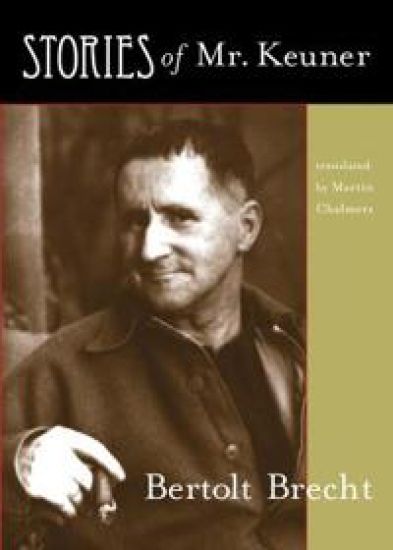
Stories of Mr. Keuner gathers Bertolt Brecht's fictionalized comments on politics, everyday life, and exile. Written from the late 1920s till the late 1950s, Stories of Mr. Keuner is the precipitate of Brecht's experience of a world in political and cultural flux, a world of revolution, civil war, world war, cultural efflorescence, Nazism, Stalinism, and the Cold War -- in short, the first half of the twentieth century. Mr. Keuner said: "I, too, once adopted an aristocratic stance (you know: erect, upright, and proud, head thrown back). I was standing in rising water at the time. I adopted this posture when it rose to my chin." "At first, they appear almost innocuous, these so-called stories, anecdotal fragments often of a single page or less. Brecht's scenarios seem so simple, his style so direct. He expressly wished what he wrote to be useful. Here he succeeded brilliantly: These pieces are small enough to be carried away whole, but what they say is big enough to be equal to the reader." --Johnathon Keats, SF Gate "Stories of Mr. Keuner finally puts in English translation this startling and stunning body of work, not only encouraging a broader appreciation of a playwright famed for fighting inhumanity in his time, but also effectively questioning integrity in our own day." --San Francisco Chronicle Book Review "The first English translation of the great playwright's discursive semifictionalized observations on German life and politics, as spoken by the eponymous Keuner (his name from the German "keiner," meaning "no man"), a "thinking man" obviously inspired by Plato's Socrates. Written between the 1920s and '50s (and collected for the first publication in 1956, the year of Brecht's death), they're brief (often single-paragraph) apercus generally employed to deflate contemporary pretensions regarding religion, patriotism, capitalism, exile, and other themes engaged more fully in their author's celebrated poems and plays (e.g., "I am for justice; so it's good if the place in which I'm staying has more than one exit"), but most effectively adumbrated in this revealing coda to an indisputably major, and still challenging, body of work." --Kirkus Reviews Bertolt Brecht wrote The Threepenny Opera, Mahagonny, Mother Courage, The Life of Galileo, and many other plays, poems, and theoretical writings. Ardent antifascist, friend to Walter Benjamin, and wily ally of the COmmunists, Brecht was often on the run, "changing countries more than shoes." As Hitler's armies advanced, Brecht fled to Denmark, Sweden, Finland, and the U. S. before finally settling in East Germany after the war, where he became director of the renowned Berliner Ensemble. Martin Chalmers (1948-2014) had translated works by Victor Klemperer, Hans Magnus Enzensberger, Hubert Fichte, and Elfriede Jelinek, among others. Mr. Chalmers lived in London, where he wrote extensively on German literature, film, history, and culture.
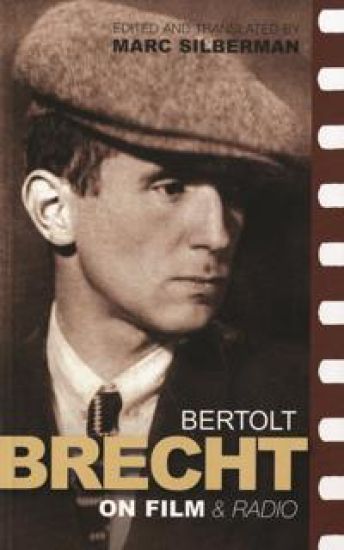
From Weimar Germany to Hollywood to East Berlin, Brecht on Film and Radio gathers together a selection of Bertolt Brecht's own writings on the new film and broadcast media that revolutionised arts and communication in the twentieth century. Bertolt Brecht's hugely influential views on drama, acting and stage production have long been widely recognised. Less familiar, but of profound importance, are his writings on film and radio. From Weimar Germany to Hollywood to East Berlin, Brecht on Film and Radio gathers together for the first time a selection of Brecht's own writings on the new film and broadcast media that fascinated him throughout his life and revolutionised arts and communication in the twentieth century. Marc Silberman's full editorial commentary sets Brecht's ideas in the context of his other work." I strongly wish that after their invention of the radio the bourgeoisie would make a further invention that enables us to fix for all time what the radio communicates. Later generations would then have the opportunity to marvel how a caste was able to tell the whole planet what it had to say and at the same time how it enabled the planet to see that it had nothing to say." (Bertolt Brecht)
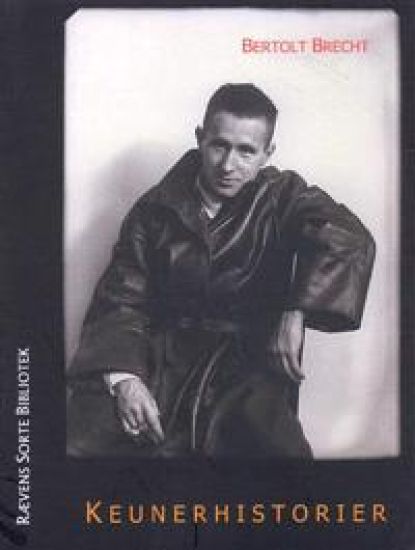
Små ironiske prosastykker med morale. Her i en komplet oversættelse til dansk.
Brechts lyrisches Werk ist in Qualität und Umfang einmalig in diesem Jahrhundert. Die ca. 2000 Gedichte, die zwischen 1913 und 1956 entstanden, sind zugleich Spiegel und Brennglas für die erste Hälfte des zwanzigsten Jahrhunderts. Der Band versammelt sämtliche Gedichte Brechts, die zu seinen Lebzeiten erschienen oder aus dem Nachlaß ediert worden sind. Am Beginn stehen die großen Sammlungen, alle weiteren Gedichte Brechts schließen sich in chronologischer Folge an.
This volume gathers together, for the first time in English translation, Brecht's own writings on the new film and broadcast technologies that revolutionised arts and communication in the early part of the twentieth century This book includes all of Brecht's theoretical writing about film, radio, broadcasting and the new media written between 1919 and 1956 as well as all of his important screenplays produced during the 1920s and 1930s. Screenplays written during this time include an early sound-film adaptation of The Threepenny Opera, and a collaboration with Fritz Lang, Hangmen Also Die. Brecht's writings on the new media document his fascination with it from Weimar Germany to Hollywood and the movie industry. A must for students of Brecht and film studies alike.

This is a parable inspired by the Chinese play Chalk Circle. Written at the close of World War II, the story is set in the Caucasus Mountains of Georgia. It retells the tale of King Solomon and a child claimed and fought over by two mothers'
Written during Brecht''s exile and set in Communist China, this is the parable of a young woman torn between obligation and reality, between love and practicality, and between her own needs and those of her friends and neighbours'