Kirjailija
Bertrand Russell
Kirjat ja teokset yhdessä paikassa: 548 kirjaa, julkaisuja vuosilta 1912–2026, suosituimpiin kuuluu The Atomic Age. Vertaile teosten hintoja ja tarkista saatavuus suomalaisista kirjakaupoista.
548 kirjaa
Kirjojen julkaisuvuodet: 1912–2026.
'China, by her resources and her population, is capable of being the greatest power in the world after the United States.' Bertrand Russell, The Problem of China In 1920 the philosopher Bertrand Russell spent a year in China as Professor of Philosophy at the University of Beijing (then Peking), where his lectures on mathematical logic enthralled students and listeners, including Mao Tse Tung, who attended some of Russell’s talks. Written at a time when China was largely regarded by the West as backward and weak, The Problem of China sees Russell rise above the prejudices of his era and presciently assess China's past, present and future. Russell brings his analytical and insightful eye to bear on some fundamental aspects of China’s history and politics, cautioning China against adopting a purely Western model of social and economic development, which he regarded as characterized by a combination of greed and militarism. Beginning with an overview of nineteenth-century Chinese history and considering China's relations with Japan and Russia, Russell then contrasts Chinese civilization with Western. He devotes a fascinating chapter to the character of the Chinese, which he argues is complex but ultimately defined by a ‘pacific temper’. With uncanny foresight, Russell predicts China’s resurgence, but only if it is able to establish an orderly government, promote industrial development under Chinese control and foster the spread of education. This Routledge Classics edition includes a new introduction by Bernard Linsky.

‘I have come to think that one of the main causes of trouble in the world is dogmatic and fanatical belief in some doctrine for which there is no adequate evidence.’ – Bertrand Russell, Portraits from MemoryPortraits from Memory is one of Bertrand Russell’s most self-reflective and engaging books. Whilst not intended as an autobiography, it is a vivid recollection of some of his celebrated contemporaries, such as George Bernard Shaw, Sidney and Beatrice Webb and D. H. Lawrence. Russell provides some arresting and sometimes amusing insights into writers with whom he corresponded. He was fascinated by Joseph Conrad, with whom he formed a strong emotional bond, writing that his Heart of Darkness was not just a story but an expression of Conrad’s ‘philosophy of life’. There are also some typically pithy Russellian observations; H. G. Wells ‘derived his importance from quantity rather than quality’, whilst after a brief and fraught friendship Russell thought D. H. Lawrence ‘had no real wish to make the world better, but only to indulge in eloquent soliloquy about how bad it was’. This engaging book also includes some of Russell’s customary razor-sharp essays on a rich array of subjects, from his ardent pacifism, liberal politics and morality to the ethics of education, the skills of good writing and how he came to philosophy as a young man. These include ‘A Plea for Clear Thinking’, ‘A Philosophy for Our Time’ and ‘How I Write’. Portraits from Memory is Russell at his best and will enthrall those new to Russell as well as those already well-acquainted with his work. This Routledge Classics edition includes a new foreword by the Russell scholar Nicholas Griffin, editor of The Selected Letters of Bertrand Russell.
'China, by her resources and her population, is capable of being the greatest power in the world after the United States.' Bertrand Russell, The Problem of China In 1920 the philosopher Bertrand Russell spent a year in China as Professor of Philosophy at the University of Beijing (then Peking), where his lectures on mathematical logic enthralled students and listeners, including Mao Tse Tung, who attended some of Russell’s talks. Written at a time when China was largely regarded by the West as backward and weak, The Problem of China sees Russell rise above the prejudices of his era and presciently assess China's past, present and future. Russell brings his analytical and insightful eye to bear on some fundamental aspects of China’s history and politics, cautioning China against adopting a purely Western model of social and economic development, which he regarded as characterized by a combination of greed and militarism. Beginning with an overview of nineteenth-century Chinese history and considering China's relations with Japan and Russia, Russell then contrasts Chinese civilization with Western. He devotes a fascinating chapter to the character of the Chinese, which he argues is complex but ultimately defined by a ‘pacific temper’. With uncanny foresight, Russell predicts China’s resurgence, but only if it is able to establish an orderly government, promote industrial development under Chinese control and foster the spread of education. This Routledge Classics edition includes a new introduction by Bernard Linsky.

The Problems of Philosophy By Bertrand RussellThe Problems of Philosophy is a 1912 book by the philosopher Bertrand Russell, in which the author attempts to create a brief and accessible guide to the problems of philosophy. Focusing on problems he believes will provoke positive and constructive discussion, Russell concentrates on knowledge rather than metaphysics: If it is uncertain that external objects exist, how can we then have knowledge of them but by probability. There is no reason to doubt the existence of external objects simply because of sense data. Russell guides the reader through his famous 1910 distinction between knowledge by acquaintance and knowledge by description and introduces important theories of Plato, Aristotle, Ren Descartes, David Hume, John Locke, Immanuel Kant, Georg Wilhelm Friedrich Hegel and others to lay the foundation for philosophical inquiry by general readers and scholars alike. In the following pages I have confined myself in the main to those problems of philosophy in regard to which I thought it possible to say something positive and constructive, since merely negative criticism seemed out of place. For this reason, theory of knowledge occupies a larger space than metaphysics in the present volume, and some topics much discussed by philosophers are treated very briefly, if at all. Is there any knowledge in the world which is so certain that no reasonable man could doubt it? This question, which at first sight might not seem difficult, is really one of the most difficult that can be asked. When we have realized the obstacles in the way of a straightforward and confident answer, we shall be well launched on the study of philosophy-for philosophy is merely the attempt to answer such ultimate questions, not carelessly and dogmatically, as we do in ordinary life and even in the sciences, but critically, after exploring all that makes such questions puzzling, and after realizing all the vagueness and confusion that underlie our ordinary ideas. In daily life, we assume as certain many things which, on a closer scrutiny, are found to be so full of apparent contradictions that only a great amount of thought enables us to know what it is that we really may believe. In the search for certainty, it is natural to begin with our present experiences, and in some sense, no doubt, knowledge is to be derived from them. But any statement as to what it is that our immediate experiences make us know is very likely to be wrong. It seems to me that I am now sitting in a chair, at a table of a certain shape, on which I see sheets of paper with writing or print. By turning my head I see out of the window buildings and clouds and the sun. I believe that the sun is about ninety-three million miles from the earth that it is a hot globe many times bigger than the earth that, owing to the earth's rotation, it rises every morning, and will continue to do so for an indefinite time in the future.
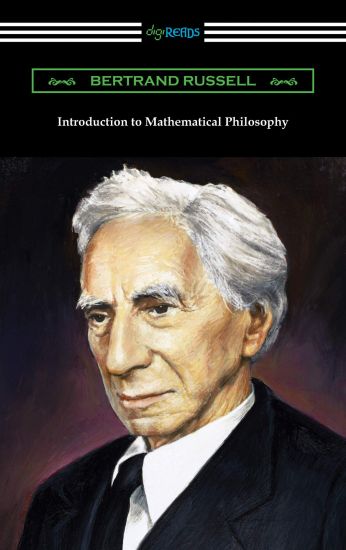
Introduction to mathematical philosophy
Bertrand Russell
Alpha Edition
2020
pokkari
Halvin toimitettuna 30,30 €
This book has been considered by academicians and scholars of great significance and value to literature. This forms a part of the knowledge base for future generations. So that the book is never forgotten we have represented this book in a print format as the same form as it was originally first published. Hence any marks or annotations seen are left intentionally to preserve its true nature.
As a mathematician, philosopher, logician, historian, socialist, pacifist, and social critic, Bertrand Russell is noted for his "revolt against idealism" in Britain in the early 20th century, as well as his pacifist activism during WWI, a campaign against Adolf Hitler and later the United States' involvement in the Vietnam War. In addition to his political activism, he is considered to be one of the founders of analytic philosophy, receiving the Nobel Prize in Literature in 1950 for his various humanitarian and philosophical works. He wrote his "Introduction to Mathematical Philosophy" in order to elucidate in a less technical way the main ideas of his and N. A. Whitehead's earlier "Principia Mathematica". The work focuses on mathematical logic as related to traditional and contemporary philosophy, of which Russell remarks, "logic is the youth of mathematics and mathematics is the manhood of logic." It is regarded today as a lucid, accessible exploration of the gray area where mathematics and philosophy meet. This edition is printed on premium acid-free paper.
A critical exposition of the philosophy of Leibniz, with an appendix of leading passages
Bertrand Russell
Alpha Edition
2019
pokkari
This book has been considered by academicians and scholars of great significance and value to literature. This forms a part of the knowledge base for future generations. So that the book is never forgotten we have represented this book in a print format as the same form as it was originally first published. Hence any marks or annotations seen are left intentionally to preserve its true nature.
Principia mathematica (Volume III)
Alfred North Whitehead; Bertrand Russell
Alpha Edition
2019
pokkari
This book has been considered by academicians and scholars of great significance and value to literature. This forms a part of the knowledge base for future generations. We have represented this book in the same form as it was first published. Hence any marks seen are left intentionally to preserve its true nature.
The Problems of Philosophy is a 1912 book by Bertrand Russell, in which the author attempts to create a brief and accessible guide to the problems of philosophy. Focusing on problems he believes will provoke positive and constructive discussion, Russell concentrates on knowledge rather than metaphysics: If it is uncertain that external objects exist, how can we then have knowledge of them but by probability. There is no reason to doubt the existence of external objects simply because of sense data. Russell guides the reader through his famous 1910 distinction between knowledge by acquaintance and knowledge by description and introduces important theories of Plato, Aristotle, Ren Descartes, David Hume, John Locke, Immanuel Kant, Georg Wilhelm Friedrich Hegel and others to lay the foundation for philosophical inquiry by general readers and scholars alike. In the following pages I have confined myself in the main to those problems of philosophy in regard to which I thought it possible to say something positive and constructive, since merely negative criticism seemed out of place. For this reason, theory of knowledge occupies a larger space than metaphysics in the present volume, and some topics much discussed by philosophers are treated very briefly, if at all. " - Bertrand Russell, Preface of The Problems of Philosophy
Completed in April 1918, "in the last days before a period of imprisonment," Proposed Roads to Freedom contains Bertrand Russell's astute political commentary on anarchism, socialism, and syndicalism. Russell begins with a historical overview of socialism and anarchism, the teachings and organizations of Marx and Bakunin, and the syndicalist revolt against socialism. He then turns to more pressing problems of the future, and how these movements could contribute to reconstruction after the war. Although he has criticism for each movement, Russell respected what they attempted to achieve. "What is new in Socialism and Anarchism is that close relations of the ideal to the present sufferings of men, which has enabled powerful political movements to grow out of the hopes of solitary thinkers. It is this that makes Socialism and Anarchism important, and it is this that makes them dangerous to those who batten, consciously or unconsciously, upon the evils of our present order of society."
The Problems of Philosophy
Bertrand Russell
Bibliotech Press
2019
pokkari
Halvin toimitettuna 22,50 €
Bertrand Arthur William Russell, 3rd Earl Russell (18 May 1872 - 2 February 1970) was a British philosopher, logician, mathematician, historian, socialist, pacifist and social critic. Although he spent most of his life in England, he was born in Wales, where he also died. Russell led the British "revolt against idealism" in the early 1900s. He is considered one of the founders of analytic philosophy along with his prot g Wittgenstein and his elder Frege, and is widely held to be one of the 20th century's premier logicians. He co-authored, with A. N. Whitehead, Principia Mathematica, an attempt to ground mathematics on logic. His philosophical essay "On Denoting" has been considered a "paradigm of philosophy." Both works have had a considerable influence on logic, mathematics, set theory, linguistics, and philosophy. He was a prominent anti-war activist, championing free trade between nations and anti-imperialism. Russell was imprisoned for his pacifist activism during World War I, campaigned against Adolf Hitler, for nuclear disarmament, criticised Soviet totalitarianism and the United States of America's involvement in the Vietnam War. In 1950, Russell was awarded the Nobel Prize in Literature, "in recognition of his varied and significant writings in which he champions humanitarian ideals and freedom of thought." (wikipedia.org)
This book is a result of an effort made by us towards making a contribution to the preservation and repair of original classic literature. In an attempt to preserve, improve and recreate the original content, we have worked towards: 1. Type-setting & Reformatting: The complete work has been re-designed via professional layout, formatting and type-setting tools to re-create the same edition with rich typography, graphics, high quality images, and table elements, giving our readers the feel of holding a 'fresh and newly' reprinted and/or revised edition, as opposed to other scanned & printed (Optical Character Recognition - OCR) reproductions. 2. Correction of imperfections: As the work was re-created from the scratch, therefore, it was vetted to rectify certain conventional norms with regard to typographical mistakes, hyphenations, punctuations, blurred images, missing content/pages, and/or other related subject matters, upon our consideration. Every attempt was made to rectify the imperfections related to omitted constructs in the original edition via other references. However, a few of such imperfections which could not be rectified due to intentional\unintentional omission of content in the original edition, were inherited and preserved from the original work to maintain the authenticity and construct, relevant to the work. We believe that this work holds historical, cultural and/or intellectual importance in the literary works community, therefore despite the oddities, we accounted the work for print as a part of our continuing effort towards preservation of literary work and our contribution towards the development of the society as a whole, driven by our beliefs. We are grateful to our readers for putting their faith in us and accepting our imperfections with regard to preservation of the historical content. HAPPY READING
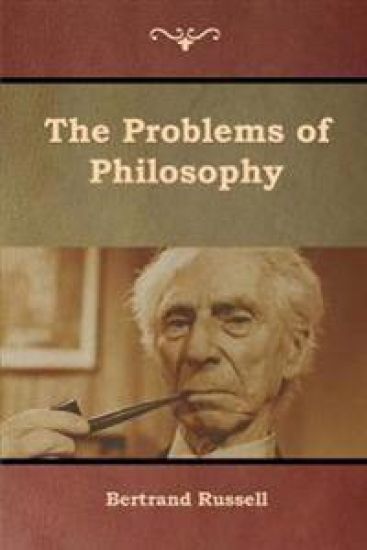
Problems of Philosophy
Bertrand Russell
Iap - Information Age Pub. Inc.
2019
sidottu
Halvin toimitettuna 30,40 €
The Problems of Philosophy is a book by Bertrand Russell, in which the author attempts to create an accessible guide to the main problems of philosophy, which will provoke a constructive discussion. For this reason, Russell concentrates on knowledge rather than metaphysics. He briefly addresses topics much discussed by philosophers in a general way.
Many of the revolutionary effects of science and technology are obvious enough. Bertrand Russell saw in the 1950s that there are also many negative aspects of scientific innovation. Insightful and controversial in equal measure, Russell argues that science offers the world greater well-being than it has ever known, on the condition that prosperity is dispersed power is diffused by means of a single, world government birth rates do not become too high and war is abolished. Russell acknowledges that is a tall order, but remains essentially optimistic. This Routledge Classics edition includes a new Preface by Tim Sluckin.