Kirjojen hintavertailu – 12 859 819 kirjaa ja 27 kauppaa

Kirjailija

Bertrand Russell

Kirjat ja teokset yhdessä paikassa: 548 kirjaa, julkaisuja vuosilta 1912–2026, suosituimpiin kuuluu The Atomic Age. Vertaile teosten hintoja ja tarkista saatavuus suomalaisista kirjakaupoista.

548 kirjaa

Kirjojen julkaisuvuodet: 1912–2026.

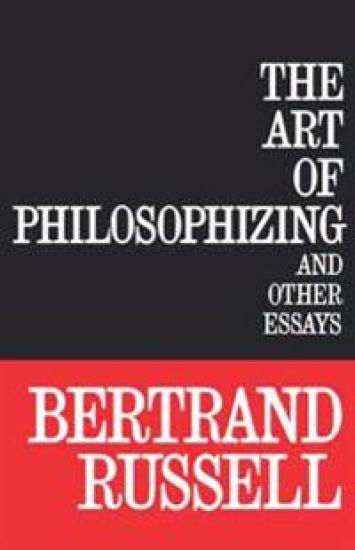
The Art of Philosophizing

The Art of Philosophizing

Bertrand Russell

Philosophical Library
1968
pokkari

Halvin toimitettuna 19,70 €

The essays in this little volume, published here for the first time in book form, were written by Bertrand Russell during the Second World War when he was less concerned with the stormy issues of nuclear warfare and the containment of communist aggression. In those years the author was teaching philosophy at American universities and exercising a growing influence on America's student population. The essays assembled here are fundamentally concerned with "the art of reckoning" in the fields of mathematics, logic and philosophy. The simplicity of Russell's exposition is astonishing, as is his ability to get to the core of the great philosophical issues and to skillfully probe the depth of philosophical analysis. Bertrand Arthur William Russell, 3rd Earl Russell was a British philosopher, logician, mathematician, historian, social reformer, and pacifist. Although he spent the majority of his life in England, he was born in Wales, where he also died. Russell led the British "revolt against Idealism" in the early 1900s and is considered one of the founders of analytic philosophy along with his prot g Wittgenstein and his elder Frege. He co-authored, with A. N. Whitehead, Principia Mathematica, an attempt to ground mathematics on logic. His philosophical essay "On Denoting" has been considered a "paradigm of philosophy." Both works have had a considerable influence on logic, mathematics, set theory, linguistics and analytic philosophy. He was a prominent anti-war activist, championing free trade between nations and anti-imperialism. Russell was imprisoned for his pacifist activism during World War I, campaigned against Adolf Hitler, for nuclear disarmament, criticized Soviet totalitarianism and the United States of America's involvement in the Vietnam War. In 1950, Russell was awarded the Nobel Prize in Literature, "in recognition of his varied and significant writings in which he champions humanitarian ideals and freedom of thought."
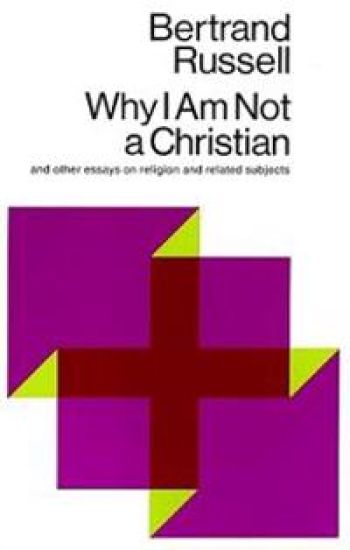
Why I am Not a Christian, and Other Essays on Religion and Related Subjects

Why I am Not a Christian, and Other Essays on Religion and Related Subjects

Bertrand Russell

Simon Schuster
1967
nidottu

Halvin toimitettuna 22,00 €

"Devastating in its use of cold logic," (The Independent), the classic essay collection that expresses the freethinker's views to religion and challenges set notions in today's society from one of the most influential intellectual figures of the twentieth century. Dedicated as few men have been to the life of reason, Bertrand Russell has always been concerned with the basic questions to which religion also addresses itself--questions about man's place in the universe and the nature of the good life, questions that involve life after death, morality, freedom, education, and sexual ethics. He brings to his treatment of these questions the same courage, scrupulous logic, and lofty wisdom for which his other work as philosopher, writer, and teacher has been famous. These qualities make the essays included in this book perhaps the most graceful and moving presentation of the freethinker's position since the days of Hume and Voltaire. "I am as firmly convinced that religions do harm as I am that they are untrue," Russell declares in his Preface, and his reasoned opposition to any system or dogma which he feels may shackle man's mind runs through all the essays in this book, whether they were written as early as 1899 or as late as 1954. The book has been edited, with Lord Russell's full approval and cooperation, by Professor Paul Edwards of the Philosophy Department of New York University. In an Appendix, Professor Edwards contributes a full account of the highly controversial "Bertrand Russell Case" of 1940, in which Russell was judicially declared "unfit" to teach philosophy at the College of the City of New York. Whether the reader shares or rejects Bertrand Russell's views, he will find this book an invigorating challenge to set notions, a masterly statement of a philosophical position, and a pure joy to read.
The Prospects of Industrial Civilisation

The Prospects of Industrial Civilisation

Bertrand Russell; Dora Russell

Routledge
1959
sidottu
The Prospects of Industrial Civilization provides a rare glimpse into areas of Russell's political thought which are often ignored. Written with Dora Black (who became Russell's second wife) on a trip to China in 1920, it is revealing both as a period piece and as a book for our times. Russell criticises his own age, and demonstrates how humanity perpetually struggles against the centralising forces of industrialism and nationalism. He views industrialism as a threat to human freedom, as it creates large populations which have to be subject to controls and he likens Bolshevik Russia to Cromwell's England, asserting that both were dictatorships designed to force an essentially feudal society to adopt industrialism. He sees industrialism and nationalism as fundamentally linked and proposes one government for the whole world as a solution. Russell is not blind to the positive side of industrialism; without machines an economy of subsistence would be the best for which society could hope, but argues that the global village and prevailing political democracy should be its eventual results.
Dictionary of Mind Matter and Morals

Dictionary of Mind Matter and Morals

Bertrand Russell

Philosophical Library
1952
pokkari

Halvin toimitettuna 25,00 €

The Dictionary of Mind, Matter, and Morals contains more than 1000 selections from over 100 of Russell's books and articles. It serves as an introduction to Russell's brilliance in analysis, argument, and exposition which develops a clear notion of his method of approach, his fundamental principles and many of his leading ideas. Here is found definitions and terms reflected in the topics of Matter, Mind, and Morals. Bertrand Arthur William Russell, 3rd Earl Russell was a British philosopher, logician, mathematician, historian, social reformer, and pacifist. Although he spent the majority of his life in England, he was born in Wales, where he also died. Russell led the British "revolt against Idealism" in the early 1900s and is considered one of the founders of analytic philosophy along with his prot g Wittgenstein and his elder Frege. He co-authored, with A. N. Whitehead, Principia Mathematica, an attempt to ground mathematics on logic. His philosophical essay "On Denoting" has been considered a "paradigm of philosophy." Both works have had a considerable influence on logic, mathematics, set theory, linguistics and analytic philosophy. He was a prominent anti-war activist, championing free trade between nations and anti-imperialism. Russell was imprisoned for his pacifist activism during World War I, campaigned against Adolf Hitler, for nuclear disarmament, criticised Soviet totalitarianism and the United States of America's involvement in the Vietnam War. In 1950, Russell was awarded the Nobel Prize in Literature, "in recognition of his varied and significant writings in which he champions humanitarian ideals and freedom of thought.
The Analysis of Mind

The Analysis of Mind

Bertrand Russell

Binker North
1921
pokkari
This book has grown out of an attempt to harmonize two different tendencies, one in psychology, the other in physics, with both of which I find myself in sympathy, although at first sight they might seem inconsistent. On the one hand, many psychologists, especially those of the behaviourist school, tend to adopt what is essentially a materialistic position, as a matter of method if not of metaphysics. They make psychology increasingly dependent on physiology and external observation, and tend to think of matter as something much more solid and indubitable than mind. Meanwhile the physicists, especially Einstein and other exponents of the theory of relativity, have been making "matter" less and less material. Their world consists of "events," from which "matter" is derived by a logical construction. Whoever reads, for example, Professor Eddington's "Space, Time and Gravitation" (Cambridge University Press, 1920), will see that an old-fashioned materialism can receive no support from modern physics. I think that what has permanent value in the outlook of the behaviourists is the feeling that physics is the most fundamental science at present in existence. But this position cannot be called materialistic, if, as seems to be the case, physics does not assume the existence of matter. The view that seems to me to reconcile the materialistic tendency of psychology with the anti-materialistic tendency of physics is the view of William James and the American new realists, according to which the "stuff" of the world is neither mental nor material, but a "neutral stuff," out of which both are constructed. I have endeavoured in this work to develop this view in some detail as regards the phenomena with which psychology is concerned. My thanks are due to Professor John B. Watson and to Dr. T. P. Nunn for reading my MSS. at an early stage and helping me with many valuable suggestions; also to Mr. A. Wohlgemuth for much very useful information as regards important literature. I have also to acknowledge the help of the editor of this Library of Philosophy, Professor Muirhead, for several suggestions by which I have profited. The work has been given in the form of lectures both in London and Peking, and one lecture, that on Desire, has been published in the Athenaeum. There are a few allusions to China in this book, all of which were written before I had been in China, and are not intended to be taken by the reader as geographically accurate. I have used "China" merely as a synonym for "a distant country," when I wanted illustrations of unfamiliar things. Peking, January 1921.
Proposed Roads to Freedom

Proposed Roads to Freedom

Bertrand Russell

Binker North
1918
sidottu
SOCIALISM, like everything else that is vital, is rather a tendency than a strictly definable body of doctrine. A definition of Socialism is sure either to include some views which many would regard as not Socialistic, or to exclude others which claim to be included. But I think we shall come nearest to the essence of Socialism by defining it as the advocacy of communal ownership of land and capital. Communal ownership may mean ownership by a democratic State, but cannot be held to include ownership by any State which is not democratic. Communal ownership may also be understood, as Anarchist Communism understands it, in the sense of ownership by the free association of the men and women in a community without those compulsory powers which are necessary to constitute a State. Some Socialists expect communal ownership to arrive suddenly and completely by a catastrophic revolution, while others expect it to come gradually, first in one industry, then in another. Some insist upon the necessity of completeness in the acquisition of land and capital by the public, while others would be content to see lingering islands of private ownership, provided they were not too extensive or powerful. What all forms have in common is democracy and the abolition, virtual or complete, of the present capitalistic system. The distinction between Socialists, Anarchists and Syndicalists turns largely upon the kind of democracy which they desire. Orthodox Socialists are content with parliamentary democracy in the sphere of government, holding that the evils apparent in this form of constitution at present would disappear with the disappearance of capitalism. Anarchists and Syndicalists, on the other hand, object to the whole parliamentary machinery, and aim at a different method of regulating the political affairs of the community. But all alike are democratic in the sense that they aim at abolishing every kind of privilege and every kind of artificial inequality: all alike are champions of the wage- earner in existing society. All three also have much in common in their economic doctrine. All three regard capital and the wages system as a means of exploiting the laborer in the interests of the possessing classes, and hold that communal ownership, in one form or another, is the only means of bringing freedom to the producers. But within the framework of this common doctrine there are many divergences, and even among those who are strictly to be called Socialists, there is a very considerable diversity of schools. Socialism as a power in Europe may be said to begin with Marx. It is true that before his time there were Socialist theories, both in England and in France. It is also true that in France, during the revolution of 1848, Socialism for a brief period acquired considerable influence in the State. But the Socialists who preceded Marx tended to indulge in Utopian dreams and failed to found any strong or stable political party. To Marx, in collaboration with Engels, are due both the formulation of a coherent body of Socialist doctrine, sufficiently true or plausible to dominate the minds of vast numbers of men, and the formation of the International Socialist movement, which has continued to grow in all European countries throughout the last fifty years.
The Problems of Philosophy

The Problems of Philosophy

Bertrand Russell

Binker North
1912
pokkari
The Problems of Philosophy is a 1912 book by Bertrand Russell, in which Russell attempts to create a brief and accessible guide to the problems of philosophy. Focusing on problems he believes will provoke positive and constructive discussion, Russell concentrates on knowledge rather than metaphysics: If it is uncertain that external objects exist, how can we then have knowledge of them but by probability. There is no reason to doubt the existence of external objects simply because of sense data. Russell guides the reader through his famous 1910 distinction between knowledge by acquaintance and knowledge by description and introduces important theories of Plato, Aristotle, Ren Descartes, David Hume, John Locke, Immanuel Kant, Georg Wilhelm Friedrich Hegel and others to lay the foundation for philosophical inquiry by general readers and scholars alike." In the following pages I have confined myself in the main to those problems of philosophy in regard to which I thought it possible to say something positive and constructive, since merely negative criticism seemed out of place. For this reason, theory of knowledge occupies a larger space than metaphysics in the present volume, and some topics much discussed by philosophers are treated very briefly, if at all.