Kirjojen hintavertailu – 12 859 819 kirjaa ja 27 kauppaa

Kirjailija

Bertrand Russell

Kirjat ja teokset yhdessä paikassa: 548 kirjaa, julkaisuja vuosilta 1912–2026, suosituimpiin kuuluu The Atomic Age. Vertaile teosten hintoja ja tarkista saatavuus suomalaisista kirjakaupoista.

548 kirjaa

Kirjojen julkaisuvuodet: 1912–2026.

Our Knowledge of the External World

Our Knowledge of the External World

Bertrand Russell

Routledge
1993
nidottu
'Philosophy, from the earliest times, has made greater claims, and acheived fewer results than any other branch of learning ... I believe that the time has now arrived when this unsatisfactory state of affairs can be brought to an end' - Bertrand RussellSo begins Our Knowledge of the Eternal World, Bertrand Russell's classic attempt to show by means of examples, the nature, capacity and limitations of the logico-analytical method in philosophy.
Theory of Knowledge

Theory of Knowledge

Bertrand Russell

Routledge
1992
nidottu
Theory of Knowledge gives us a picture of one of the great minds of the twentieth century at work. It is possible to see the unsolved problems left without disguise or evasion. Historically, it is invaluable to our understanding of both Russell's own thought and his relationship with Wittgenstein.
Principles of Mathematics

Principles of Mathematics

Bertrand Russell

Routledge
1992
nidottu
Published in 1903, this book was the first comprehensive treatise on the logical foundations of mathematics written in English. It sets forth, as far as possible without mathematical and logical symbolism, the grounds in favour of the view that mathematics and logic are identical. It proposes simply that what is commonly called mathematics are merely later deductions from logical premises. It provided the thesis for which Principia Mathematica provided the detailed proof, and introduced the work of Frege to a wider audience. In addition to the new introduction by John Slater, this edition contains Russell's introduction to the 1937 edition in which he defends his position against his formalist and intuitionist critics.
The Problems of Philosophy

The Problems of Philosophy

Bertrand Russell

Hackett Publishing Co, Inc
1990
nidottu
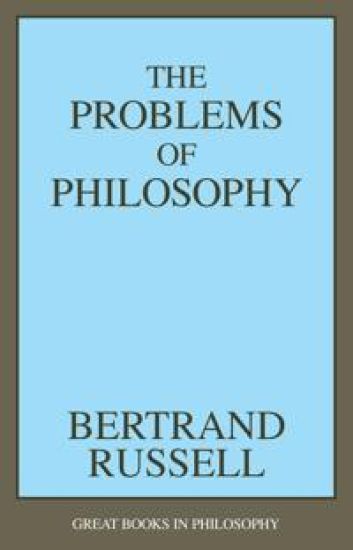
Contents: I. Appearance and Reality II. The Existence of Matter III. The Nature of Matter IV. Idealism V. Knowledge by Acquaintance and Knowledge by Description VI. On Induction VII. On our Knowledge of General Principles VIII. How A Priori Knowledge is Possible IX. The World of Universals X. On Our Knowledge of Universals XI. On Intuitive Knowledge XII. Truth and Falsehood XIII. Knowledge, Error, and Probable Opinion XIV. The Limits of Philosophical Knowledge XV. The Value of Philosophy Bibliographical Not Index
The Problems of Philosophy

The Problems of Philosophy

Bertrand Russell

PROMETHEUS BOOKS
1988
pokkari
One of his great works, and a must-read for any student of philosophy, The Problems of Philosophy was written in 1912 as an introduction to Russell's thought. As an empiricist, Russell starts at the beginning with this question: Is there any knowledge in the world that is so certain that no reasonable man could doubt it? This, according to Russell, is where the work of philosophy begins. He covers topics such as reality, the nature of matter, inductive reasoning, truth, and the limits of philosophical knowledge. As one of the greatest minds in Western philosophy, Russell's thoughts are profoundly informative and provocative and suitable for anyone wishing to expand his mind. British philosopher and mathematician BERTRAND ARTHUR WILLIAM RUSSELL (1872-1970) won the Nobel Prize for Literature in 1950. Among his many works are Why I Am Not a Christian (1927), Power: A New Social Analysis (1938), and My Philosophical Development (1959).
Bertrand Russell on Ethics, Sex, and Marriage

Bertrand Russell on Ethics, Sex, and Marriage

Bertrand Russell

Prometheus Books
1987
pokkari
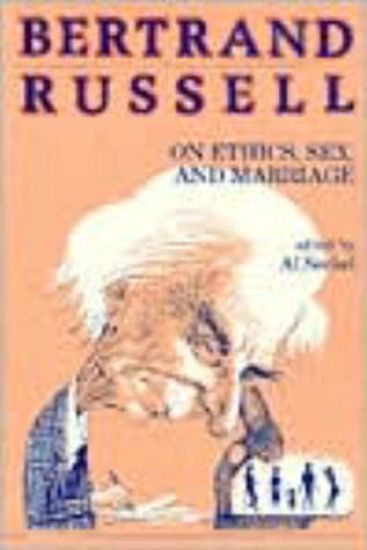
During his long life (1872-1970) Bertrand Russell was one of a handful of social thinkers, let alone internationally recognized philosophers, whose views on contemporary issues won for him a devoted and supportive audience on the one hand and a host of vituperative critics on the other. Russell's revolutionary writings frequently placed him in the center of controversy with conservatives and all those who were unwilling to consider moral questions from a rational rather than an emotional stance. Al Seckel has compiled an exhaustive collection of Russell's very best and most thought-provoking essays on ethics, social morality, happiness, sex, adultery, marriage, and divorce. Often hidden in obscure journals, pamphlets, out-of-print periodicals, and hard-to-find books, the works assembled here comprise a comprehensive volume that is augmented by valuable section introductions and editor's comments. This volume also includes "Morality and Instinct," which is published here for the first time.
Bertrand Russell on God and Religion

Bertrand Russell on God and Religion

Bertrand Russell

Prometheus Books
1986
pokkari
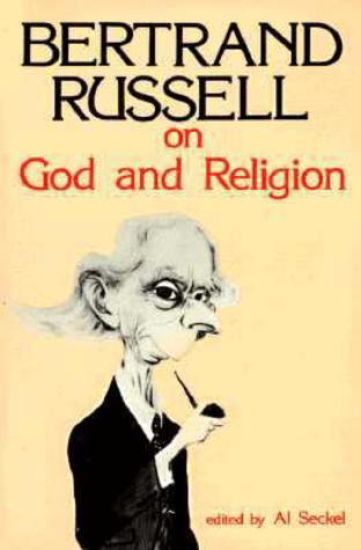
"I think all the great religions of the world - Buddhism, Hinduism, Christianity, Islam, and Communism - both untrue and harmful. It is evident as a matter of logic that, since they disagree, not more than one of them can be true." Bertrand Russell wrote these words in his famous essay, "Why I Am Not A Christian." In Bertrand Russell on God and Religion, Al Seckel presents in one volume the severe scrutiny Russell brought to bear on organized religion in his best essays. Bertrand Russell on God and Religion is an exhaustive compilation of Russell's best essays on religion, freethought, and rationalism. Al Seckel has rescued many of the writings from obscure pamphlets, chapters buried in books, and from out-of-print periodicals. From the outset of his career, Russell struggled to uproot and expose the remnants of Puritanism's emphasis upon guilt, sin, and moral condemnation. In "Why I Am Not A Christian," he wrote, "Religion is based . . . primarily and mainly upon fear . . . fear of the mysterious, fear of defeat, fear of death. Fear is the parent of cruelty, and therefore, it is no wonder if cruelty and religion have gone hand in hand." It is in this vein that Russell approached religion. The essays in this book are representative of the full range of his thinking on the subject. Some of the essays included are, "My Religious Reminiscences," "A Debate On The Existence of God," "What Is An Agnostic?" and "Are the World's Troubles Due to Decay in Faith?" Bertrand Russell was the recipient of countless awards for excellence during his long lifetime (1872-1970), including the Nobel Prize for literature, which he won in 1950. The range of his critical inquiry is without parallel in contemporary Western culture.

Marriage and Morals

Marriage and Morals

Bertrand Russell

Routledge
1985
nidottu
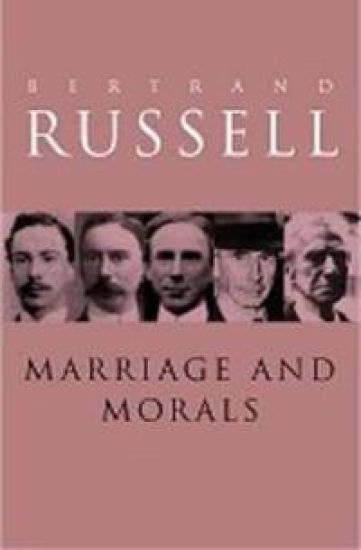
First published in 1985. Marriage and Morals won Bertrand Russell the Nobel Prize for Literature in 1950. With his customary wit and clarity, Russell explores the changing role of marriage, the codes of sexual ethics and the question of population. By what codes should we live our sexual lives? Every aspect, from the origin of marriage to the values of a healthy sex life, from the influence of religion, psychoanalysis and taboos to the possibilities of eugenics, receives the incisive scrutiny of Russell’s intellect. Here is the Passionate Sceptic at his most vigorous.
On Education

On Education

Bertrand Russell

Routledge
1985
nidottu
First published in 1985. Bertrand Russell's observations on education ace world famous. He discusses the different stages of education emphasizing the importance of education at a very young age. The education of character begins at home with wise parents training their children to be affectionate and fearless. Among the most important themes covered is education in knowledge in which a balance must be sought between interest and accuracy, and between utility and disinterestedness. Russell argues that if the basis of all education is knowledge wielded by love then society can be transformed.
Authority and the Individual

Authority and the Individual

Bertrand Russell

Routledge
1985
nidottu
First published in 1985. In the first of the BBC's famous Reith Lectures, Russell tackles what is still one of the most hotly debated issues of the twentieth century: the conflict between law, order and authority and the rights of each individual man and woman.
Education and the Social Order

Education and the Social Order

Bertrand Russell

Routledge
1980
nidottu
Despite the disastrous failure of his one practical attempt to create a perfect school, Russell constantly strove to invent a system of education free from repression. Here Russell dissects the motives behind much educational theory and practice - and attacks the influence of chauvanism, snobbery and money. Energetically discussed and debated are discipline, natural ability, competition, class distinction, bureaucracy, finance, religion, sex education, state versus private schools, education in Russia, indoctrination, the home environment and many other topics. Described by reviewers as 'brilliant', 'provocative', 'sane', 'stimulating', 'practical', and 'original', this book contains the essence of Russell's thought on education and society.
SCIENCE ET RELIGION

SCIENCE ET RELIGION

BERTRAND RUSSELL

Francais / ranskankieliset
1971
Pehmeäkantinen
In this timely work, Russell, philosopher, agnostic, mathematician, and renowned peace advocate, offers a brief yet insightful study of the conflicts between science and traditional religion during the last four centuries. Examining accounts in which scientific advances clashed with Christian doctrine or biblical interpretations of the day, from Galileo and the Copernican Revolution, to the medical breakthroughs of anesthesia and inoculation, Russell points to the constant upheaval and reevaluation of our systems of belief throughout history. In turn, he identifies where similar debates between modern science and the Church still exist today. This classic is sure to interest all readers of philosophy and religion, as well as those interested in Russell’s thought and writings.