

Kirjailija
Bill Jordan
Kirjat ja teokset yhdessä paikassa: 57 kirjaa, julkaisuja vuosilta 1991–2026, suosituimpiin kuuluu Elementary and Intermediate Algebra. Vertaile teosten hintoja ja tarkista saatavuus suomalaisista kirjakaupoista.
57 kirjaa
Kirjojen julkaisuvuodet: 1991–2026.

This book addresses the disintegration of collective units of all kinds, under the twin pressures of economic globalisation and technological automation. At the level of super-states, the constituent nations of the European Union and the former Soviet Union, and of the United Kingdom, have demonstrated this dynamic; and their constituent groups, associations and communities have done so too. The author analyses the causes and consequences of these processes, at the global, national and local levels, the significance of increased mobility and migration, and the politics of resistance to some damaging effects. He recommends ways in which public policy can offset some of the latter, including radical changes in tax-benefits systems, already being trialled in several countries worldwide.

This book provides a detailed analysis of the economic and political implications of the introduction of Artificial Intelligence and Robotics into the service sector of economies that have so far relied on service jobs to sustain levels of employment. It examines how reliance on coercive measures for enforcing low-paid service work attempts to postpone this third Industrial Revolution, and analyses the struggles that must still take place if we are to achieve a future of freedom and social justice for all. While automation and globalisation have made human solidarities of traditional kinds more difficult to sustain, they have also made new kinds possible. Experiments in social policy, and especially the pilot projects with unconditional Universal Basic Incomes, offer a possible model for a new kind of society. The author argues that it is politics which will determine whether we can achieve these new human solidarities.

Tactical skill is vital. A player with 2000 level tactics and 1200 positional play will do much better than a player with 1200 level tactics and 2000 level positional play. This is book 1 in a series of 5 books. These contain puzzles designed to help you improve both looking ahead and recognizing tactical patterns. Books become progressively more challenging. Unlike other tactical books, you need to solve puzzles move by move. There will be lots of surprises with checkmates, forks, pins, skewers, discoveries, trapped pieces, tied pieces, pawn promotion etc. The author has been a chess coach for many years.

This was originally a course I wrote some years ago for a correspondence college which no longer exists. I had developed a course on chess previously published by the college and thought it would be interesting to write a course of some of the teachings of Edward DeBono. Edward DeBono has written a large number of interesting and important books on thinking and has been described as a psychologist, philosopher, inventor and consultant. I have read quite of few of his books over the years and would like to share some of what I have learned. Some of my own ideas are included. Some things are added just for fun. There are 10 lessons. Each has assignment questions which you may answer or not answer. Most assignment questions are open ended. No answers are given for these. There are answers to closed ended questions. There are also some puzzles which have answers in the book.

IntroductionIts important to get off to a good start in a Chess game. Both sides start in a weak position, most pieces cannot move and the Kings need to get castled. Bill Jordan, a master and senior national champion will show you how. Most opening books concentrate on showing concrete variations. One shortcoming of knowledge of a concrete variation is that a move might be valid in one position, but even if another position has only one small difference then the same move may be a terrible blunder. Another difficulty of memorization is the huge possible number of opening positions. Even after only a few moves there are many millions of possibilities. This book offers an alternative approach. Understanding of ideas is more valuable than memorization of specific move sequences. Ideas can often be applied in different situations. It does not matter how much opening theory you know, you will always get into opening positions you have never reached before. The ability to improvise is invaluable. There is an article titled 'My First Chess Tournament' on the Melbourne Chess Club website by a committee member, Simon Dale. His son Ari is now an IM (International Master). Here is part of his article. I was most nervous about losing in 10 moves, so I asked Bill Jordan, a coach at Melbourne Chess Club, to 'show me chess openings'. I am well known at the club because of my children and I am a volunteer committee member, so Bill was very happy to help. His one hour accelerated opening course was about opening principles, he did not teach me a single opening, but rather gave me confidence to just play with general ideas. This was brilliant because I did not have to learn anything and had the bonus of taking the experienced players out of theory pretty quickly. In my opinion this was a very solid approach for the beginner. This book is inspired by that lesson. Opening PrinciplesThe book examines standard opening principles and explores their strengths and weaknesses. Opening MovesThis book examines likely moves in the opening, including the 20 possible moves in the initial position. It looks at the strong and weak points of each move. This is he bulk of the book. There are numerous example positions from real openings. This book has many diagrams. You do not need a chess set and board to read this book. It is designed to be read several times. Each time it is reread, you may grasp points that were previously obscure to you. Enjoy See my author's page for information about my background and other books.

After the collapse of the Soviet Union, it was assumed that liberal democracies would flourish worldwide. Instead, today authoritarian leaders are gaining power – from Trump’s US and Bolsonaro's Brazil to Orban's Hungary – while Russia and China have turned back towards their old, autocratic traditions. This book examines the origins and implications of this shift, and focusses especially on the longstanding coercion of poor people. As industrial employment, and now also many service jobs, are being replaced through technological innovations, state-subsidised, low-paid, insecure work is being enforced through regimes of benefits cuts and sanctions. Authoritarians are exploiting the divisions in the working class that this creates to stoke resentment against immigrants and poor people. The author identifies new social movements and policies (notably the Universal Basic Income) which could counter these dangers.
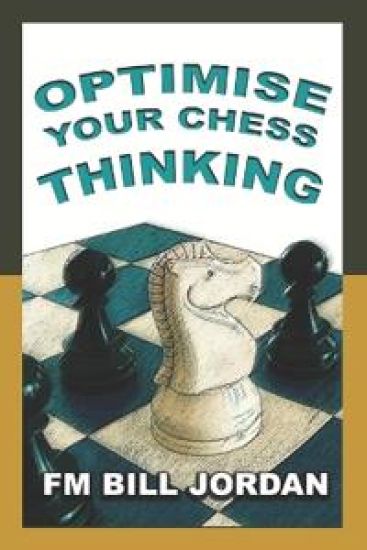
Optimise your Chess ThinkingOptimise means to make better. In practice even just making something better will be very useful. We optimise our computers. We defragment fragmented files and delete unused ones. We make computers faster and more efficient. Why not optimise our own thinking? We want to think positive thoughts that serve us, not negative thoughts that are destructive to us. Chess is a game of thinking. The more optimal our chess thinking is, the better we will play, At the very least, we will play the same moves, but more quickly. Moving quicker has certain practical advantages. FIDE master and national Correspondence Champion Bill Jordan shows you how to optimise your chess thinking. Chapters are: IntroductionWhat is Chess Skill? Optimise Your Chess VisionOptimise Your Static AnalysisOptimise Your CalculationOptimise Your EvaluationOptimise Your Positional PlayOptimise Your Move CheckingOptimise Thinking on Your Opponent's TimeOptimise Your OpeningsOptimise Your EndgamesOptimise Your ConcentrationOptimise Your Practical ChancesOptimise Your Study TimeThe book uses standard chess notation, which is short Algebraic notation. It is desirable to know this. See my authors page for information about my background and other books.

Originally published in 1981, Automatic Poverty provides a much-needed alternative to the Radical Right’s analysis. The book argues that Britain’s economic decline is symptomatic of an advanced stage of industrialisation in which productive processes are increasingly mechanised, but output remains static. Under these circumstances workers become redundant, the income of the working class diminishes, and dependence on the state increases. The ‘Ricardo phenomenon’ has become long-term feature of the British economy, and the author shows that neither Keynesian nor monetarist policies can remedy its consequences. It reflects a critical stage in the development of capitalism.

Originally published in 1973, Paupers looks at poverty through the lens of class and the Welfare State. The book examines those living in poverty, and the direct effects poverty has. The book follows the basis that the economic factors which gave rise to poverty, have little to do with the Welfare State, and that fragmentary changes, can do little to change them. The book’s core argument examines the political and social significance of poverty, and look at the underlying causes and effects of the drift towards a more unequal and unjust society. The book also analyses the factors which bring economically disadvantaged people together, and what happens when they join for collective action.

Originally published in 1976, Freedom and the Welfare State, critiques the Welfare State in Britain and analyses the relationship between freedom and welfare. The book considers philosophical, literary and political expressions of the ideals of liberty, and relates them to present-day issues in social policy and the social services. It tackles the major questions emerging in the current welfare debate such as, does state assistance destroy individual initiative and independence and, are welfare institutions agencies of social control which reinforce the dominant economic order?

When Mat lost his soul mate, Ashley, to cancer, he never thought he would find true love again. While attending a support group for tragic losses, Mat befriends Samantha who takes interest in the captivating stories he tells about his life with Ashley and their love for each other. Over time, Samantha is drawn to Mat, but Mat struggles to decide whether love has a place in his life after Ashley. Will he give love the second chance Samantha needs him to?

Elementary and Intermediate Algebra, Books a la Carte Edition, Plus Mylab Math -- Access Card Package
Tom Carson; Bill Jordan
PEARSON
2014
sidottu
This edition features the same content as the traditional text in a convenient, three-hole-punched, loose-leaf version. Books a la Carte also offer a great value--this format costs significantly less than a new textbook. Before you purchase, check with your instructor or review your course syllabus to ensure that you select the correct ISBN. Several versions of Pearson's MyLab & Mastering products exist for each title, including customized versions for individual schools, and registrations are not transferable. In addition, you may need a CourseID, provided by your instructor, to register for and use Pearson's MyLab & Mastering products. The Carson Algebra Series guides students to success by presenting the why behind understanding algebra, and includes the complete Carson Math Study System with a Learning Styles Inventory to address individual learning styles. The Carson Math Study System adapts to the way each student learns, and targeted learning strategies are presented throughout the program. The authors speak to students in everyday language and walk them through the concepts, explaining not only how to do the math, but also where the concepts come from and why they work to foster conceptual understanding.

Elementary Algebra, Books a la Carte Edition, Plus Mylab Math -- Access Card Package
Tom Carson; Bill Jordan
PEARSON
2014
sidottu
This edition features the same content as the traditional text in a convenient, three-hole-punched, loose-leaf version. Books a la Carte also offer a great value--this format costs significantly less than a new textbook. Before you purchase, check with your instructor or review your course syllabus to ensure that you select the correct ISBN. Several versions of Pearson's MyLab & Mastering products exist for each title, including customized versions for individual schools, and registrations are not transferable. In addition, you may need a CourseID, provided by your instructor, to register for and use Pearson's MyLab & Mastering products. The Carson Algebra Series guides students to success by presenting the why behind understanding algebra, and includes the complete Carson Math Study System with a Learning Styles Inventory to address individual learning styles. The Carson Math Study System adapts to the way each student learns, and targeted learning strategies are presented throughout the program. The authors speak to students in everyday language and walk them through the concepts, explaining not only how to do the math, but also where the concepts come from and why they work to foster conceptual understanding.
Social Work and Social Policy under Austerity
Bill Jordan; Mark Drakeford
Red Globe Press
2012
nidottu
What has the contemporary financial context meant for social policy, social work and the relationship between them? Examining the role of political, economic and societal forces, this lively book uses a full range of supportive features to encourage reflection on the impact of austerity on different social groups, social work and social care.

Integrated Arithmetic and Basic Algebra, Fifth Edition, integrates arithmetic and algebra to allow students to see the big picture of math. Rather than separating these two subjects, this text helps students recognize algebra as a natural extension of arithmetic. As a result, students see how concepts are interrelated and are better prepared for future courses.

In the wake of the economic crash, public policy is in search of a new moral compass. This book explains why the Third Way's combination of market-friendly and abstract, value-led principles has failed, and shows what is needed for an adequate replacement as a political and moral project. It criticises the economic analysis on which the Third Way approach to policy was founded and suggests an alternative to its legalistic and managerial basis for the regulation of social relations.

In the wake of the economic crash, public policy is in search of a new moral compass. This book explains why the Third Way's combination of market-friendly and abstract, value-led principles has failed, and shows what is needed for an adequate replacement as a political and moral project. It criticises the economic analysis on which the Third Way approach to policy was founded and suggests an alternative to its legalistic and managerial basis for the regulation of social relations.

This book argues that the financial crash of 2008-9 has exposed the disastrous consequences of applying economic theory to the collective life of societies. In seeking to manage social relationships through incentives for individual gain, market-like menus of choices and business-style sets of interlocking contracts, the model adopted by the governments of the UK and USA has subverted the basis for social policy in mutuality and membership. This has been demonstrated by growing inequalities, by failures and scandals in the social services, by the flat-lining of measured well-being (even during the boom years), by increases in a wide range of social problems, and by public disillusion over the effectiveness of policy programmes. In the post-crash world, the political culture needs to enable the expression of collective action for the benefits of interdependence, and to overcome the threats of ecological catastrophe and divisive ideology. Only in this way can social policy be part of an inclusive global movement to restore faith in a politics of social justice. Bill Jordan's up-to-date, passionate and engaging argument forges convincing links between a wide range of the troubling phenomena in the public life of our times.

This book argues that the financial crash of 2008-9 has exposed the disastrous consequences of applying economic theory to the collective life of societies. In seeking to manage social relationships through incentives for individual gain, market-like menus of choices and business-style sets of interlocking contracts, the model adopted by the governments of the UK and USA has subverted the basis for social policy in mutuality and membership. This has been demonstrated by growing inequalities, by failures and scandals in the social services, by the flat-lining of measured well-being (even during the boom years), by increases in a wide range of social problems, and by public disillusion over the effectiveness of policy programmes. In the post-crash world, the political culture needs to enable the expression of collective action for the benefits of interdependence, and to overcome the threats of ecological catastrophe and divisive ideology. Only in this way can social policy be part of an inclusive global movement to restore faith in a politics of social justice. Bill Jordan's up-to-date, passionate and engaging argument forges convincing links between a wide range of the troubling phenomena in the public life of our times.