Kirjojen hintavertailu – 12 903 725 kirjaa ja 27 kauppaa

Kirjailija

Bill Jordan

Kirjat ja teokset yhdessä paikassa: 57 kirjaa, julkaisuja vuosilta 1991–2026, suosituimpiin kuuluu Elementary and Intermediate Algebra. Vertaile teosten hintoja ja tarkista saatavuus suomalaisista kirjakaupoista.

57 kirjaa

Kirjojen julkaisuvuodet: 1991–2026.

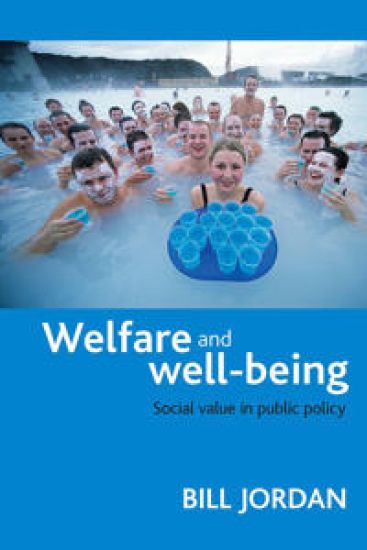
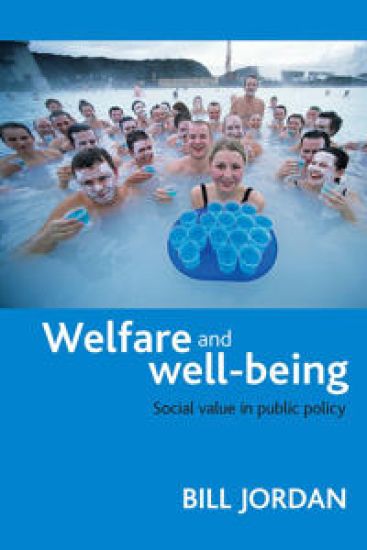
Welfare and well-being

Welfare and well-being

Bill Jordan

Policy Press
2008
nidottu
Research on well-being reveals the significance of personal relationships, trust and participation to sustain quality of life, yet it is the economic model that remains the dominant basis for political and social institutions and policy. In this original book, Bill Jordan presents a new analysis of well-being in terms of social value, and outlines how it could be incorporated into public policy decisions. He argues that the grandiose attempt to maximise welfare and regulate social relations through contract, in line with the economic theory of information and incentives, is counterproductive for well-being. Instead, both the quality of personal experience and the restraints necessary for a convivial collective life would be better served by a focus on cultures and institutions. This book will be an essential text for academics and students in social theory, social welfare, public policy and governance. Bill Jordan is Professor of Social Policy at Plymouth and Huddersfield Universities. He has held visiting chairs in Germany, the Netherlands, Denmark, Slovakia and Hungary. He worked for 20 years in the UK social services, and is the author of 25 books on social policy, social theory, politics and social work.
Welfare and well-being

Welfare and well-being

Bill Jordan

POLICY PRESS
2008
sidottu
Research on well-being reveals the significance of personal relationships, trust and participation to sustain quality of life, yet it is the economic model that remains the dominant basis for political and social institutions and policy. In this original book, Bill Jordan presents a new analysis of well-being in terms of social value, and outlines how it could be incorporated into public policy decisions. He argues that the grandiose attempt to maximise welfare and regulate social relations through contract, in line with the economic theory of information and incentives, is counterproductive for well-being. Instead, both the quality of personal experience and the restraints necessary for a convivial collective life would be better served by a focus on cultures and institutions. This book will be an essential text for academics and students in social theory, social welfare, public policy and governance. Bill Jordan is Professor of Social Policy at Plymouth and Huddersfield Universities. He has held visiting chairs in Germany, the Netherlands, Denmark, Slovakia and Hungary. He worked for 20 years in the UK social services, and is the author of 25 books on social policy, social theory, politics and social work.
Social Policy for the Twenty-First Century
In the new century, governments face three challenges for their social policies. Their efforts to improve their citizens’ well-being must be consistent with the development of the world economy, and should if possible enhance the situation of the poorest populations. Their systems for redistribution and public services must be rooted in a convincing version of their own domestic order. And they should be sustainable over time, doing justice to the needs of future generations. This book shows how social policy can address these big issues, and how they relate to each other in an integrated world economy. Drawing on perspectives and analyses from political and social theory, economics, psychology, migration studies and international relations, Bill Jordan gives a new account of the links between global human development and individual well-being. He analyses the purposes and strategies of international organizations, business corporations and ordinary individuals, using case examples from all over the world. Essential reading for anyone interested in the future of social policy.
Social Policy for the Twenty-First Century
In the new century, governments face three challenges for their social policies. Their efforts to improve their citizens’ well-being must be consistent with the development of the world economy, and should if possible enhance the situation of the poorest populations. Their systems for redistribution and public services must be rooted in a convincing version of their own domestic order. And they should be sustainable over time, doing justice to the needs of future generations. This book shows how social policy can address these big issues, and how they relate to each other in an integrated world economy. Drawing on perspectives and analyses from political and social theory, economics, psychology, migration studies and international relations, Bill Jordan gives a new account of the links between global human development and individual well-being. He analyses the purposes and strategies of international organizations, business corporations and ordinary individuals, using case examples from all over the world. Essential reading for anyone interested in the future of social policy.
Sex, Money and Power

Sex, Money and Power

Bill Jordan

Polity Press
2004
sidottu
Intimacy, choice, movement – these are the elements which make up the desirable lifestyle in the mainstream of affluent societies. They also undermine traditional forms of power and control. And they create a web of connections between individuals all over the world, which promises to be more flexible and less restrictive than any which have existed before. Bill Jordan sets out to explain the particular attractions of this vision of freedom, equality and harmony. He traces its appeal to a formula for human institutions which emerged with the birth of the social sciences. Sex, money and political authority glued together these changing accounts of the collective world. We are still seduced by the idea that personal autonomy and the moral sovereignty of individuals can make up a well-functioning social order. But, he argues, our present global institutions shut out the majority of the world’s population, who are left to rely on quite different bonds, of blood, soil and faith. This book will be essential reading for students and scholars of sociology and social policy, as well as of the humanities in general. It will also be compelling reading for anyone who is interested in human relationships and modern society.
Sex, Money and Power

Sex, Money and Power

Bill Jordan

Polity Press
2004
nidottu
Intimacy, choice, movement – these are the elements which make up the desirable lifestyle in the mainstream of affluent societies. They also undermine traditional forms of power and control. And they create a web of connections between individuals all over the world, which promises to be more flexible and less restrictive than any which have existed before. Bill Jordan sets out to explain the particular attractions of this vision of freedom, equality and harmony. He traces its appeal to a formula for human institutions which emerged with the birth of the social sciences. Sex, money and political authority glued together these changing accounts of the collective world. We are still seduced by the idea that personal autonomy and the moral sovereignty of individuals can make up a well-functioning social order. But, he argues, our present global institutions shut out the majority of the world’s population, who are left to rely on quite different bonds, of blood, soil and faith. This book will be essential reading for students and scholars of sociology and social policy, as well as of the humanities in general. It will also be compelling reading for anyone who is interested in human relationships and modern society.
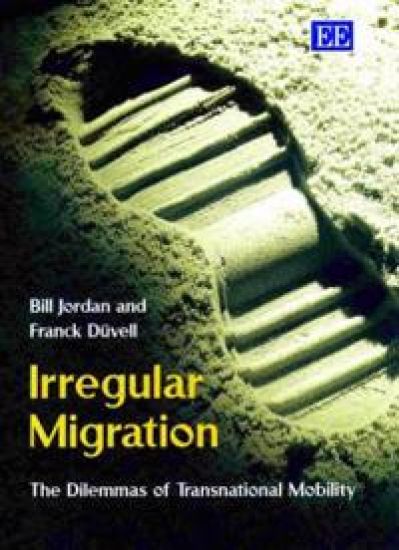
Irregular Migration

Irregular Migration

Bill Jordan; Franck Düvell

Edward Elgar Publishing Ltd
2003
nidottu
Irregular Migration is an extremely timely and topical book, analysing the fundamental tensions at the core of present attempts to manage the movement of population in today's world. Recent events around the globe have prompted a reappraisal of the emerging consensus on migration control. Business demands free movement while nations fear unregulated population flows. The replacement of immigration control with migration management is the aim of First World governments as irregular migration challenges states' attempts to find a balance between recruitment of labour, humanitarian protection and national security. This book provides a theoretical framework for the analysis of mobility and border crossings in an age of globalisation. It draws upon the authors' pioneering research on people working in the UK without proper immigration status, the organisations that support immigrants, and the responses of control agencies and public services. Losers in the global economy, who vote with their feet as economic migrants, are making a claim to justice as well as trying to improve their standards of living. The book concludes with an evaluation of the justification for border controls, and of the prospects for migration regimes under conditions of growing inequality. This fascinating book will be warmly welcomed by academics and researchers in economics, politics, migration studies, social policy and economic geography. NGOs and policymakers concerned with immigration, asylum and public service provision will also find this invaluable reading.
Migration

Migration

Bill Jordan; Franck Duvell

Polity Press
2003
nidottu
The freedom to choose where to live and work is a fundamental right in liberal societies. The moral equality of persons is the basic principle of democratic politics. But liberal democracy has no coherent theory of boundaries, or how members should be selected for political communities. The global economy requires mobility across borders, but liberal democracy cannot reconcile the demands of footloose and rivalrous economic agents with the human needs of sedentary and vulnerable populations. These are urgent issues for the new century, as the upsurge of nationalist, authoritarian and racist movements threatens the liberal democratic order. Mass migrations in search of political freedom and economic opportunity expose incoherence in states’ policies, and in theories of equality and justice. Whilst globalization allows new opportunities for mobility and membership in a chosen community, claims for income support or humanitarian protection are viewed as signs of moral defectiveness. In this book, Bill Jordan and Franck Düvell offer an alternative to market-driven regimes for migration management, which select those able to make economic contributions, whilst confining vulnerable outsiders to impoverished and excluded communities of fate.
Migration

Migration

Bill Jordan; Franck Duvell

Polity Press
2003
sidottu
The freedom to choose where to live and work is a fundamental right in liberal societies. The moral equality of persons is the basic principle of democratic politics. But liberal democracy has no coherent theory of boundaries, or how members should be selected for political communities. The global economy requires mobility across borders, but liberal democracy cannot reconcile the demands of footloose and rivalrous economic agents with the human needs of sedentary and vulnerable populations. These are urgent issues for the new century, as the upsurge of nationalist, authoritarian and racist movements threatens the liberal democratic order. Mass migrations in search of political freedom and economic opportunity expose incoherence in states’ policies, and in theories of equality and justice. Whilst globalization allows new opportunities for mobility and membership in a chosen community, claims for income support or humanitarian protection are viewed as signs of moral defectiveness. In this book, Bill Jordan and Franck Düvell offer an alternative to market-driven regimes for migration management, which select those able to make economic contributions, whilst confining vulnerable outsiders to impoverished and excluded communities of fate.
Irregular Migration

Irregular Migration

Bill Jordan; Franck Düvell

Edward Elgar Publishing Ltd
2002
sidottu
Irregular Migration is an extremely timely and topical book, analysing the fundamental tensions at the core of present attempts to manage the movement of population in today's world. Recent events around the globe have prompted a reappraisal of the emerging consensus on migration control. Business demands free movement while nations fear unregulated population flows. The replacement of immigration control with migration management is the aim of First World governments as irregular migration challenges states' attempts to find a balance between recruitment of labour, humanitarian protection and national security. This book provides a theoretical framework for the analysis of mobility and border crossings in an age of globalisation. It draws upon the authors' pioneering research on people working in the UK without proper immigration status, the organisations that support immigrants, and the responses of control agencies and public services. Losers in the global economy, who vote with their feet as economic migrants, are making a claim to justice as well as trying to improve their standards of living. The book concludes with an evaluation of the justification for border controls, and of the prospects for migration regimes under conditions of growing inequality. This fascinating book will be warmly welcomed by academics and researchers in economics, politics, migration studies, social policy and economic geography. NGOs and policymakers concerned with immigration, asylum and public service provision will also find this invaluable reading.
Social Work and the Third Way

Social Work and the Third Way

Bill Jordan

SAGE Publications Inc
2000
nidottu
`This lively book critiques New Labour assumptions and implementation of policies related to citizenship, communities and welfare reform and the implications of current developments for social work. Focusing explicitly on the UK, the book nevertheless draws on examples and comparisions from other countries (including notably Australia and the US, but also countries in the EU and Central and Eastern Europe), and some of the concerns and arguments will be appreciated by readers elsewhere' - International Social Work `This book is a well-written contribution to both the British Third Way debate and the welfare state literature.... The book will appeal to upper-level undergraduates as well as scholars of British politics and the welfare state' - Political Studies `Jordan begins by establishing New Labour's suspicion of local government framing its policy on welfare. Fundamentally, there exists a need for social workers to educate themselves as to the nature of this social experiment which New Labour has embarked upon. It challenges social workers to be aware…This is an interesting and at times challenging book, reiterating the history and roots of current ideology within government... The work is grounded in a contemporary context of social services and social work practice, challenging the withdrawal of social work behind a barrier of `managerialism, budget control, form filling…into office based assessment and rationing'… Finally, it offers a satisfying critique to the dominant `hegemonic' of `evidence-based practice', arguing for research at the level of means rather than the technical… Jordan similarly argues in his conclusion that all of the government white papers, guidelines, etc. indicate a lack of clarity of purpose and method social work should retain its belief in 'a human and creative activity… which engages with people's emotions… as well as their rights and obligations' - British Journal of Social Work The New Labour government in the UK is committed to a programme of reform of the welfare state that will pull away safety nets and replace them by trampolines, to bounce citizens back into active participation. Its regime of 'tough love' will make more demands on those claiming benefits and services, as well as clamping down on dependencey, fraud and crime. This will be done by changing the culture of welfare agencies, towards promoting achievement and independence, as well as meeting 'genuine need'. In Social Work and the Third Way, Bill Jordan provides an accessible and lively analysis of the tensions between 'toughness' and 'love' in the Third Way's political philosophy, and the problems of implementing New Labour's programme. He looks at the government's reliance on face-to-face methods for activating citizens and changing their behaviour in many of its initiatives. On the one hand, New Labour places a surprising amount of faith in the ability of counsellors and advisers to bring about the changes it requires; yet it is highly suspicious of the public sector in general, and local authorities in particular, as part of the 'forces of conservatism' in the UK. Hence it spawns new agencies and projects, often with a strong enforcement ethos, and regulates the whole implementation process through strict top-down surveillance. In all this, professional social work, and local authority social services, are relegated to a tightly circumscribed role in social care. The author argues for a new, more generous and expansive approach to practice, which can do justice to the challenges of change under New Labour's regime and in doing so Social Work and the Third Way provides an important and topical contribution to the debate on the future of the Welfare State and will be essential reading for students and researchers in social work, social policy and politics.

Social Work and the Third Way

Social Work and the Third Way

Bill Jordan

SAGE Publications Inc
2000
sidottu
`This lively book critiques New Labour assumptions and implementation of policies related to citizenship, communities and welfare reform and the implications of current developments for social work. Focusing explicitly on the UK, the book nevertheless draws on examples and comparisions from other countries (including notably Australia and the US, but also countries in the EU and Central and Eastern Europe), and some of the concerns and arguments will be appreciated by readers elsewhere' - International Social Work `This book is a well-written contribution to both the British Third Way debate and the welfare state literature.... The book will appeal to upper-level undergraduates as well as scholars of British politics and the welfare state' - Political Studies `Jordan begins by establishing New Labour's suspicion of local government framing its policy on welfare. Fundamentally, there exists a need for social workers to educate themselves as to the nature of this social experiment which New Labour has embarked upon. It challenges social workers to be aware…This is an interesting and at times challenging book, reiterating the history and roots of current ideology within government... The work is grounded in a contemporary context of social services and social work practice, challenging the withdrawal of social work behind a barrier of `managerialism, budget control, form filling…into office based assessment and rationing'… Finally, it offers a satisfying critique to the dominant `hegemonic' of `evidence-based practice', arguing for research at the level of means rather than the technical… Jordan similarly argues in his conclusion that all of the government white papers, guidelines, etc. indicate a lack of clarity of purpose and method social work should retain its belief in 'a human and creative activity… which engages with people's emotions… as well as their rights and obligations' - British Journal of Social Work The New Labour government in the UK is committed to a programme of reform of the welfare state that will pull away safety nets and replace them by trampolines, to bounce citizens back into active participation. Its regime of 'tough love' will make more demands on those claiming benefits and services, as well as clamping down on dependencey, fraud and crime. This will be done by changing the culture of welfare agencies, towards promoting achievement and independence, as well as meeting 'genuine need'. In Social Work and the Third Way, Bill Jordan provides an accessible and lively analysis of the tensions between 'toughness' and 'love' in the Third Way's political philosophy, and the problems of implementing New Labour's programme. He looks at the government's reliance on face-to-face methods for activating citizens and changing their behaviour in many of its initiatives. On the one hand, New Labour places a surprising amount of faith in the ability of counsellors and advisers to bring about the changes it requires; yet it is highly suspicious of the public sector in general, and local authorities in particular, as part of the 'forces of conservatism' in the UK. Hence it spawns new agencies and projects, often with a strong enforcement ethos, and regulates the whole implementation process through strict top-down surveillance. In all this, professional social work, and local authority social services, are relegated to a tightly circumscribed role in social care. The author argues for a new, more generous and expansive approach to practice, which can do justice to the challenges of change under New Labour's regime and in doing so Social Work and the Third Way provides an important and topical contribution to the debate on the future of the Welfare State and will be essential reading for students and researchers in social work, social policy and politics.
The New Politics of Welfare

The New Politics of Welfare

Bill Jordan

SAGE Publications Inc
1998
sidottu
This critical and highly topical introduction to the current debates and politics surrounding welfare reform in the United Kingdom and the United States explains the origins and main tenets of the Blair-Clinton orthodoxy. Central to the book is an examination of this orthodoxy's appeal to the concept of social justice. Bill Jordan demonstrates how values derived from the family and voluntary associations are in danger of running counter to the more fundamental principles of liberal democracy and the requirements of transnational economic exchange. He links the new politics of welfare to liberal and communitarian theories of citizenship and social justice, and assesses the broader prospects for European social policy in the struggle over economic and political integration. `For more than a decade, Bill Jordan has been one of our most thoughtful and independent thinkers on the future of welfare. Anyone who wants to know more about what is happening to global welfare and why and how it should be changed should read this book' - Chris Pierson, Department of Politics, University of Nottingham
The New Politics of Welfare

The New Politics of Welfare

Bill Jordan

SAGE Publications Inc
1998
nidottu
This critical and highly topical introduction to the current debates and politics surrounding welfare reform in the United Kingdom and the United States explains the origins and main tenets of the Blair-Clinton orthodoxy. Central to the book is an examination of this orthodoxy's appeal to the concept of social justice. Bill Jordan demonstrates how values derived from the family and voluntary associations are in danger of running counter to the more fundamental principles of liberal democracy and the requirements of transnational economic exchange. He links the new politics of welfare to liberal and communitarian theories of citizenship and social justice, and assesses the broader prospects for European social policy in the struggle over economic and political integration. `For more than a decade, Bill Jordan has been one of our most thoughtful and independent thinkers on the future of welfare. Anyone who wants to know more about what is happening to global welfare and why and how it should be changed should read this book' - Chris Pierson, Department of Politics, University of Nottingham
A Theory of Poverty and Social Exclusion
This study draws on public choice theory for its analysis of collective action of all kinds, from households and clubs to communities and politics, and shows how the strategies of individuals and groups affect collective outcomes. The book cites a wide range of examples from different countries.
Trapped in Poverty?

Trapped in Poverty?

James Davidson; Bill Jordan; Helen Kay; Marcus Redley

Routledge
1991
sidottu
How do people on low incomes make decisions about employment and benefit claims? Interview material and economic analysis combine with new theories of the relationship between moral and economic reasoning.