Kirjojen hintavertailu – 12 859 827 kirjaa ja 27 kauppaa

Kirjailija

Bill McKibben

Kirjat ja teokset yhdessä paikassa: 83 kirjaa, julkaisuja vuosilta 1996–2026, suosituimpiin kuuluu Aldo Leopold's Odyssey, Tenth Anniversary Edition. Vertaile teosten hintoja ja tarkista saatavuus suomalaisista kirjakaupoista.

83 kirjaa

Kirjojen julkaisuvuodet: 1996–2026.

The Right to Be Cold

The Right to Be Cold

Sheila Watt-Cloutier; Bill McKibben

University of Minnesota Press
2018
nidottu

Halvin toimitettuna 30,10 €

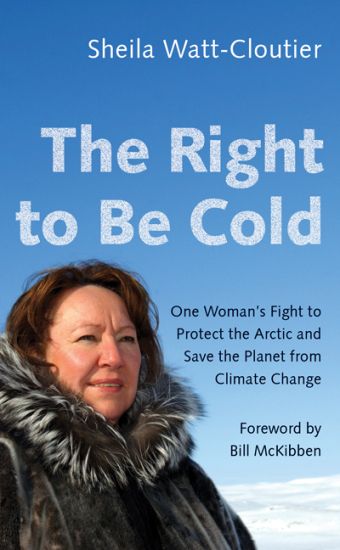
A “courageous and revelatory memoir” (Naomi Klein) chronicling the life of the leading Indigenous climate change, cultural, and human rights advocate For the first ten years of her life, Sheila Watt-Cloutier traveled only by dog team. Today there are more snow machines than dogs in her native Nunavik, a region that is part of the homeland of the Inuit in Canada. In Inuktitut, the language of Inuit, the elders say that the weather is Uggianaqtuq-behaving in strange and unexpected ways. The Right to Be Cold is Watt-Cloutier’s memoir of growing up in the Arctic reaches of Quebec during these unsettling times. It is the story of an Inuk woman finding her place in the world, only to find her native land giving way to the inexorable warming of the planet. She decides to take a stand against its destruction. The Right to Be Cold is the human story of life on the front lines of climate change, told by a woman who rose from humble beginnings to become one of the most influential Indigenous environmental, cultural, and human rights advocates in the world. Raised by a single mother and grandmother in the small community of Kuujjuaq, Quebec, Watt-Cloutier describes life in the traditional ice-based hunting culture of an Inuit community and reveals how Indigenous life, human rights, and the threat of climate change are inextricably linked. Colonialism intervened in this world and in her life in often violent ways, and she traces her path from Nunavik to Nova Scotia (where she was sent at the age of ten to live with a family that was not her own); to a residential school in Churchill, Manitoba; and back to her hometown to work as an interpreter and student counselor. The Right to Be Cold is at once the intimate coming-of-age story of a remarkable woman, a deeply informed look at the life and culture of an Indigenous community reeling from a colonial history and now threatened by climate change, and a stirring account of an activist’s powerful efforts to safeguard Inuit culture, the Arctic, and the planet.
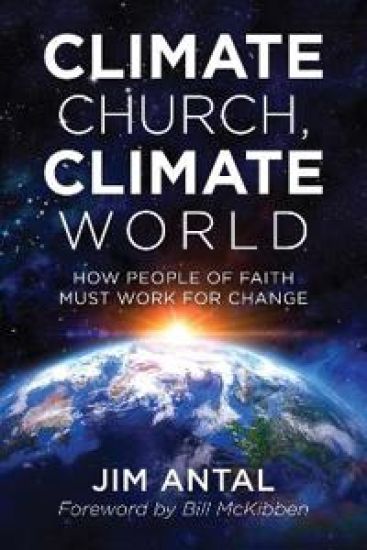
Climate Church, Climate World

Climate Church, Climate World

Jim Antal; Bill McKibben

Rowman Littlefield
2018
nidottu
Climate Church, Climate World argues that climate change is the greatest moral challenge humanity has ever faced. Hunger, refugees, poverty, inequality, deadly viruses, war—climate change multiplies all forms of global social injustice. Environmental leader Reverend Jim Antal presents a compelling case that it’s time for the church to meet this moral challenge, just as the church addressed previous moral challenges. Antal calls for the church to embrace a new vocation so that future generations might live in harmony with God’s creation. After describing how we have created the dangers our planet now faces, Antal urges the church to embrace a new vocation, one focused on collective salvation and an expanded understanding of the Golden Rule (Golden Rule 2.0). He suggests ways people of faith can reorient what they prize through new approaches to worship, preaching, witnessing and other spiritual practices that honor creation and cultivate hope.
Climate Church, Climate World

Climate Church, Climate World

Jim Antal; Bill McKibben

Rowman Littlefield
2018
sidottu
Climate Church, Climate World argues that climate change is the greatest moral challenge humanity has ever faced; it multiplies all forms of global social injustice: hunger, refugees, poverty, inequality, deadly viruses, war. Environmental leader Reverend Jim Antal presents a compelling case that it’s time for the church to meet this moral challenge, just as the church addressed previous moral challenges. He calls for the church to embrace a new vocation so that future generations might live in harmony with God’s creation. After describing how we have created the dangers our planet now faces, Antal urges the church to embrace a new vocation, one focused on collective salvation and an expanded understanding of the Golden Rule (Golden Rule 2.0). He suggests ways people of faith can reorient what they prize through new approaches to worship, preaching, witnessing, and other spiritual practices that honor creation and cultivate hope.
Great Hiking Trails of the World

Great Hiking Trails of the World

Karen Berger; Bill McKibben

Rizzoli International Publications
2017
sidottu
Celebrating the most important, popular, and diverse hiking trails in the world, this book invites readers to take a walking tour through the planet s natural wonders. Divided into six sections, the book groups trails by theme: pilgrimages, historic hikes, mountain hikes, wilderness trails, trails through diverse environments, and long-distance trails. From Mount Kenya to subarctic hikes in Scandinavia, and from exotic hikes in the Himalayas to more familiar trails in the United States and Canada, this book invites readers to explore the history, environment, and cultures of the world on foot. Each featured trail has its own section, with a map and photo gallery focusing on what makes it one of the most magnificent hiking trails anywhere in the world. Included are detailed descriptions and trail highlights. This book is perfect for anyone interested in conservation, outdoor recreation, or the myriad ways that walking through a landscape is an intimate exploration of its soul.
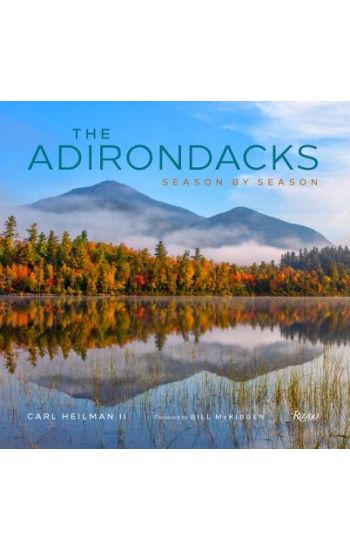
The Adirondacks

The Adirondacks

Bill McKibben

Rizzoli International Publications
2017
sidottu
Covering more ground than Yellowstone, Yosemite, and the Grand Canyon combined, the Adirondack Park is one of the great wilderness areas in this country. This volume presents an all-new selection of images, with a focus on how the seasons transform the landscape: the tree-covered mountains in autumnal glory, rivers hushed by winter snow, verdant meadows alive with spring, wildlife such as bears and moose, as well as historic resorts and villages. Each chapter covers a different corner of the park, from Lake Placid and the High Peaks to Saranac Lake, Lake George, and the Fulton Chain. To appreciate the wonders of the Adirondacks through the lens of one of the area s most accomplished photographers is like exploring them for the first time.
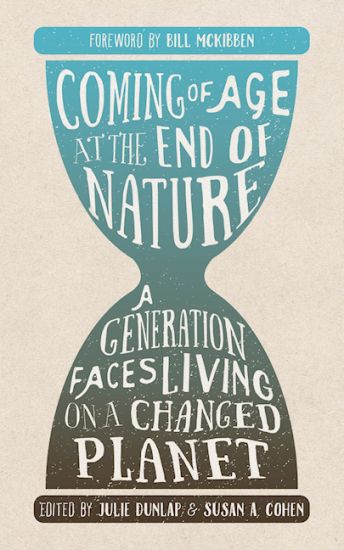
Coming of Age at the End of Nature

Coming of Age at the End of Nature

Bill McKibben

Trinity University Press,U.S.
2016
pokkari
Coming of Age at the End of Nature explores a new kind of environmental writing. This powerful anthology gathers the passionate voices of young writers who have grown up in an environmentally damaged and compromised world. Each contributor has come of age since Bill McKibben foretold the doom of humanity's ancient relationship with a pristine earth in his prescient 1988 warning of climate change, The End of Nature. What happens to individuals and societies when their most fundamental cultural, historical, and ecological bonds weaken--or snap? In Coming of Age at the End of Nature, insightful millennials express their anger and love, dreams and fears, and sources of resilience for living and thriving on our shifting planet. Twenty-two essays explore wide-ranging themes that are paramount to young generations but that resonate with everyone, including redefining materialism and environmental justice, assessing the risk and promise of technology, and celebrating place anywhere from a wild Atlantic island to the Arizona desert, to Baltimore and Bangkok. The contributors speak with authority on problems facing us all, whether railing against the errors of past generations, reveling in their own adaptability, or insisting on a collective responsibility to do better.
The Green Guide to Low-Impact Hiking and Camping

The Green Guide to Low-Impact Hiking and Camping

Guy Waterman; Laura Waterman; Bill McKibben

Countryman Press Inc.
2016
nidottu
Originally published as Backwoods Ethics in 1979, Laura and Guy Waterman's definitive guide to low-impact hiking and camping was a prophetic call to reevaluate the impact of outdoor recreation on the wilderness. Enthusiastically received by environmentalists and wilderness managers at the time, its warnings and advice are now more relevant than ever. With wisdom and gentle humor, Laura and Guy Waterman present a strong case for the importance of respecting the natural world while you're enjoying it. In his foreword to the new edition, world-famous environmentalist Bill McKibben puts the Watermans' advice into context for today's world. Day hikers, campers, and backpackers who follow the sensible techniques laid out in this book will help preserve the wilderness experience for generations to come.
Building a Healthy Economy from the Bottom Up

Building a Healthy Economy from the Bottom Up

Anthony Flaccavento; Bill McKibben

The University Press of Kentucky
2016
nidottu
The global economy has witnessed important changes in recent years. In the United States, enterprising communities have transitioned from tobacco farming to growing organic produce, from extractive fishing to vertical farming, from nonrenewable energy consumption to the implementation of solar cooperatives -- and have transformed from impoverished neighborhoods into green development zones. Yet these promising achievements remain a small part of the total economy and are largely ignored by policy makers, pundits, and economists. In Building a Healthy Economy from the Bottom Up: Harnessing Real World Experience for Transformative Change, Anthony Flaccavento introduces readers to the innovators who are creating thriving, locally based economies and provides a road map for others who are interested in doing the same. He demonstrates that, despite the success of local initiatives like farmers' markets and clean energy cooperatives, true and lasting change of this type stalls without the appropriate discussion and implementation of public policies that define their lasting impact. He shows how active citizens can spur essential changes, generate community capital, increase civic dialogue, and foster sustainability efforts. Flaccavento skillfully combines economic analysis and public policy recommendations with practical solutions. His call to collective action will appeal to scholars, entrepreneurs, policymakers, community activists, environmentalists, and all citizens passionate about the health of their communities.
America's Great National Forests, Wildernesses, and Grasslands

America's Great National Forests, Wildernesses, and Grasslands

Char Miller; Bill McKibben

Rizzoli International Publications
2016
sidottu
For more than a century, America's national forests have proved an environmental gift and cultural treasure, our spectacular backyard. Under the management of the U. S. Forest Service, this system of public lands encompasses 193 million acres of mountains, prairies, rivers, and canyons-much of it undiscovered, but accessible for hiking, kayaking, fishing, and winter sports. Officially published with the U. S. Forest Service, this book features the thirty most notable national forests- while also celebrating more than one hundred different national forests in forty-four states-from the White Mountains of New Hampshire to the Olympics of Washington. Unlike the national parks, Americans can use these lands for all manner of recreation, truly earning these tremendous resources the moniker of America's backyard. This book is a treasure for all readers who use and cherish these lands.
While Glaciers Slept

While Glaciers Slept

M Jackson; Bill McKibben

Green Writers Press
2015
sidottu
While Glaciers Slept weaves together the parallel stories of what happens when the climates of a family and a planet change. M Jackson, a noted scientist and National Geographic Expert, reveals how these events are deeply intertwined, and how the deterioration of her parents’ health was as devastating as the inexorable changing of Earth’s climate. Jackson poses a stark question: if losing one’s parents is so devastating, how can we survive the destruction of the planet that sustains us? Jackson draws both literal and metaphorical parallels between the degradation of the climate and her parents’ struggles with cancer. Nonetheless, Jackson shows that even in the darkest of times we cannot lose hope. Jackson guides us to solar, wind, and geothermal solutions, bringing us along on her expeditions to research climate change and to educate people about how to stop it. Scientists are continually looking for better ways to translate hard science into human language and that is precisely what this book does. While Glaciers Slept shows us that the story of one family can be the story of one planet, and that climate change has a human face. Climate change, she convinces us, is not just about science—it is also about the audacity of human courage and imagination.
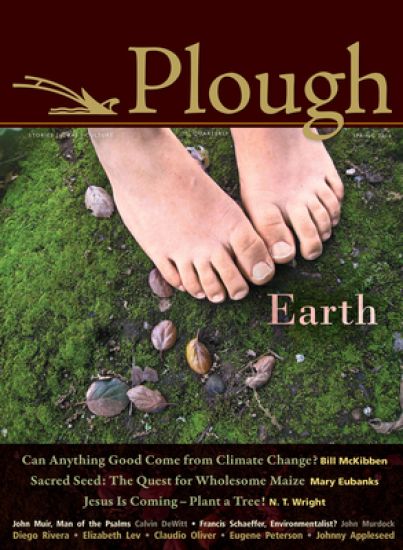
Plough Quarterly No. 4

Plough Quarterly No. 4

Bill McKibben; Eugene H. Peterson; N. T. Wright; Elizabeth Lev; Calvin DeWitt; Jane Tyson Clement; Wendell Berry; Barbara Kingsolver; John Muir; Flannery O'Connor; John Paul; Peter Mommsen

Plough Publishing House
2015
pokkari
This issue of Plough Quarterly explores our relationship with the natural world. Hear from leading scientists, farmers, writers, activists, theologians, and artists who have set their hearts and minds and hands to caring for the earth for generations to come. Bold, hope-filled, and down-to-earth, Plough Quarterly features thought-provoking articles, commentary, interviews, short fiction, book reviews, poetry and artwork to inspire everyday faith and action. Each issue brings together essential voices from many traditions to give you fresh insights on a core theme such as peacemaking, biblical justice, children and family, building community, man and woman, nature and the environment, nonviolence, or simple living. Starting from the conviction that the teachings and example of Jesus can transform and renew our world, it aims to apply them to all aspects of life, seeking common ground with all people of goodwill regardless of creed.
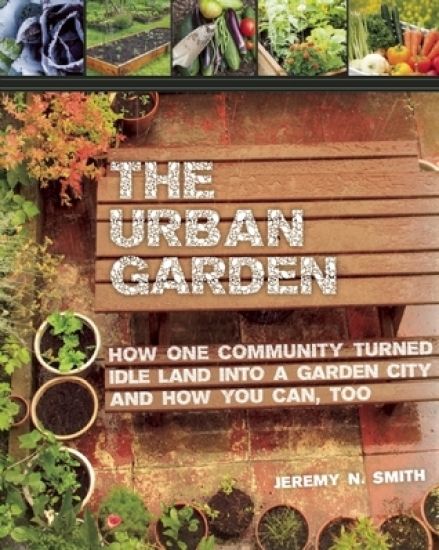
The Urban Garden

The Urban Garden

Jeremy N. Smith; Bill McKibben

Skyhorse Publishing
2014
pokkari
Fifteen people?plus a class of first graders?tell how local food, farms, and gardens changed their lives and their community . . . and how they can change yours, too. Urban Farming Handbook includes:? Fifteen first-person stories of personal and civic transformation from a range of individuals, including farmers and community garden members, a low-income senior and a troubled teen, a foodie, a food bank officer, and many more? Seven in-depth ? How It Works” sections on student farms, community gardens, community-supported agriculture (CSA), community education, farm work therapy, community outreach, and more? Detailed information on dozens of additional resources from relevant books and websites to government programs and national nonprofit organizations? Seventy full-color photographs showing a diverse local food community at home, work, and playRead Urban Farming Handbook to learn how people like you, with busy lives like yours, can and do enjoy the many benefits of local food without having to become full-time organic farmers. Gain the information you need to organize or get involved in your own ?growing community” anywhere across the country and around the world.
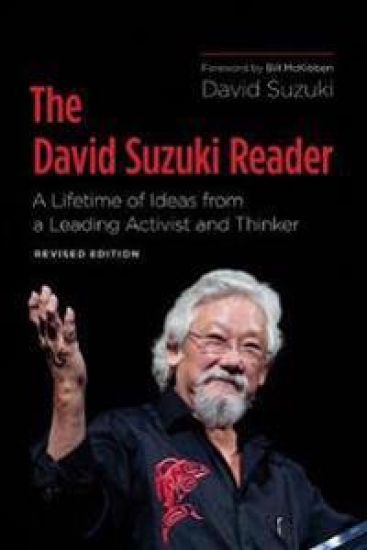
The David Suzuki Reader

The David Suzuki Reader

David Suzuki; Bill McKibben

Greystone Books,Canada
2014
pokkari
In this revised and expanded edition of his collected writings, David Suzuki continues to explore the themes that have informed his work for more than four decades -- the interconnectedness of all things, our misguided elevation of economics above all else, the urgent need to deal with climate change -- but with an increased emphasis on solutions to the myriad problems we face, his inspiring vision for the future, and the legacy he hopes to leave behind. There is also more emphasis on the personal, as he recounts episodes from his childhood and early adulthood and speaks eloquently about old age, death, and the abiding role of nature and family in his life. Written with clarity, passion, and wisdom, this book is essential for anyone who is an admirer of David Suzuki, who wants to understand what science can and can't do, or who wants to make a difference.
Introducing Evangelical Ecotheology – Foundations in Scripture, Theology, History, and Praxis

Introducing Evangelical Ecotheology – Foundations in Scripture, Theology, History, and Praxis

Daniel L. Brunner; Jennifer L. Butler; A. J. Swoboda; Bill McKibben

Baker Academic, Div of Baker Publishing Group
2014
nidottu

Halvin toimitettuna 31,00 €

Today's church finds itself in a new world, one in which climate change and ecological degradation are front-page news. In the eyes of many, the evangelical community has been slow to take up a call to creation care. How do Christians address this issue in a faithful way? This evangelically centered but ecumenically informed introduction to ecological theology (ecotheology) explores the global dimensions of creation care, calling Christians to meet contemporary ecological challenges with courage and hope. The book provides a biblical, theological, ecological, and historical rationale for earthcare as well as specific practices to engage both individuals and churches. Drawing from a variety of Christian traditions, the book promotes a spirit of hospitality, civility, honesty, and partnership. It includes a foreword by Bill McKibben and an afterword by Matthew Sleeth.
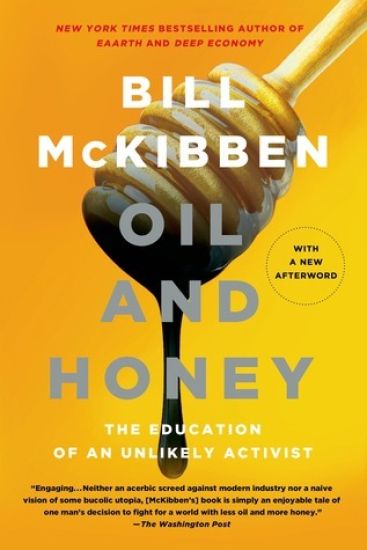
Oil and Honey

Oil and Honey

Bill McKibben

Saint Martin's Griffin,U.S.
2014
nidottu
With the Arctic melting, the Midwest in drought, and Irene scouring the Atlantic, McKibben recognized that action was needed if solutions were to be found. Some of those would come at the local level, where McKibben joins forces with a Vermont beekeeper raising his hives as part of the growing trend toward local food. Other solutions would come from a much larger fight against the fossil-fuel industry as a whole. Oil and Honey is McKibben's account of these two necessary and mutually reinforcing sides of the global climate fight - from the centre of the maelstrom and from the growing hive of small-scale local answers. With empathy and passion he makes the case for a renewed commitment on both levels, telling the story of raising one year's honey crop and building a social movement that's still cresting.
Wandering Home

Wandering Home

Bill McKibben

Henry Holt Company Inc
2014
pokkari
In one of his most personal books, Bill McKibben invites readers to join him on a hike from his current home in Vermont to his former home in the Adirondacks. Here he reveals that the motivation for his impassioned environmental activism is not high-minded or abstract, but as tangible as the lakes and forests he explored in his twenties, the same woods where he lives with his family today. Over the course of his journey McKibben meets with old friends and kindred spirits, including activists, writers, organic farmers, a vintner, a beekeeper, and environmental studies students, all in touch with nature and committed to its preservation. For McKibben, there is no better place than these woods to work out a balance between the wild and the cultivated, the individual and the global community, and to discover the answers to the challenges facing our planet today.
Toward an Ecology of Transfiguration

Toward an Ecology of Transfiguration

Bill McKibben

Fordham University Press
2013
pokkari

Halvin toimitettuna 46,70 €

Can Orthodox Christianity offer spiritual resources uniquely suited to the environmental concerns of today? This book makes the case emphatically that it can indeed. In addition to being the first substantial and comprehensive collection of essays, in any language, to address environmental issues from the Orthodox point of view, this volume (with contributions from many of the most influential theologians and philosophers in contemporary world Orthodoxy) will engage a wide audience, in academic as well as popular circles—resonating not only with Orthodox audiences but with all those in search of a fresh approach to environmental theory and ethics that can bring to bear the resources of ancient spirituality, often virtually unknown in the West, on modern challenges and dilemmas.