Kirjojen hintavertailu – 12 903 724 kirjaa ja 27 kauppaa
Kirjailija
Bishwajeet Pandey
Kirjat ja teokset yhdessä paikassa: 18 kirjaa, julkaisuja vuosilta 2013–2026, suosituimpiin kuuluu Diseño de un multiplicador védico de bajo consumo sensible a las variaciones de PVT. Vertaile teosten hintoja ja tarkista saatavuus suomalaisista kirjakaupoista.
Neste livro, projetamos um descodificador de 64 bits, um descodificador habilitado para Internet das Coisas (IoT), um controlador de sem foros com efici ncia energ tica, barreiras autom ticas baseadas em sensores em cruzamentos ferrovi rios p blicos, um sensor de carga m vel usando o padr o LVCMOS IO, um rel gio de pulso biom dico, um leitor Unicode de grego, latim e sindhi, um rel gio digital e um filtro FIR usando Verilog. Al m disso, estamos a utilizar objetivos de design, escala de capacit ncia, escala de frequ ncia, abordagem de design com reconhecimento t rmico, clock gating, escala de tens o, padr es IO LVCMOS, padr es IO HSTL e padr es IO SSTL. Estamos a utilizar os mais recentes FPGA Virtex-6, Kintex-7 e Artix-7 com tecnologia de 28 nm e 40 nm. Estamos a utilizar o XPower Analyzer para estimativa de pot ncia e o Xilinx para simula o de linguagem de descri o de hardware. Em resumo, cobrimos mais de 10 circuitos diferentes e 10 t cnicas diferentes de efici ncia energ tica que ajudar o pesquisadores e estudantes a aprender essas t cnicas e aplic -las em seus pr prios projetos, a fim de criar projetos energeticamente eficientes com Verilog.
In questo libro abbiamo progettato un decodificatore a 64 bit, un decodificatore abilitato per l'Internet delle cose (IoT), un controller per semafori ad alta efficienza energetica, barriere automatiche basate su sensori per passaggi a livello ferroviari pubblici, un sensore di carica mobile che utilizza lo standard LVCMOS IO, un orologio da polso biomedico, un lettore Unicode per greco, latino e sindhi, un orologio digitale e un filtro FIR utilizzando Verilog. Inoltre, utilizziamo Design Goal, ridimensionamento della capacit , ridimensionamento della frequenza, approccio di progettazione termicamente consapevole, clock gating, ridimensionamento della tensione, standard IO LVCMOS, standard IO HSTL e standard IO SSTL. Utilizziamo FPGA Virtex-6, Kintex-7 e Artix-7 di ultima generazione basati su tecnologia 28 nm e 40 nm. Stiamo utilizzando XPower Analyzer per la stima della potenza e Xilinx per la simulazione del linguaggio di descrizione hardware. In sintesi, abbiamo trattato pi di 10 circuiti diversi e 10 tecniche di efficienza energetica diverse che aiuteranno i ricercatori e gli studenti ad apprendere queste tecniche e ad applicarle nei propri progetti al fine di realizzare progetti efficienti dal punto di vista energetico con Verilog.
Dans cet ouvrage, nous avons con u un d codeur 64 bits, un d codeur compatible avec l'Internet des objets (IoT), un contr leur de feux de signalisation conome en nergie, des barri res automatiques bas es sur des capteurs pour les passages niveau publics, un capteur de charge mobile utilisant la norme LVCMOS IO, une montre-bracelet biom dicale, un lecteur Unicode pour le grec, le latin et le sindhi, une horloge num rique et un filtre FIR utilisant Verilog. Nous utilisons galement l'approche de conception bas e sur les objectifs, la mise l' chelle de la capacit , la mise l' chelle de la fr quence, la prise en compte thermique, le clock gating, la mise l' chelle de la tension, les normes d'E/S LVCMOS, HSTL et SSTL. Nous utilisons les derniers FPGA Virtex-6, Kintex-7 et Artix-7 bas s sur les technologies 28 nm et 40 nm. Nous utilisons XPower Analyzer pour l'estimation de la puissance et Xilinx pour la simulation du langage de description du mat riel. En r sum , nous avons couvert plus de 10 circuits diff rents et 10 techniques d'efficacit nerg tique diff rentes qui aideront les chercheurs et les apprenants acqu rir ces techniques et les appliquer dans leurs propres conceptions afin de r aliser des conceptions co nerg tiques avec Verilog.
In diesem Buch haben wir einen 64-Bit-Decoder, einen IoT-f higen Decoder (Internet of Things), einen energieeffizienten Ampelcontroller, sensorbasierte automatische Barrieren an ffentlichen Bahn berg ngen, einen mobilen Ladungssensor mit LVCMOS-IO-Standard, eine biomedizinische Armbanduhr, einen Unicode-Leser f r Griechisch, Latein und Sindhi, eine Digitaluhr und einen FIR-Filter mit Verilog entworfen. Dabei verwenden wir Designziel, Kapazit tsskalierung, Frequenzskalierung, thermisch orientierten Designansatz, Clock Gating, Spannungsskalierung, LVCMOS-IO-Standards, HSTL-IO-Standards und SSTL-IO-Standards. Wir verwenden die neuesten Virtex-6-, Kintex-7- und Artix-7-FPGAs auf Basis der 28-nm- und 40-nm-Technologie. Wir verwenden XPower Analyzer f r die Leistungsabsch tzung und Xilinx f r die Simulation der Hardwarebeschreibungssprache. Zusammenfassend haben wir mehr als 10 verschiedene Schaltungen und 10 verschiedene energieeffiziente Techniken behandelt, die Forschern und Lernenden helfen werden, diese Techniken zu erlernen und in ihren eigenen Entw rfen anzuwenden, um energieeffiziente Entw rfe mit Verilog zu erstellen.
W niniejszej książce zaprojektowaliśmy 64-bitowy dekoder, dekoder obslugujący Internet rzeczy (IoT), energooszczędny kontroler sygnalizacji świetlnej, automatyczne bariery oparte na czujnikach na publicznych przejazdach kolejowych, czujnik ladowania urządzeń mobilnych wykorzystujący standard LVCMOS IO, biomedyczny zegarek na rękę, czytnik Unicode dla język w greckiego, lacińskiego i sindhi, zegar cyfrowy oraz filtr FIR wykorzystujący Verilog. Korzystamy z Design Goal, skalowania pojemności, skalowania częstotliwości, podejścia projektowego uwzględniającego temperaturę, bramkowania zegara, skalowania napięcia, standard w LVCMOS IO, standard w HSTL IO oraz standard w SSTL IO. Korzystamy z najnowszych uklad w FPGA Virtex-6, Kintex-7 i Artix-7 opartych na technologii 28 nm i 40 nm. Do szacowania mocy używamy XPower Analyzer, a do symulacji języka opisu sprzętu - Xilinx. Podsumowując, om wiliśmy ponad 10 r żnych obwod w i 10 r żnych technik energooszczędnych, kt re pomogą badaczom i osobom uczącym się poznac te techniki i zastosowac je we wlasnych projektach, aby tworzyc energooszczędne projekty z wykorzystaniem języka Verilog.
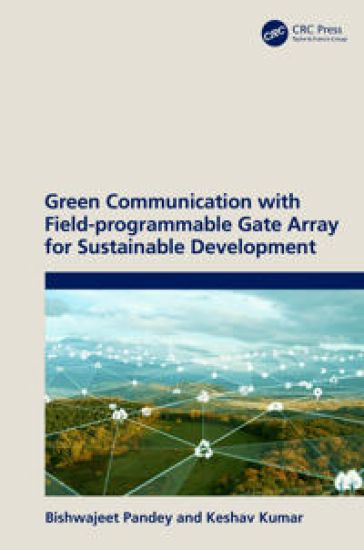
The text discusses the designing of field-programmable gate array-based green computing circuits for efficient green communication. It will help senior undergraduate, graduate students, and academic researchers from diverse engineering domains such as electrical, electronics and communication, and computer. Discusses hardware description language coding of green communication computing (GCC) circuitsPresents field-programmable gate arrays-based power-efficient modelsExplores the integrations of universal asynchronous receiver/transmitter and field-programmable gate arraysCovers architecture and programming tools of field-programmable gate arraysShowcases Verilog and VHDL codes for green computing circuits such as finite impulse response filter, parity checker, and packet counterThe text discusses the designing of energy-efficient network components, using low voltage complementary metal-oxide semiconductors, high-speed transceiver logic, and stub series-terminated logic input/output standards. It showcases how to write Verilog and VHDL codes for green computing circuits including finite impulse response filter, packet counter, and universal asynchronous receiver-transmitter.
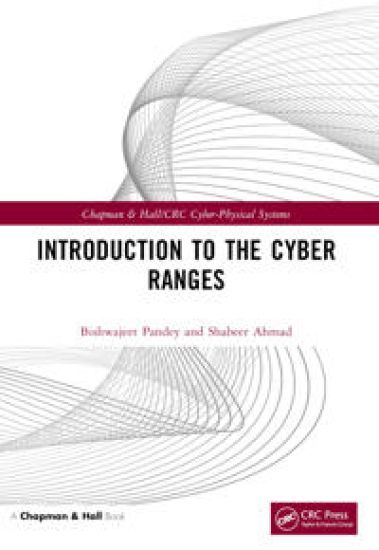
Introduction to the Cyber Ranges provides a comprehensive, integrative, easy-to-comprehend overview of different aspects involved in the cybersecurity arena. It expands on various concepts like cyber situational awareness, simulation and emulation environments, and cybersecurity exercises. It also focuses on detailed analysis and the comparison of various existing cyber ranges in military, academic, and commercial sectors. It highlights every crucial aspect necessary for developing a deeper insight about the working of the cyber ranges, their architectural design, and their need in the market. It conveys how cyber ranges are complex and effective tools in dealing with advanced cyber threats and attacks. Enhancing the network defenses, resilience, and efficiency of different components of critical infrastructures is the principal objective of cyber ranges. Cyber ranges provide simulations of possible cyberattacks and training on how to thwart such attacks. They are widely used in urban enterprise sectors because they present a sturdy and secure setting for hands-on cyber skills training, advanced cybersecurity education, security testing/training, and certification. Features: A comprehensive guide to understanding the complexities involved with cyber ranges and other cybersecurity aspects Substantial theoretical knowhow on cyber ranges, their architectural design, along with case studies of existing cyber ranges in leading urban sectors like military, academic, and commercial Elucidates the defensive technologies used by various cyber ranges in enhancing the security setups of private and government organizations Information organized in an accessible format for students (in engineering, computer science, and information management), professionals, researchers, and scientists working in the fields of IT, cybersecurity, distributed systems, and computer networks
The text discusses the designing of field-programmable gate array-based green computing circuits for efficient green communication. It will help senior undergraduate, graduate students, and academic researchers from diverse engineering domains such as electrical, electronics and communication, and computer. Discusses hardware description language coding of green communication computing (GCC) circuitsPresents field-programmable gate arrays-based power-efficient modelsExplores the integrations of universal asynchronous receiver/transmitter and field-programmable gate arraysCovers architecture and programming tools of field-programmable gate arraysShowcases Verilog and VHDL codes for green computing circuits such as finite impulse response filter, parity checker, and packet counterThe text discusses the designing of energy-efficient network components, using low voltage complementary metal-oxide semiconductors, high-speed transceiver logic, and stub series-terminated logic input/output standards. It showcases how to write Verilog and VHDL codes for green computing circuits including finite impulse response filter, packet counter, and universal asynchronous receiver-transmitter.
Introduction to the Cyber Ranges provides a comprehensive, integrative, easy-to-comprehend overview of different aspects involved in the cybersecurity arena. It expands on various concepts like cyber situational awareness, simulation and emulation environments, and cybersecurity exercises. It also focuses on detailed analysis and the comparison of various existing cyber ranges in military, academic, and commercial sectors. It highlights every crucial aspect necessary for developing a deeper insight about the working of the cyber ranges, their architectural design, and their need in the market. It conveys how cyber ranges are complex and effective tools in dealing with advanced cyber threats and attacks. Enhancing the network defenses, resilience, and efficiency of different components of critical infrastructures is the principal objective of cyber ranges. Cyber ranges provide simulations of possible cyberattacks and training on how to thwart such attacks. They are widely used in urban enterprise sectors because they present a sturdy and secure setting for hands-on cyber skills training, advanced cybersecurity education, security testing/training, and certification. Features: A comprehensive guide to understanding the complexities involved with cyber ranges and other cybersecurity aspects Substantial theoretical knowhow on cyber ranges, their architectural design, along with case studies of existing cyber ranges in leading urban sectors like military, academic, and commercial Elucidates the defensive technologies used by various cyber ranges in enhancing the security setups of private and government organizations Information organized in an accessible format for students (in engineering, computer science, and information management), professionals, researchers, and scientists working in the fields of IT, cybersecurity, distributed systems, and computer networks