

Kirjailija
Bram Stoker
Kirjat ja teokset yhdessä paikassa: 1 088 kirjaa, julkaisuja vuosilta 1897–2026, suosituimpiin kuuluu Dracula. Vertaile teosten hintoja ja tarkista saatavuus suomalaisista kirjakaupoista.
1 088 kirjaa
Kirjojen julkaisuvuodet: 1897–2026.
This Book "Lady Athlyne" has been considered important throughout the human history, and so that this work is never forgotten we have made efforts in its preservation by republishing this book in a modern format for present and future generations. This whole book has been reformatted, retyped and designed. These books are not made of scanned copies of their original work and hence the text is clear and readable.
Dracula is an unchanged, high-quality reprint of the original edition of 1897. Hansebooks is editor of the literature on different topic areas such as research and science, travel and expeditions, cooking and nutrition, medicine, and other genres. As a publisher we focus on the preservation of historical literature. Many works of historical writers and scientists are available today as antiques only. Hansebooks newly publishes these books and contributes to the preservation of literature which has become rare and historical knowledge for the future.
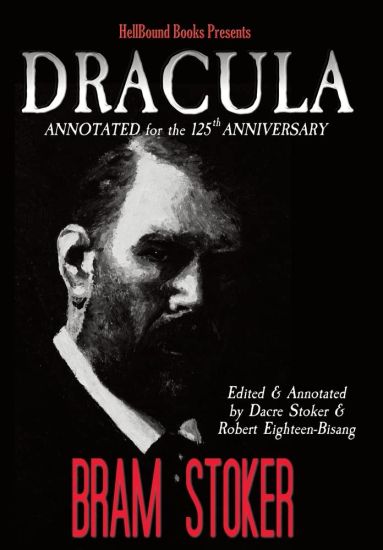
"An absolute must for Dracula, Horror, and Literary History aficionados the world over." Annotated, edited, and in the author's full, original form, Dracula: Annotated is the very first edition of Bram Stoker's timeless classic horror novel to be written by a member of Bram Stoker's family, Dacre Stoker, his great grand nephew, with the assistance of award-winning vampire expert, Robert Eighteen-Bisang. This book includes the entire version of Dracula-not only Constable's text of 1897 and Dracula's Guest, but outlines of Bram's original first, second, and third chapters. Within these pages are all of the pre-publication deletions from the original typescript, as well as Bram's hand-written changes and the entire abridged edition of 1901-read for the first time the changes Bram made to create his dramatic adaptation of Dracula in 1897 and note the differences in the Doubleday & McClure and William Rider texts. This exceptional, incredibly unique slice of literary history represents a rare insight into the remarkable creative process of Bram Stoker, the grand master of horror himself.
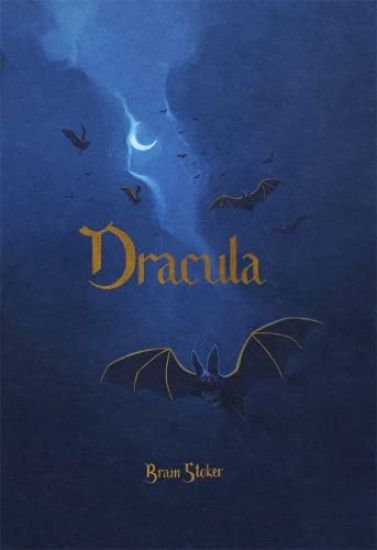
'There he lay looking as if youth had been half-renewed, for the white hair and moustache were changed to dark iron-grey, the cheeks were fuller, and the white skin seemed ruby-red underneath; the mouth was redder than ever, for on the lips were gouts of fresh blood, which trickled from the corners of the mouth and ran over the chin and neck. Even the deep, burning eyes seemed set amongst the swollen flesh, for the lids and pouches underneath were bloated. It seemed as if the whole awful creature were simply gorged with blood; he lay like a filthy leech, exhausted with his repletion.' Thus Bram Stoker, one of the greatest exponents of the supernatural narrative, describes the demonic subject of his chilling masterpiece Dracula, a truly iconic and unsettling tale of vampirism.
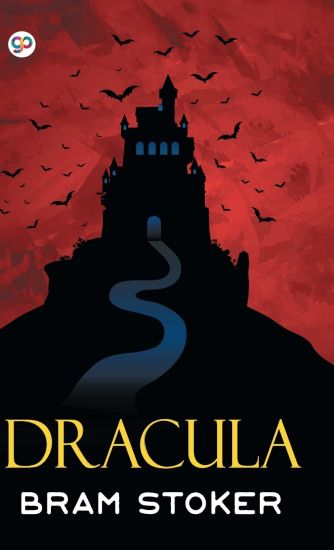
First published in 1897, 'Dracula' is a gothic horror novel by Bram Stoker, an Irish author. During his lifetime, he was better known as the personal assistant of actor Sir Henry Irving and business manager of the Lyceum Theatre, which Irving owned. Bram Stoker presented the character of Count Dracula and provided the basis of modern vampire fiction in this novel. Penned as a wonderful series of letters, newspaper clippings, diary entries, and ships' records, the story initiates with lawyer Jonathan Harker journeying to meet Dracula at his remote castle to complete a real estate transaction. Harker soon discovers that he is being held prisoner and that Dracula has a rather disturbing nighttime life. Touching on themes such as Victorian culture, immigration, and colonialism, among others, this timeless classic is sure to keep readers on the edge of their seats.
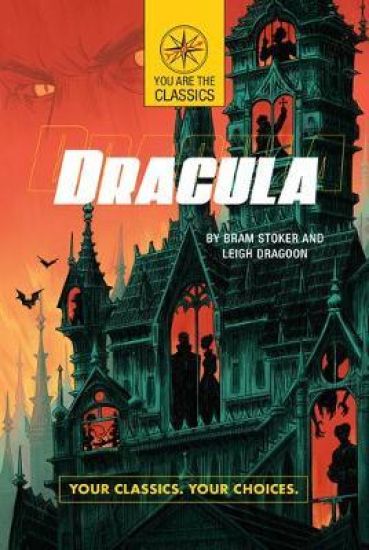
In these literary classics, you make the choices. Readers explore alternative paths, new character developments, shocking new endings, and surprising plot twists, as they attempt to escape Dracula's castle as described in Bram Stoker's original book. While readers can follow the original path from the castle in Bram Stoker's Dracula, new options allow readers to explore additional characters and settings. Some lead to new endings, while others send readers back into the original storyline. Fans of literary classics will delight in seeing their favorite stories given new life, and reluctant readers will discover the classics through the engaging format of an interactive story.
First published in 1897, 'Dracula' is a gothic horror novel by Bram Stoker, an Irish author. During his lifetime, he was better known as the personal assistant of actor Sir Henry Irving and business manager of the Lyceum Theatre, which Irving owned. Bram Stoker presented the character of Count Dracula and provided the basis of modern vampire fiction in this novel. Penned as a wonderful series of letters, newspaper clippings, diary entries, and ships' records, the story initiates with lawyer Jonathan Harker journeying to meet Dracula at his remote castle to complete a real estate transaction. Harker soon discovers that he is being held prisoner and that Dracula has a rather disturbing nighttime life. Touching on themes such as Victorian culture, immigration, and colonialism, among others, this timeless classic is sure to keep readers on the edge of their seats.
A visit to an exotic castle in the mysterious mountains of Transylvania, a wealthy and welcoming nobleman . . . what could possibly go wrong? The most iconic of vampire tales ever told, that's what. The story revealed in a series of documents, from various sources, unfolds in bits and pieces seen from numerous viewpoints, Dracula has been filmed, imitated, even satirized, but never surpassed as THE single epic of the evil world of the Undead.
Bram Stoker's DRACULA. Enough said.
Neil LaBute brings a rich theatricality and his provocative way with language and story to the world of Count Dracula, Van Helsing, Jonathan Harker, and his beloved Mina-this time, with very much a mind of her own-infusing the classic gothic tale of terror, obsession, and pathos with a modern edge. Chilling yet stylish in its atmosphere, dark yet deeply human in its emotional impact, Neil LaBute's DRACULA is a tribute to both LaBute's dramatic vision and the timelessness of Stoker's novel.

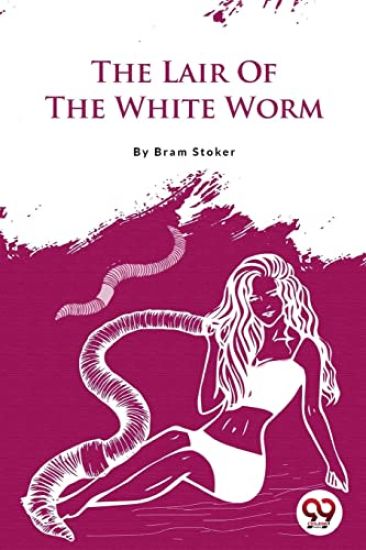
The Lair of the White Worm is a horror novel written by the Irish writer Bram Stoker. It was first published by Rider and Son of London in 1911 - the year prior to Stoker's demise. The story is based on the legend of the Lambton Worm and the book has been issued as The Garden of Evil. The protagonist, Adam Salton is contacted by his uncle, Richard Salton, who needs to make his beneficiary of his estate. He quickly finds himself in the middle of mysterious events, with Sir Nathaniel de Salis as his assistant. The White Worm is a huge snake-like animal dwelling profound under Arabella's home in Diana's Forest. Sir Nathaniel is a Van Helsing-type character who needs to chase down Arabella, who he accepts, with expanding conviction. Adam and Sir Nathaniel start to think that Arabella is at real fault for different wrongdoings and that she needs to kill Mimi Watford. Sir Nathaniel accepts the White Worm plummets from winged serpents, who exchanged actual power for tricky. The Worm climbs from its pit and looks to go after Adam and Mimi Watford. Adam can thwart Arabella's different endeavors to kill Mimi. Arabella offers to sell Diana's Woods, which Adam purchases determined to obliterate the Worm.
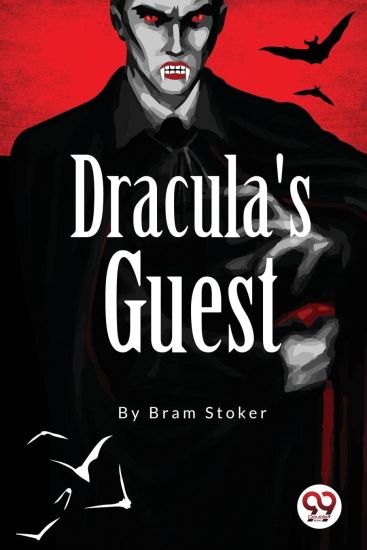
Bram Stoker wrote a short story named "Dracula's Guest." A young Englishman is followed in "Dracula's Guest" as he travels to Transylvania. The young guy subsequently leaves his carriage and walks off, disregarding the hotel owner's advice to arrive on time. After a few hours, it starts to snow as he approaches a barren valley; as a dark storm intensifies, he seeks refuge in a forest of cypress and yew trees. Soon, the moonlight reveals his location as a cemetery, and he finds himself in front of a marble tomb with a huge iron spike embedded in the roof. The Englishman's problems are still far from over. As he slowly comes to his senses after the ordeal, he experiences a feeling of disgust that he associates with a warm sensation in his chest and the licking of his throat. The horsemen who first discover the Englishman unconscious in a tomb describe him as an animal that is "a wolf-and yet not a wolf." Additionally, they observe that blood is on the tomb while his neck is unblooded. When the men later return the Englishman to his hotel, they tell him that it was none other than his eager host Count Dracula who had sent a telegram warning the Ma tre d'h tel of "dangers from snow and wolves and night."
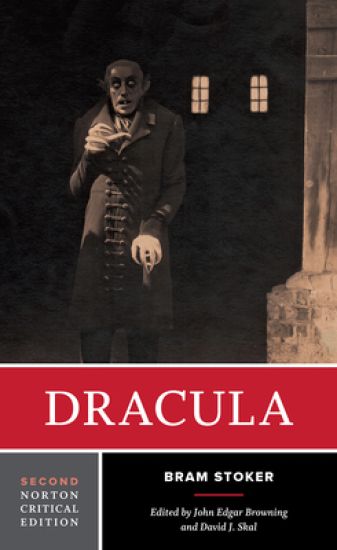
This Norton Critical Edition includes: The first edition of the novel, published by Archibald Constable in London in 1897 and chosen by the editors in order to give readers—insofar as such a thing is possible—a more historically authentic reading experience than has been generally available. Arcane words and usages are footnoted at first appearance. Editorial matter by John Edgar Browning and David J. Skal. Eight background pieces, five of them new to the Second Edition, on Count Dracula specifically and vampires more generally; seven reviews and reactions to Dracula’s publication, five of them new to the Second Edition; and six selections, two of them new to and two others updated for the Second Edition, on Dracula’s many dramatic and filmic variations. Eleven critical essays on Dracula’s central themes, six of them new to the Second Edition. A selected bibliography. About the Series Read by more than 12 million students over fifty-five years, Norton Critical Editions set the standard for apparatus that is right for undergraduate readers. The three-part format—annotated text, contexts and criticism—helps students to better understand, analyse and appreciate the literature, while opening a wide range of teaching possibilities for instructors. Whether in print or in digital format, Norton Critical Editions provide all the resources students need.