Kirjailija
Bruce A. Elleman
Kirjat ja teokset yhdessä paikassa: 27 kirjaa, julkaisuja vuosilta 2001–2025, suosituimpiin kuuluu Modern China. Vertaile teosten hintoja ja tarkista saatavuus suomalaisista kirjakaupoista.
Nimi esiintyy myös muodoissa: Bruce A Elleman
27 kirjaa
Kirjojen julkaisuvuodet: 2001–2025.
This book explores the question “Why is the US Navy in the South China Sea at all?” It traces the history of diplomatic, economic, and military tensions among the People’s Republic of China, the Soviet Union, the United States, and the Socialist Republic of Vietnam, outlining the origins of the United States-Vietnam relationship during the immediate post-World War II period, the turmoil of the Vietnam War during which China supported North Vietnam against a US-backed South Vietnam, and the decision of the US government to open relations with China beginning in 1972. It shows how from 1945–1975, the US government used its relations with Vietnam to exert diplomatic, economic, and military pressure on China to open negotiations leading to full recognition and further discusses the surprising action of the US Navy in 1974 to allow the Chinese Navy to take the Paracel Islands by force, thereby denying control over these islands to a united Vietnam, closely allied with the Soviet Union, which was the common enemy of both China and the USA. Overall, the book demonstrates how the presence of the US Navy in the South China Sea is a crucial element in much wider, global US strategy.
US-China Naval Co-operation Against the Soviet Union
Bruce A. Elleman
TAYLOR FRANCIS LTD
2025
sidottu
This book discusses the key role of the transfer of naval technology from the U. S. to China in building up the Chinese Navy during the Cold War. Revealing how this process began in the late 1970s under the Carter Administration when Deng Xiaoping was newly in power, and how it accelerated under both the Reagan and Bush administrations, moving from the transfer of simple technology to entire naval systems the book highlights how the policy was successful in helping make China a serious threat to the Soviet Union, and how it thereby contributed to the collapse of the Soviet Union and the end of the Cold War. The book also demonstrates how this same policy also enabled China, now with the world’s largest navy, to become much more assertive in East Asia more widely, resulting in the U. S. reversing its technology transfer policy following the Tiananmen Square massacre and in China turning to Russia and other former Soviet countries including Ukraine for the supply of Soviet-era equipment. Utilising disclosed and formerly secret documents this book will be a valuable resource to both students and scholars of international relations, security studies and naval studies, particularly in relation to Chinese-U. S.-USSR relations during the Cold War.
A short, but highly relevant, history of the Cold War, 1919–1994, and its significance today. The 75-year Cold War pitted the Anglo-American world against the Soviet Bloc, with China, the ultimate prize. Chapter A will examine the creation of the Anglo-American Special Relationship, the end of World War I, 1919 Versailles Peace Treaty, and the lead-in to World War II. Chapter B will examine the Bolshevik revolution, 1919 Comintern creation, 1924 Soviet Bloc creation, the tumultuous 1930s, World War II, plus Soviet competition with America and England through 1949. Chapter C will discuss a China torn between West and East, finally joining the Soviet bloc in 1949 but by 1979 rejoining the West, and cooperating to destroy the USSR from 1979 to 1994, when the final Russian troops left Germany. In the Conclusion, the Cold War’s impact and strategic significance today will be discussed. From 1979 to 1994, the U. S. government attempted to use its relations with China to exert diplomatic, economic, and military pressure on the USSR. Beginning in the late 1970s and continuing through the 1980s, China began to import high-technology equipment from the United States to fill key sensor and weapon roles. With the end of the Cold War, in particular, the Soviet navy was eliminated almost overnight as the world’s second most powerful naval force; Russia’s Pacific fleet is now so poorly supplied and equipped that it rarely leaves port. This unprecedented reversal of fortunes has created a maritime vacuum throughout East Asia that China hopes to fill. In recent years, however, the former Sino-U. S. cooperation has changed as rising Chinese-sponsored tensions in the South China Sea have led to many possible points of alliance between Beijing and Moscow. Joint Sino-Russian Naval Exercises are just one example. Vladimir Putin and Xi Jinping appear to once again be combining against the Anglo-American-led West. Will history “rhyme” as Mark Twain says, allowing the Anglo-American West to win Cold War II, or will events turn out differently this time.
This book examines the origins of the US Navy’s 2007 Maritime Strategy, the formation of the US government’s “Pivot to Asia” strategy, and the most recent revisions to this strategy that focus more specifically on China. Besides examining the details of this strategy formulation, the book explores the internal and external repercussions on the US Navy of the Pivot to Asia. It discusses the “Fat Leonard” scandal, which involved bribery and corruption in contracts for the maintenance of the US fleets in the region, and considers the sharp decrease in training and readiness of the Pacific fleet to support the pivot, which in turn led to serious maritime collisions. It also assesses the impact of the pivot on other countries in the region, engaging in the debate as to whether the pivot was necessary in order to convince the countries of the region that the United States had not lost its staying power, or whether the pivot managed to make tensions in the Asia-Pacific worse even while allowing the strategic situation in the Middle East and Europe to worsen as a result of neglect.
This book explores the question “Why is the US Navy in the South China Sea at all?” It traces the history of diplomatic, economic, and military tensions among the People’s Republic of China, the Soviet Union, the United States, and the Socialist Republic of Vietnam, outlining the origins of the United States-Vietnam relationship during the immediate post-World War II period, the turmoil of the Vietnam War during which China supported North Vietnam against a US-backed South Vietnam, and the decision of the US government to open relations with China beginning in 1972. It shows how from 1945–1975, the US government used its relations with Vietnam to exert diplomatic, economic, and military pressure on China to open negotiations leading to full recognition and further discusses the surprising action of the US Navy in 1974 to allow the Chinese Navy to take the Paracel Islands by force, thereby denying control over these islands to a united Vietnam, closely allied with the Soviet Union, which was the common enemy of both China and the USA. Overall, the book demonstrates how the presence of the US Navy in the South China Sea is a crucial element in much wider, global US strategy.
Principles of Maritime Power
Bruce A. Elleman; S. C. M. Paine
BLOOMSBURY PUBLISHING PLC
2024
nidottu
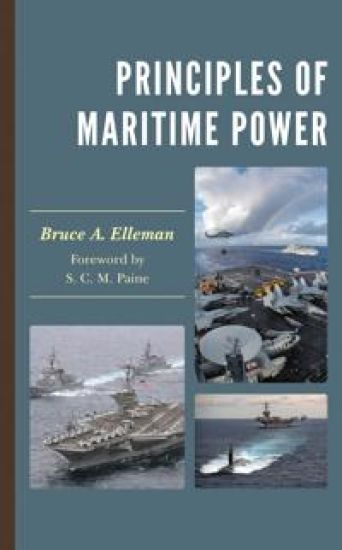
Maritime powers dominate the planet, from the British empire of the 19th century, to the American post-World War II domination of global affairs. To a large degree their control of the globe is based on control of the seas. This book seeks to examine the strengths and weaknesses of maritime power, including specific chapters on mutiny, blockades, coalitions, piracy, expeditionary warfare, commerce raiding, and soft power operations, but with larger discussion of such sea power characteristics as sea control, sea denial, and the competition between land powers and sea powers. The conclusions will discuss how many other countries, including Russia during the Cold War and the PRC today, have or are seeking to use sea power to claim regional and then eventually global hegemony.
The Impact of Coincidence in Modern American, British, and Asian History
Bruce A. Elleman
ANTHEM PRESS
2023
nidottu
In 21 short case studies, this short book examines the distinctive coincidental history of America, Britain, and various Asian countries during the twentieth century. It covers a wide range of historical events, from American expansion into the Pacific to the creation of the Soviet gulags in Siberia to the end of the Vietnam War. Its main goal is to show how watershed historical events can often become layered or overlap each other, sometimes by intent but often merely by happenstance. As Ian Fleming once famously opined about actions in war: “Once is happenstance. Twice is a coincidence. Three times is enemy action.”
This book examines the origins of the US Navy’s 2007 Maritime Strategy, the formation of the US government’s “Pivot to Asia” strategy, and the most recent revisions to this strategy that focus more specifically on China. Besides examining the details of this strategy formulation, the book explores the internal and external repercussions on the US Navy of the Pivot to Asia. It discusses the “Fat Leonard” scandal, which involved bribery and corruption in contracts for the maintenance of the US fleets in the region, and considers the sharp decrease in training and readiness of the Pacific fleet to support the pivot, which in turn led to serious maritime collisions. It also assesses the impact of the pivot on other countries in the region, engaging in the debate as to whether the pivot was necessary in order to convince the countries of the region that the United States had not lost its staying power, or whether the pivot managed to make tensions in the Asia-Pacific worse even while allowing the strategic situation in the Middle East and Europe to worsen as a result of neglect.
Following the Nationalist defeat on the mainland in 1949, Chiang Kai-shek and his followers retreated to Taiwan, forming the Republic of China (ROC). Tensions with the People’s Republic of China (PRC) focused on control over a number of offshore islands, especially Quemoy (Jinmen) and Matsu (Mazu). Twice in the 1950s tensions peaked, during the first (1954–55) and second (1958) Taiwan Strait crises. This small body of water—often compared to the English Channel—separates the PRC and Taiwan, and has been the location for periodic military tensions, some threatening to end in war. Today, relations between the ROC and PRC depend on quelling tensions over the Taiwan Strait. This work provides a short, but highly relevant, history of the Taiwan Strait, and its significance today.
Principles of Maritime Power
Bruce A. Elleman; S. C. M. Paine
BLOOMSBURY PUBLISHING PLC
2022
sidottu
Maritime powers dominate the planet, from the British empire of the 19th century, to the American post-World War II domination of global affairs. To a large degree their control of the globe is based on control of the seas. This book seeks to examine the strengths and weaknesses of maritime power, including specific chapters on mutiny, blockades, coalitions, expeditionary warfare, piracy, commerce raiding, and soft power operations, but with larger discussion of such sea power characteristics as sea control, sea denial, and the competition between land powers and sea powers. The conclusions will discuss how many other countries, including Russia during the Cold War and the PRC today, have or are seeking to use sea power to claim regional and then eventually global hegemony.
Following the Nationalist defeat on the mainland in 1949, Chiang Kai-shek and his followers retreated to Taiwan, forming the Republic of China (ROC). Tensions with the People’s Republic of China (PRC) focused on control over a number of offshore islands, especially Quemoy (Jinmen) and Matsu (Mazu). Twice in the 1950s tensions peaked, during the first (1954–55) and second (1958) Taiwan Strait crises. This small body of water—often compared to the English Channel—separates the PRC and Taiwan, and has been the location for periodic military tensions, some threatening to end in war. Today, relations between the ROC and PRC depend on quelling tensions over the Taiwan Strait. This work provides a short, but highly relevant, history of the Taiwan Strait, and its significance today.
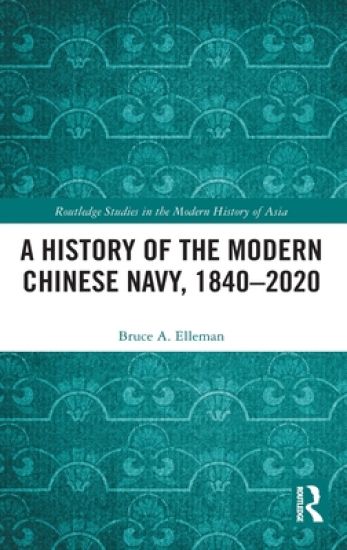
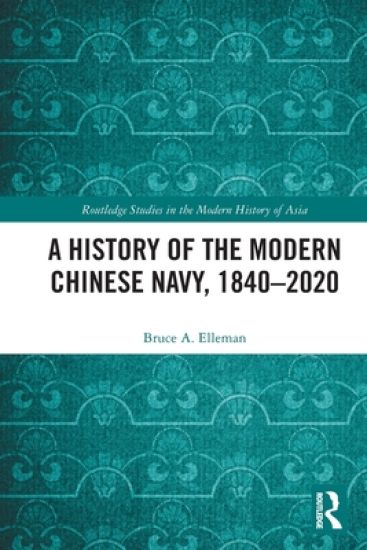
This book provides a comprehensive history of the modern Chinese navy from 1840 to the present. Beginning with a survey of naval developments in earlier imperial times, the book goes on to show how China has since the mid-19th century four times built or rebuilt its navy: after the Opium Wars, a navy which was sunk or captured by the Japanese in the war of 1894–1895; during the 1920s and 1930s, a navy again sunk or lost to Japan, in the war of 1937–1945; in the 1950s, a navy built with Soviet help, which stagnated following the Sino-Soviet split in the early 1960s; and finally the present navy which absorbed its predecessor, but with the most modern sections dating from the 1990s—a navy which continues to grow and prosper. The book also shows how the underlying strategic imperative for the Chinese navy has been the defense of China’s coasts and major rivers; how naval mutiny was a key factor in the overthrow of the Qing and the Nationalist regimes; and how successive Chinese governments, aware of the potent threat of naval mutiny, have restricted the growth, independence, and capabilities of the navy. Overall, the book provides—at a time when many people in the West view China and its navy as a threat—a rich, detailed, and realistic assessment of the true nature of the Chinese navy and the contemporary factors that affect its development.
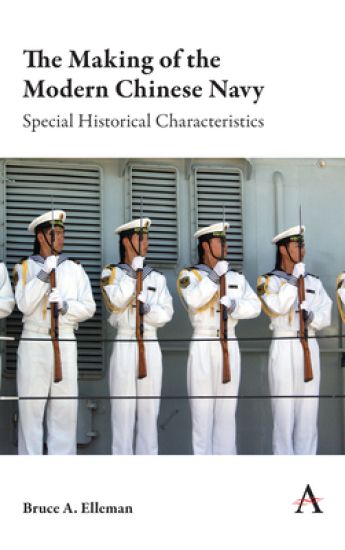
‘The Making of the Modern Chinese Navy’ includes 14 historical case studies that help to illuminate a number of special characteristics of the modern-day Chinese navy most Chinese naval officers perhaps take for granted, including a belief in the Mandate of Heaven, tributary system and the fear of ‘losing face’ either in a diplomatic setting or by risking valuable equipment in battle. Ethnic and language differences, regional loyalties and political mistrust potentially exacerbate these problems. Special peculiarities include the Mongol dual-officer diarchy that led to the political commissar system utilized by the People’s Liberation Army. Outside influences, such as blockade, sanctions or embargoes, can exert a profound impact on China, just as foreign intervention or, equally important, a decision not to intervene, can often determine the outcome of major maritime events. [NP] The 14 case studies discuss many of these characteristics, while the Conclusion examines all case studies together and places them in a historical perspective. ‘The Making of the Modern Chinese Navy’assesses which of these historical characteristics and peculiarities are still present in full force in China and which ones may no longer have as great an impact on the contemporary Chinese navy.
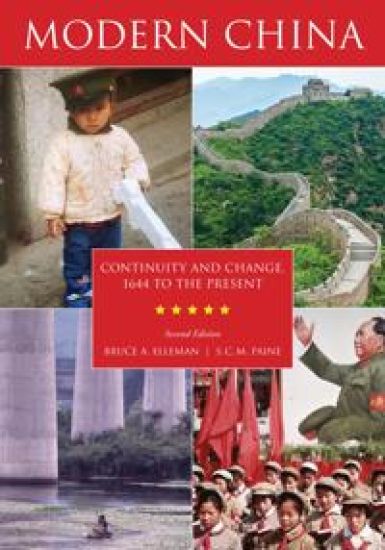
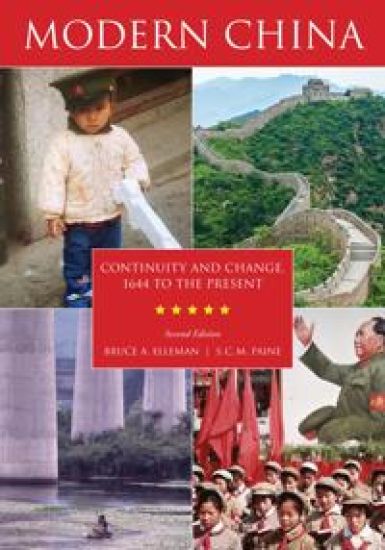
Now in a fully updated edition, this accessible text provides a balanced history of modern China in a global context. Through years of living and research in China, Taiwan, Japan, and Russia, the authors are deeply qualified to understand China’s internal dynamics as well as its foreign relations over centuries. Arguing that modern Chinese history cannot be understood without a deep appreciation of the outside factors that have influenced the country, the authors focus on China’s near neighbors, especially Japan and Russia. They also emphasize the tragic role of almost endless warfare throughout Chinese history. Providing a unique comparative approach, the authors bridge the cultural divide separating Chinese history from Western readers trying to understand it. Specifically geared to the teaching requirements of the semester system, the book is divided into four parts and a total of twenty-eight chapters, corresponding either to two chapters per week in a fourteen-week semester or one chapter per week in a two-semester course.
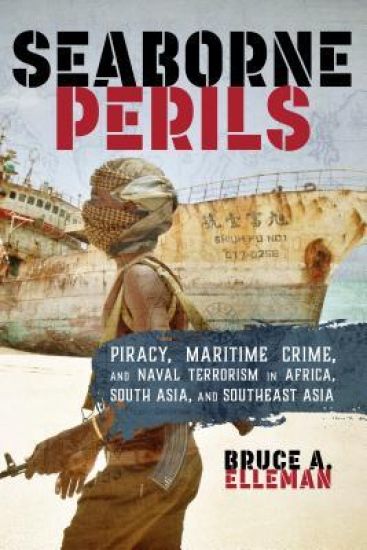
This comprehensive survey of historical and contemporary issues related to maritime crime and piracy, with a special focus on Africa, South Asia, and Southeast Asia, explains why piracy is a growing problem and how it affects security policy making in the United States. Here, piracy is defined as taking place on the high seas, while maritime crime takes place within a country's territorial waters. Seaborne terrorism may occur in either one of these maritime zones. Maritime piracy can be divided into several categories, from pirates robbing a ship or its crew of petty items while at sea to taking a ship's cargo and taking control of a vessel, reflagging it, and then using this captured ship to smuggle drugs, transport illegal immigrants, or conduct further acts of piracy. This is the most dangerous, not only because pirates can use a captured ship to carry out more raids, but also because they can use the ship's identity papers to transport goods and weapons—potentially WMDs—into otherwise secure port areas. A special concern to the US is that the threat of piracy is growing most quickly in parts of the world—such as Africa, South Asia, and Southeast Asia—where both global trade is rapidly expanding and where international terrorist groups are actively functioning or have supporters. This geographical overlap suggests that the risk that pirates and terrorists may one day cooperate to strike at the US or an ally is most likely also on the rise. While many important African, South Asia, and Southeast Asian cases have received insufficient attention, many well-known historical piracy events stand in need of a reappraisal. This book integrates a number of multinational, multiregional, and historical cases of piracy, maritime crime, and seaborne terrorism to investigate whether piracy and other forms of maritime crime are becoming a major United States national security concern. It analyzes some of the most important cases, especially of the 19th, 20th, and early 21st centuries, as well as specific historical events. This allows to draw lessons as to what are the components of successful and unsuccessful piracy, common causes, the type of navy necessary to control it, and finally, possible military, political, and economic consequences. The book also discusses various types of cases, including parasitic, intrinsic, episodic, and opportunistic piracy. Specific cases are also evaluated in terms of the changing interpretations of international law and the recent reported growth rates of piracy, maritime crime, and seaborne terrorism. These findings are used to explore the impact of piracy on maritime security, in particular in Africa, South Asia, and Southeast Asia and their surrounding waters, which is where the majority of contemporary piracies and maritime crimes occur. Different methods of policing piracy and maritime crime are evaluated, including the viability of adopting greater Maritime Domain Awareness, which would require that all ships at sea—regardless of size or function—emit a signal beacon identifying their name, country of origin, and route. This combination of historical and modern day piracy and the many cases studied will provide readers with a broader understanding of maritime piracy.

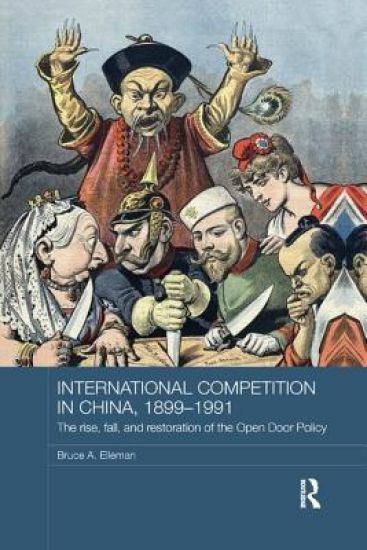
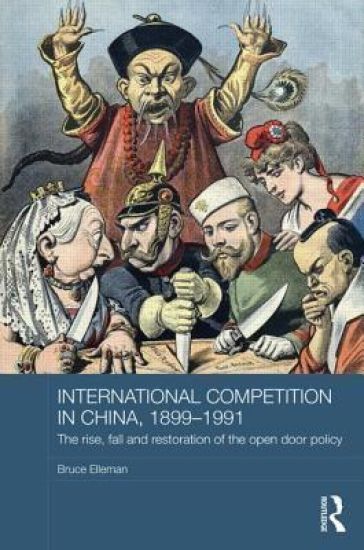
China's recent economic reforms have opened its economy to the world. This policy, however, is not new: in the late nineteenth century, the United States put forward the Open Door Policy as a counter to European exclusive 'spheres of influence' in China. This book, based on extensive original archival research, examines and re-evaluates China's Open Door Policy. It considers the policy from its inception in 1899 right through to the post-1978 reforms. It relates these changes to the various shifts in China’s international relations, discusses how decades of foreign invasion, civil war and revolution followed the destruction of the policy in the 1920s, and considers how the policy, when applied in Taiwan after 1949, and by Deng Xiaoping in mainland China after 1978, was instrumental in bringing about, respectively, Taiwan's 'economic miracle' and mainland China’s recent economic boom. The book argues that, although the policy was characterised as United States 'economic imperialism' during the Cold War, in reality it helped China retain its sovereignty and territorial integrity.