
Kirjailija
Bruno S. Frey
Kirjat ja teokset yhdessä paikassa: 23 kirjaa, julkaisuja vuosilta 1988–2024, suosituimpiin kuuluu Overcoming Overtourism. Vertaile teosten hintoja ja tarkista saatavuus suomalaisista kirjakaupoista.
23 kirjaa
Kirjojen julkaisuvuodet: 1988–2024.

Demokratische Wirtschaftspolitik
Bruno S. Frey; Lars P. Feld; Melanie Häner
Vahlen Franz GmbH
2024
sidottu
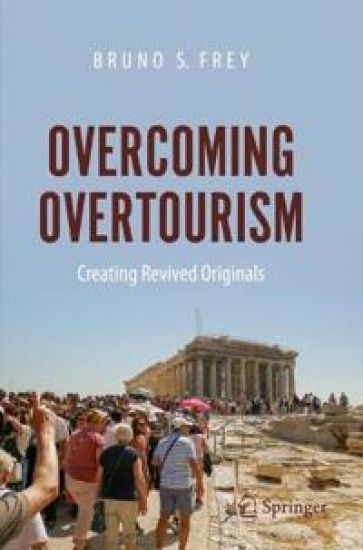
Cultural Overtourism is a comparatively new term, and refers to historical sites, museums and places that are extremely crowded by tourists; hence, a type of tourism that has negative effects on both the cultural sites and the people who live there. This problem has sparked more and more protests. Accordingly, many cultural institutions and cities are now taking measures to limit the flow of tourists. In this book, Bruno S. Frey - a renowned and frequently cited economist - suggests, on the contrary, an extension of the supply of cultural sites in the form of “Revived Originals”. By this he means the erection of identical replicas of the most important buildings at a suitable nearby location. In addition, digital information technologies (augmented and virtual reality including holograms) can be used to immerse visitors in the history and culture of the newly established sites, while adjacent hotels, restaurants and shops provide the necessary accompanying infrastructure. In this way, the flow of tourists can be distributed between the original site and the Revived Original. This book outlines the “Revived Originals” concept, discusses the organisational and economic challenges it entails, and contrasts it with existing Disneyland concepts. Especially for families with children or people who have little interest in culture - i.e., for the majority of visitors - these places can be very attractive. This book will appeal to anyone interested in alternative forms of tourism, as well as political and administrative decision-makers looking for new solutions to cultural overtourism.
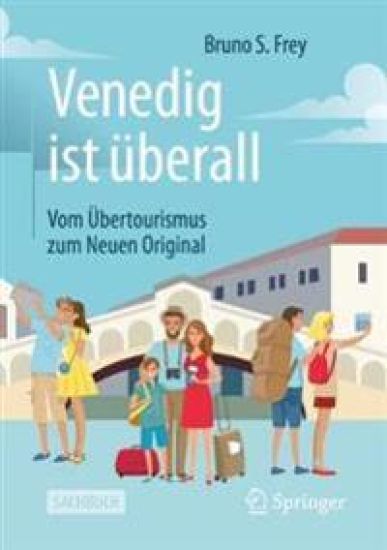
Kultureller Übertourismus ist das neue Schlagwort für von Touristen extrem stark frequentierte und damit überfüllte historische Sehenswürdigkeiten, Museen und Städte. Ein Kulturtourismus also, der negative Auswirkungen sowohl für die kulturellen Orte als auch für die dort lebenden Menschen zeitigt. In Reaktion darauf wird vermehrt protestiert und Kulturträger und Bürgermeister ergreifen zunehmend Maßnahmen, um den Touristenstrom zu begrenzen. Ist dies das Ende einer „Kultur für alle“? In diesem Buch schlägt Bruno S. Frey - renommierter und vielzitierter Kulturökonom - im Gegenteil eine Erweiterung des Angebotes als „Neue Originale“ vor: Die wichtigsten Monumente werden an einem geografisch geeigneten Ort identisch kopiert. Ergänzend werden den Besuchern mithilfe digitaler Informationstechnologien (Augmented und Virtual Reality inklusive Hologramme) Geschichte und Kultur der Orte nahe gebracht. Angrenzende Hotels, Restaurants und Läden bieten die notwendige begleitende Infrastruktur. Auf diese Weise kann der Touristenstrom zwischen den ursprünglichen und den „Neuen Originalen“ verteilt werden. Diese Idee wird mit seinen organisatorischen und ökonomischen Herausforderungen skizziert und von bestehenden Disneyland-Konzepten abgegrenzt. Gerade für Familien mit Kindern und allgemein kulturell interessierte Personen – also für die größte Zahl der Besucher – können diese „Neuen Originale“ sehr attraktiv sein.
Bruno S. Frey untersucht Kunst und Kultur vom Standpunkt der Wirtschaftswissenschaften – vor allem unter zwei Aspekten: der Beziehung zwischen Kunst und Wirtschaft sowie der Anwendung ökonomischen Denkens auf den Bereich der Kunst und Kultur. Wichtige Bereiche der Kunstökonomik befassen sich mit der darstellenden und bildenden Kunst, Museen, der Kulturindustrie, dem Kulturtourismus und dem kulturellen Erbe. Mit der Anwendung ökonomischen Denkens wird eine neue Art der Interdisziplinarität eröffnet. Die Kunstökonomik ist eine spannende Anwendung der ökonomischen Denkweise. Finanzwissenschaftliche Aspekte stehen dabei im Vordergrund. Der Autor erörtert Möglichkeiten, welche Rolle der Staat in der Finanzierung der Kunst spielt und spielen kann. Der Autor: Bruno S. Frey ist Ständiger Gastprofessor an der Universität Basel und Forschungsdirektor bei CREMA – Center for Research in Economics, Management and the Arts, Zürich/Schweiz. Zuvor war er Professor an den Universitäten Konstanz, Zürich, Chicago, Warwick und Friedrichshafen und ist mit fünf Ehrendoktoraten in fünf Ländern ausgezeichnet worden.
This book studies the relationship between the arts and the economy. By applying economic thinking to arts and culture, it analyses markets for art and cultural goods, highlights specific facets of art auctions and discusses determinants of the economic success of artists. The author also sheds new light on various cultural areas, such as the performing and visual arts, festivals, films, museums and cultural heritage. Lastly, the book discusses cultural policies, the role of the state in financing culture, and the relationship between the arts and happiness.
This book focuses on what makes people happy. The author explains methods for measuring subjective life satisfaction and well-being by discussing economic and sociodemographic factors, as well as the psychological, cultural and political dimensions of personal happiness. Does higher income increase happiness? Are people in rich countries, such as the United States, the United Kingdom and Scandinavian countries, happier than those living elsewhere? Does losing one’s job make one unhappy? What is the role of genetic endowments inherited from our parents? How important are physical and emotional health to subjective life satisfaction? Do older people tend to be happier, or younger people? Are close social relationships necessary for happiness? Do political conditions, such as respect for human rights, democracy and autonomy, play a part? How can governments contribute to the population’s happiness? This book answers these questions on the basis of extensiveinterdisciplinary research reflecting the current state of knowledge. The book will appeal to anyone interested in learning more about the various dimensions of personal well-being beyond the happiness-prosperity connection, as well as to policymakers looking for guidance on how to improve happiness in societies.
Honours fulfil one of the most fundamental desires of human beings, namely, to be recognised and held in esteem by others. There are thousands of awards in all areas of society: the state, arts and media, sports, religion, the voluntary sector, academia, and business. Awards are well visible, can raise the recipients' intrinsic motivation and creativity, and establish a bond of loyalty to the giver. They have distinct advantages over money and other rewards. Presenting empirical evidence using modern statistical techniques Honours versus Money argues that awards can significantly raise performance in different contexts even if they are purely symbolic, recommending how this can be used in practice. It makes the case for reorienting our focus- away from the monetary or material dimensions of work and private life, and towards the symbolic dimensions to celebrate and shine a light on merit and achievement. Honours versus Money discusses award bestowals in their different forms and facets, including as signals and as components of organisations' human resource strategies. It opens our perspective for motivational strategies beyond money, while also outlining their potential pitfalls.

Dieses essential beschäftigt sich mit der Frage, was uns Menschen glücklich macht. Bruno S. Frey erläutert Messmethoden, wirtschaftliche Faktoren, soziodemografische Einflüsse sowie politische Dimensionen des Glücks. Steigert ein höheres Einkommen die Zufriedenheit? Wird, wer die Arbeit verliert, unglücklich? Wie wichtig ist die physische und psychische Gesundheit für die Lebenszufriedenheit? Sind alte oder junge Menschen glücklicher? Braucht es intensive soziale Beziehungen, um glücklich zu werden? Welche Rolle spielen die politischen Bedingungen, wie die Beachtung der Menschenrechte, Demokratie und Autonomie? Und was kann die Regierung zum Glück ihrer Einwohner beitragen? Diese Fragen werden auf der Grundlage umfassender wissenschaftlicher Untersuchungen auf dem Stand des heutigen Wissens beantwortet.
This book champions the view that economics is a social science, and that, moreover, it may serve as a new paradigm for the social sciences. Economics is taken to be part of those sciences which deal with actual problems of society by providing insights, improving our understanding and suggesting solutions. I am aware that the way problems are addressed here has little in common with economics as it is generally understood today; most economists make strong efforts to imitate the exact sciences. Economics tends to become a branch of applied mathematics; the majority of all publications in professional journals and books are full of axioms, lemmas and proofs, and they are much concerned with purely formal deductions. Often, when the results are translated into verbal language, or when they are applied empirically, disappointingly little of interest remains. The book wants to show that another type of economics exists which is surprisingly little known. This type of economics has its own particular point of view. It centres on a concept of man, or a model of human behaviour, which differs from those normally used in other social sciences such as sociology, political science, law, or psychology. I do not, how ever, claim that economics is the only legitimate social science. On the vii viii PREFACE contrary, economics can provide useful insights only in collaboration with the other social sciences-an aspect which has been disregarded by mathematically oriented economics.
A leading economist discusses the potential of happiness research (the quantification of well-being) to answer important questions that standard economics methods are unable to analyze. Revolutionary developments in economics are rare. The conservative bias of the field and its enshrined knowledge make it difficult to introduce new ideas not in line with received theory. Happiness research, however, has the potential to change economics substantially in the future. Its findings, which are gradually being taken into account in standard economics, can be considered revolutionary in three respects: the measurement of experienced utility using psychologists' tools for measuring subjective well-being; new insights into how human beings value goods and services and social conditions that include consideration of such non-material values as autonomy and social relations; and policy consequences of these new insights that suggest different ways for government to affect individual well-being. In Happiness, emphasizing empirical evidence rather than theoretical conjectures, Bruno Frey substantiates these three revolutionary claims for happiness research. After tracing the major developments of happiness research in economics and demonstrating that we have gained important new insights into how income, unemployment, inflation, and income demonstration affect well-being, Frey examines such wide-ranging topics as democracy and federalism, self-employment and volunteer work, marriage, terrorism, and watching television from the new perspective of happiness research. Turning to policy implications, Frey describes how government can provide the conditions for people to achieve well-being, arguing that a crucial role is played by adequate political institutions and decentralized decision making. Happiness demonstrates the achievements of the economic happiness revolution and points the way to future research.

Emphasising a positive approach to dealing with terrorism (the carrot), this book provides a critique of deterrence policy (the stick) which can be ineffective and even counterproductive, and proposes three alternative and effective anti-terrorist policies:Decentralisation reduces vulnerability to terrorist attacks. A system with many different centres is more stable due to its diversity, enabling one part to substitute for another. Positive incentives can be offered to actual and prospective terrorists not to engage in violent acts. Incentives include: reintegrating terrorists into society, welcoming repentents and offering them valued opportunities. Diverting attention by naming several terrorist groups potentially responsible for a particular terrorist act. The government thus supplies more information than the terrorist responsible would wish. The proposed anti-terrorist policy has two important advantages over a coercive policy. The whole interaction between terrorists and the government transforms into a positive sum game and the strategy undermines the cohesiveness of the terrorist organisation. Surveying empirical results on the effects of terrorism on the economy and society, Bruno Frey demonstrates the strength of an economic approach to terrorism, which will be of great interest to social and also political scientists, public policy scholars, international relations experts and researchers, and above all, economists. The alternatives to deterrence illustrated in the book are advantageous for the general public and politicians, and the actuality that a positive policy is better than a coercive policy will be of great appeal to educators.

Emphasising a positive approach to dealing with terrorism (the carrot), this book provides a critique of deterrence policy (the stick) which can be ineffective and even counterproductive, and proposes three alternative and effective anti-terrorist policies:Decentralisation reduces vulnerability to terrorist attacks. A system with many different centres is more stable due to its diversity, enabling one part to substitute for another. Positive incentives can be offered to actual and prospective terrorists not to engage in violent acts. Incentives include: reintegrating terrorists into society, welcoming repentents and offering them valued opportunities. Diverting attention by naming several terrorist groups potentially responsible for a particular terrorist act. The government thus supplies more information than the terrorist responsible would wish. The proposed anti-terrorist policy has two important advantages over a coercive policy. The whole interaction between terrorists and the government transforms into a positive sum game and the strategy undermines the cohesiveness of the terrorist organisation. Surveying empirical results on the effects of terrorism on the economy and society, Bruno Frey demonstrates the strength of an economic approach to terrorism, which will be of great interest to social and also political scientists, public policy scholars, international relations experts and researchers, and above all, economists. The alternatives to deterrence illustrated in the book are advantageous for the general public and politicians, and the actuality that a positive policy is better than a coercive policy will be of great appeal to educators.
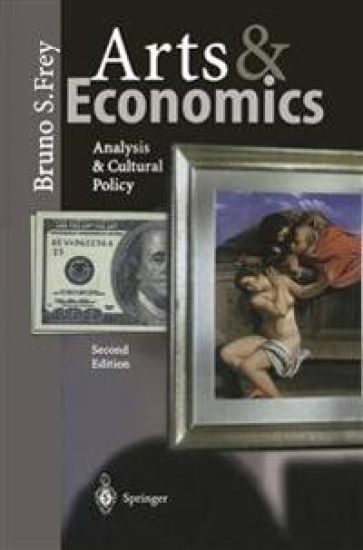
To put the ARTS & ECONOMICS next to each other, as in the title to this book, may be shocking to some readers. Must not creative art be free of economic constraints, must it not lead a life of its own? And is economics not the realm of mean commercial dealings? This book argues that it is not so: the ARTS & ECONOMICS go well together, indeed need each other. Without a sound economic base, art cannot exist, and without creativity the economy cannot flourish. There is a second way in which the Arts and Economics go together, namely in the sense of applying economic thinking to the arts. Over the last decades, this scholarly endeavor has been established under the name of "The Economics of Art" or "Cultural Economics". But this may also sound revolting to some readers as it suggests an imperialistic extension of a lowly benefit-cost calculus to the world of art. This fear is unwarranted. On the contrary, cultural economists stress the social value of art and defend it against a crude business view of art. Rather than dismissing art without direct commercial profit, art economists seek ways and means of supporting it. This book is not a textbook summarizing the achievements attained by the economics of art. Such books already exist, among them the author's own, Muses and Markets, Explorations in the Economics of Art, written jointly with Werner Pommerehne. VI Preface ARTS & ECONOMICS charters little known territories.
Economics can be inspiring - often taking a stand against convention, achieving challenging results, discussing unorthodox viewpoints and suggesting new policies. Bruno S. Frey illustrates what he perceives to be the inspirational quality of economics and how this differs from the type of economics studied in many academic institutions. He introduces insights into economics from a psychological perspective, dealing with issues such as transformation of anomalies, identification in democracy and crowding effects, and focuses on intrinsic motivation and how it is undermined. Inspiring Economics also looks at the integration of economics and politics, covering topics including popular initiatives and referenda, authoritarian nations and foreign aid, and the way in which the cost of war is reflected on the capital market. This groundbreaking empirical study of human motivation and behaviour will be a fascinating read for those interested in economics and economic theory.
Curiously, economists, whose discipline has much to do with human well-being, have shied away from factoring the study of happiness into their work. Happiness, they might say, is an "unscientific" concept. This is the first book to establish empirically the link between happiness and economics--and between happiness and democracy. Two respected economists, Bruno S. Frey and Alois Stutzer, integrate insights and findings from psychology, where attempts to measure quality of life are well-documented, as well as from sociology and political science. They demonstrate how micro- and macro-economic conditions in the form of income, unemployment, and inflation affect happiness. The research is centered on Switzerland, whose varying degrees of direct democracy from one canton to another, all within a single economy, allow for political effects to be isolated from economic effects. Not surprisingly, the authors confirm that unemployment and inflation nurture unhappiness. Their most striking revelation, however, is that the more developed the democratic institutions and the degree of local autonomy, the more satisfied people are with their lives. While such factors as rising income increase personal happiness only minimally, institutions that facilitate more individual involvement in politics (such as referendums) have a substantial effect. For countries such as the United States, where disillusionment with politics seems to be on the rise, such findings are especially significant. By applying econometrics to a real-world issue of general concern and yielding surprising results, Happiness and Economics promises to spark healthy debate over a wide range of the social sciences.
Economics can be inspiring - often taking a stand against convention, achieving challenging results, discussing unorthodox viewpoints and suggesting new policies. Bruno S. Frey illustrates what he perceives to be the inspirational quality of economics and how this differs from the type of economics studied in many academic institutions. He introduces insights into economics from a psychological perspective, dealing with issues such as transformation of anomalies, identification in democracy and crowding effects, and focuses on intrinsic motivation and how it is undermined. Inspiring Economics also looks at the integration of economics and politics, covering topics including popular initiatives and referenda, authoritarian nations and foreign aid, and the way in which the cost of war is reflected on the capital market. This groundbreaking empirical study of human motivation and behaviour will be a fascinating read for those interested in economics and economic theory.
This book champions the view that economics is a social science, and that, moreover, it may serve as a new paradigm for the social sciences. Economics is taken to be part of those sciences which deal with actual problems of society by providing insights, improving our understanding and suggesting solutions. I am aware that the way problems are addressed here has little in common with economics as it is generally understood today; most economists make strong efforts to imitate the exact sciences. Economics tends to become a branch of applied mathematics; the majority of all publications in professional journals and books are full of axioms, lemmas and proofs, and they are much concerned with purely formal deductions. Often, when the results are translated into verbal language, or when they are applied empirically, disappointingly little of interest remains. The book wants to show that another type of economics exists which is surprisingly little known. This type of economics has its own particular point of view. It centres on a concept of man, or a model of human behaviour, which differs from those normally used in other social sciences such as sociology, political science, law, or psychology. I do not, however, claim that economics is the only legitimate social science. On the contrary, economics can provide useful insights only in collaboration with the other social Vll Vlll PREFACE sciences-an aspect which has been disregarded by mathematically oriented economics.
This book champions the view that economics is a social science, and that, moreover, it may serve as a new paradigm for the social sciences. Economics is taken to be part of those sciences which deal with actual problems of society by providing insights, improving our understanding and suggesting solutions. I am aware that the way problems are addressed here has little in common with economics as it is generally understood today; most economists make strong efforts to imitate the exact sciences. Economics tends to become a branch of applied mathematics; the majority of all publications in professional journals and books are full of axioms, lemmas and proofs, and they are much concerned with purely formal deductions. Often, when the results are translated into verbal language, or when they are applied empirically, disappointingly little of interest remains. The book wants to show that another type of economics exists which is surprisingly little known. This type of economics has its own particular point of view. It centres on a concept of man, or a model of human behaviour, which differs from those normally used in other social sciences such as sociology, political science, law, or psychology. I do not, however, claim that economics is the only legitimate social science. On the contrary, economics can provide useful insights only in collaboration with the other social Vll Vlll PREFACE sciences-an aspect which has been disregarded by mathematically oriented economics.