Kirjojen hintavertailu – 12 859 819 kirjaa ja 27 kauppaa
Kirjailija
C. G. Jung
Kirjat ja teokset yhdessä paikassa: 359 kirjaa, julkaisuja vuosilta 1954–2026, suosituimpiin kuuluu Kalojen aika. Vertaile teosten hintoja ja tarkista saatavuus suomalaisista kirjakaupoista.
Nimi esiintyy myös muodoissa: C.G. Jung, C G Jung, C.G Jung, C. G Jung
Extracted from Volumes 10, 11, 13, and 18. Includes Commentary on The Secret of the Golden Flower, Psychological Commentary on The Tibetan Book of the Dead and The Tibetan Book of the Great Liberation, Foreword to Suzuki's Introduction to Zen Buddhism, and Foreword to the I Ching.
Extracted from Volumes 1, 8, and 18. Includes Jung's Foreword to Phenomenes Occultes (1939), "On the Psychology and Pathology of So-called Occult Phenomena," "The Psychological Foundations of Belief in Spirits," "The Soul and Death," "Psychology and Spiritualism," "On Spooks: Heresy or Truth?" and Foreword to Jaffe: Apparitions and Precognition.
The great psychologist provides a detailed account of the problems of philosophical alchemy and its central endeavor and symbols, relating them to his own psychological discoveries
The authoritative edition of Jung's miscellaneous collected writings The Symbolic Life gathers some 160 of Jung's writings that span sixty years and reflect his inquiring mind, numerous interests, and wide circle of professional and personal acquaintance. These writings include three longer works, "The Symbolic Life," "Symbols and the Interpretation of Dreams," and "The Tavistock Lectures"; a number of previously overlooked reviews, reports, and articles from the early years of Jung's career; several finished or virtually finished manuscripts that weren't published in his lifetime, including a 1901 report on Freud's On Dreams; and works Jung wrote after retiring from active medical practice. The other pieces collected here include forewords to books by colleagues and pupils, replies to journalists' questions, encyclopedia articles, and letters on technical subjects.
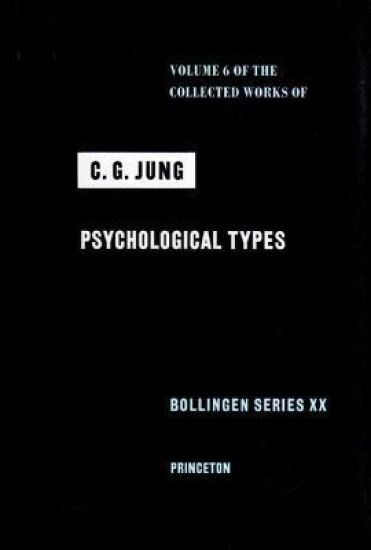
One of the most important of Jung's longer works, and probably the most famous of his books, Psychological Types appeared in German in 1921 after a "fallow period" of eight years during which Jung had published little. He called it "the fruit of nearly twenty years' work in the domain of practical psychology," and in his autobiography he wrote: "This work sprang originally from my need to define the ways in which my outlook differed from Freud's and Adler's. In attempting to answer this question, I came across the problem of types; for it is one's psychological type which from the outset determines and limits a person's judgment. My book, therefore, was an effort to deal with the relationship of the individual to the world, to people and things. It discussed the various aspects of consciousness, the various attitudes the conscious mind might take toward the world, and thus constitutes a psychology of consciousness regarded from what might be called a clinical angle." In expounding his system of personality types Jung relied not so much on formal case data as on the countless impressions and experiences derived from the treatment of nervous illnesses, from intercourse with people of all social levels, "friend and foe alike," and from an analysis of his own psychological nature. The book is rich in material drawn from literature, aesthetics, religion, and philosophy. The extended chapters that give general descriptions of the types and definitions of Jung's principal psychological concepts are key documents in analytical psychology.
In May 1956, in his eighty-second year, Jung first discussed with Gerhard Adler the question of the publication of his letters. Over many years, Jung had often used the medium of letters to communicate his ideas to others and to clarify the interpretation of his work, quite apart from answering people who approached him with genuine problems of their own and simply corresponding with friends and colleagues. Many of his letters thus contain new creative ideas and provide a running commentary on his work. From some 1,600 letters written by Jung between the years 1906-1961, the editors have selected over 1,000. Volume 1, published in 1973, contains those letters written between 1906 and 1950.
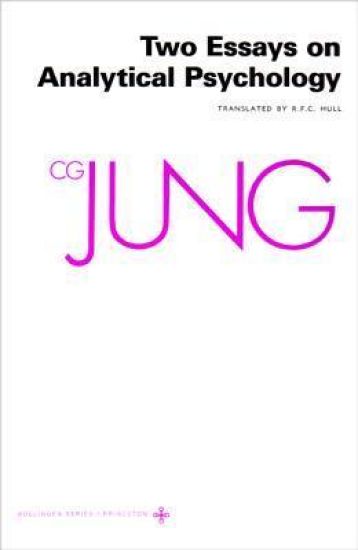
This volume has become known as perhaps the best introduction to Jung's work. In these famous essays. "The Relations between the Ego and the Unconscious" and "On the Psychology of the Unconscious," he presented the essential core of his system. Historically, they mark the end of Jung's intimate association with Freud and sum up his attempt to integrate the psychological schools of Freud and Adler into a comprehensive framework. This is the first paperback publication of this key work in its revised and augmented second edition of 1966. The earliest versions of the Two Essays, "New Paths in Psychology" (1912) and "The Structure of the Unconscious" (1916), discovered among Jung's posthumous papers, are published in an appendix, to show the development of Jung's thought in later versions. As an aid to study, the index has been comprehensively expanded.
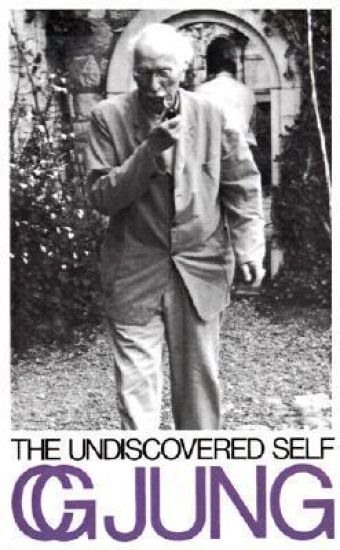
Together for the first time in one paperback volume are two of Jung's major late works, in the version published in The Collected Works of C. G. Jung, as rendered by Jung's official translator. "The Undiscovered Self" (1957) integrates many of Jung's lifelong social and psychological concerns and addresses the uneasy relation between the individual and mass society. The survival of civilization, he maintains, depends on individual awareness of both the conscious and unconscious aspects of the human psyche. The exploration of the unconscious, in particular, leads to self-knowledge and with it recognition of the duality of human natureits potential for evil as well as for good. Jung believes that it is this self-knowledge that enables the individual to resist the collective power of mass society and the state and to cope with their possible threats. Jung's reflections on self-knowledge and the exploration of the unconscious carry over into his essay "Symbols and the Interpretation of Dreams," completed shortly before his death in 1961. (It is the original version of his introduction to the symposium Man and His Symbols, conceived as a popular presentation of Jungian ideas.) Describing dreams as communications from the unconscious--as expressions of aspects of the individual that have been neglected or unrealized--Jung explains how the symbols that occur in dreams compensate for repressed emotions and intuitions. In a world dehumanized, in Jung's view, by scientific "progress" and the loss of emotional participation in natural events, symbols recall our original nature, its instincts and peculiar way of thinking. This essay brings together Jung's fully evolved thoughts on the analysis of dreams and the healing of the rift between consciousness and the unconscious, in the context of his system of psychology.
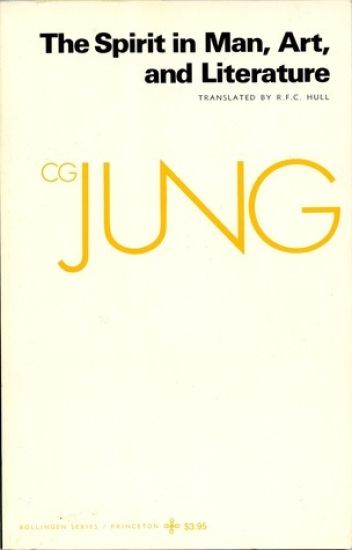
Nine essays, written between 1922 and 1941, on Paracelsus, Freud, Picasso, the sinologist Richard Wilhelm, Joyce's Ulysses, artistic creativity generally, and the source of artistic creativity in archetypal structures.
One of the most important of Jung's longer works, and probably the most famous of his books, Psychological Types appeared in German in 1921 after a "fallow period" of eight years during which Jung had published little. He called it "the fruit of nearly twenty years' work in the domain of practical psychology," and in his autobiography he wrote: "This work sprang originally from my need to define the ways in which my outlook differed from Freud's and Adler's. In attempting to answer this question, I came across the problem of types; for it is one's psychological type which from the outset determines and limits a person's judgment. My book, therefore, was an effort to deal with the relationship of the individual to the world, to people and things. It discussed the various aspects of consciousness, the various attitudes the conscious mind might take toward the world, and thus constitutes a psychology of consciousness regarded from what might be called a clinical angle." In expounding his system of personality types Jung relied not so much on formal case data as on the countless impressions and experiences derived from the treatment of nervous illnesses, from intercourse with people of all social levels, "friend and foe alike," and from an analysis of his own psychological nature. The book is rich in material drawn from literature, aesthetics, religion, and philosophy. The extended chapters that give general descriptions of the types and definitions of Jung's principal psychological concepts are key documents in analytical psychology.
An authoritative collection of Jung's writings on contemporary events, including The Undiscovered Self and Flying Saucers Civilization in Transition features Jung's writings on contemporary events, especially the relation between the individual and society. In the earliest essay, "The Role of the Unconscious" (1918), Jung advanced the theory that World War I was a psychological crisis originating in the collective unconscious of individuals. In other essays included here, he pursued this theory in the 1920s and 1930s, focusing on the upheaval in Germany, and he gave it a much wider application in two major works of his last years, also featured here--Flying Saucers, which is about the birth of a myth that Jung regarded as a reaction to the scientific trends of a technological era, and The Undiscovered Self.
The Structure and Dynamics of the Psyche first appeared in the Collected Works in 1960. In this new edition bibliographical citations and entries have been revised in the light of subsequent publications in the Collected Works, and essential corrections have been made. The book traces an important line of development in Jung's thought from 1912 onwards. The earliest of the papers elaborates Freud's concept of sexual libido into that of psychic energy. In those that follow we see how, Jung, discarding one by one the traditional 'philosophical' hypotheses, gradually arrived at a concept which is even more controversial than psychic energy was in its day ^DDL namely, psychic reality. The book contains the first mention of the archetype in Jung's writings as well as his later views on its nature. There is also a valuable account of the therapeutic uses of 'active imagination' first described in an essay written in 1916.
Over one hundred forty items, representative of Jung's interests and professional activities and spanning sixty years, include lectures, forewords, reviews, articles, and letters
An authoritative edition of Jung's shorter works on the psychology of religious phenomena This volume collects Jung's shorter writings on religion and psychology, including several that are of major importance. The pieces on Western religion are Psychology and Religion - A Psychological Approach to the Dogma of the Trinity - Transformation Symbolism in the Mass - Forewords to White's God and the Unconscious and Werblowsky's Lucifer and Prometheus - Brother Klaus - Psychotherapists or the Clergy - Psychoanalysis and the Cure of Souls - Answer to Job The pieces on Eastern religion are Psychological Commentaries on The Tibetan Book of the Great Liberation and The Tibetan Book of the Dead - Yoga and the West - Foreword to Suzuki's Introduction to Zen Buddhism - The Psychology of Eastern Meditation - The Holy Men of India - Foreword to the I Ching
An authoritative collection of Jung's writings on analytical psychology, including Synchronicity The Structure and Dynamics of the Psyche features a selection of Jung's writings, ranging over four decades of his career, which illustrate the development of the conceptual foundations of analytical psychology. These pieces span the period from Jung's break with Freud and the psychoanalytical school, when Jung began formulating his own theories, to the 1950s, when he published an account of his controversial theory of synchronicity. The contents are: On Psychic Energy - The Transcendent Function - A Review of the Complex Theory - The Significance of Constitution and Heredity in Psychology - Psychological Factors Determining Human Behavior - Instinct and the Unconscious - The Structure of the Psyche - On the Nature of the Psyche - General Aspects of Dream Psychology - On the Nature of Dreams - The Psychological Foundation of Belief in Spirits - Spirit and Life - Basic Postulates of Analytical Psychology - Analytical Psychology and Weltanschauung - The Real and the Surreal - The Stages of Life - The Soul and Death - Synchronicity: An Acausal Connecting Principle - On Synchronicity
Essays on a Science of Mythology is a cooperative work between C. Kerenyi, who has been called "the most psychological of mythologists," and C. G. Jung, who has been called "the most mythological of psychologists." Kerenyi contributes an essay on the Divine Child and one on the Kore (the Maiden), together with a substantial introduction and conclusion. Jung contributes a psychological commentary on each essay. Both men hoped, through their collaboration, to elevate the study of mythology to the status of a science. In "The Primordial Child in Primordial Times" Kerenyi treats the child-God as an enduring and significant figure in Greek, Norse, Finnish, Etruscan, and Judeo-Christian mythology. He discusses the Kore as Athena, Artemis, Hecate, and Demeter-Persephone, the mother-daughter of the Eleusinian mysteries. Jung speaks of the Divine Child and the Maiden as living psychological realities that provide continuing meaning in people's lives. The investigations of C. Kerenyi are continued in a later study, Eleusis: Archetypal Image of Mother and Daughter (Princeton).