Kirjojen hintavertailu – 12 859 818 kirjaa ja 27 kauppaa

Kirjailija

C. G. Jung

Kirjat ja teokset yhdessä paikassa: 359 kirjaa, julkaisuja vuosilta 1954–2026, suosituimpiin kuuluu Kalojen aika. Vertaile teosten hintoja ja tarkista saatavuus suomalaisista kirjakaupoista.

Nimi esiintyy myös muodoissa: C.G. Jung, C G Jung, C.G Jung, C. G Jung

359 kirjaa

Kirjojen julkaisuvuodet: 1954–2026.

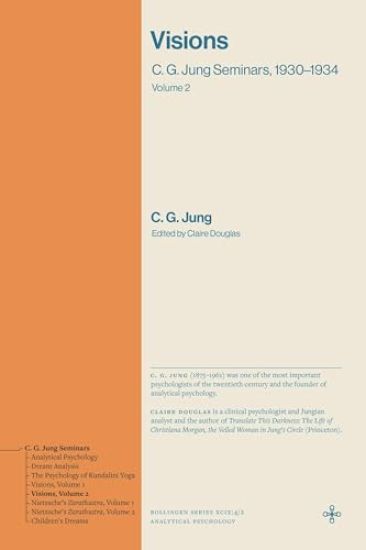
Visions

Visions

C. G. Jung

PRINCETON UNIVERSITY PRESS
2026
sidottu
Volume one of Jung’s legendary talks on the archetypal visions of one of analytical psychology’s most intriguing figures For C. G. Jung, the beautiful and gifted twenty-eight-year-old Christiana Morgan was an inspirational force whose path in self-analysis paralleled his own quest for self-knowledge. Teaching Morgan the trance-like technique of active imagination, Jung launched her on a pilgrimage of archetypal encounters in a quest for psychological integration—encounters she recorded in the words and paintings that formed the basis of the seminar Jung would give to his circle in Zurich, presented here in the first of two volumes. Jung speaks candidly about Morgan’s visions even as he struggles with the feminine principle in his subject and his own psyche. The theories from his years of intellectual research—the anima and animus, the process of individuation, the mythopoetic archetypes of the collective unconscious—all spring to life in the fiery imagery of Morgan’s imaginal landscape. Recounting her journey, Jung employs his full range of scholarship and professional experience as he unravels the skein of archetypal parallels from Western myth and Eastern yoga.
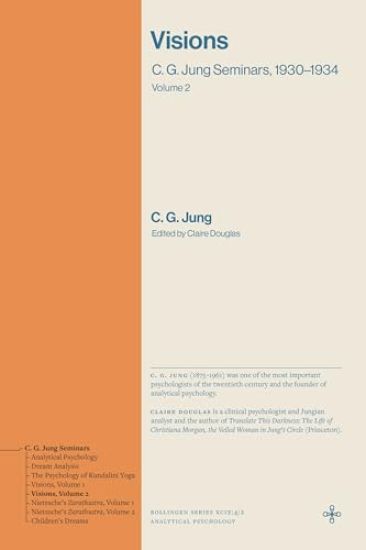
Visions

Visions

C. G. Jung

PRINCETON UNIVERSITY PRESS
2026
pokkari
Volume two of Jung’s legendary talks on the archetypal visions of one of analytical psychology’s most intriguing figures For C. G. Jung, the beautiful and gifted twenty-eight-year-old Christiana Morgan was an inspirational force whose path in self-analysis paralleled his own quest for self-knowledge. Teaching Morgan the trance-like technique of active imagination, Jung launched her on a pilgrimage of archetypal encounters in a quest for psychological integration—encounters she recorded in the words and paintings that formed the basis of the seminar Jung would give to his circle in Zurich, presented here in the second of two volumes. Jung speaks candidly about Morgan’s visions even as he struggles with the feminine principle in his subject and his own psyche. The theories from his years of intellectual research—the anima and animus, the process of individuation, the mythopoetic archetypes of the collective unconscious—all spring to life in the fiery imagery of Morgan’s imaginal landscape. Recounting her journey, Jung employs his full range of scholarship and professional experience as he unravels the skein of archetypal parallels from Western myth and Eastern yoga.
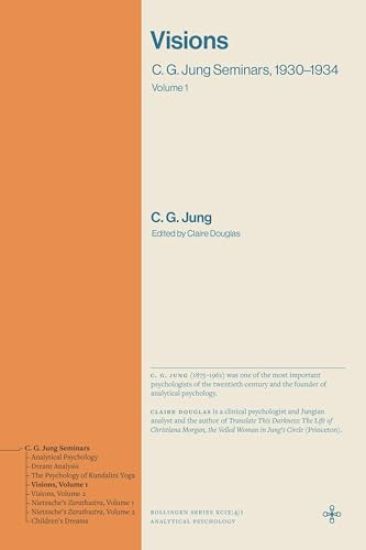
Visions

Visions

C. G. Jung

PRINCETON UNIVERSITY PRESS
2026
sidottu
Volume one of Jung’s legendary talks on the archetypal visions of one of analytical psychology’s most intriguing figures For C. G. Jung, the beautiful and gifted twenty-eight-year-old Christiana Morgan was an inspirational force whose path in self-analysis paralleled his own quest for self-knowledge. Teaching Morgan the trance-like technique of active imagination, Jung launched her on a pilgrimage of archetypal encounters in a quest for psychological integration—encounters she recorded in the words and paintings that formed the basis of the seminar Jung would give to his circle in Zurich, presented here in the first of two volumes. Jung speaks candidly about Morgan’s visions even as he struggles with the feminine principle in his subject and his own psyche. The theories from his years of intellectual research—the anima and animus, the process of individuation, the mythopoetic archetypes of the collective unconscious—all spring to life in the fiery imagery of Morgan’s imaginal landscape. Recounting her journey, Jung employs his full range of scholarship and professional experience as he unravels the skein of archetypal parallels from Western myth and Eastern yoga.
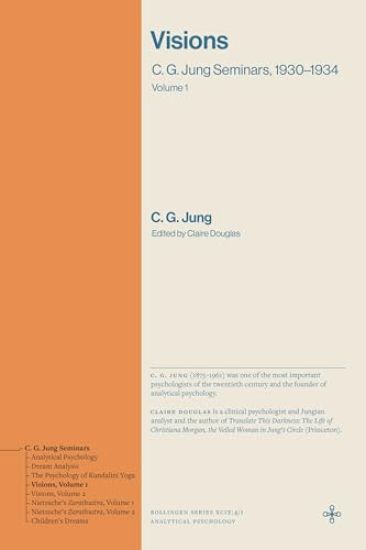
Visions

Visions

C. G. Jung

PRINCETON UNIVERSITY PRESS
2026
pokkari
Volume one of Jung’s legendary talks on the archetypal visions of one of analytical psychology’s most intriguing figures For C. G. Jung, the beautiful and gifted twenty-eight-year-old Christiana Morgan was an inspirational force whose path in self-analysis paralleled his own quest for self-knowledge. Teaching Morgan the trance-like technique of active imagination, Jung launched her on a pilgrimage of archetypal encounters in a quest for psychological integration—encounters she recorded in the words and paintings that formed the basis of the seminar Jung would give to his circle in Zurich, presented here in the first of two volumes. Jung speaks candidly about Morgan’s visions even as he struggles with the feminine principle in his subject and his own psyche. The theories from his years of intellectual research—the anima and animus, the process of individuation, the mythopoetic archetypes of the collective unconscious—all spring to life in the fiery imagery of Morgan’s imaginal landscape. Recounting her journey, Jung employs his full range of scholarship and professional experience as he unravels the skein of archetypal parallels from Western myth and Eastern yoga.
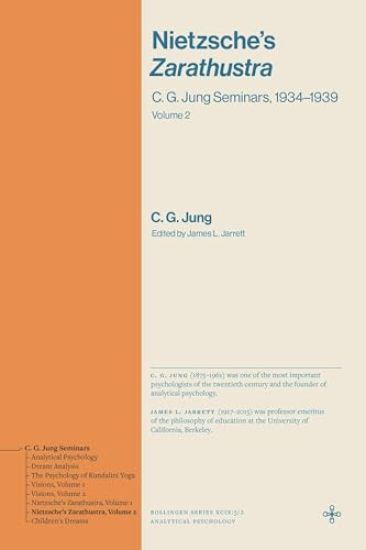
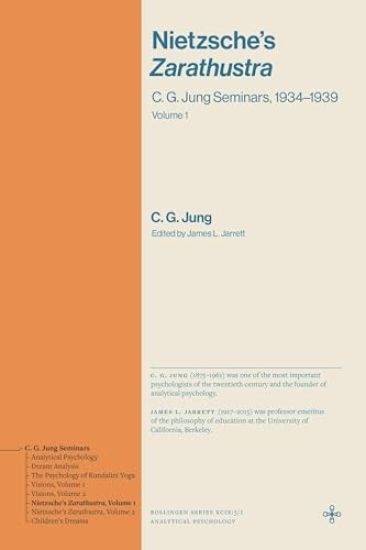
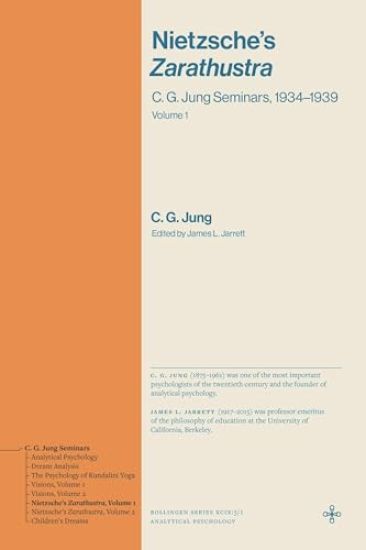
Nietzsche's Zarathustra

Nietzsche's Zarathustra

C. G. Jung

PRINCETON UNIVERSITY PRESS
2026
pokkari
Volume two of Jung’s seminar on the book that moved him profoundly and had a lifelong influence on his thought Nietzsche’s infamous work Thus Spake Zarathustra is filled with a strange sense of religiosity that seems to run counter to the philosopher’s usual polemics against religious faith. For some scholars, this book marks little but a mental decline in the great philosopher. For C. G. Jung, however, Zarathustra was an invaluable demonstration of the unconscious at work, one that illuminated both Nietzsche’s psychology and spirituality and that of the modern world in general. This is the second of two volumes of Jung’s lively seminar on Nietzsche’s Zarathustra, which remains an important source for specialists in depth psychology. In these historic sessions, the mature Jung speaks informally to members of his inner circle about a thinker whose work not only overwhelmed him with the depth of their understanding of human nature but also provided the philosophical sources of many of his own ideas.
Nietzsche's Zarathustra

Nietzsche's Zarathustra

C. G. Jung

PRINCETON UNIVERSITY PRESS
2026
sidottu
Volume one of Jung’s seminar on the book that moved him profoundly and had a lifelong influence on his thought Nietzsche’s infamous work Thus Spake Zarathustra is filled with a strange sense of religiosity that seems to run counter to the philosopher’s usual polemics against religious faith. For some scholars, this book marks little but a mental decline in the great philosopher. For C. G. Jung, however, Zarathustra was an invaluable demonstration of the unconscious at work, one that illuminated both Nietzsche’s psychology and spirituality and that of the modern world in general. This is the first of two volumes of Jung’s lively seminar on Nietzsche’s Zarathustra, which remains an important source for specialists in depth psychology. In these historic sessions, the mature Jung speaks informally to members of his inner circle about a thinker whose work not only overwhelmed him with the depth of their understanding of human nature but also provided the philosophical sources of many of his own ideas.
Nietzsche's Zarathustra

Nietzsche's Zarathustra

C. G. Jung

PRINCETON UNIVERSITY PRESS
2026
pokkari
Volume one of Jung’s seminar on the book that moved him profoundly and had a lifelong influence on his thought Nietzsche’s infamous work Thus Spake Zarathustra is filled with a strange sense of religiosity that seems to run counter to the philosopher’s usual polemics against religious faith. For some scholars, this book marks little but a mental decline in the great philosopher. For C. G. Jung, however, Zarathustra was an invaluable demonstration of the unconscious at work, one that illuminated both Nietzsche’s psychology and spirituality and that of the modern world in general. This is the first of two volumes of Jung’s lively seminar on Nietzsche’s Zarathustra, which remains an important source for specialists in depth psychology. In these historic sessions, the mature Jung speaks informally to members of his inner circle about a thinker whose work not only overwhelmed him with the depth of their understanding of human nature but also provided the philosophical sources of many of his own ideas.
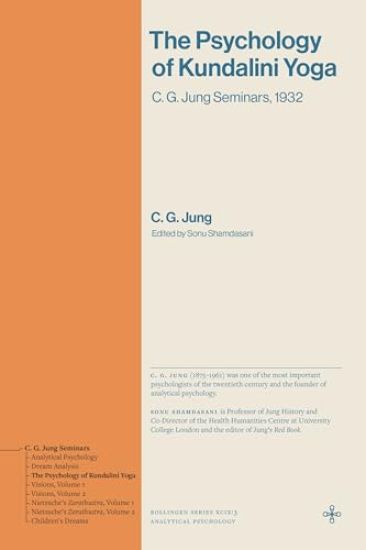
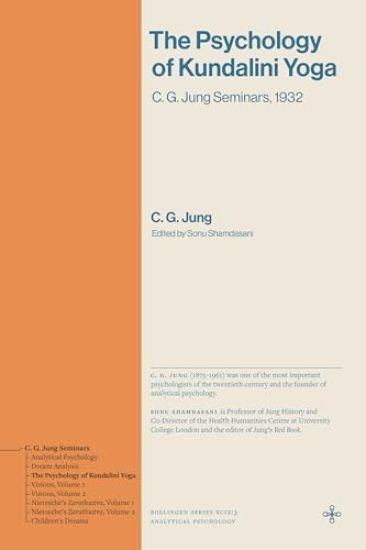
The Psychology of Kundalini Yoga

The Psychology of Kundalini Yoga

C. G. Jung

PRINCETON UNIVERSITY PRESS
2026
sidottu
Jung’s landmark seminar on kundalini yoga and the symbolic transformations of inner experience C. G. Jung’s seminar on kundalini yoga, presented to the Psychological Club in Zurich in 1932, is widely regarded as a milestone in the psychological understanding of Eastern thought. Kundalini yoga presented Jung with a model for the developmental phases of higher consciousness, and he interpreted its symbols in terms of the process of individuation. The Psychology of Kundalini Yoga brings together these lectures and seminar discussions into a single illuminating volume. It gives today’s readers an appreciation of some of the questions that stirred the minds of analysts in the 1930s: What is the relation between Eastern schools of liberation and Western psychotherapy? What connection is there between esoteric religious traditions and spontaneous individual experience? What light do the symbols of kundalini yoga shine on conditions diagnosed as psychotic? The book also includes a seminar by the Indologist Wilhelm Hauer, presented in conjunction with Jung’s own, and Sir John Woodroffe’s classic translation of the tantric text, the Sat-cakra Nirupana.
The Psychology of Kundalini Yoga

The Psychology of Kundalini Yoga

C. G. Jung

PRINCETON UNIVERSITY PRESS
2026
pokkari
Jung’s landmark seminar on kundalini yoga and the symbolic transformations of inner experience C. G. Jung’s seminar on kundalini yoga, presented to the Psychological Club in Zurich in 1932, is widely regarded as a milestone in the psychological understanding of Eastern thought. Kundalini yoga presented Jung with a model for the developmental phases of higher consciousness, and he interpreted its symbols in terms of the process of individuation. The Psychology of Kundalini Yoga brings together these lectures and seminar discussions into a single illuminating volume. It gives today’s readers an appreciation of some of the questions that stirred the minds of analysts in the 1930s: What is the relation between Eastern schools of liberation and Western psychotherapy? What connection is there between esoteric religious traditions and spontaneous individual experience? What light do the symbols of kundalini yoga shine on conditions diagnosed as psychotic? The book also includes a seminar by the Indologist Wilhelm Hauer, presented in conjunction with Jung’s own, and Sir John Woodroffe’s classic translation of the tantric text, the Sat-cakra Nirupana.
Dream Analysis

Dream Analysis

C. G. Jung

PRINCETON UNIVERSITY PRESS
2026
sidottu
Jung’s landmark seminar on dream analysis Presented here is the first of C. G. Jung’s extended English seminars, given to a relatively large group of auditors at weekly meetings from November 1928 to June 1930. While the basis of this seminar is a series of thirty dreams of a male patient of Jung’s, the commentary ranges associatively over a broad expanse of Jung’s learning and experience. Dream Analysis offers an up-close view of Jung the teacher and clinician, illuminating his method of dream analysis through amplification.
Dream Analysis

Dream Analysis

C. G. Jung

PRINCETON UNIVERSITY PRESS
2026
pokkari
Jung’s landmark seminar on dream analysis Presented here is the first of C. G. Jung’s extended English seminars, given to a relatively large group of auditors at weekly meetings from November 1928 to June 1930. While the basis of this seminar is a series of thirty dreams of a male patient of Jung’s, the commentary ranges associatively over a broad expanse of Jung’s learning and experience. Dream Analysis offers an up-close view of Jung the teacher and clinician, illuminating his method of dream analysis through amplification.
Analytical Psychology

Analytical Psychology

C. G. Jung

PRINCETON UNIVERSITY PRESS
2026
sidottu
Jung’s groundbreaking seminar on the foundations of analytical psychology For C. G. Jung, 1925 was a watershed year. He turned fifty, visited the Pueblo Indians of New Mexico and the tribesmen of East Africa, and published his first book on the principles of analytical psychology meant for general readers. He gave the first of his formal seminars in English, conducted in weekly meetings during the spring and summer. Analytical Psychology is the authoritative edition of this illuminating seminar. It begins with a notably personal account of the development of his thinking from 1896 up to his break with Freud in 1912. It moves on to discussions of the basic tenets of analytical psychology—the collective unconscious, typology, the archetypes, and the anima/animus theory. In his elucidation of the theory, Jung analyzes in detail the symbolism in H. Rider Haggard’s She and other novels. Besides these literary paradigms, he makes use of case material and examples from the fine arts.
Analytical Psychology

Analytical Psychology

C. G. Jung

PRINCETON UNIVERSITY PRESS
2026
pokkari
Jung’s groundbreaking seminar on the foundations of analytical psychology For C. G. Jung, 1925 was a watershed year. He turned fifty, visited the Pueblo Indians of New Mexico and the tribesmen of East Africa, and published his first book on the principles of analytical psychology meant for general readers. He gave the first of his formal seminars in English, conducted in weekly meetings during the spring and summer. Analytical Psychology is the authoritative edition of this illuminating seminar. It begins with a notably personal account of the development of his thinking from 1896 up to his break with Freud in 1912. It moves on to discussions of the basic tenets of analytical psychology—the collective unconscious, typology, the archetypes, and the anima/animus theory. In his elucidation of the theory, Jung analyzes in detail the symbolism in H. Rider Haggard’s She and other novels. Besides these literary paradigms, he makes use of case material and examples from the fine arts.
Psychological Types

Psychological Types

C. G. Jung

Routledge
2026
sidottu
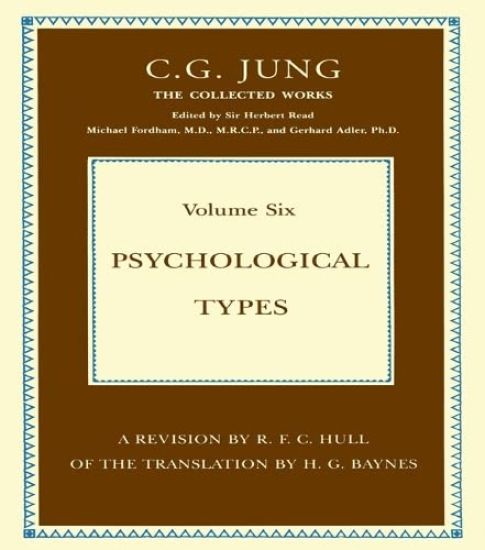
Psychological Types is one of Jung's most important and most famous works. First published by Routledge (Kegan Paul) in the early 1920s it appeared after Jung's so-called fallow period, during which he published little, and it is perhaps the first significant book to appear after his own confrontation with the unconscious. It is the book that introduced the world to the terms 'extravert' and 'introvert'. Though very much associated with the unconscious, in Psychological Types Jung shows himself to be a supreme theorist of the conscious. In putting forward his system of psychological types Jung provides a means for understanding ourselves and the world around us: our different patterns of behaviour, our relationships, marriage, national and international conflict, organizational functioning. Appearing in paperback for the first time this central volume from Jung's Collected Works will be essential to anyone requiring a proper understanding of Jung's psychology.
The I Ching or Book of Changes

The I Ching or Book of Changes

C. G. Jung

PRINCETON UNIVERSITY PRESS
2026
pokkari
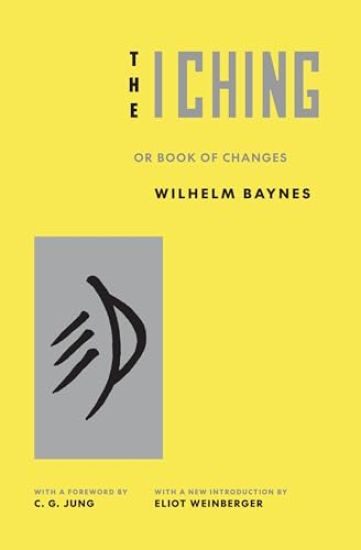
The landmark translation that introduced an ancient Chinese Classic to the West—more than one million copies sold The Wilhelm-Baynes translation of the I Ching, or Book of Changes, has inspired millions with its timeless insights into the changing nature of existence. First set down in the dawn of history as a book of oracles, the I Ching grew into a book of wisdom, eventually becoming one of the Five Classics of Confucianism and providing a common source for both Confucianist and Taoist philosophy. With this groundbreaking translation, the ancient Classic came to the West, where it has influenced countless artists and writers, from Bob Dylan and Philip K. Dick to John Cage and Octavio Paz. Organized for easy reference, it presents the sixty-four hexagrams alongside their commentaries and interpretations, including the Ten Wings, supplemental writings traditionally ascribed to Confucius that provide indispensable perspectives on the symbolic structure of the hexagrams. Featuring C. G. Jung’s illuminating foreword, and now with a new introduction by internationally acclaimed essayist Eliot Weinberger, this essential edition preserves the spirit of the ancient text while providing a vital key for anyone seeking to live harmoniously with the immutable law of change.