Kirjojen hintavertailu – 12 903 725 kirjaa ja 27 kauppaa

Kirjailija

C. Stephen Evans

Kirjat ja teokset yhdessä paikassa: 32 kirjaa, julkaisuja vuosilta 1985–2026, suosituimpiin kuuluu Kierkegaard on Faith and the Self. Vertaile teosten hintoja ja tarkista saatavuus suomalaisista kirjakaupoista.

Nimi esiintyy myös muodoissa: C Stephen Evans

32 kirjaa

Kirjojen julkaisuvuodet: 1985–2026.

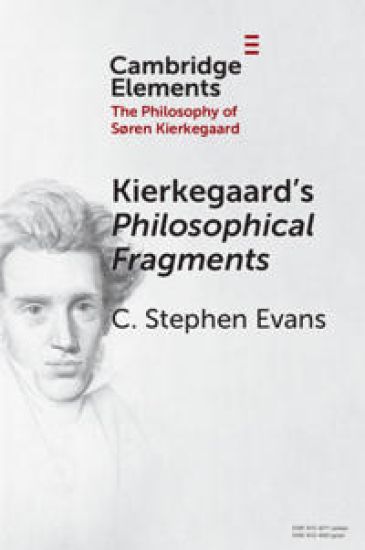
Kierkegaard's Philosophical Fragments

Kierkegaard's Philosophical Fragments

C. Stephen Evans

Cambridge University Press
2026
pokkari
This Element is a critical analysis of Kierkegaard's Philosophical Fragments, attributed to the pseudonymous author Johannes Climacus. The philosophical content of Kierkegaard's work is developed in the form of an ironical, humorous jest in which Climacus pretends to invent a philosophical view that he claims cannot be humanly invented, and which bears a strong resemblance to Christian faith. The invention is proposed as an alternative to “the Socratic view” of the Truth that, if possessed, leads to eternal life. The crucial underlying issue is whether eternal life could be linked to history. This Element explores the purpose of this literary form, and its relation to the philosophical content, highlighting the importance of Fragments for philosophy of religion, theology, and even the contemporary relation of religion to politics and culture, and arguing that Kierkegaard's view is not a form of irrational fideism.
Kierkegaard's Philosophical Fragments

Kierkegaard's Philosophical Fragments

C. Stephen Evans

Cambridge University Press
2026
sidottu
This Element is a critical analysis of Kierkegaard's Philosophical Fragments, attributed to the pseudonymous author Johannes Climacus. The philosophical content of Kierkegaard's work is developed in the form of an ironical, humorous jest in which Climacus pretends to invent a philosophical view that he claims cannot be humanly invented, and which bears a strong resemblance to Christian faith. The invention is proposed as an alternative to “the Socratic view” of the Truth that, if possessed, leads to eternal life. The crucial underlying issue is whether eternal life could be linked to history. This Element explores the purpose of this literary form, and its relation to the philosophical content, highlighting the importance of Fragments for philosophy of religion, theology, and even the contemporary relation of religion to politics and culture, and arguing that Kierkegaard's view is not a form of irrational fideism.
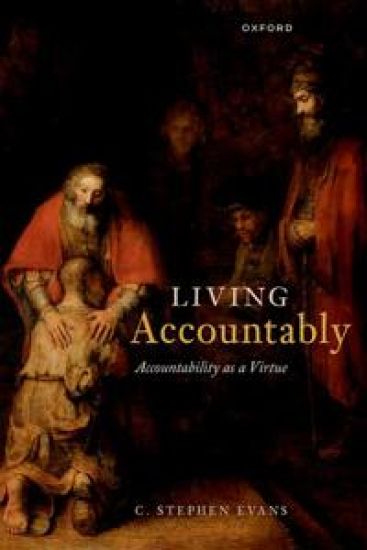
Living Accountably

Living Accountably

C. Stephen Evans

Oxford University Press
2022
sidottu
In contemporary culture, accountability is usually understood in terms of holding people who have done something wrong accountable for their actions. As such, it is virtually synonymous with punishing someone. Living Accountably argues that accountability should also be understood as a significant, forward-looking virtue, an excellence possessed by those who willingly embrace being accountable to those who have proper standing, when that standing is exercised appropriately. Those who have this virtue are people who strive to live accountably. The book gives a fine-grained description of the virtue and how it is exercised, including an account of the motivational profile of the one who has the virtue. It examines the relation of accountability to other virtues, such as honesty and humility, as well as opposing vices, such as self-deception, arrogance, and servility. Though the virtue of accountability is compatible with individual autonomy, recognizing the importance of the virtue does justice to the social character of human persons. C. Stephen Evans also explores the history of this virtue in other cultures and historical eras, providing evidence that the virtue is widely recognized, even if it is somewhat eclipsed in modern western societies. Accountability is also a virtue that connects ethical life with religious life for many people, since it is common for people to have a sense that they are accountable in a global way for how they live their lives. Living Accountably explores the question as to whether global accountability can be understood in a purely secular way, as accountability to other humans, or whether it must be understood as accountability to God, or some other transcendent reality.
Kierkegaard's  "Fragments" and  "Postscripts

Kierkegaard's "Fragments" and "Postscripts

C. Stephen Evans

Baylor University Press
2020
sidottu
Evans' analysis of Kierkegaard's Philosophical Fragments and Concluding Unscientific Postscript introduces even the nonspecialist to two of Kierkegaard's most challenging works without minimizing the complex nature of his philosophy. Evans honors Kierkegaard's wish not to be confused with his pseudonyms and so frames the discussion around the thoughts of "Johannes Climacus." Yet, Evans highlights the similarities between Climacus' and Kierkegaard's ideas while setting them in conversation with contemporary philosophers and theologians. The book is divided into thirteen chapters. The first three set up the book with an introduction to Kierkegaard's pseudonymous literature as a whole, an overview of Fragments and Postscript, and a discussion of the character and views of the Johannes Climacus pseudonym. The next nine chapters delve into specific pairs of concepts such as existence and the ethical, truth and subjectivity, and irony and humor. Evans also explores concepts that illuminate "immanent" or natural religion, as well as Christianity, understood as a "transcendent" religion grounded in a special revelation. Throughout, there is a revealing look at the roles objectivity and subjectivity play in human existence. Evans concludes his work with a consideration of Climacus' voice that opens the door for readers to make their own interpretations and contributions to the conversation. A careful and lucid guide, Evans' book is a key companion to Kierkegaard's philosophical writings.
Kierkegaard on Faith and the Self

Kierkegaard on Faith and the Self

C. Stephen Evans

Baylor University Press
2020
sidottu
Kierkegaard on Faith and the Self represents a rich collection of studies that allow Søren Kierkegaard to speak directly to the questions of contemporary readers. Evans analyzes Kierkegaard as a philosopher, his perspectives on faith, reason, and epistemology, ethics, and his view of the self. Evans makes a strong case that Kierkegaard has something crucial to say to the Christian church as a philosopher and something equally crucial to say to the philosophical world as a Christian believer.
A History of Western Philosophy – From the Pre–Socratics to Postmodernism

A History of Western Philosophy – From the Pre–Socratics to Postmodernism

C. Stephen Evans

IVP Academic
2018
sidottu

Halvin toimitettuna 73,60 €

Plato. Aristotle. Augustine. Hume. Kant. Hegel. These names and the philosophies associated with them ring through the minds of every student and scholar of philosophy. And in their search for knowledge, every student of philosophy needs to know the history of the philosophical discourse such giants have bequeathed us. Noted philosopher C. Stephen Evans brings his expertise to this daunting task as he surveys the history of Western philosophy, from the Pre-Socratics to Nietzsche and postmodernism—and every major figure and movement in between.
Kierkegaard's  "Fragments" and  "Postscripts

Kierkegaard's "Fragments" and "Postscripts

C. Stephen Evans

Baylor University Press
2018
nidottu
Evans' analysis of Kierkegaard's Philosophical Fragments and Concluding Unscientific Postscript introduces even the nonspecialist to two of Kierkegaard's most challenging works without minimizing the complex nature of his philosophy. Evans honors Kierkegaard's wish not to be confused with his pseudonyms and so frames the discussion around the thoughts of "Johannes Climacus". Yet, Evans highlights the similarities between Climacus' and Kierkegaard's ideas while setting them in conversation with contemporary philosophers and theologians. The book is divided into thirteen chapters. The first three set up the book with an introduction to Kierkegaard's pseudonymous literature as a whole, an overview of Fragments and Postscript, and a discussion of the character and views of the Johannes Climacus pseudonym. The next nine chapters delve into specific pairs of concepts such as existence and the ethical, truth and subjectivity, and irony and humor. Evans also explores concepts that illuminate "immanent" or natural religion, as well as Christianity, understood as a "transcendent" religion grounded in a special revelation. Throughout, there is a revealing look at the roles objectivity and subjectivity play in human existence. Evans concludes his work with a consideration of Climacus' voice that opens the door for readers to make their own interpretations and contributions to the conversation. A careful and lucid guide, Evans' book is a key companion to Kierkegaard's philosophical writings.
Why Christian Faith Still Makes Sense – A Response to Contemporary Challenges

Why Christian Faith Still Makes Sense – A Response to Contemporary Challenges

C. Stephen Evans; Craig Evans; Lee Mcdonald

Baker Academic, Div of Baker Publishing Group
2015
nidottu
In recent years the Christian faith has been challenged by skeptics, including the New Atheists, who claim that belief in God is simply not reasonable. Here prominent Christian philosopher C. Stephen Evans offers a fresh, contemporary, and nuanced response. He makes the case for belief in a personal God through an exploration of natural "signs," which open our minds to theistic possibilities and foster belief in the Christian revelation. Evans then discusses why God's self-revelation is both authoritative and authentic. This sophisticated yet accessible book provides a clear account of the evidence for Christian faith, concluding that it still makes sense to believe.
God and Moral Obligation

God and Moral Obligation

C. Stephen Evans

Oxford University Press
2014
nidottu
Is there a connection between religion and morality? Ivan Karamazov, in Dostoevsky's The Brothers Karamazov, famously declares that if God does not exist, then "everything is permitted." Most philosophers reject such a view and hold that moral truths do not depend on God. C. Stephen Evans argues that the truth lies somewhere between these two claims. It is not quite right to say that there would be nothing left of morality if God did not exist, but moral obligations do depend on God ontologically. Such obligations are best understood as God's commands or requirements, communicated to humans in a variety of ways, including conscience. In God and Moral Obligation, Evans also argues that two views often thought to be rivals to a divine command morality, natural law ethics and virtue ethics, are not rivals at all but provide necessary complementary elements of a comprehensive morality. A number of objections to a divine command account of moral obligations are posed and answered. In the concluding chapters Evans points out the advantages such an account has over secular rivals. The authority and objectivity of moral obligations are best explained by seeing them as divine commands.
God and Moral Obligation

God and Moral Obligation

C. Stephen Evans

Oxford University Press
2013
sidottu
Is there a connection between religion and morality? Ivan Karamazov, in Dostoevsky's The Brothers Karamazov, famously declares that if God does not exist, then "everything is permitted." Most philosophers reject such a view and hold that moral truths do not depend on God. C. Stephen Evans argues that the truth lies somewhere between these two claims. It is not quite right to say that there would be nothing left of morality if God did not exist, but moral obligations do depend on God ontologically. Such obligations are best understood as God's commands or requirements, communicated to humans in a variety of ways, including conscience. In God and Moral Obligation, Evans also argues that two views often thought to be rivals to a divine command morality, natural law ethics and virtue ethics, are not rivals at all but provide necessary complementary elements of a comprehensive morality. A number of objections to a divine command account of moral obligations are posed and answered. In the concluding chapters Evans points out the advantages such an account has over secular rivals. The authority and objectivity of moral obligations are best explained by seeing them as divine commands.
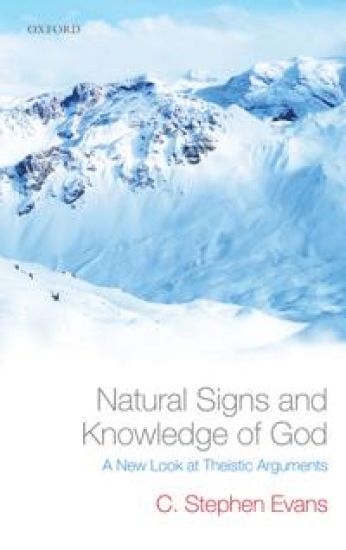
Natural Signs and Knowledge of God

Natural Signs and Knowledge of God

C. Stephen Evans

Oxford University Press
2012
nidottu
Is there such a thing as natural knowledge of God? C. Stephen Evans presents the case for understanding theistic arguments as expressions of natural signs in order to gain a new perspective both on their strengths and weaknesses. Three classical, much-discussed theistic arguments - cosmological, teleological, and moral - are examined for the natural signs they embody. At the heart of this book lie several relatively simple ideas. One is that if there is a God of the kind accepted by Christians, Jews, and Muslims, then it is likely that a 'natural' knowledge of God is possible. Another is that this knowledge will have two characteristics: it will be both widely available to humans and yet easy to resist. If these principles are right, a new perspective on many of the classical arguments for God's existence becomes possible. We understand why these arguments have for many people a continued appeal but also why they do not constitute conclusive 'proofs' that settle the debate once and for all. Touching on the interplay between these ideas and contemporary scientific theories about the origins of religious belief, particularly the role of natural selection in predisposing humans to form beliefs in God or gods, Evans concludes that these scientific accounts of religious belief are fully consistent, even supportive, of the truth of religious convictions.
Kierkegaard on Faith and the Self

Kierkegaard on Faith and the Self

C. Stephen Evans

Baylor University Press
2010
nidottu
Kierkegaard on Faith and the Self represents a rich collection of studies that allow Soren Kierkegaard to speak directly to the questions of contemporary readers. Evans analyzes Kierkegaard as a philosopher, his perspectives on faith, reason, and epistemology, ethics, and his view of the self. Evans makes a strong case that Kierkegaard has something crucial to say to the Christian church as a philosopher and something equally crucial to say to the philosophical world as a Christian believer.
Natural Signs and Knowledge of God

Natural Signs and Knowledge of God

C. Stephen Evans

Oxford University Press
2010
sidottu
Is there such a thing as natural knowledge of God? C. Stephen Evans presents the case for understanding theistic arguments as expressions of natural signs in order to gain a new perspective both on their strengths and weaknesses. Three classical, much-discussed theistic arguments - cosmological, teleological, and moral - are examined for the natural signs they embody. At the heart of this book lie several relatively simple ideas. One is that if there is a God of the kind accepted by Christians, Jews, and Muslims, then it is likely that a 'natural' knowledge of God is possible. Another is that this knowledge will have two characteristics: it will be both widely available to humans and yet easy to resist. If these principles are right, a new perspective on many of the classical arguments for God's existence becomes possible. We understand why these arguments have for many people a continued appeal but also why they do not constitute conclusive 'proofs' that settle the debate once and for all. Touching on the interplay between these ideas and contemporary scientific theories about the origins of religious belief, particularly the role of natural selection in predisposing humans to form beliefs in God or gods, Evans concludes that these scientific accounts of religious belief are fully consistent, even supportive, of the truth of religious convictions.
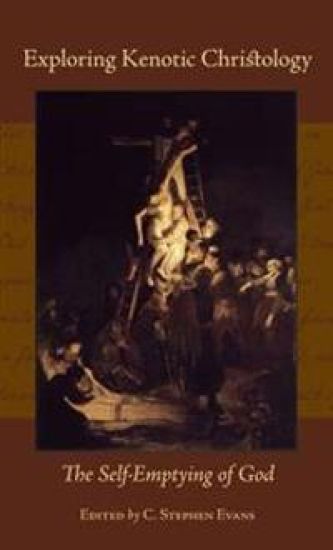
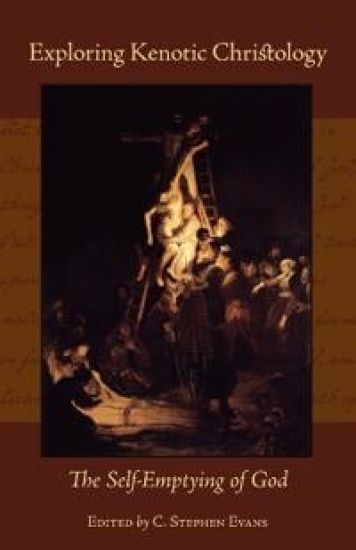
Exploring Kenotic Christology: The Self-Emptying of God

Exploring Kenotic Christology: The Self-Emptying of God

C. Stephen Evans

Regent College Publishing
2009
sidottu
This collection of essays, by a team of of Christian philosophers, theologians, and biblical scholars, explores the viability of a kenotic account of the incarnation. Such an account is inspired by Paul's lyrical claims in Philippians 2:6-11 that Christ Jesus though God in nature, 'emptied himself' or 'made himself nothing' by becoming human. The biblical support for such a view can be found throughout the four gospels, and the book of Hebrews, as well as in other places. A kenotic account takes seriously the possibility that Christ in becoming incarnate, temporarily divested himself of such properties as omnipotence, omniscience, and omnipresence. Several of the contributors argue that this view is fully orthodox, and that it has great strengths in giving us a picture of God who is willing to become completely vulnerable for the sake of human beings, and one that is completely consistent with the very human portrait of Jesus in the New Testament. The proponents of kenotic Christology argue that the philosophical accounts of God's nature that have led to rejection of this theory ought themselves to be subjected to criticism in light of the biblical data. Some essays test the theory by raising critical questions and arguing that traditional accounts of the incarnation can achieve the goals of kenotic theories as well as kenotic theories can. The book also explores the implications of a kenotic view of the incarnation for philosophical theology in general and the doctrine of the Trinity in particular, and it concludes with essays that examine the validity of the ideal of kenosis for women, and a challenge to traditional Christology to take a kenotic theory seriously. CONTRIBUTORS: C. Stephen Evans, Gordon D. Fee, Sarah Coakley, Stephen T. Davis, Ronald J. Feenstra, Bruce N. Fisk, Ruth Groenhout, Edward T. Oakes, SJ, Cornelius Plantinga, Jr., Thomas R. Thompson, Edwin Chr. van Driel.

Philosophy of Religion

Philosophy of Religion

C Stephen Evans

Apollos
2009
pokkari

Halvin toimitettuna 24,70 €

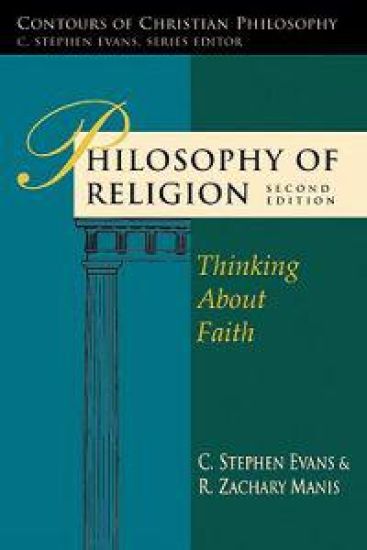
With over 40,000 copies in print since its original publication in 1982, Steve Evans's Philosophy of Religion has served many generations of students as a classic introduction to the philosophy of religion from a Christian perspective. Over the years the philosophical landscape has changed, and in this new edition Zach Manis joins Evans in a thorough revamping of arguments and information, while maintaining the qualities of clarity and brevity that made the first edition so appreciated. New material on divine foreknowledge and human freedom has been added as well as on Reformed epistemology. The discussions on science now cover new developments from cognitive psychology and naturalism as well as on the fine-tuning of the cosmos. The chapter on faith and reason has been expanded to include consideration of evidentialism. The problem of evil now forms its own new chapter and adds a discussion of the problem of hell. The standard features remain: a survey of the field, an examination of classical arguments for God's existence, and an exploration of contemporary challenges to theism from the social sciences and philosophy as well as the natural sciences. The meaning and significance of personal religious experience, revelation and miracles - all within the realm of contemporary religious pluralism - are likewise investigated. A classic introduction thoroughly updated and refreshed for today's student.
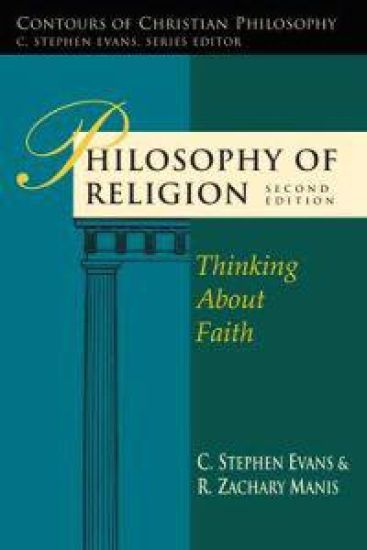
Philosophy of Religion

Philosophy of Religion

C. Stephen Evans; R. Zachary Manis

INTERVARSITY PRESS
2009
nidottu
With over 40,000 copies in print since its original publication in 1982, Steve Evans's Philosophy of Religion has served many generations of students as a classic introduction to the philosophy of religion from a Christian perspective. Over the years the philosophical landscape has changed, and in this new edition Zach Manis joins Evans in a thorough revamping of arguments and information, while maintaining the qualities of clarity and brevity that made the first edition so appreciated. New material on divine foreknowledge and human freedom has been added as well as on Reformed epistemology. The discussions on science now cover new developments from cognitive psychology and naturalism as well as on the fine-tuning of the cosmos. The chapter on faith and reason has been expanded to include consideration of evidentialism. The problem of evil now forms its own new chapter and adds a discussion of the problem of hell. The standard features remain: a survey of the field, an examination of classical arguments for God's existence, and an exploration of contemporary challenges to theism from the social sciences and philosophy as well as the natural sciences. The meaning and significance of personal religious experience, revelation and miracles--all within the realm of contemporary religious pluralism--are likewise investigated. A classic introduction thoroughly updated and refreshed for today's student.
Kierkegaard

Kierkegaard

C. Stephen Evans

Cambridge University Press
2009
sidottu
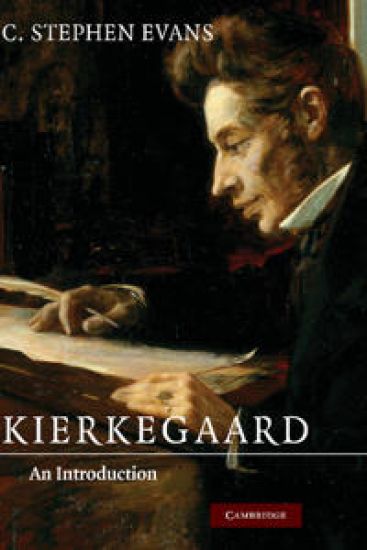
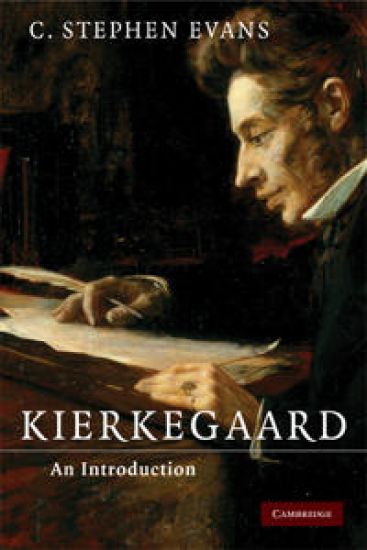
C. Stephen Evans provides a clear, readable introduction to Søren Kierkegaard (1813–55) as a philosopher and thinker. His book is organised around Kierkegaard's concept of the three 'stages' or 'spheres' of human existence, which provide both a developmental account of the human self and an understanding of three rival views of human life and its meaning. Evans also discusses such important Kierkegaardian concepts as 'indirect communication', 'truth as subjectivity', and the Incarnation understood as 'the Absolute Paradox'. Although his discussion emphasises the importance of Christianity for understanding Kierkgaard, it shows him to be a writer of great interest to a secular as well as a religious audience. Evans' book brings Kierkegaard into conversation with western philosophers past and present, presenting him as one who gives powerful answers to the questions which philosophers ask.
Kierkegaard

Kierkegaard

C. Stephen Evans

Cambridge University Press
2009
pokkari

Halvin toimitettuna 32,90 €

C. Stephen Evans provides a clear, readable introduction to Søren Kierkegaard (1813–55) as a philosopher and thinker. His book is organised around Kierkegaard's concept of the three 'stages' or 'spheres' of human existence, which provide both a developmental account of the human self and an understanding of three rival views of human life and its meaning. Evans also discusses such important Kierkegaardian concepts as 'indirect communication', 'truth as subjectivity', and the Incarnation understood as 'the Absolute Paradox'. Although his discussion emphasises the importance of Christianity for understanding Kierkgaard, it shows him to be a writer of great interest to a secular as well as a religious audience. Evans' book brings Kierkegaard into conversation with western philosophers past and present, presenting him as one who gives powerful answers to the questions which philosophers ask.