Kirjojen hintavertailu – 12 903 725 kirjaa ja 27 kauppaa

Kirjailija

C. Stephen Evans

Kirjat ja teokset yhdessä paikassa: 32 kirjaa, julkaisuja vuosilta 1985–2026, suosituimpiin kuuluu Kierkegaard on Faith and the Self. Vertaile teosten hintoja ja tarkista saatavuus suomalaisista kirjakaupoista.

Nimi esiintyy myös muodoissa: C Stephen Evans

32 kirjaa

Kirjojen julkaisuvuodet: 1985–2026.

Kierkegaard's Ethic of Love

Kierkegaard's Ethic of Love

C. Stephen Evans

Oxford University Press
2006
nidottu
C. Stephen Evans explains and defends Kierkegaard's account of moral obligations as rooted in God's commands, the fundamental command being `You shall love your neighbour as yourself'. The work will be of interest not only to those interested in Kierkegaard, but also to those interested in the relation between ethics and religion, especially questions about whether morality can or must have a religious foundation. As well as providing a comprehensive reading of Kierkegaard as an ethical thinker, Evans puts him into conversation with contemporary moral theorists. Kierkegaard's divine command theory is shown to be an account that safeguards human flourishing, as well as protecting the proper relations between religion and state in a pluralistic society.
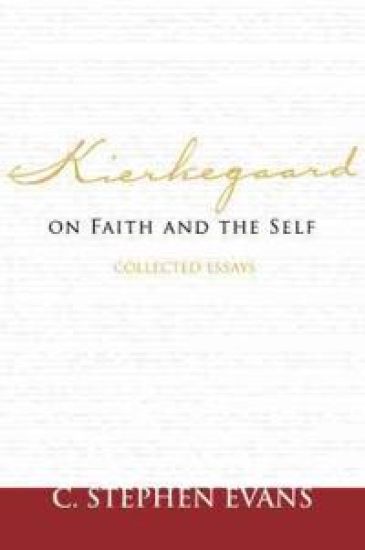
Kierkegaard on Faith and the Self

Kierkegaard on Faith and the Self

C. Stephen Evans

Baylor University Press
2006
sidottu
Kierkegaard on Faith and the Self represents a rich collection of studies that allow SÃ,ren Kierkegaard to speak directly to the questions of contemporary readers. Evans analyzes Kierkegaard as a philosopher, his perspectives on faith, reason, and epistemology, ethics, and his view of the self. Evans makes a strong case that Kierkegaard has something crucial to say to the Christian church as a philosopher and something equally crucial to say to the philosophical world as a Christian believer.
Kierkegaard's Ethic of Love

Kierkegaard's Ethic of Love

C. Stephen Evans

Oxford University Press
2004
sidottu
C. Stephen Evans explains and defends Kierkegaard's account of moral obligations as rooted in God's commands, the fundamental command being `You shall love your neighbour as yourself'. The work will be of interest not only to those interested in Kierkegaard, but also to those interested in the relation between ethics and religion, especially questions about whether morality can or must have a religious foundation. As well as providing a comprehensive reading of Kierkegaard as an ethical thinker, Evans puts him into conversation with contemporary moral theorists. Kierkegaard's divine command theory is shown to be an account that safeguards human flourishing, as well as protecting the proper relations between religion and state in a pluralistic society.

Pocket dictionary of apologetics & philosophy of religion
For philosophers, the pursuit of truth travels on precise definitions. For Christian apologists, the defence of the faith is founded on the defining Word. For students approaching either discipline for the first time, and for beginning students of either discipline, the difference between success and frustration begins with understanding the terms and ideas and identifying the thinkers and movements. The Pocket Dictionary of Apologetics & Philosophy of Religion is designed to be a companion to your study of these two related disciplines. Here is an affordable and easily accessible "help key" for your readings, lectures, writing assignments and exam preparation. It's a must-have study aid for any student who expects to cogitate on coherentism, or ruminate on Ricouer.
Pocket Dictionary of Apologetics & Philosophy of Religion
For philosophers, the pursuit of truth travels on precise definitions. For Christian apologists, the defense of the faith is founded on the defining Word. And for beginning students of either discipline, the difference between success and frustration begins with understanding the terms and ideas and identifying the thinkers and movements. The Pocket Dictionary of Apologetics Philosophy of Religion is designed to be a companion to your study of these two related disciplines. Among its 300 entries areterms, from a posteriori to worldviewapologists, from Abelard to Van Tilphilosophers of religion, from Alston to Wolterstorffmovements, from analytic philosophy to voluntarismapologetic arguments, from the cosmological to the wagertheologies, from Arminianism to ZoroastrianismHere is an affordable and easily accessible "help key" for your readings, lectures, writing assignments and exam preparation. It's a must-have study aid for any student who expects to cogitate on coherentism or ruminate on Ricouer. Designed for students and pastors alike, the short and accessible volumes in the IVP Pocket Reference Series will help you tackle the study of biblical languages, church history, apologetics, world religions, Christian spirituality, ethics, theology, and more.
Faith Beyond Reason

Faith Beyond Reason

C Stephen Evans

Edinburgh University Press
1998
nidottu
Can a 'leap' of faith be justified? Ought we not to reject anything for which there is no evidence? C. Stephen Evans distinguishes between a faith which rejects all reason and a faith requiring that reason is self-critical. In this accessible book he addresses this central debate in the philosophy of religion in the light of the key arguments from Kierkegaard, Aquinas and Kant. The text leads the student gently through the traditional topics, such as knowledge of God's existence, the problem of evil, and how someone could know that his or her religion had been based on revelation from God.
Why Believe?

Why Believe?

C. Stephen Evans

William B Eerdmans Publishing Co
1996
nidottu
C. Sephen Evans has written a pointed and personal book directed to those who want to have faith but whose thinking has been obscured by the static of prevailing philosophies, illuminating the attraction and reasonableness of Christianity.
The Historical Christ and the Jesus of Faith

The Historical Christ and the Jesus of Faith

C. Stephen Evans

Oxford University Press
1996
nidottu
The story of Jesus of Nazareth, as recounted in the New Testament, has always been understood by the church to be historically true. It is an account of the life, death, and resurrection of a real person, whose links with history are firmly signalled in the creeds of the early church, which affirm that Jesus `suffered under Pontius Pilate'. Contemporary historical scholarship has, however, called into question the reliability of the church's version of this story, and thereby raised the question as to whether ordinary people can know its historical truth. This book argues that the historicity of the story still matters, and that its religious significance cannot be captured by the category of `non-historical myth'. The commonly drawn distinction between the Christ of faith and Jesus of history cannot be maintained. The Christ who is the object of faith must be seen as historical; the Jesus who is reconstructed by historical scholarship is always shaped by commitments of faith. A reconsideration of the Englightenment epistemologies that underlie much historical scholarship shows that historical knowledge of this story is still possible. Such knowledge can be inferential, based on historical evidence. A careful look at contemporary New Testament studies, and the philosophical and literary assumptions upon which it rests, shows that this scholarship should not undermine the confidence of lay people who believe that they can know that the church's story about Jesus is true.
Passionate Reason

Passionate Reason

C. Stephen Evans

Indiana University Press
1992
sidottu
Johannes Climacus, Søren Kierkegaard's pseudonymous author of Philosophical Fragments, "invents" a religion suspiciously resembling Christianity as an alternative to the assumption that humans possess the Truth within themselves. Through this literary device, Climacus raises in a fresh and audacious way age-old questions about the relation of Christian faith to human reason. Is the idea of a human incarnation of God logically coherent? Is religious faith the product of a voluntary choice? In a comprehensive discussion of one of Kierkegaard's most important books, C. Stephen Evans elucidates Kierkegaard's novel explanation that the tension between faith and reason must be understood as a consequence of the passionate character of reason itself. Passionate Reason situates Kierkegaard's philosophy in the context of postmodern religious thought, providing a contemporary reading of Fragments as a challenge to both the modern Enlightenment critique of reason and the postmodern abandonment of truth.