Kirjojen hintavertailu – 12 859 829 kirjaa ja 27 kauppaa
Kirjailija
Carlo Goldoni
Kirjat ja teokset yhdessä paikassa: 349 kirjaa, julkaisuja vuosilta 1883–2026, suosituimpiin kuuluu La Pamela. Vertaile teosten hintoja ja tarkista saatavuus suomalaisista kirjakaupoista.
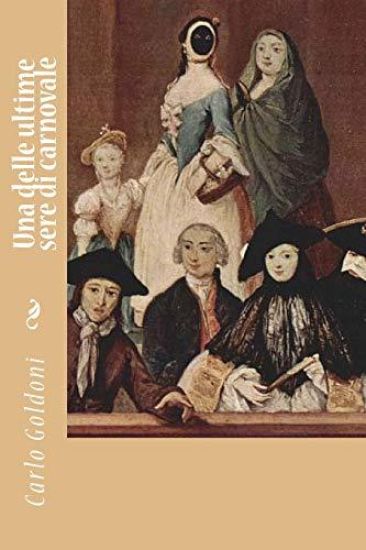
Una delle ultime sere di carnovale una commedia in tre atti di Carlo Goldoni. Fu rappresentata il 16 febbraio 1762, al teatro San Luca di Venezia, a coronamento della stagione teatrale che aveva visto Le baruffe chiozzotte e I rusteghi. un'opera che non manca di autobiografismo, anzi dall'autore stesso definita nei Memories come una commedia d'allegoria "che ha bisogno di una spiegazione".
Domenico Cimarosa (1749-1801) IL MERCATO DI MALMANTILE Dramma giocoso in due atti di Carlo Goldoni, adattato da Giovan Battista Lorenzi (?) Musica di Domenico Cimarosa Prima rappresentazione: Firenze, Teatro alla Pergola, 1784. Edizione critica di Simone Perugini (Partitura - Full Score) 2nd Edition
The 18th century was a wealth of knowledge, exploration and rapidly growing technology and expanding record-keeping made possible by advances in the printing press. In its determination to preserve the century of revolution, Gale initiated a revolution of its own: digitization of epic proportions to preserve these invaluable works in the largest archive of its kind. Now for the first time these high-quality digital copies of original 18th century manuscripts are available in print, making them highly accessible to libraries, undergraduate students, and independent scholars. Western literary study flows out of eighteenth-century works by Alexander Pope, Daniel Defoe, Henry Fielding, Frances Burney, Denis Diderot, Johann Gottfried Herder, Johann Wolfgang von Goethe, and others. Experience the birth of the modern novel, or compare the development of language using dictionaries and grammar discourses. ++++The below data was compiled from various identification fields in the bibliographic record of this title. This data is provided as an additional tool in helping to insure edition identification: ++++British LibraryT071448An adaptation of the play by Carlo Goldoni, based on prose romances. The libretto only, in a different version from that published in 1755. Parallel Italian text and English prose translation. "The musick is by Signor Vincenzo Ciampi." London: printed by G. Woodfall, 1762. 91, 1]p.; 8
The 18th century was a wealth of knowledge, exploration and rapidly growing technology and expanding record-keeping made possible by advances in the printing press. In its determination to preserve the century of revolution, Gale initiated a revolution of its own: digitization of epic proportions to preserve these invaluable works in the largest archive of its kind. Now for the first time these high-quality digital copies of original 18th century manuscripts are available in print, making them highly accessible to libraries, undergraduate students, and independent scholars. Western literary study flows out of eighteenth-century works by Alexander Pope, Daniel Defoe, Henry Fielding, Frances Burney, Denis Diderot, Johann Gottfried Herder, Johann Wolfgang von Goethe, and others. Experience the birth of the modern novel, or compare the development of language using dictionaries and grammar discourses. ++++The below data was compiled from various identification fields in the bibliographic record of this title. This data is provided as an additional tool in helping to insure edition identification: ++++British LibraryT071125An adaptation of the play by Carlo Goldoni, based on prose romances. The libretto only. Parallel Italian and English texts. London: printed for G. Woodfall, 1755. 67, 1]p.; 8
The 18th century was a wealth of knowledge, exploration and rapidly growing technology and expanding record-keeping made possible by advances in the printing press. In its determination to preserve the century of revolution, Gale initiated a revolution of its own: digitization of epic proportions to preserve these invaluable works in the largest archive of its kind. Now for the first time these high-quality digital copies of original 18th century manuscripts are available in print, making them highly accessible to libraries, undergraduate students, and independent scholars. Western literary study flows out of eighteenth-century works by Alexander Pope, Daniel Defoe, Henry Fielding, Frances Burney, Denis Diderot, Johann Gottfried Herder, Johann Wolfgang von Goethe, and others. Experience the birth of the modern novel, or compare the development of language using dictionaries and grammar discourses. ++++The below data was compiled from various identification fields in the bibliographic record of this title. This data is provided as an additional tool in helping to insure edition identification: ++++British LibraryT070476The libretto only, by Carlo Goldoni. Parallel English and Italian texts. With a final leaf of advertisements for new music printed and sold by R. Bremner. London: printed by W. Griffin, 1769. 53, 3]p.; 8
This work has been selected by scholars as being culturally important, and is part of the knowledge base of civilization as we know it. This work was reproduced from the original artifact, and remains as true to the original work as possible. Therefore, you will see the original copyright references, library stamps (as most of these works have been housed in our most important libraries around the world), and other notations in the work. This work is in the public domain in the United States of America, and possibly other nations. Within the United States, you may freely copy and distribute this work, as no entity (individual or corporate) has a copyright on the body of the work. As a reproduction of a historical artifact, this work may contain missing or blurred pages, poor pictures, errant marks, etc. Scholars believe, and we concur, that this work is important enough to be preserved, reproduced, and made generally available to the public. We appreciate your support of the preservation process, and thank you for being an important part of keeping this knowledge alive and relevant.
This work has been selected by scholars as being culturally important, and is part of the knowledge base of civilization as we know it. This work was reproduced from the original artifact, and remains as true to the original work as possible. Therefore, you will see the original copyright references, library stamps (as most of these works have been housed in our most important libraries around the world), and other notations in the work. This work is in the public domain in the United States of America, and possibly other nations. Within the United States, you may freely copy and distribute this work, as no entity (individual or corporate) has a copyright on the body of the work. As a reproduction of a historical artifact, this work may contain missing or blurred pages, poor pictures, errant marks, etc. Scholars believe, and we concur, that this work is important enough to be preserved, reproduced, and made generally available to the public. We appreciate your support of the preservation process, and thank you for being an important part of keeping this knowledge alive and relevant.
THE historian of human life finds less of difficulty and of intricacy to develop, in its accidents and adventures, than the investigator of the human heart in its feelings and its changes. In vain may Fortune wave her many-coloured banner, alternately regaling and dismaying, with hues that seem glowing with all the creation's felicities, or with tints that appear stained with ingredients of unmixt horrors; her most rapid vicissitudes, her most unassimilating eccentricities, are mocked, laughed at, and distanced by the wilder wonders of the Heart of man; that amazing assemblage of all possible contrarieties, in which one thing alone is steady-the perverseness of spirit which grafts desire on what is denied. Its qualities are indefinable, its resources unfathomable, its weaknesses indefensible. In our neighbours we cannot judge, in ourselves we dare not trust it. We lose ere we learn to appreciate, and ere we can comprehend it we must be born again. Its capacity o'er-leaps all limit, while its futility includes every absurdity. It lives its own surprise-it ceases to beat-and the void is inscrutable In one grand and general view, who can display such a portrait? Fairly, however faintly, to delineate some of its features, is the sole and discriminate province of the pen which would trace nature, yet blot out personality. Chapter 1 A Family Scene REPOSE is not more welcome to the worn and to the aged, to the sick and to the unhappy, than danger, difficulty, and toil to the young and adventurous. Danger they encounter but as the forerunner of success; difficulty, as the spur of ingenuity; and toil, as the herald of honour.
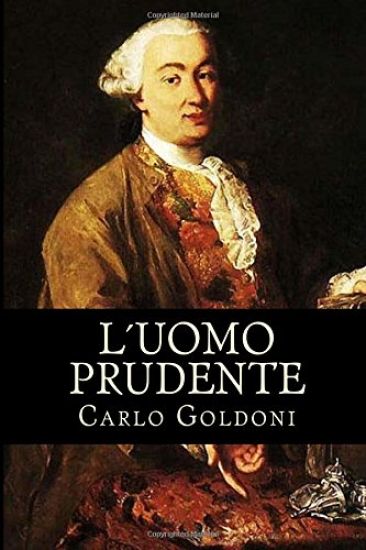
Carlo Osvaldo Goldoni was an Italian playwright and librettist from the Republic of Venice. His works include some of Italy's most famous and best-loved plays. Audiences have admired the plays of Goldoni for their ingenious mix of wit and honesty. His plays offered his contemporaries images of themselves, often dramatizing the lives, values, and conflicts of the emerging middle classes. Though he wrote in French and Italian, his plays make rich use of the Venetian language, regional vernacular, and colloquialisms. Goldoni also wrote under the pen name and title "Polisseno Fegeio, Pastor Arcade," which he claimed in his memoirs the "Arcadians of Rome" bestowed on him.