
Kirjailija
Catherine Malabou
Kirjat ja teokset yhdessä paikassa: 40 kirjaa, julkaisuja vuosilta 1996–2026, suosituimpiin kuuluu L'Avenir de Hegel: Plasticitae, Temporalitae, Dialectique. Vertaile teosten hintoja ja tarkista saatavuus suomalaisista kirjakaupoista.
40 kirjaa
Kirjojen julkaisuvuodet: 1996–2026.
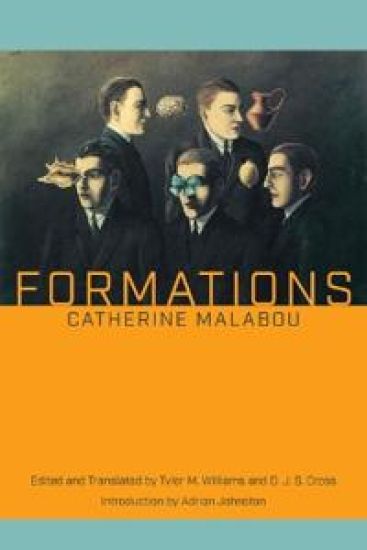
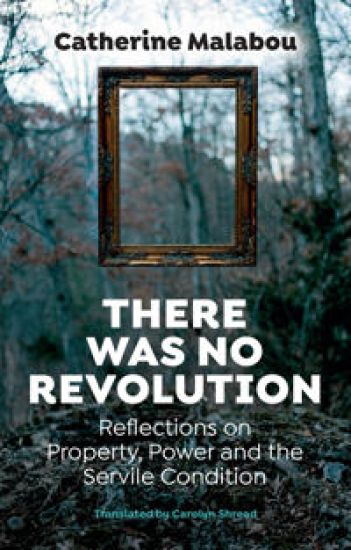
In her new book, Catherine Malabou argues that the French Revolution existed in name only, not in reality - privileges disappeared only on the surface and the old forms of domination persisted in structuring everyday life. And sure enough, French citizens soon came to ask: how is it that we are falling back into the same patterns of servitude and privilege? In developing this argument, Malabou echoes the conclusion drawn by Pierre-Joseph Proudhon whose work, What is Property?, written in 1840, claimed that there was no revolution. Proudhon witnessed how, in the aftermath of the French Revolution, feudal relations persisted and monarchy was restored. He connected the persistence of feudalism and servitude to his critique of property. For Proudhon, property is but another name for domination: ‘property is theft’, he famously declared, by which he meant that private property starts with a theft of memory and meaning that transforms continuous bondage into a promise of emancipation. This marks the specificity of the anarchist critique of property and it led Proudhon to conclude ‘I am an anarchist’. Malabou connects her re-reading of Proudhon’s masterpiece with our own political situation today, more than 200 years after the French Revolution. She examines how the enduring domination which is central to private property infiltrates various aspects of the modern world, from the legacies of colonialism and slavery to work and politics. This timely re-assessment of the relation between property and domination will be of interest to students of philosophy and politics and to anyone concerned with today’s key political questions.
In her new book, Catherine Malabou argues that the French Revolution existed in name only, not in reality - privileges disappeared only on the surface and the old forms of domination persisted in structuring everyday life. And sure enough, French citizens soon came to ask: how is it that we are falling back into the same patterns of servitude and privilege? In developing this argument, Malabou echoes the conclusion drawn by Pierre-Joseph Proudhon whose work, What is Property?, written in 1840, claimed that there was no revolution. Proudhon witnessed how, in the aftermath of the French Revolution, feudal relations persisted and monarchy was restored. He connected the persistence of feudalism and servitude to his critique of property. For Proudhon, property is but another name for domination: ‘property is theft’, he famously declared, by which he meant that private property starts with a theft of memory and meaning that transforms continuous bondage into a promise of emancipation. This marks the specificity of the anarchist critique of property and it led Proudhon to conclude ‘I am an anarchist’. Malabou connects her re-reading of Proudhon’s masterpiece with our own political situation today, more than 200 years after the French Revolution. She examines how the enduring domination which is central to private property infiltrates various aspects of the modern world, from the legacies of colonialism and slavery to work and politics. This timely re-assessment of the relation between property and domination will be of interest to students of philosophy and politics and to anyone concerned with today’s key political questions.
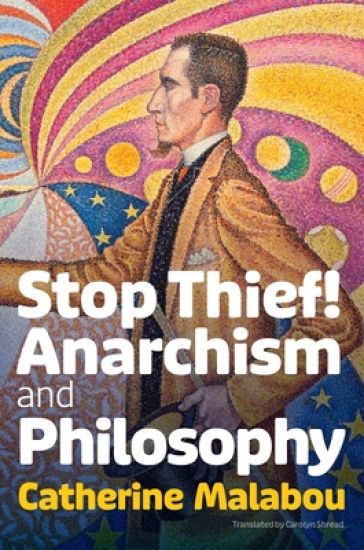
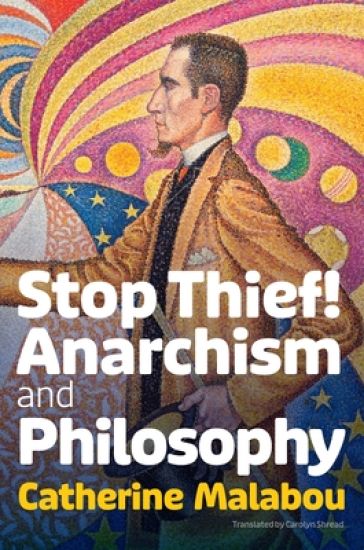
Many contemporary philosophers – including Michel Foucault, Jacques Derrida, and Giorgio Agamben – ascribe an ethical or political value to anarchy, but none ever called themselves an “anarchist.” It is as if anarchism were unmentionable and had to be concealed, even though its critique of domination and of government is poached by the philosophers. Stop Thief! calls out the plundering of anarchism by philosophy. It’s a call that is all the more resonant today as the planetary demand for an alternative political realm raises a deafening cry. It also alerts us to a new philosophical awakening. Catherine Malabou proposes to answer the cry by re-elaborating a concept of anarchy articulated around a notion of the “non-governable” far beyond an inciting of disobedience or common critiques of capitalism. Anarchism is the only way out, the only pathway that allows us to question the legitimacy of political domination and thereby wfree up the confidence that we need if we are to survive.
Many contemporary philosophers – including Michel Foucault, Jacques Derrida, and Giorgio Agamben – ascribe an ethical or political value to anarchy, but none ever called themselves an “anarchist.” It is as if anarchism were unmentionable and had to be concealed, even though its critique of domination and of government is poached by the philosophers. Stop Thief! calls out the plundering of anarchism by philosophy. It’s a call that is all the more resonant today as the planetary demand for an alternative political realm raises a deafening cry. It also alerts us to a new philosophical awakening. Catherine Malabou proposes to answer the cry by re-elaborating a concept of anarchy articulated around a notion of the “non-governable” far beyond an inciting of disobedience or common critiques of capitalism. Anarchism is the only way out, the only pathway that allows us to question the legitimacy of political domination and thereby wfree up the confidence that we need if we are to survive.
Klitoris har lenge vært forvist fra vitenskapen og filosofien så vel som kunsten. I Fredløs nytelse synliggjør Catherine Malabou dette fraværet, og med utgangspunkt i klitoris som et autonomt nytelsesorgan som ikke er underlagt reproduksjonens patrialkalske system, argumenterer hun for at den kan fungere som et samlingspunkt for alle former for feminisme. Malabou forsvarer ideen om det «feminine» som noe plastisk, altså formelig og i konstant utvikling, som i motsetning til stivnede oppfatninger om kjønn ikke impliserer en fastlåst «natur» eller «essens», og som dessuten står for et annet forhold til seksualitet og makt. «I lang tid ble også klitoris ansett for å være en bråkmaker, ett organ for mye, ubrukelig, som gjorde narr av den anatomiske, politiske, sosiale ordenen gjennom sin anarkistiske uavhengighet, sin dynamiske nytelse frikoblet ethvert prinsipp og enhver hensiktsmessighet. En klitoris lar seg ikke styre. Til tross for alle forsøkene på å underkaste den forskjellige herrer og mestere - patriarkalsk autoritet, psykoanalysens påbud, moralske bud, sedvanens tvang, fortidens blylodd - den holder stand.»
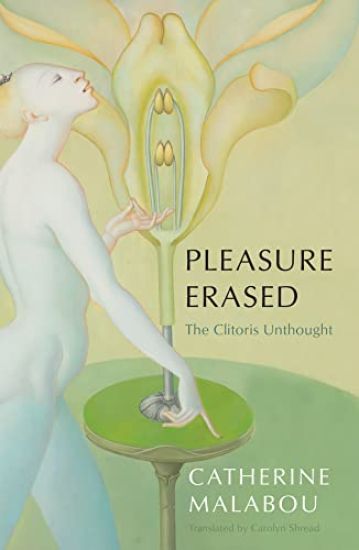
The clitoris was absent in anatomy books, in paintings and sculptures, absent in spirit and even body; it has long been the organ of erased pleasure. We assume that this oversight has been repaired in our times: today, the clitoris is not forgotten but honoured. Conferences, books, manifestos, works of art are all devoted to it. The autonomy of clitoral jouissance is recognized. The boundaries of feminism have also moved: queer, intersex and trans approaches claim that the clitoris is perhaps no longer the exclusive preserve of the woman. And yet, there remains a wounded space. Because genital mutilation is still common practice. Because millions of women are still denied pleasure. The clitoris continues to mark the enigmatic space of the feminine. Constrained by the extreme difficulty and the extreme urgency of returning to this scorched earth, it is time to give voice to an organ of pleasure which has still not become an organ of thought.
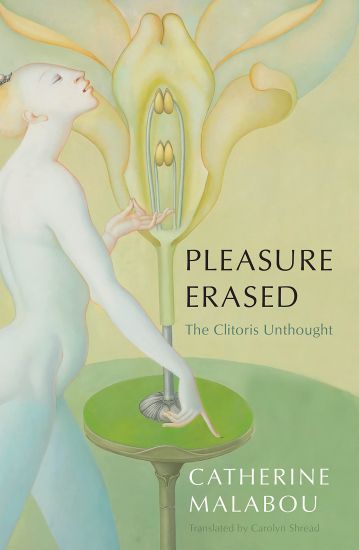
The clitoris was absent in anatomy books, in paintings and sculptures, absent in spirit and even body; it has long been the organ of erased pleasure. We assume that this oversight has been repaired in our times: today, the clitoris is not forgotten but honoured. Conferences, books, manifestos, works of art are all devoted to it. The autonomy of clitoral jouissance is recognized. The boundaries of feminism have also moved: queer, intersex and trans approaches claim that the clitoris is perhaps no longer the exclusive preserve of the woman. And yet, there remains a wounded space. Because genital mutilation is still common practice. Because millions of women are still denied pleasure. The clitoris continues to mark the enigmatic space of the feminine. Constrained by the extreme difficulty and the extreme urgency of returning to this scorched earth, it is time to give voice to an organ of pleasure which has still not become an organ of thought.
A career-spanning collection of published and unpublished writings Catherine Malabou is one of the foremost, most innovative intelligences working in contemporary French philosophy today. Her work articulates a coherent conceptualisation of 'plasticity' by merging recent neurobiology and medicinal sciences with the history of philosophy and political theory. Across the essays gathered in Plasticity: The Promise of Explosion, Malabou carves a philosophical space between structuralism, deconstruction, cognitive psychology, psychoanalysis and speculative realism. By demonstrating the plastic transformability at the heart of these disciplines, a change that always promises future explosion, Malabou, as a female philosopher, also articulates the need to 'change difference' within patriarchal concepts of tradition itself. The collection is divided into four thematic parts, each of which showcases a major aspect of Malabou's conceptualisation of plasticity. In his introduction, Ian James situates Malabou's work within contemporary philosophy and navigates the contours of her unique work.
A career-spanning collection of published and unpublished writings Catherine Malabou is one of the foremost, most innovative intelligences working in contemporary French philosophy today. Her work articulates a coherent conceptualisation of 'plasticity' by merging recent neurobiology and medicinal sciences with the history of philosophy and political theory. Across the essays gathered in Plasticity: The Promise of Explosion, Malabou carves a philosophical space between structuralism, deconstruction, cognitive psychology, psychoanalysis and speculative realism. By demonstrating the plastic transformability at the heart of these disciplines, a change that always promises future explosion, Malabou, as a female philosopher, also articulates the need to 'change difference' within patriarchal concepts of tradition itself. The collection is divided into four thematic parts, each of which showcases a major aspect of Malabou's conceptualisation of plasticity. In his introduction, Ian James situates Malabou's work within contemporary philosophy and navigates the contours of her unique work.
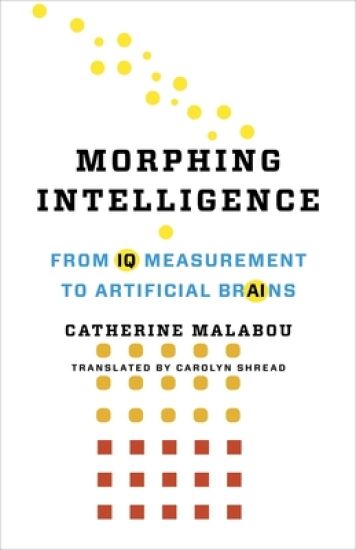
What is intelligence? The concept crosses and blurs the boundaries between natural and artificial, bridging the human brain and the cybernetic world of AI. In this book, the acclaimed philosopher Catherine Malabou ventures a new approach that emphasizes the intertwined, networked relationships among the biological, the technological, and the symbolic. Malabou traces the modern metamorphoses of intelligence, seeking to understand how neurobiological and neurotechnological advances have transformed our view. She considers three crucial developments: the notion of intelligence as an empirical, genetically based quality measurable by standardized tests; the shift to the epigenetic paradigm, with its emphasis on neural plasticity; and the dawn of artificial intelligence, with its potential to simulate, replicate, and ultimately surpass the workings of the brain. Malabou concludes that a dialogue between human and cybernetic intelligence offers the best if not the only means to build a democratic future. A strikingly original exploration of our changing notions of intelligence and the human and their far-reaching philosophical and political implications, Morphing Intelligence is an essential analysis of the porous border between symbolic and biological life at a time when once-clear distinctions between mind and machine have become uncertain.
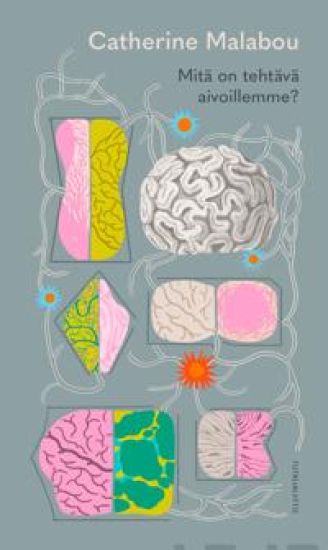
Biotieteiden uudet kehityskulut ovat paljastaneet ihmisaivojen olevan plastiset: ne kehittyvät ja muuttuvat läpi elämän vuorovaikutuksessa ympäristönsä kanssa. Kirjassa Mitä on tehtävä aivoillemme? Catherine Malabou tarkastelee uusien biotieteiden tutkimustuloksia filosofisesti suhteessa nyky-yhteiskuntaan. Biotieteet eivät ole kehittyneet irrallaan historiallisesta tai poliittisesta ympäristöstään, ja niiden löydökset muistuttavatkin kumman läheisesti nykykapitalismin keskeisiä ideoita: keskusjohtoinen, hierarkkinen ja pysyvä on korvattu hajautetulla, verkostomaisella ja joustavalla. Työmarkkinoilla ja konsulttipuheessa plastisuus näyttää kuitenkin typistyvän pelkäksi ”joustavuudeksi”, iskulauseeksi, joka tuntuu loppujen lopuksi merkitsevän ihmisen kykyä sopeutua ja alistua mihin tahansa markkinoiden vaatimuksiin. Ihmisaivoille ominainen plastisuus on kuitenkin myös jotain aivan muuta: olosuhteisiin sopeutumisen lisäksi se on kykyä muuttaa juuri noita olosuhteita. Aivoista - ja aivotutkimuksesta - löytyy ennalta arvaamatonta kumouksellista potentiaalia. Catherine Malabou on ranskalainen filosofi, joka toimii professorina Kingstonin yliopistossa, European Graduate Schoolissa sekä Kalifornian yliopistossa Irvinessä. Malaboun kirjavan aihepiirin kattava tuotanto luo uusia ja yllättäviä yhteyksiä ja silloittaa kuiluja vaikkapa juuri filosofian, empiirisen aivotutkimuksen ja kapitalismin kritiikin välillä. Mitä on tehtävä aivoillemme? on ensimmäinen Malaboulta suomennettu teos. Eetu Viren on aiemmin suomentanut mm. Walter Benjaminin, Gilles Deleuzen, Eduardo Viveiros de Castron ja Frantz Fanonin teoksia. Hän on myös kirjoittanut useita kirjoja nykykapitalismista ja siihen kohdistuvasta vastarinnasta.
När livet går sin gilla gång och allting flyter på som vanligt blir varje individ den han eller hon redan är. Kroppsliga och psykiska förändringar gör inget annat än befäster identitetens permanens. Men till följd av ett allvarligt trauma, eller ibland utan någon särskild anledning alls, kan subjektets historia klyvas och bereda väg för en ny persona som börjar leva tillsammans med den gamla personen – en oigenkännlig persona utan tidigare motstycke vars presens inte kommer ur något förflutet och vars framtid inte bär på något som ska komma; en existentiell improvisation, en form född ur tillfälligheten och av tillfälligheten. Ur det djupa sår som öppnar sig i en biografi framträder en ny varelse för andra gången i världen. Vad är denna form? Ett ansikte? En psykologisk profil? Finns det någon ontologi som kan redogöra för den, givet att ontologin alltid har befattat sig med det väsensmässiga och därmed gjort sig blind för transformationens alea? Vilken varats historia kan förklaras med hänvisning till förstörelsens plastiska kraft? Vad kan denna kraft säga oss om den explosiva tendens i tillvaron som i tysthet hotar var och en av oss? Catherine Malabou är fransk författare och filosof, verksam vid The European Graduate School vid Kingston university i London. Bland hennes böcker återfinns Changer de différence och Avant demain. På svenska finns även Vad ska vi göra med vår hjärna?

Neurovetenskapen har de senaste åren börjat göra sig av med den gamla modellen av hjärnan som en enhetlig och centraliserad kontrollinstans. I stället lägger man nu allt större tonvikt vid begreppet ”plasticitet”, det vill säga hjärnans förmåga att utvecklas och förändras under loppet av våra liv. Våra hjärnor existerar i egenskap av historiska produkter som utvecklas genom att interagera med varandra och sin omgivning. Därför finns det en nära koppling mellan nervsystemets organisering och det politiska och sociala system som både betingar och betingas av den mänskliga erfarenheten. Om man tittar närmare på de senaste neurovetenskapliga rönen märker man omedelbart hur det nya sättet att tala om hjärnan återspeglar dagens nyliberala managementdiskurs med dess inriktning på decentralisering, nätverk och flexibilitet. I Vad ska vi göra med vår hjärna? utvecklar Catherine Malabou en radikal variant av plasticitetsbegreppet. Plasticiteten gör det inte bara möjligt för vår hjärna att anpassa sig till rådande villkor; den skapar också ett utrymme för hjärnan att aktivt förändra sina villkor. Detta perspektiv belyser en transformativ dimension av neurovetenskapen som sällan uppmärksammats. Genom att insistera på kopplingen mellan neurovetenskap och samhällsvetenskap gör Malabou en parafras på Marx välkända påstående om historien: människan skapar sin egen hjärna, men hon vet inte om det. Föreliggande bok syftar till att väcka en sådan medvetenhet. Catherine Malabou är fransk författare och filosof, verksam vid The European Graduate School vid Kingston university i London. Bland hennes böcker återfinns Changer de différence och Avant demain. På svenska finns även Olyckans ontologi.
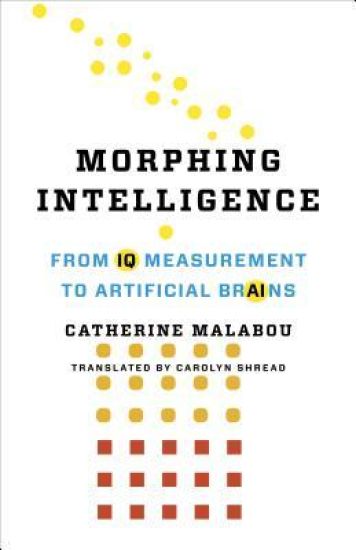
What is intelligence? The concept crosses and blurs the boundaries between natural and artificial, bridging the human brain and the cybernetic world of AI. In this book, the acclaimed philosopher Catherine Malabou ventures a new approach that emphasizes the intertwined, networked relationships among the biological, the technological, and the symbolic. Malabou traces the modern metamorphoses of intelligence, seeking to understand how neurobiological and neurotechnological advances have transformed our view. She considers three crucial developments: the notion of intelligence as an empirical, genetically based quality measurable by standardized tests; the shift to the epigenetic paradigm, with its emphasis on neural plasticity; and the dawn of artificial intelligence, with its potential to simulate, replicate, and ultimately surpass the workings of the brain. Malabou concludes that a dialogue between human and cybernetic intelligence offers the best if not the only means to build a democratic future. A strikingly original exploration of our changing notions of intelligence and the human and their far-reaching philosophical and political implications, Morphing Intelligence is an essential analysis of the porous border between symbolic and biological life at a time when once-clear distinctions between mind and machine have become uncertain.
Power of Gentleness
Anne Dufourmantelle; Catherine Malabou
Fordham University Press
2018
pokkari
Halvin toimitettuna 27,40 €
Gentleness is an enigma. Taken up in a double movement of welcoming and giving, it appears on the threshold of passages signed off by birth and death. Because it has its degrees of intensity, because it is a symbolic force, and because it has a transformative ability over things and beings, it is a power. The simplicity of gentleness is misleading. It is an active passivity that may become an extraordinary force of symbolic resistance and, as such, become central to both ethics and politics. Gentleness is a force of secret life-giving transformation linked to what the ancients called potentiality. In our day, gentleness is sold to us under its related form of diluted mawkishness. By infantilizing it our era denies it. This is how we try to overcome the high demands of its subtlety—no longer by fighting it, but by enfeebling it. Language itself is therefore perverted: what our society intends to give the human beings that it crushes "gently," it does in the name of the highest values: happiness, truth, security. From listening to those who come to me and confide their despair, I have heard it expressed in every lived experience. I have felt its force of resistance and its intangible magic. In mediating its relation to the world, it appears that its intelligence carries life, saves and amplifies it.
Gentleness is an enigma. Taken up in a double movement of welcoming and giving, it appears on the threshold of passages signed off by birth and death. Because it has its degrees of intensity, because it is a symbolic force, and because it has a transformative ability over things and beings, it is a power. The simplicity of gentleness is misleading. It is an active passivity that may become an extraordinary force of symbolic resistance and, as such, become central to both ethics and politics. Gentleness is a force of secret life-giving transformation linked to what the ancients called potentiality. In our day, gentleness is sold to us under its related form of diluted mawkishness. By infantilizing it our era denies it. This is how we try to overcome the high demands of its subtlety—no longer by fighting it, but by enfeebling it. Language itself is therefore perverted: what our society intends to give the human beings that it crushes "gently," it does in the name of the highest values: happiness, truth, security. From listening to those who come to me and confide their despair, I have heard it expressed in every lived experience. I have felt its force of resistance and its intangible magic. In mediating its relation to the world, it appears that its intelligence carries life, saves and amplifies it.