Kirjailija
Catherine Malabou
Kirjat ja teokset yhdessä paikassa: 40 kirjaa, julkaisuja vuosilta 1996–2026, suosituimpiin kuuluu L'Avenir de Hegel: Plasticitae, Temporalitae, Dialectique. Vertaile teosten hintoja ja tarkista saatavuus suomalaisista kirjakaupoista.
40 kirjaa
Kirjojen julkaisuvuodet: 1996–2026.
A bold new theory of cyberwar argues that militarized hacking is best understood as a form of deconstruction From shadowy attempts to steal state secrets to the explosive destruction of Iranian centrifuges, cyberwar has been a vital part of statecraft for nearly thirty years. But although computer-based warfare has been with us for decades, it has changed dramatically since its emergence in the 1990s, and the pace of change is accelerating. In Deconstruction Machines, Justin Joque inquires into the fundamental nature of cyberwar through a detailed investigation of what happens at the crisis points when cybersecurity systems break down and reveal their internal contradictions. He concludes that cyberwar is best envisioned as a series of networks whose constantly shifting connections shape its very possibilities. He ultimately envisions cyberwar as a form of writing, advancing the innovative thesis that cyber attacks should be seen as a militarized form of deconstruction in which computer programs are systems that operate within the broader world of texts. Throughout, Joque addresses hot-button subjects such as technological social control and cyber-resistance entities like Anonymous and Wikileaks while also providing a rich, detailed history of cyberwar. Deconstruction Machines provides a necessary new interpretation of deconstruction and timely analysis of media, war, and technology.
Is contemporary continental philosophy making a break with Kant? The structures of knowledge, taken for granted since Kant?s Critique of Pure Reason, are now being called into question: the finitude of the subject, the phenomenal given, a priori synthesis. Relinquish the transcendental: such is the imperative of postcritical thinking in the 21st century. Questions that we no longer thought it possible to ask now reemerge with renewed vigor: can Kant really maintain the difference between a priori and innate? Can he deduce, rather than impose, the categories, or justify the necessity of nature? Recent research into brain development aggravates these suspicions, which measure transcendental idealism against the thesis of a biological origin for cognitive processes. In her important new book Catherine Malabou lays out Kant?s response to his posterity. True to its subject, the book evolves as an epigenesis ? the differentiated growth of the embryo ? for, as those who know how to read critical philosophy affirm, this is the very life of the transcendental and contains the promise of its transformation.
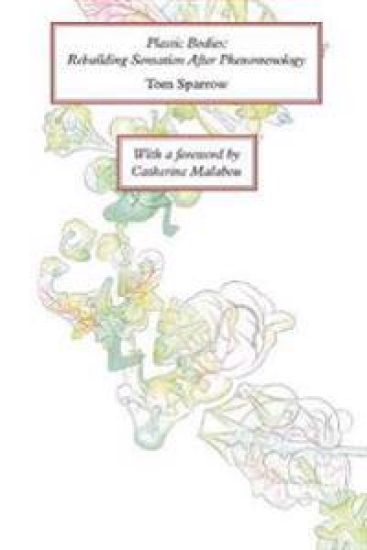
Plastic Bodies
Tom Sparrow; Catherine Malabou
Open Humanities Press
2015
nidottu
Halvin toimitettuna 25,70 €
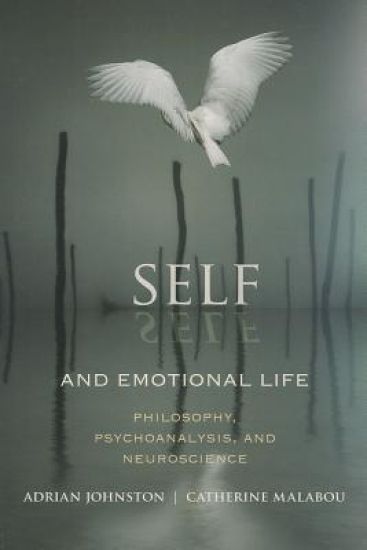
Adrian Johnston and Catherine Malabou defy theoretical humanities' deeply-entrenched resistance to engagements with the life sciences. Rather than treat biology and its branches as hopelessly reductive and politically suspect, they view recent advances in neurobiology and its adjacent scientific fields as providing crucial catalysts to a radical rethinking of subjectivity. Merging three distinct disciplines-European philosophy from Descartes to the present, Freudian-Lacanian psychoanalysis, and affective neuroscience-Johnston and Malabou triangulate the emotional life of affective subjects as conceptualized in philosophy and psychoanalysis with neuroscience. Their experiments yield different outcomes. Johnston finds psychoanalysis and neurobiology have the potential to enrich each other, though affective neuroscience demands a reconsideration of whether affects can be unconscious. Investigating this vexed issue has profound implications for theoretical and practical analysis, as well as philosophical understandings of the emotions. Malabou believes scientific explorations of the brain seriously problematize established notions of affective subjectivity in Continental philosophy and Freudian-Lacanian analysis. She confronts philosophy and psychoanalysis with something neither field has seriously considered: the concept of wonder and the cold, disturbing visage of those who have been affected by disease or injury, such that they are no longer affected emotionally. At stake in this exchange are some of philosophy's most important claims concerning the relationship between the subjective mind and the objective body, the structures and dynamics of the unconscious dimensions of mental life, the role emotion plays in making us human, and the functional differences between philosophy and science.
Elaborates the author's conception of plasticity by proposing a new way of thinking through Heidegger's writings on change. Behind Martin Heidegger's question of Being lies another one not yet sufficiently addressed in continental philosophy: change. Catherine Malabou, one of France's most inventive contemporary philosophers, explores this topic in the writings of Heidegger through the themes of metamorphosis, migration, exchange, and modification, finding and articulating a radical theory of ontico-ontological transformability. The Heidegger Change sketches the implications of this theory for a wide range of issues of central concern to the humanities-capitalism, the gift, ethics, suffering, the biological, technology, imagination, and time. Not since the writings of Jacques Derrida and Emmanuel Levinas has the work of Heidegger been the subject of such inventive interpretation and original theory in its own right.
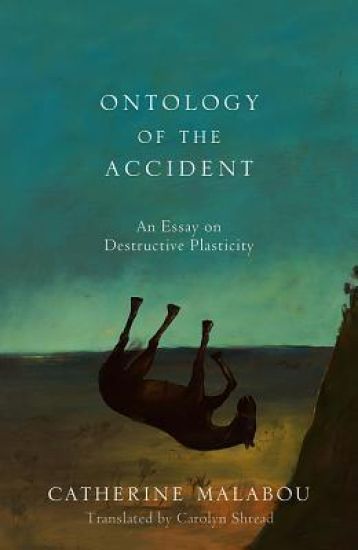
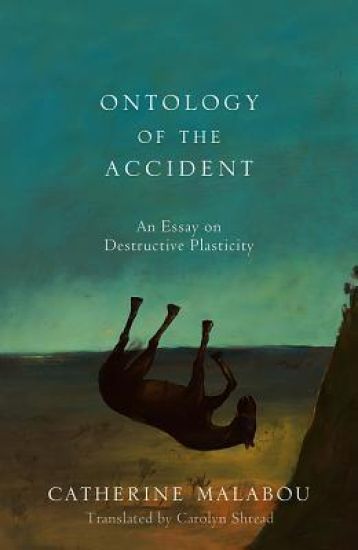
In the usual order of things, lives run their course and eventually one becomes who one is. Bodily and psychic transformations do nothing but reinforce the permanence of identity. But as a result of serious trauma, or sometimes for no reason at all, a subject’s history splits and a new, unprecedented persona comes to live with the former person - an unrecognizable persona whose present comes from no past and whose future harbors nothing to come; an existential improvisation, a form born of the accident and by accident. Out of a deep cut opened in a biography, a new being comes into the world for a second time. What is this form? A face? A psychological profile? What ontology can it account for, if ontology has always been attached to the essential, forever blind to the aléa of transformations? What history of being can the plastic power of destruction explain? What can it tell us about the explosive tendency of existence that secretly threatens each one of us? Continuing her reflections on destructive plasticity, split identities and the psychic consequences experienced by those who have suffered brain injury or have been traumatized by war and other catastrophes, Catherine Malabou invites us to join her in a philosophic and literary adventure in which Spinoza, Deleuze and Freud cross paths with Proust and Duras.
This book employs a philosophical approach to the "new wounded" (brain lesion patients) to stage a confrontation between psychoanalysis and contemporary neurobiology, focused on the issue of trauma and psychic wounds. It thereby reevaluates the brain as an organ that is not separated from psychic life but rather at its center. The "new wounded" suffer from psychic wounds that traditional psychoanalysis, with its emphasis on the psyche's need to integrate events into its own history, cannot understand or cure. They are victims of various cerebral lesions or attacks, including degenerative brain diseases such as Parkinson's and Alzheimer's. Changes caused by cerebral lesions frequently manifest themselves as an unprecedented metamorphosis in the patient's identity. A person with Alzheimer's disease, for example, is not—or not only—someone who has "changed" or been "modified" but rather a subject who has become someone else. The behavior of subjects who are victims of "sociopolitical traumas," such as abuse, war, terrorist attacks, or sexual assaults, displays striking resemblances to that of subjects who have suffered brain damage. Thus today the border separating organic trauma and sociopolitical trauma is increasingly porous. Effacing the limits that separate "neurobiology" from "sociopathy," brain damage tends also to blur the boundaries between history and nature. At the same time, it reveals that political oppression today assumes the guise of a traumatic blow stripped of all justification. We are thus dealing with a strange mixture of nature and politics, in which politics takes on the appearance of nature, and nature disappears in order to assume the mask of politics.
Translated by CAROLYN SHREAD In the post-feminist age the fact that ‘woman' finds herself deprived of her ‘essence' only confirms, paradoxically, a very ancient state of affairs: ‘woman' has never been able to define herself in any other way than in terms of the violence done to her. Violence alone confers her being - whether it is domestic and social violence or theoretical violence. The critique of ‘essentialism' (i.e. there is no specifically feminine essence) proposed by both gender theory and deconstruction is just one more twist in the ontological negation of the feminine. Contrary to all expectations, however, this ever more radical hollowing out of woman within intellectual movements supposed to protect her, this assimilation of woman to a ‘being nothing', clears the way for a new beginning. Let us now assume the thought of ‘woman' as an empty but resistant essence, an essence that is resistant precisely because it is empty, a resistance that strikes down the impossibility of its own disappearance once and for all. To ask what remains of woman after the sacrifice of her being is to signal a new era in the feminist struggle, changing the terms of the battle to go beyond both essentialism and anti-essentialism. In this path-breaking work Catherine Malabou begins with philosophy, asking: what is the life of a woman philosopher?
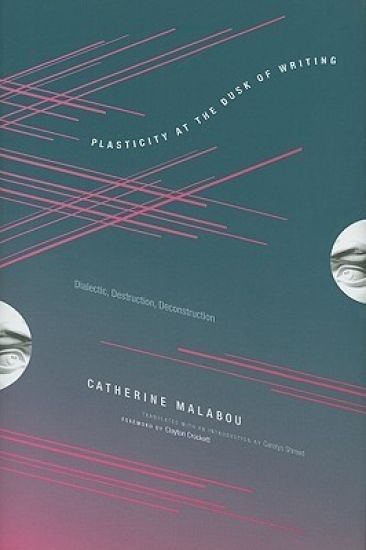
Plasticity at the Dusk of Writing
Catherine Malabou; Clayton Crockett
Columbia University Press
2009
sidottu
A former student and collaborator of Jacques Derrida, Catherine Malabou has generated worldwide acclaim for her progressive rethinking of postmodern, Derridean critique. Building on her notion of plasticity, a term she originally borrowed from Hegel's Phenomenology of Spirit and adapted to a reading of Hegel's own work, Malabou transforms our understanding of the political and the religious, revealing the malleable nature of these concepts and their openness to positive reinvention. In French to describe something as plastic is to recognize both its flexibility and its explosiveness-its capacity not only to receive and give form but to annihilate it as well. After defining plasticity in terms of its active embodiments, Malabou applies the notion to the work of Hegel, Heidegger, Levinas, Levi-Strauss, Freud, and Derrida, recasting their writing as a process of change (rather than mediation) between dialectic and deconstruction. Malabou contrasts plasticity against the graphic element of Derrida's work and the notion of trace in Derrida and Levinas, arguing that plasticity refers to sculptural forms that accommodate or express a trace. She then expands this analysis to the realms of politics and religion, claiming, against Derrida, that "the event" of justice and democracy is not fixed but susceptible to human action.
Recent neuroscience, in replacing the old model of the brain as a single centralized source of control, has emphasized "plasticity," the quality by which our brains develop and change throughout the course of our lives. Our brains exist as historical products, developing in interaction with themselves and with their surroundings. Hence there is a thin line between the organization of the nervous system and the political and social organization that both conditions and is conditioned by human experience. Looking carefully at contemporary neuroscience, it is hard not to notice that the new way of talking about the brain mirrors the management discourse of the neo-liberal capitalist world in which we now live, with its talk of decentralization, networks, and flexibility. Consciously or unconsciously, science cannot but echo the world in which it takes place. In the neo-liberal world, "plasticity" can be equated with "flexibility"—a term that has become a buzzword in economics and management theory. The plastic brain would thus represent just another style of power, which, although less centralized, is still a means of control. In this book, Catherine Malabou develops a second, more radical meaning for plasticity. Not only does plasticity allow our brains to adapt to existing circumstances, it opens a margin of freedom to intervene, to change those very circumstances. Such an understanding opens up a newly transformative aspect of the neurosciences. In insisting on this proximity between the neurosciences and the social sciences, Malabou applies to the brain Marx's well-known phrase about history: people make their own brains, but they do not know it. This book is a summons to such knowledge.
This book is one of the most important recent books on Hegel, a philosopher who has had a crucial impact on the shape of continental philosophy. Published here in English for the first time, it includes a substantial preface by Jacques Derrida in which he explores the themes and conclusions of Malabou's book. The Future of Hegel: Plasticity, Temporality and Dialectic restores Hegel's rich and complex concepts of time and temporality to contemporary philosophy. It examines his concept of time, relating it to perennial topics in philosophy such as substance, accident and the identity of the subject. Catherine Malabou's also contrasts her account of Hegelian temporality with the interpretation given by Heidegger in Being and Time, arguing that it is the concept of 'plasticity' that best describes Hegel's theory of temporality. The future is understood not simply as a moment in time, but as something malleable and constantly open to change through our interpretation. The book also develops Hegel's preoccupation with the history of Greek thought and Christianity and explores the role of theology in his thought. Essential reading for those interested in Hegel and contemporary continental philosophy, The Future of Hegel is also fascinating to those interested in the ideas of Heidegger and Derrida.
L'Avenir de Hegel: Plasticitae, Temporalitae, Dialectique
Catherine Malabou
Librarie Philosophique J. Vrin
1996
nidottu
Comment la philosophie de Hegel pourrait-elle encore promettre quelque chose puisqu'elle est apparue, aux yeux des lecteurs contemporains, comme une entreprise d'annulation du temps? Le savoir absolu n'est-il pas le resultat du processus dialectique par lequel l'esprit releve toute temporalite et par la toute surprise, l'evenement se produisant toujours trop tard? D'une absence de pensee de l'avenir dans la philosophie de Hegel decoulerait une absence d'avenir de la philosophie hegelienne elle-meme. C'est contre une telle assertion que le present ouvrage s'inscrit en faux; il se propose pour cela de travailler le concept de plasticite, montrant comment il forme en profondeur, a la fois comme sa structure et comme son rythme, le contenu speculatif. Est plastique ce qui est susceptible de recevoir comme de donner la forme, mais aussi de l'aneantir. Hegel degage ce concept de son sol natal, l'art, pour le rendre a sa veritable origine: le developpement de la subjectivite. Est dit plastique, en effet, le rapport que la subjectivite entretient avec l'accident, avec ce qui arrive. L'auto-determination apparait comme proces de temporalisation au sein duquel la subjectivite, dans l'attitude contrastee d'un voir venir, se donne et par la recoit sa propre forme, anticipant son avenir tout en renoncant a en maitriser l'irruption. La plasticite du concept hegelien de temps est le foyer de resistance clandestin ou se prepare la reponse a l'accusation de vulgarite portee par Heidegger a l'encontre de ce meme concept.