Kirjojen hintavertailu – 12 903 725 kirjaa ja 27 kauppaa
Kirjailija
Center of Military History United States
Kirjat ja teokset yhdessä paikassa: 134 kirjaa, julkaisuja vuosilta 2014–2015, suosituimpiin kuuluu The Chemical Warfare Service: Organizing for War. Vertaile teosten hintoja ja tarkista saatavuus suomalaisista kirjakaupoista.
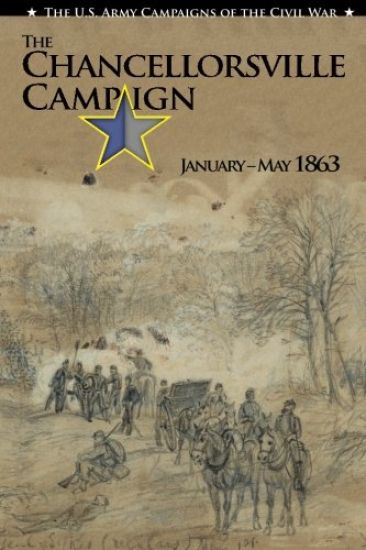
In The Chancellorsville Campaign, January-May 1863, author Bradford Wineman examines the battle of Chancellorsville in which a powerful Union Army, under Maj. Gen. Joseph Hooker, was pitted against a smaller but well-led Confederate force under General Robert E. Lee. Hooker planned a bold flanking maneuver to secure a Union victory, crush the rebel army, and open the way for a march toward Richmond, Virginia, the Confederate capital. He anticipated a glorious victory for his Federal troops. In the end it was Lee, and his chief lieutenant, Maj. Gen. Thomas J. "Stonewall" Jackson, who achieved what many historians have called the South's greatest victory during the Civil War. Once Hooker had maneuvered the bulk of his forces over the Rappahannock River the Union commander gathered his troops into a defensive position at Chancellorsville and waited for Lee to attack. Lee seized the initiative, made several risky tactical moves, and drove the Federals from the field after three days of intense fighting. Only the death of the "Stonewall" Jackson tarnished Lee's crowning victory. This book is part of the U. S. Army Campaigns of the Civil War series and includes four maps and eleven illustrations.
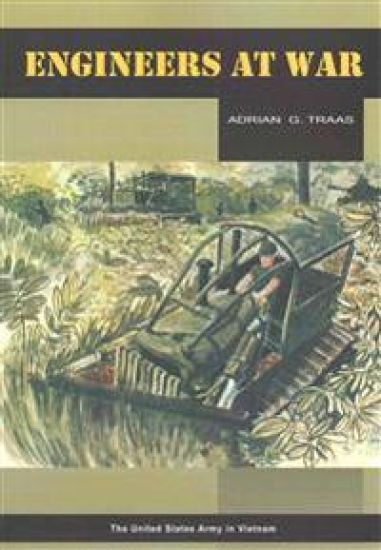
Engineers at War describes the role of military engineers, especially the U. S. Army Corps of Engineers, in the Vietnam War. It is a story of the engineers' battle against an elusive and determined enemy in one of the harshest underdeveloped regions of the world. Despite these challenges, engineer soldiers successfully carried out their combat and construction missions. The building effort in South Vietnam allowed the United States to deploy and operate a modern 500,000-man force in a far-off region. Although the engineers faced huge construction tasks, they were always ready to support the combat troops. They built ports and depots, carved airfields and airstrips out of jungle and mountain plateaus, repaired roads and bridges, and constructed bases. Because of these efforts, ground combat troops with their supporting engineers were able to fight the enemy from well-established bases. Although most of the construction was temporary, more durable facilities, such as airfields, port and depot complexes, headquarters buildings, communications facilities, and an improved highway system, were intended to serve as economic assets for South Vietnam. This volume covers how the engineers grew from a few advisory detachments to a force of more than 10 percent of the Army troops serving in South Vietnam. The 35th Engineer Group began arriving in large numbers in June 1965 to begin transforming Cam Ranh Bay into a major port, airfield, and depot complex. Within a few years, the Army engineers had expanded to a command, two brigades, six groups, twenty-eight construction and combat battalions, and many smaller units.