Kirjojen hintavertailu – 12 903 725 kirjaa ja 27 kauppaa
Kirjailija
Center of Military History United States
Kirjat ja teokset yhdessä paikassa: 134 kirjaa, julkaisuja vuosilta 2014–2015, suosituimpiin kuuluu The Chemical Warfare Service: Organizing for War. Vertaile teosten hintoja ja tarkista saatavuus suomalaisista kirjakaupoista.
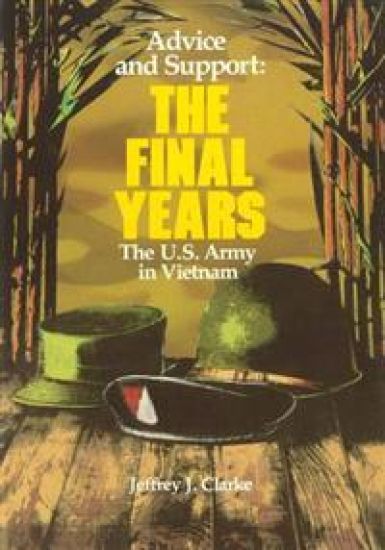
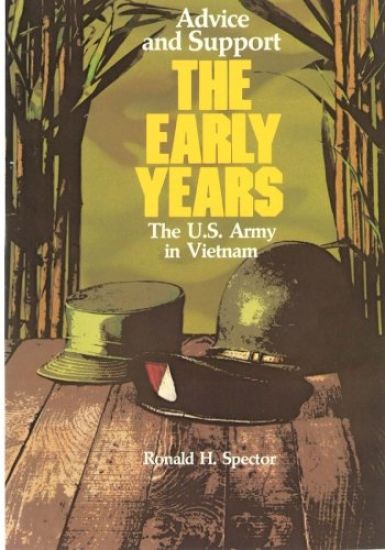
To many Americans, the war in Vietnam was, and remains, a divisive conflict. Now almost fifty years after the beginning of major U. S. combat operations in Vietnam, the war has faded from much of America's consciousness. Over half of the U. S. population was born after the war and has no direct memory of the conflict, yet this does not lessen its importance. The massive American commitment-political, military, and diplomatic-to the independence of South Vietnam beginning in the 1950s and continuing with U. S. direct combat operations in the 1960s and early 1970s makes it important to remember those who served. U. S. involvement in this corner of Southeast Asia began after World War II when Vietnam was fighting for independence from France. Although generally favoring Vietnamese independence, the United States supported France because the rebels-or Viet Minh-were led by Communists and in the days of the Cold War U. S. officials considered any and all Communists to be little more than the puppets of Moscow and Beijing. France's defeat in 1954, the bifurcation of Vietnam into a Communist North and non-Communist South, and America's assumption of the job of training the armed forces of the newly created non-Communist Republic of Vietnam pulled the United States deeper into the conflict. Framed primarily as a fight to defend democracy against the forces of international communism, the United States gradu-ally committed more troops and materiel to fight Communist-led Southern guerrillas (or Viet Cong) and the regular military forces sent to South Vietnam by the politburo in Hanoi. By the time President Lyndon B. Johnson committed major combat units in 1965, the United States had already invested thousands of men and millions of dollars in the fight to build a secure and stable South Vietnam. That commitment expanded rapidly until by 1969 the United States had over 365,000 soldiers in every military region of South Vietnam with thousands of other servicemen and women throughout the Pacific area in direct support of operations. The war saw many technological innovations including the massive use of helicopters, wide-scale use of computers, sophisticated psychological operations, new concepts of counterinsurgency, and major advances in military medicine. Yet, as in most wars, much of the burden of battle was still borne by the foot soldiers on the ground who slogged over the hills and through the rice paddies in search of an often elusive foe. The enormous military and political effort by the United States was, however, continuously matched by the determination of North Vietnamese leaders to unify their country under communism at whatever cost. That determination, in the end, proved decisive. Negotiations accompanied by the gradual withdrawal of American forces led to the Paris Peace Accords in January 1973, effectively ending the U. S. military role. The continued existence of an independent South Vietnam, however, was of short duration. Two years after the American exit the North Vietnamese Army overran South Vietnam and sealed its victory in April 1975. The vast majority of American men and women who served in Vietnam did so in the uniform of the United States Army. They served their country when called, many at great personal cost, against a backdrop of growing uncertainty and unrest at home. These commemorative pamphlets are dedicated to them.
Defense acquisition reform initiatives have been Department of Defense perennials over the past fifty years. Yet reforming the acquisition process remains a high priority each time a new administration comes into office. Many notable studies of defense acquisition with recommendations for changes have been published, and each has reached the same general findings with similar recommendations. However, despite the defense community's intent to reform the acquisition process, the difficulty of the problem and the associated politics, combined with organizational dynamics that are resistant to change, have led to only minor improvements. The problems of schedule slippages, cost growth, and shortfalls in technical performance on defense acquisition programs have remained much the same throughout this period. The importance of the Department of Defense's huge acquisition projects over the years cannot be overstressed. The United States has often turned to cutting-edge technological solutions to solve strategic and operational challenges. To highlight the importance of acquisition issues, the Department of Defense began a project in 2001 to write a history of defense acquisition from the end of World War II to the start of the twenty-first century. The U. S. Army Center of Military History served as the executive agent for that project until funding was effectively withdrawn in 2009. Two volumes of that history are nearing publication, which will take the story up to 1969. To capitalize on essential information on defense acquisition reform initiatives from the three unpublished draft volumes covering the period from 1969 to 2000, the Center decided to publish extracts from those volumes, with additional analysis by J. Ronald Fox, a subject matter expert on acquisition and an adviser to the project. Much of chapter two of this acquisition reform study was written by Walton S. Moody and David G. Allen for their draft Volume III (1969-1980) of the Defense Acquisition History Project and then edited, analyzed, and augmented by Fox. Similarly, most of chapter three was taken from Thomas C. Lassman's draft chapters three and five of his Volume IV (1981-1990), and much of chapter four was written by Philip L. Shiman as chapter eight of his Volume V (1991-2000) of the Defense Acquisition History Project. Fox was able to take their chapters, provide additional analysis and insights, and consolidate and edit them with his own work to prepare this important volume focusing on defense acquisition reform. This volume is the result of all of their research and writing efforts and their collective insights into an incredibly complex system. Professor Fox's Defense Acquisition Reform, 1960-2009: An Elusive Goal, provides valuable historical analysis of the numerous attempts over the past fifty years to reform the defense acquisition process for major weapons systems. It identifies important long-term trends, insights, and observations that provide perspective and context to assist current defense decision makers, acquisition officials, and the acquisition schoolhouse. It is an important work on an important subject that continues to defy solution.
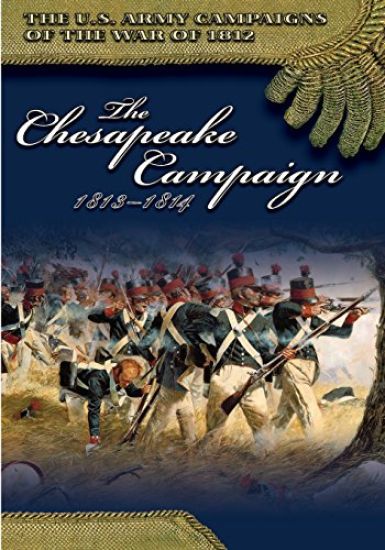
The Chesapeake Campaign, 1813-1814, examines a pivotal series of military operations during the War of 1812, many of which remain unknown to most Americans. Most know of the embarrassment that the British army caused when it entered Washington, D. C., to burn the Capitol, the president's mansion, and other government buildings. Many are also aware that during a battle three weeks later a garrison flag of a U. S. Army post inspired the writing of a patriotic song that eventually became our national anthem. In addition to the legacy of the "Star Spangled Banner," the Chesapeake Campaign holds far greater historical and military significance. As Britain concentrated its military and naval might against Napoleon in Europe, it could commit few forces to defend its possessions in North America, in what was considered a troublesome sideshow. The campaign started as a strategic effort to disrupt American commerce and divert U. S. forces, including most of the Regular Army, from continued incursions into the Upper and Lower Canadian provinces. With Napoleon's exile to Elba in 1814, the British could now concentrate on the war in America and dispatched additional ships and men. After executing a successful raid on Washington, British leaders turned their attention on the more militarily important and prosperous port city of Baltimore. Despite a combined land and sea attack, the operation failed. Together with news that American forces had also defeated a British invasion along the Lake Champlain corridor at Plattsburgh, New York, the victory at Baltimore gave U. S. peace commissioners in Ghent, Belgium, a much stronger position from which to negotiate the terms of the treaty that ended the war.
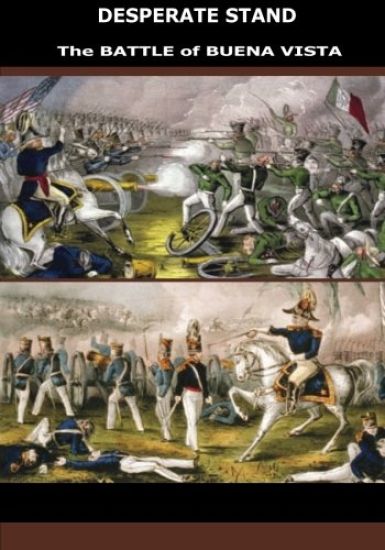
The Mexican War (1846-1848) was the U. S. Army's first experience waging an extended conflict in a foreign land. This brief war is often overlooked by casual students of history since it occurred so close to the American Civil War and is overshadowed by the latter's sheer size and scope. Yet, the Mexican War was instrumental in shaping the geographical boundaries of the United States. At the conclusion of this conflict, the U. S. had added some one million square miles of territory, including what today are the states of Texas, Arizona, New Mexico, and California, as well as portions of Colorado, Wyoming, Utah, and Nevada. This newly acquired land also became a battleground between advocates for the expansion of slavery and those who fought to prevent its spread. These sectional and political differences ripped the fabric of the union of states and eventually contributed to the start of the American Civil War, just thir¬teen years later. In addition, the Mexican War was a proving ground for a generation of U. S. Army leaders who as junior officers in Mexico learned the trade of war and later applied those lessons to the Civil War. The Mexican War lasted some twenty-six months from its first engagement through the withdrawal of American troops. Fighting took place over thousands of miles, from northern Mexico to Mexico City, and across New Mexico and California. During the conflict, the U. S. Army won a series of decisive conventional battles, all of which highlighted the value of U. S. Military Academy graduates who time and again paved the way for American victories. The Mexican War still has much to teach us about projecting force, conducting operations in hostile territory with a small force that is dwarfed by the local population, urban combat, the difficulties of occupation, and the courage and perseverance of individual soldiers. The following essay is one of eight planned in this series to provide an accessible and readable account of the U. S. Army's role and achievements in the conflict.
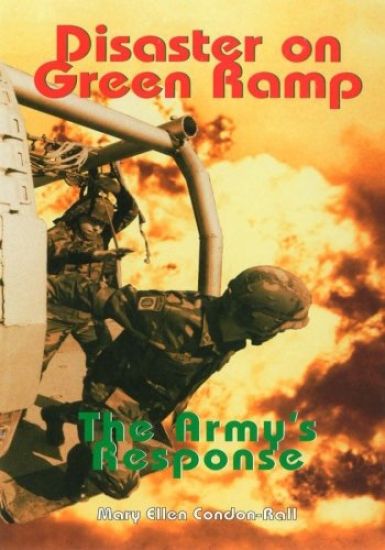
Disaster on Green Ramp: The Army's Response is a powerful story of pain, terror, pride, courage, and compassion. It celebrates the magnificent spirit of the men and women who make up America's military community. This work describes the Army's exceptionally effective response to the tragic events on 23 March 1994 at Pope Air Force Base, North Carolina. On that day a large number of Army paratroopers from nearby Fort Bragg had assembled in an area adjacent to the airstrip known as Green Ramp, preparing to board a transport that would carry them aloft for a training parachute jump. They never made that j ump. Shortly after 1400 hours two aircraft attempted to land simultaneously at Pope. The resulting crash produced a massive fire that brought death or injury to more than a hundred paratroopers- the worst peacetime loss of life suffered by the 82d Airborne Division since World War II. You will recognize the troopers, doctors, medics, chaplains, volunteers, and family members who triumphed over tragedy; some by name, but most by type. They are, in truth, much like you and me- essentially ordinary people cast in extraordinary roles by fate. What they shared was a fierce loyalty to one another.
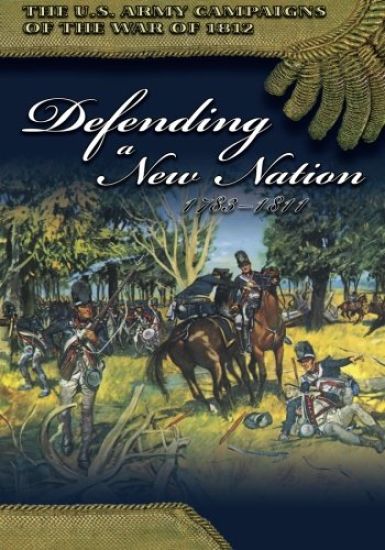
The War of 1812 is perhaps the United States' least known conflict. Other than Andrew Jackson's 1815 victory at New Orleans and Francis Scott Key's poem "The Star-Spangled Banner" written in 1814 during the British attack on Baltimore, most Americans know little about the country's second major war. Its causes are still debated by historians today. Great Britain's impressment of American sailors, its seizure of American ships on the high seas, and suspected British encouragement of Indian opposition to further American settlement on the western frontier all contributed to America's decision to declare war against Great Britain in June 1812. None of these factors, however, adequately explain why Presi-dent James Madison called for a war the country was ill-prepared to wage. Moreover, the war was quite unpopular from the start. Many Federalists-chiefly in the New England states-opposed an armed conflict with Great Britain, continued to trade with the British, and even met in convention to propose secession from the Union. Some members of the president's own Republican Party objected to the war's inevitable costs and questionable objectives, such as the conquest of Canada. To declare war was one thing, but to prosecute it successfully was a different matter. Much of the story of the War of 1812 is about the unpreparedness of America's Army and Navy at the conflict's outset, and the enormous difficulties the new nation faced in raising troops, finding competent officers, and supplying its forces. Most of America's military leaders were inexperienced and performed poorly, particularly in the first two years of war. Only gradually did better leaders rise to the top to command the more disciplined and well-trained units that America eventually fielded. But despite costly initial setbacks, by the time the fighting stopped American arms had won key victories at Chippewa, Lundy's Lane, and New Orleans under excellent officers such as Winfield Scott, Jacob Brown, and Andrew Jackson. Although the United States achieved few of its political objectives in the War of 1812, its Regular Army emerged more professional, better led, and fit to take its place as the foundation of America's national defenses. I encourage all Army leaders and soldiers to read this pamphlet and the others in our series of campaign pamphlets in commemoration of the bicentennial of the War of 1812. We can all profit from greater knowledge about the beginnings of our Army: an Army forged in victory and defeat during what has often been called the second war of American independence.
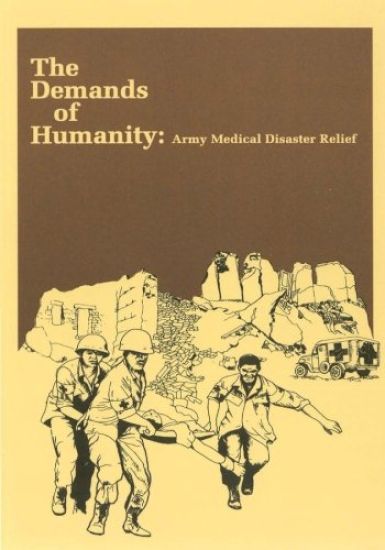
From the earliest days of the Republic, the United States Anny has not just maintained the national defense but has also performed a wide variety of peacetime missions. Army officers helped explore the West, Anny engineers built early flood control systems, and Army pilots flew the first airmail routes. The Army Medical Department in particular has long aided the civilian community. Its members regularly contributed to the advancement of medical knowledge and in special situations provided health care for civilians. The Demands of Humanity examines one aspect of that direct assistance, medical aid rendered during natural disasters. Discussing help given both at home and abroad, this third volume in the Special Studies Series examines the origin of the relief mission in the nineteenth century and recounts its history to 1976. With their special expertise in public health and the treatment of mass casualties, Army medical personnel during these years compiled an impressive record of assistance. After the Spanish-American War, Anny doctors made medical history in their campaigns against epidemic diseases in Cuba, Puerto Rico, and the Philippines. In times of twentieth century floods, hurricanes, tornadoes, earthquakes, famines, and epidemics, Anny medical personnel aided individuals and furnished stricken communities valuable advice on sanitation and health care. The Demands of Humanity chronicles the humanitarian contribution made by Army doctors, nurses, and medical corpsmen during disaster situations. It also examines the problems their units encountered in relief operations and explains the development of the Anny's assistance role. It thereby contributes not only to the often-neglected history of the peacetime role of the military but to the history of social welfare policy in the United States as well .
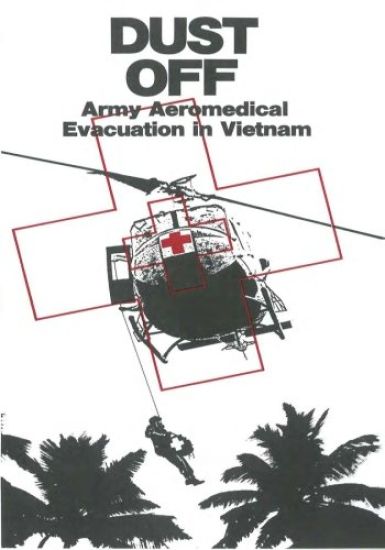
From the wheat fields of the Civil War lo the jungles and paddies of Vietnam, the United States Army has led the world in adapting modern transport technology to the humanitarian goal of saving the lives of the sick and wounded. Drawing on its first experiments with helicopters in Korea, the Army in Vietnam came to rely almost entirely on the helicopter for medical evacuation, The Dust Off and Medevac helicopter ambulance units tested and perfected for medical use the Army's new helicopter, the UH- I (" Huey" Iroquois), and developed several new devices, especially the hoist, that helped save thousands of American and allied lives between 1962 and 1973, The pilots of these helicopter ambulances displayed a courage and devotion to duty that earned them widespread respect from soldiers in Vietnam. This book chronicles the early problems of medical evacuation in Vietnam, recounts the valor of several of the Dust Off crews, and describes the procedures and equipment used to speed the movement of patients to in-theater Army hospitals. It also shows the effect that the helicopter had on traditional Army procedures dating back to the Civil War. It should interest anyone concerned with Army medical history, the Vietnam War, or the problem of administering medical care in war or in times of civilian disasters. The widespread use of the helicopter for medical evacuation in America since the Vietnam War testifies to the broader issues raised by this study, and of the relevance of Army history to the civilian community. It is gratifying that the demand for this work justifies this new reprint.