
Kirjailija
Charles A Eastman
Kirjat ja teokset yhdessä paikassa: 126 kirjaa, julkaisuja vuosilta 1977–2026, suosituimpiin kuuluu The Charles A. Eastman Collection. Vertaile teosten hintoja ja tarkista saatavuus suomalaisista kirjakaupoista.
Nimi esiintyy myös muodoissa: Charles A. Eastman
126 kirjaa
Kirjojen julkaisuvuodet: 1977–2026.
Indian Boyhood
Charles A. Eastman
University of Nebraska Press
1991
pokkari
Halvin toimitettuna 25,30 €
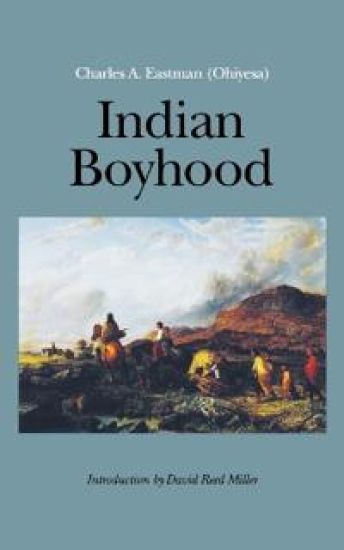
Indian Boyhood (1902) was the literary debut of Charles A. Eastman (Ohiyesa), a Santee Sioux whose eleven books aimed at bringing whites and Indians closer together. The favorable reception of the autobiographical Indian Boyhood would lead him to write such classic works as Old Indian Days (1907), Wig warn Evenings: Sioux Folk Tales Retold (with Elaine Goodale Eastman, 1909), The Soul of the Indian (1911), From the Deep Woods to Civilization (1916), and Indian Heroes and Great Chieftains (1918), all reprinted as Bison Books. At the beginning of Indian Boyhood Eastman recalls the 1862 Sioux Uprising in Minnesota that sent his family into exile in Canada. He describes his childhood there, which ended when his father, who had been presumed dead, appeared to take him back to the United States. An Indian boy's training, child-hood games, harvesting and feasts, legends told around a campfire—Eastman relates all aspects of the rich traditional life of the Santee Sioux, which had already passed away by the time this book was published.
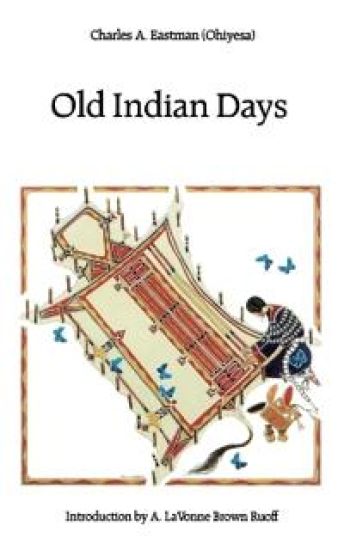
The stories in Old Indian Days focus mainly on Sioux bands of the Upper Midwest in prereservation times, when contact with whites was minimal. Charles A. Eastman, a mixed-blood Sioux who earned renown as the author of nearly a dozen books, was on home ground in writing about the traditional life of his people, their customs, warm family relations, reverence for animals, and struggle for survival. Originally published in 1907, Old Indian Days alludes to historical figures like Little Crow and Tamahay and to an event that Eastman experienced as a small boy, the 1862 Sioux Uprising in Minnesota. The excitement of intertribal warfare and the warrior's lone exploits, as well as his more tender side in trying to fathom the mysteries of womanhood and the eternal are seen in "The Love of Antelope," "The Madness of Bald Eagle." "The Singing Spirit," and other stories. Women enter into these evocations of Indian life most memorably. In "The Peace-Maker" a Sioux woman takes a valiant stand against the consumption of whiskey. Other heroines, including Blue Sky and She-Who-Has-a-Soul, are instrumental in bringing peace between tribes and between races. "Winona, the Woman-Child" and "Winona, the Child-Woman" are among those stories revealing the everyday life of the Indian woman, her rearing and education and influence. In her introduction to this Bison Book edition, A. LaVonne Brown Ruoff, a professor of English at the University of Illinois at Chicago, examines the extent to which the stories are original creations and reinterpretations of existing oral accounts.
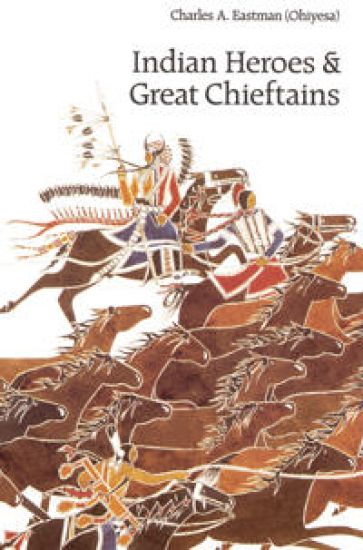
Charles A. Eastman, a Santee Sioux, was four years old at the time of the 1862 Sioux Uprising in Minnesota. Separated from his father in the aftermath of the rebellion, he spent eleven years with relatives in Canada before being reunited with him and taken to Dakota Territory. Deeply influenced by his father who had been converted to Christianity, he likewise followed "the white man's trail," attending Dartmouth and, in 1890, becoming a government physician at the Pine Ridge Agency. His fame today rests on the eleven books he wrote, in which he attempted to correct misapprehensions whites had about Indians and to bring the two races closer together. First published in 1918, Indian Heroes and Great Chieftains contains biographical vignettes of fifteen great Indian leaders, most of them Sioux and some of them, like Red Cloud and Rain-in-the-Face, friends and acquaintances of Eastman. He pays tribute to Little Wolf, the Cheyenne chief whom he knew well, and describes the noble career of Chief Joseph of the Nez Perces, who received his assistance in drawing up a document of grievances presented to the government in 1897. In finely honed prose Eastman cuts to the essence of his subjects, including Crazy Horse, Sitting Bull, Spotted Tail, Little Crow, Gall, Two Strike, American Horse, Dull Knife, Roman Nose. Hole-in-the-Day, and Tamahay (who counseled against the Sioux Uprising in Minnesota).
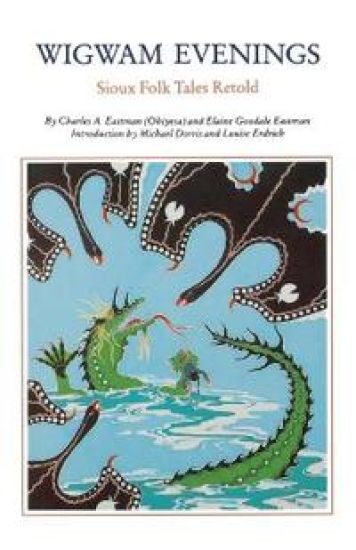
"Charles Eastman, in collaboration with his wife, Elaine Goodale Eastman, has assembled in this collection a composite, condensed sampling of his tribe's values, and presents them in a language that is at once direct and engaging. To say these allegories are 'wise' begs the question; they are the distilled conclusions of generations upon generations of Plains society and point to the essence of what it is to be a decent, thoughtful, respectable human being—a Sioux Tao told in prose a child of any culture, of any time, can comprehend." Charles A. Eastman (Ohiyesa) (1858-1939) was a mixed-blood Sioux who became one of the best-known Indians of his time. He earned a bachelor's degree from Dartmouth and a medical degree from Boston University. From his first appointment as a physician at Pine Ridge Agency; where he witnessed the events that culminated in the Wounded Knee massacre, he sought to bring understanding between Native and non-Native Americans. He wrote eleven books, some, such as Sister to the Sioux (also available as a Bison Book), in collaboration with Elaine Goodale Eastman. His From the Deep Woods to Civilization: Chapters in the Autobiography of an Indian, Indian Boyhood, Indian Heroes and Great Chieftains, Old Indian Days, and The Soul of the Indian: An Interpretation are all available as Bison Books.
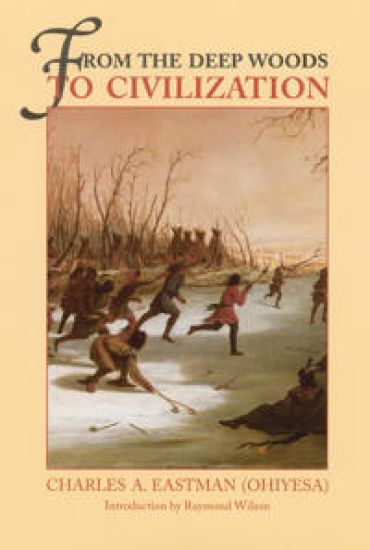
In an earlier book, Indian Boyhood, Charles Alexander Eastman (Ohiyesa) recounted the story of his traditional Sioux Childhood and youth. From the Deep Woods to Civilization, first published in 1916, continues the narrative, beginning with his abrupt entry into the mainstream of Anglo-American life in 1873 at the age of fifteen. Eastman went on to become one of the best known educated Indians of his time, receiving a Bachelor of Science degree from Dartmouth in 1887 and a medical degree from Boston University in 1890. From his first job as physician at Pine Ridge Agency, where he witnessed the events that culminated in the Wounded Knee massacre, he devoted his life, both in and out of government service, to helping his fellow Indians adapt to the white world while retaining the best of their own culture.