Kirjojen hintavertailu – 12 859 826 kirjaa ja 27 kauppaa
Kirjailija
Charles Darwin
Kirjat ja teokset yhdessä paikassa: 1 236 kirjaa, julkaisuja vuosilta 1859–2027, suosituimpiin kuuluu Lajien synty. Vertaile teosten hintoja ja tarkista saatavuus suomalaisista kirjakaupoista.
Charles Robert Darwin, 12 February 1809 - 19 April 1882) was an English naturalist, geologist and biologist, best known for his contributions to the science of evolution. He established that all species of life have descended over time from common ancestors and, in a joint publication with Alfred Russel Wallace, introduced his scientific theory that this branching pattern of evolution resulted from a process that he called natural selection, in which the struggle for existence has a similar effect to the artificial selection involved in selective breeding.
Charles Darwin's seminal formulation of the theory of Evolution, On the Origin of Species continues to be as controversial today as when it was first published. This Penguin Classics edition contains an introduction and notes by William Bynum, and features a cover designed by Damien Hirst. Written for a general readership, On the Origin of Species sold out on the day of its publication and has remained in print ever since. Instantly and persistently controversial, the concept of natural selection transformed scientific analysis about all life on Earth. Before the Origin of Species, accepted thinking held that life was the static and perfect creation of God. By a single, systematic argument Darwin called this view into question. His ideas have affected public perception of everything from religion to economics. William Bynum's introduction discusses Darwin's life, the publication and reception of the themes of On the Origin of Species, and the subsequent development of its major themes. The new edition also includes brief biographies of some of the most important scientific thinkers leading up to and surrounding the Origin of Species, suggested further reading, notes and a chronology. Charles Darwin (1809-82), a Victorian scientist and naturalist, has become one of the most famous figures of science to date. The advent of On the Origin of Species by Means of Natural Selection in 1859 challenged and contradicted all contemporary biological and religious beliefs. If you enjoyed On the Origin of Species, you might like Darwin's The Descent of Man, also available in Penguin Classics.
This book, the first of three-volumes detailing the life of Charles Darwin, published five years after his death, was edited by his son Francis, who was his father's collaborator in experiments in botany and who after his death took on the responsibility of overseeing the publication of his remaining manuscript works and letters. In the preface to the first volume, Francis Darwin explains his editorial principles: 'In choosing letters for publication I have been largely guided by the wish to illustrate my father's personal character. But his life was so essentially one of work, that a history of the man could not be written without following closely the career of the author.' Among the family history, anecdotes and reminiscences of scientific colleagues is a short autobiographical essay which Charles Darwin wrote for his children and grandchildren, rather than for publication. This account of Darwin the man has never been bettered.
Initially published by the Linnean Society, this 1865 essay was Darwin's first foray into the study of climbing plants. He was inspired to produce this work by a paper on the tendrilled Cucurbitacean plant by American botanist Asa Gray, with whom he had a firm intellectual friendship. Darwin examines in detail those plants which climb using a twisting stem, such as the hop; leaf-climbers, such as the clematis; tendrilled plants such as the passion flower; and hook and root climbers such as ivy. The conclusions reached by his study are presented in terms of the adaptations of various species to their environments, a continuation of the theories that Darwin had propounded in his On the Origin of the Species six years earlier. His passion for the design of the plants and fascination with the diversity of their powers of movement are clear in this accessible example of the process of evolution.
Written in collaboration with his son Francis, a notable botanist, this 1880 book builds on Darwin's earlier investigations into climbing plants, orchids, insectivorous plants, flower variety, and the processes of fertilisation. This detailed study of many species from seed to mature plant further develops Darwin's work on adaptation and evolution, with the aim of collating the results of individual studies into common factors applicable to plants in general. Particular emphasis is given to analysis and investigation of the process here termed circumnutation, the movement of the stem of the plant in order to direct the head in certain directions. This is seen as of paramount importance, with the conclusion that it is modification of this feature that has enabled plants to adapt and evolve so diversely. The authors also note similarities between plants and animals, such as sensitivity to touch and habit of action at certain times.
These two short monographs, published under the auspices of the Palaeontographical Society in 1851 and 1854, show Charles Darwin as a meticulous research scientist, poring over fossils collected by himself and other enthusiasts in Britain and in Europe. The first volume is devoted to the Lepadidae, and the second to the Balanidae and Verrucidae (all types of barnacle, members of the infraclass Cirripedia). Darwin's interest in barnacles had first arisen in his student days in Edinburgh, under the guidance of Robert Grant, and increased during his detailed work in dissecting and classifying the specimens he had collected on the Beagle voyage. The publication of his findings cemented his reputation as a expert taxonomist and biologist, and his observations over eight years of the minute differences between males, females and an apparent hermaphroditic stage of development lent support to his developing theory of evolution.
This second edition of The Expression of the Emotions in Man and Animals was edited by his son Francis Darwin and published in 1890. As Sir Francis notes in his brief preface, because the first edition did not sell out in Charles Darwin's lifetime, 'he had no opportunity of publishing the material collected with a view to a second edition.' This material, in the form of 'a mass of letters, extracts from and references to books' was utilised in the second edition, as were Darwin's pencilled corrections in his own volume of the first. The book is a study of the muscular movements of the face (both human and animal) triggered by the emotions being felt - a 'physical' response to a 'mental' sensation. Darwin's detailed analysis of what actually happens to a body in a state of fear, or joy, or anger is illustrated by photographic images.
Darwin had long been fascinated by insectivorous plants, from the native British sundews and bladderworts to the exotic pinguiculas and nepenthes which he encountered during the Beagle voyage. Growing in environments low in soil nutrients, their highly specialised ways of obtaining enough food, including the capability for fast movement in the case of the Venus flytrap, were evidence of evolutionary adaptation. But he was also interested in what food they needed, and whether they would be selective when offered a varied diet; and how did the flytrap close its trap on its prey? Darwin conducted a range of simple but ingenious experiments on his collection of insectivores and observed and noted the results of each with his customary meticulousness. The results can be seen in this book, which remains of enormous interest to anyone whose imagination has been fired by these strange and beautiful plants.
The development of Charles Darwin's views on evolution by natural selection has fascinated biologists since the 1859 publication of his landmark text On The Origin of Species. His experiences, observations and reflections during and after his pivotal journey on the Beagle during 1831–36 were of critical importance. Darwin was not, however, a man to be rushed. While his autobiography claims that the framework of his theory was laid down by 1839, its first outline sketch did not emerge until 1842. That essay was heavily edited, with many insertions and erasures. It formed the vital kernel of his more expansive but also unpolished and unpublished essay of 1844. Following careful editing by his son Francis, both essays were published in 1909, and are reproduced here. Reading these side by side, and together with the Origin, permits us to scrutinise selection and evolution truly in action.
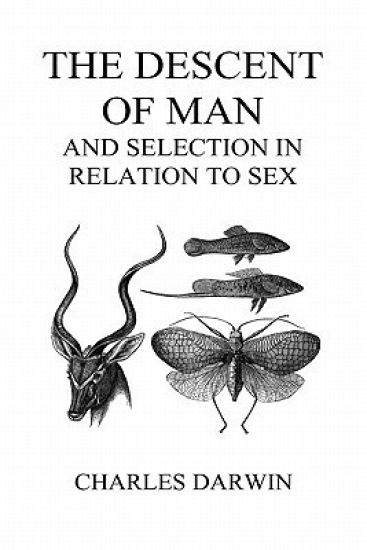
In his introduction, Darwin reveals that for many years he had no intention of publishing his notes on this topic, 'as I thought that I should thus only add to the prejudices against my views'. By 1871, he felt that his fellow scientists would show a greater openness of mind to his arguments, even when taken to their logical conclusion and applied to the descent of man from the apes – the aspect of his theory which had been so widely mocked since the notorious question asked by Bishop Wilberforce at the Oxford debate of 1860: was it through his grandmother or his grandfather that Thomas Huxley, Darwin's champion, considered himself descended from a monkey? However, the book's focus on the area of sexual selection and the evolutionary importance of secondary sexual characteristics across the animal kingdom meant that the book was received without the public outrage that Darwin had feared.
In his introduction, Darwin reveals that for many years he had no intention of publishing his notes on this topic, 'as I thought that I should thus only add to the prejudices against my views'. By 1871, he felt that his fellow scientists would show a greater openness of mind to his arguments, even when taken to their logical conclusion and applied to the descent of man from the apes – the aspect of his theory which had been so widely mocked since the notorious question asked by Bishop Wilberforce at the Oxford debate of 1860: was it through his grandmother or his grandfather that Thomas Huxley, Darwin's champion, considered himself descended from a monkey? However, the book's focus on the area of sexual selection and the evolutionary importance of secondary sexual characteristics across the animal kingdom meant that the book was received without the public outrage that Darwin had feared.