Kirjojen hintavertailu – 12 859 826 kirjaa ja 27 kauppaa

Kirjailija

Charles Darwin

Kirjat ja teokset yhdessä paikassa: 1 236 kirjaa, julkaisuja vuosilta 1859–2027, suosituimpiin kuuluu Lajien synty. Vertaile teosten hintoja ja tarkista saatavuus suomalaisista kirjakaupoista.

1 236 kirjaa

Kirjojen julkaisuvuodet: 1859–2027.

The Origin of Species

The Origin of Species

Charles Darwin

Cambridge University Press
2009
pokkari
This sixth edition of The Origin of Species was published in 1876. It is the last edition on which Darwin himself worked before his death in 1882, and offers a useful complement to the 2009 scholarly edition, edited by Jim Endersby and published by Cambridge University Press in Darwin's bicentennial year. The sixth edition contains a 'historical sketch' in which Darwin reviews the many works by eminent European and American scientists – beginning with Lamarck in 1801 – in which ideas of evolutionary species change and of natural selection were touched on but not developed. This edition, like all from the second onwards, contains the words 'by the Creator', controversially added to the famous last sentence in the book: 'There is grandeur in this view of life, with its several powers, having been breathed by the Creator into a few forms or into one...'
Journal of Researches into the Geology and Natural History of the Various Countries visited by H. M. S. Beagle
Even before Charles Darwin changed the world with his theory of natural selection, he was recognised as an eminent scientist and natural historian. Published in 1840, his Journal of Researches into the Geology and Natural History of the Various Countries Visited by H. M. S. Beagle reveals him as a writer of formidable intelligence and a keen observer of natural and human life. Darwin's journal encompasses every observable detail of the animals, birds and plants he encountered on the five-year voyage. It includes minute descriptions and even sketches of the movements and habits of hitherto unfamiliar species. Accompanying the entries are his own conclusions, analyses and classificatory notes that demonstrate his skill and talent as a naturalist. Darwin's entries on natural phenomena are interspersed with anecdotes of the indigenous peoples he encountered, transforming his journal from an impersonal scientific record to a book of true human interest.
The Life and Letters of Charles Darwin

The Life and Letters of Charles Darwin

Charles Darwin

Cambridge University Press
2009
pokkari
This book, the second of three-volumes detailing the life of Charles Darwin, published five years after his death, was edited by his son Francis, who was his father's collaborator in experiments in botany and who after his death took on the responsibility of overseeing the publication of his remaining manuscript works and letters. In the preface to the first volume, Francis Darwin explains his editorial principles: 'In choosing letters for publication I have been largely guided by the wish to illustrate my father's personal character. But his life was so essentially one of work, that a history of the man could not be written without following closely the career of the author.' Among the family history, anecdotes and reminiscences of scientific colleagues is a short autobiographical essay which Charles Darwin wrote for his children and grandchildren, rather than for publication. This account of Darwin the man has never been bettered.
The Life and Letters of Charles Darwin

The Life and Letters of Charles Darwin

Charles Darwin

Cambridge University Press
2009
pokkari
This book, the third of three-volumes detailing the life of Charles Darwin, published five years after his death, was edited by his son Francis, who was his father's collaborator in experiments in botany and who after his death took on the responsibility of overseeing the publication of his remaining manuscript works and letters. In the preface to the first volume, Francis Darwin explains his editorial principles: 'In choosing letters for publication I have been largely guided by the wish to illustrate my father's personal character. But his life was so essentially one of work, that a history of the man could not be written without following closely the career of the author.' Among the family history, anecdotes and reminiscences of scientific colleagues is a short autobiographical essay which Charles Darwin wrote for his children and grandchildren, rather than for publication. This account of Darwin the man has never been bettered.
The Formation of Vegetable Mould through the Action of Worms

The Formation of Vegetable Mould through the Action of Worms

Charles Darwin

Cambridge University Press
2009
pokkari
This book, published in 1881, was the result of many years of experimentation and observation by Darwin in the open-air laboratory of his garden at Down House in Kent. As he wrote in his introduction, the subject of soil disturbance by worms 'may appear an insignificant one, but we shall see that it possesses some interest'. He goes on to demonstrate the immensity – in size and over time – of the accumulated tiny movements of soil by earthworms, and their vital role in aerating the soil and breaking down vegetable material to keep the topsoil, the growing medium for all plant life and thus vital to human existence, fertile and healthy. At a time when there is huge interest in growing food organically and without using artificial fertilisers, Darwin's insights are as important, and his descriptions of his experiments as fascinating, as they were in the late nineteenth century.
The Effects of Cross and Self Fertilisation in the Vegetable Kingdom
Darwin's impetus for the experiments of which the results are recorded in this book was 'a mere accidental observation; and indeed it required the accident to be repeated before my attention was thoroughly aroused to the remarkable fact that seedlings of self-fertilised parentage are inferior, even in the first generation, in height and vigour to seedlings of cross-fertilised parentage'. After eleven years of meticulous experimentation and observation, described in this volume, he was ready to publish in 1876 the detailed study which he regarded as a companion volume to his 1862 On the Various Contrivances by which British and Foreign Orchids are Fertilised by Insects. His 'first and most important of the conclusions which may be drawn ... is that cross-fertilisation is generally beneficial, and self-fertilisation injurious': this understanding is of course the basis of all modern plant breeding programmes.
The Correspondence of Charles Darwin: Volume 17, 1869

The Correspondence of Charles Darwin: Volume 17, 1869

Charles Darwin

Cambridge University Press
2009
sidottu
'I have always maintained that, excepting fools, men did not differ much in intellect, only in zeal & hard work; and I still think there is an eminently important difference'. Throughout 1869, Darwin continued to collect data for his two most significant books after Origin: The Descent of Man and Expression of the Emotions. Explorers, diplomats, and missionaries all over the world were politely encouraged to investigate, for example, how emotions such as surprise, anger and shame were expressed in different cultures. As Darwin's research on human evolution neared completion, he learned that Alfred Russel Wallace, the co-discoverer of the theory, had begun to raise questions about its application to certain aspects of human development, attributing these to the action of a 'higher power'. In his correspondence, Wallace alluded to his belief in spiritualism, which he fully believed to be open to scientific investigation, but which gave Darwin much pause.
The Expression of the Emotions in Man and Animals
Published in 1872, The Expression of the Emotions in Man and Animals was a book at the very heart of Darwin's research interests - a central pillar of his 'human' series. This book engaged some of the hardest questions in the evolution debate, and it showed the ever-cautious Darwin at his boldest. If Darwin had one goal with Expression, it was to demonstrate the power of his theories for explaining the origin of our most cherished human qualities: morality and intellect. As Darwin explained, "He who admits, on general grounds, that the structure and habits of all animals have been gradually evolved, will look at the whole subject of Expression in a new and interesting light."
On the Origin of Species

On the Origin of Species

Charles Darwin

Cambridge University Press
2009
sidottu
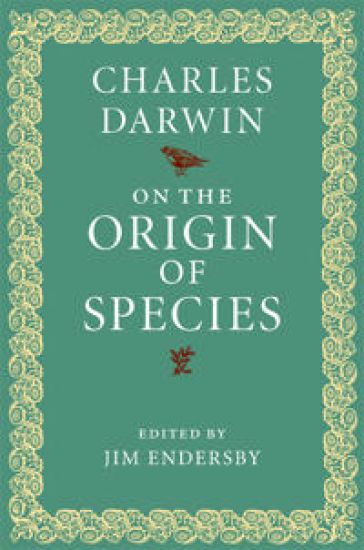
Charles Darwin's On the Origin of Species By Means of Natural Selection is both a key scientific work of research, still read by scientists, and a readable narrative that has had a cultural impact unmatched by any other scientific text. First published in 1859, it has continued to sell, to be reviewed and discussed, attacked and defended. The Origin is one of those books whose controversial reputation ensures that many who have never read it nevertheless have an opinion about it. Jim Endersby's major scholarly edition debunks some of the myths that surround Darwin's book, while providing a detailed examination of the contexts within which it was originally written, published and read. Endersby provides a very readable introduction to this classic text and a level of scholarly apparatus (explanatory notes, bibliography and appendixes) that is unmatched by any other edition.
Selections from Darwin's the Origin of Species

Selections from Darwin's the Origin of Species

Charles Darwin

Green Lion Press
2009
pokkari
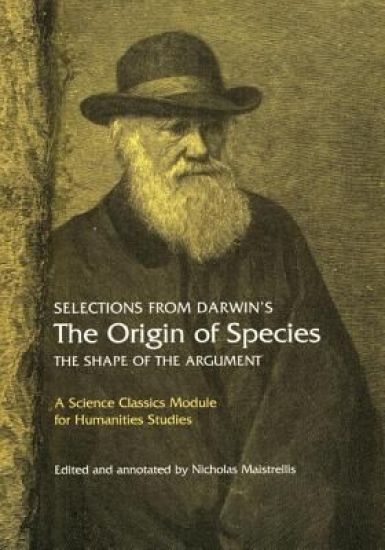
The present edition contains selections from Darwin's Origin of Species that attempt to present the principal lines of argument, without becoming bogged down in details. It also includes notes and other remarks designed to help readers focus on what is essential in Darwin's argument for his theory of the development of living things.
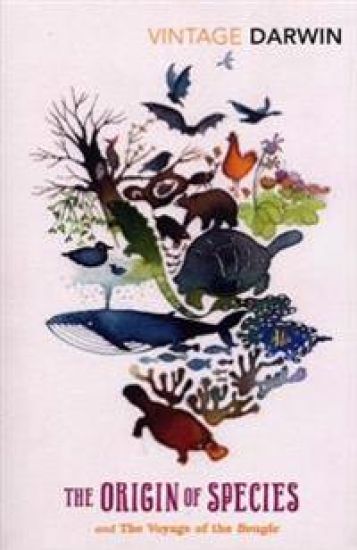
The Origin of Species and the Voyage of the Beagle
Discover Charles Darwin's most important ideas... When the eminent naturalist Charles Darwin returned from South America on board the H. M. S Beagle in 1836, he brought notes and evidence that would form the basis of his landmark theory: that species evolve by a process of natural selection. This theory, published as The Origin of Species in 1859, is the basis of modern biology and the concept of biodiversity. It also sparked a fierce scientific, religious and philosophical debate that still rages today. WITH AN INTRODUCTION BY DARWIN'S GREAT-GREAT-GRANDDAUGHTER, RUTH PADEL
Tunteiden ilmaisu ihmisissä ja eläimissä

Tunteiden ilmaisu ihmisissä ja eläimissä

Charles Darwin

Terra Cognita
2009
nidottu

Halvin toimitettuna 38,90 €

Miksi puremme ihmistä, josta pidämme? Miksi koira heiluttaa häntäänsä? Tai kissa kehrää? Miksi nolostumme ja miksi punastumme, kun nolostumme? Tunteiden ilmaisu... on Charles Darwinin toinen suuri tieteellinen klassikko ja ensimmäinen moderni esitys ihmisen ja eläinten käyttäytymisestä. Tälläkin alalla Darwinin mullistavat ajatukset ovat nykyään tuoreita ja virkistäviä. Käsitellessään niinkin laaja-alaisia asioita kuin lasten kasvatus, mielisairaus, maalaustaide ja kuvanveisto sekä maailman eri kansojen kasvonilmeiden erilaisuudet Darwin loi pohjan ihmisen tunteiden ja käyttäytymisen biologiselle tutkimukselle. Nykyään tunteiden ilmaisu... on yhtä ajankohtainen kuin ilmestyessään, sillä se on ihmistieteitä yhdistävän evoluutiopsykologian perusteos. Tämä on vuonna 1872 ilmestyneen Tunteiden ilmaisun... ensimmäinen suomennos.