Kirjailija
Charles Dickens
Kirjat ja teokset yhdessä paikassa: 4 944 kirjaa, julkaisuja vuosilta 1843–2027, suosituimpiin kuuluu Saiturin joulu. Vertaile teosten hintoja ja tarkista saatavuus suomalaisista kirjakaupoista.
Nimi esiintyy myös muodoissa: Charles Dickens.
4 944 kirjaa
Kirjojen julkaisuvuodet: 1843–2027.
Little treasures, the FLAME TREE COLLECTABLE CLASSICS are chosen to create a delightful and timeless home library. Each stunning, gift edition features deluxe cover treatments, ribbon markers, luxury endpapers and gilded edges. The unabridged text is accompanied by a Glossary of Victorian and Literary terms produced for the modern reader. Hard Times was published in 1854 and is set in Northern England in Coketown, a polluted and suffering place with smoke-filled factories and soulless workers who have been downtrodden by the cruel and heartless Thomas Gradgrind and Josiah Bounderby. The novel was published to mixed criticism, with many feeling at the time that it was too distressing. However, many modern critics have praised the book, calling it a gripping and revealing exploration of Victorian society.
Complete and unabridged. Bleak House is not only a love story and a tightly plotted murder mystery, but also a condemnation of the corruption at the heart of English society. Part of the Macmillan Collector’s Library; a series of stunning, clothbound, pocket-sized classics with gold foiled edges and ribbon markers. These beautiful books make perfect gifts or a treat for any book lover. This edition has an afterword by David Stuart Davies and original illustrations by H. K. Browne. The inheritance case of Jarndyce and Jarndyce has been going on for generations involving myriad characters from all walks of life. There’s Esther Summerson, Dickens' feisty heroine; Sir Leicester and Lady Dedlock, cocooned in their stately home in Lincolnshire; and Jo, the penniless crossing sweeper. We are drawn in and fascinated by the complex relationships. Indeed in none of Charles Dickens’ other novels is the canvas broader, the sweep more inclusive, the linguistic texture richer and the gallery of comic grotesques more extraordinary.
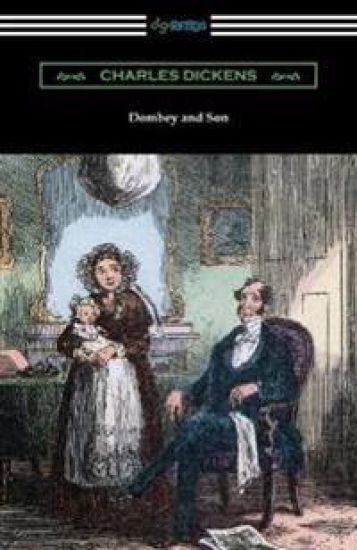
Charles Dickens was an English short story writer, dramatist, essayist, and the most popular novelist to come out of the Victorian era. Many of his novels, with their frequent concern for social reform, were first published in magazines in serial form under the pseudonym, Boz. Unlike authors who completed entire novels before serialization, Dickens often created the episodes as they were being serialized. The continuing popularity of his novels and short stories is such that they have never gone out of print. In "Dombey and Son", the title character, Mr. Dombey, is a wealthy shipping merchant whose wife dies giving birth to their second child, a long-hoped for son and heir, Paul. The elder child, Florence, being female, is neglected by her father. Paul's health is broken by the rigors of boarding school, which leads to the demise of Mr. Dombey. The Dombey family experiences a series of trials and tribulations and ultimately the family's reconciliation concludes the book in a typically Dickensian fashion. This edition is printed on premium acid-free paper.
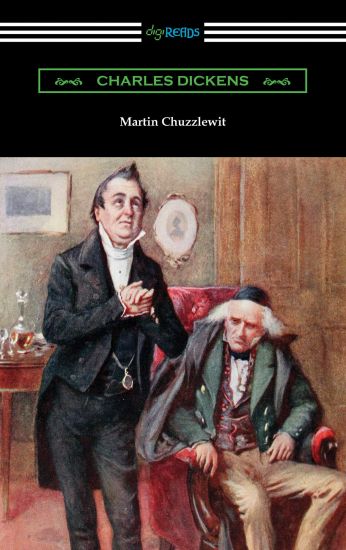
Regarded by Charles Dickens as his best novel upon publication, "Martin Chuzzlewit" relates a tale of familial selfishness and eventual moral redemption. First published serially from 1842 to 1844, it is the story of young Martin Chuzzlewit, who has been raised by his grandfather. He has fallen in love with his grandfather's ward and caretaker, the young orphan Mary Graham. Martin's grandfather does not approve and young Martin alienates himself from his grandfather and begins working for the corrupt and dishonest Seth Pecksniff. Though he meets the kind Tom Pinch during this apprenticeship, Martin is fired and decides to travel to the United States to find his fortune. However, this new and wild land is a much harsher place than Martin was prepared for and he nearly dies of malaria. The experience matures and improves him though, and upon his return he reconciles with his grandfather and reveals the crimes of other characters in Dickens's exceptional cast of characters, particularly those of Pecksniff and the arch-villain Jonas Chuzzlewit. A dark comedy, full of greed, manipulation, and duplicity intertwined with humility and generosity, "Martin Chuzzlewit" is an exemplary story that carries a timeless message of selfless kindness for others. This edition is printed on premium acid-free paper.
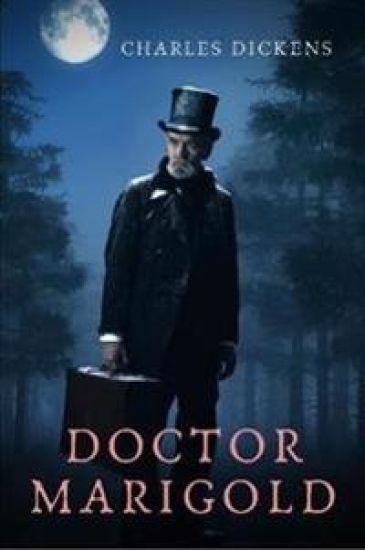
Doctor Marigold is a novella by the famous Victorian novelist Charles Dickens that tells the story of a "Cheap-Jack" who sells inexpensive articles to the poor in popular fairs. Doctor Marigold, named for the man who delivered him, is a ""cheap-jack"" who hawks sundries from a traveling cart. His lonely fortunes reverse when he adopts a deaf and mute girl whose mother is dead and whose stepfather, owner of a traveling circus, beats her. After losing both his daughter and wife, he decides to adopt a deaf and mute girl and names her Sophy after his dead daughter. Throughout the two chapters of the book, Dickens portrays the activities of salesmen in the markets and gives samples of the captivating jingles and patters that they sing. Doctor Marigold, who seems to share with Dickens his linguistic passions, invents a system of sign language for his adopted daughter and teaches her to read and communicate.
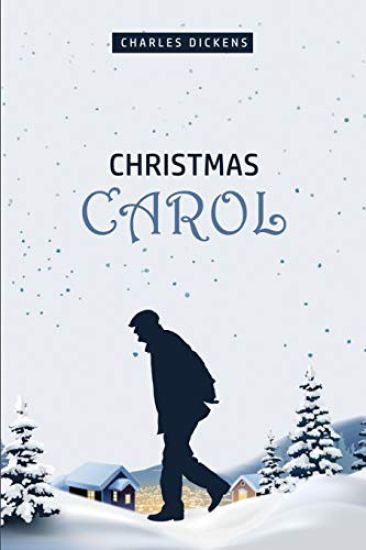
Do you want to read A Christmas Carol? If so then keep reading... A Christmas Carol is a novella by Charles Dickens, first published in London by Chapman & Hall on 19 December 1843. The novella met with instant success and critical acclaim. Carol tells the story of a bitter old miser named Ebenezer Scrooge and his transformation into a gentler, kindlier man after visitations by the ghost of his former business partner Jacob Marley and the Ghosts of Christmases Past, Present and Yet to Come. The book was written at a time when the British were examining and exploring Christmas traditions from the past as well as new customs such as Christmas cards and Christmas trees. Carol singing took a new lease on life during this time. Dickens' sources for the tale appear to be many and varied, but are, principally, the humiliating experiences of his childhood, his sympathy for the poor, and various Christmas stories and fairy tales. Dickens' Carol was one of the greatest influences in rejuvenating the old Christmas traditions of England, but, while it brings to the reader images of light, joy, warmth and life, it also brings strong and unforgettable images of darkness, despair, coldness, sadness, and death. Scrooge himself is the embodiment of winter, and, just as winter is followed by spring and the renewal of life, so too is Scrooge's cold, pinched heart restored to the innocent goodwill he had known in his childhood and youth. A Christmas Carol remains popular--having never been out of print--and has been adapted many times to film, stage, opera, and other media. What are you waiting for A Christmas Carol is one click away, select the "Buy Now" button in the top right corner NOW

Do you want to read Great Expectations? If so then keep reading... Charles Dickens's Great Expectations charts the course of orphan Pip Pirrip's life as it is transformed by a vast, mysterious inheritance. A terrifying encounter with the escaped convict Abel Magwitch in a graveyard on the wild Kent marshes; a summons to meet the bitter, decrepit Miss Havisham and her beautiful, cold-hearted ward Estella at Satis House; the sudden generosity of a mysterious benefactor - these form a series of events that change the orphaned Pip's life forever, and he eagerly abandons his humble station as an apprentice to blacksmith Joe Gargery, beginning a new life as a gentleman. Charles Dickens's haunting late novel depicts Pip's education and development through adversity as he discovers the true nature of his identity, and his 'great expectations'. This definitive version uses the text from the first published edition of 1861. What are you waiting for Great Expectations is one click away, select the "Buy Now" button in the top right corner NOW
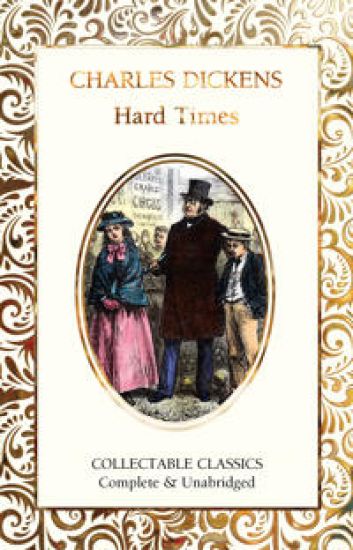
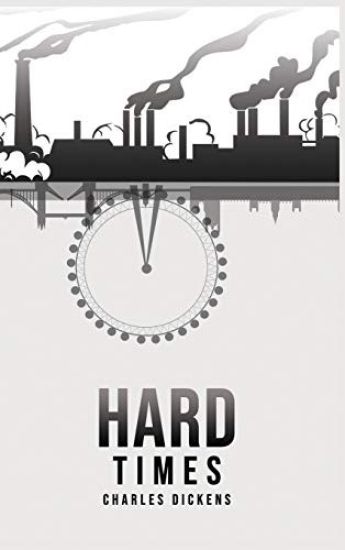
Do you want to read Hard Times? If so then keep reading... Hard Times Charles Dickens Hard Times - For These Times (commonly known as Hard Times) is the tenth novel by Charles Dickens, first published in 1854. The book appraises English society and highlights the social and economic pressures of the times. The novel was published as a serial in Dickens's weekly publication, Household Words. Sales were highly responsive and encouraging for Dickens who remarked that he was "Three parts mad, and the fourth delirious, with perpetual rushing at Hard Times". The novel was serialized, in twenty weekly parts, between 1 April and 12 August 1854. What are you waiting for Hard Times is one click away, select the "Buy Now" button in the top right corner NOW
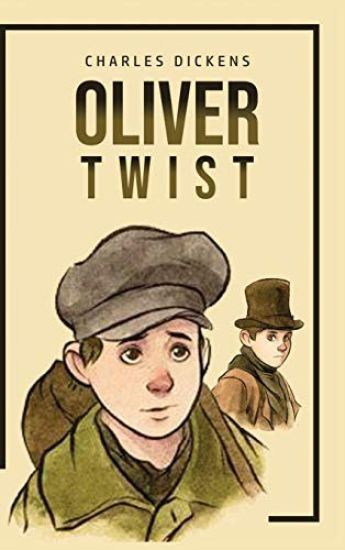
Do you want to read Oliver Twist? If so then keep reading... The story of Oliver Twist - orphaned, and set upon by evil and adversity from his first breath - shocked readers when it was published. After running away from the workhouse and pompous beadle Mr. Bumble, Oliver finds himself lured into a den of thieves peopled by vivid and memorable characters - the Artful Dodger, vicious burglar Bill Sikes, his dog Bull's Eye, and prostitute Nancy, all watched over by cunning master-thief Fagin. Combining elements of Gothic Romance, the Newgate Novel, and popular melodrama, Dickens created an entirely new kind of fiction, scathing in its indictment of a cruel society, and pervaded by an unforgettable sense of threat and mystery. What are you waiting for Oliver Twist is one click away, select the "Buy Now" button in the top right corner NOW
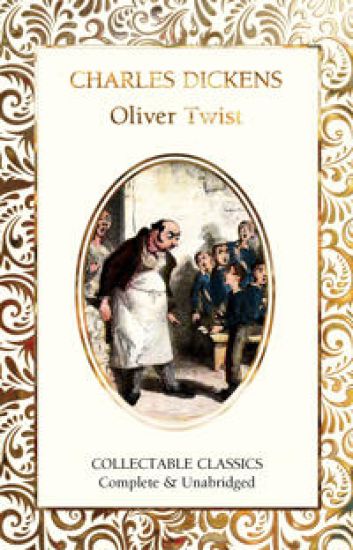
Little treasures, the FLAME TREE COLLECTABLE CLASSICS are chosen to create a delightful and timeless home library. Each stunning, gift edition features deluxe cover treatments, ribbon markers, luxury endpapers and gilded edges. The unabridged text is accompanied by a Glossary of Victorian and Literary terms produced for the modern reader. Oliver Twist dares to ask for more food, and with this a character was created that would be loved the world over and whose story would be adapted into countless television, film, theatre and film productions. For anyone wishing to read the works of the great Charles Dickens, Oliver Twist should be top of the list. The novel cemented Dickens’ growing reputation as a writer, continuing with the themes that readers expected of him – poverty, desperation and heroism in the face of adversity.
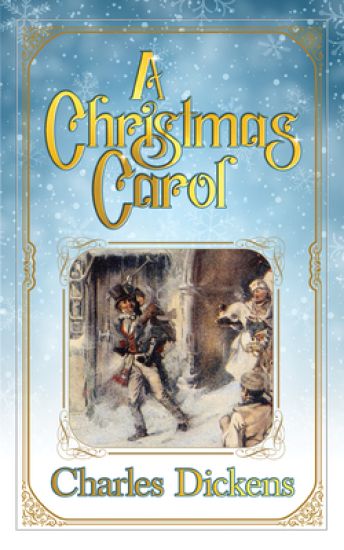
Charles Dickens' timeless classic, A Christmas Carol, is a beloved tale, which has captivated generations of readers for over 150 years. It is the story of Ebenezer Scrooge, a miserable, stingy and bitter old man who has no friends. One Christmas Eve he is visited by the ghost of his former business partner Jacob Marley and the Ghosts of Christmases Past, Present and Yet to Come. They take him on a troubling journey in order to show him the error of his stingy and mean ways. By visiting his past, present and future, Scrooge learns to love Christmas and all the people around him. Rediscover this timeless story of Scrooge and his transformation into a gentler, kinder man after his ghostly visitations. The tale renews the joy and caring that is Christmas along with a festive generosity of spirit.
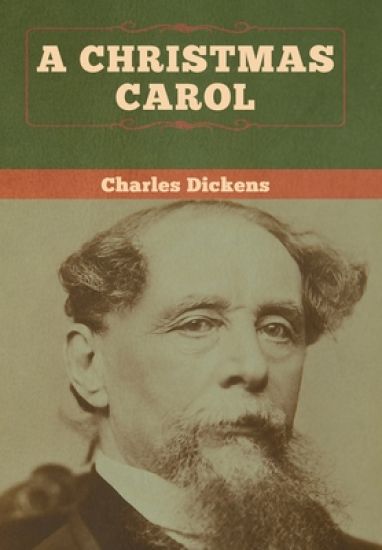
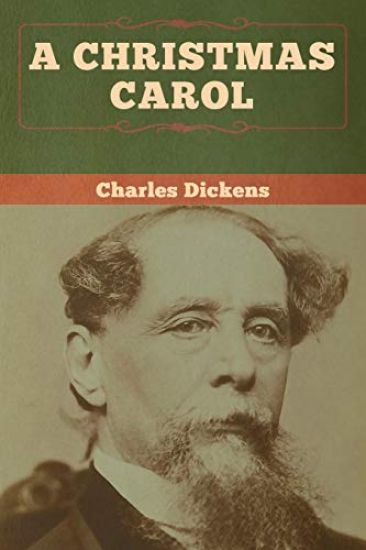
A Christmas Carol. In Prose. Being a Ghost Story of Christmas, commonly known as A Christmas Carol, is a novella by Charles Dickens, first published in London by Chapman & Hall in 1843 and illustrated by John Leech. A Christmas Carol recounts the story of Ebenezer Scrooge, an elderly miser who is visited by the ghost of his former business partner Jacob Marley and the spirits of Christmas Past, Present and Yet to Come. After their visits, Scrooge is transformed into a kinder, gentler man. Dickens wrote A Christmas Carol during a period when the British were exploring and re-evaluating past Christmas traditions, including carols and newer customs such as Christmas trees. He was influenced by the experiences of his own youth and by the Christmas stories of other authors including Washington Irving and Douglas Jerrold. Dickens had written three Christmas stories prior to the novella, and was inspired following a visit to the Field Lane Ragged School, one of several establishments for London's street children. The treatment of the poor and the ability of a selfish man to redeem himself by transforming into a more sympathetic character are the key themes of the story. There is discussion among academics as to whether this was a fully secular story, or if it is a Christian allegory. Published on 19 December, the first edition sold out by Christmas Eve; by the end of 1844 thirteen editions had been released. Most critics reviewed the novella favourably. The story was illicitly copied in January 1844; Dickens took legal action against the publishers, who went bankrupt, further reducing Dickens's small profits from the publication. He went on to write four other Christmas stories in subsequent years. In 1849 he began public readings of the story which proved so successful he undertook 127 further performances until 1870, the year of his death. A Christmas Carol has never been out of print and has been translated into several languages; the story has been adapted many times for film, stage, opera and other media. A Christmas Carol captured the zeitgeist of the mid-Victorian revival of the Christmas holiday. Dickens had acknowledged the influence of the modern Western observance of Christmas and later inspired several aspects of Christmas, including family gatherings, seasonal food and drink, dancing, games and a festive generosity of spirit. (wikipedia.org)
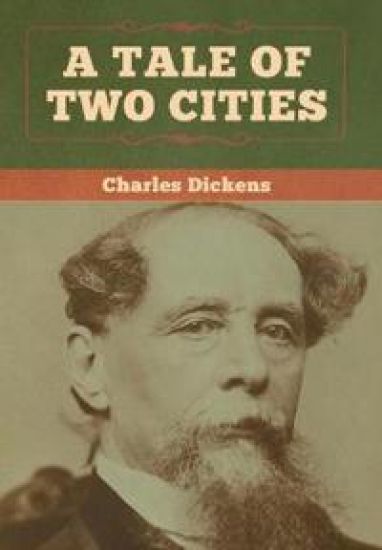
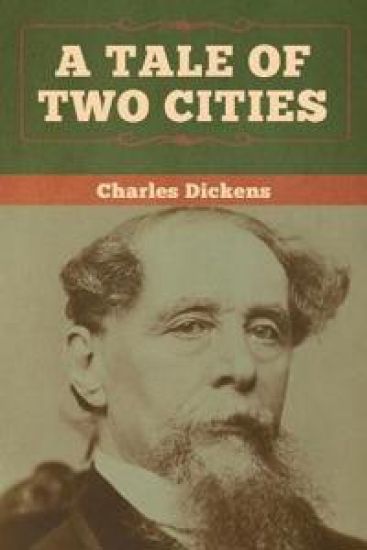
A Tale of Two Cities is an 1859 historical novel by Charles Dickens, set in London and Paris before and during the French Revolution. The novel tells the story of the French Doctor Manette, his 18-year-long imprisonment in the Bastille in Paris and his release to live in London with his daughter Lucie, whom he had never met. The story is set against the conditions that led up to the French Revolution and the Reign of Terror. Dickens' best-known work of historical fiction, with over 200 million copies sold A Tale of Two Cities is regularly cited as the best-selling novel of all time. In 2003, the novel was ranked 63rd on the BBC's The Big Read poll. The novel has been adapted for film, television, radio and the stage, and has continued to have an influence on popular culture. Screenwriter Jonathan Nolan's screenplay for The Dark Knight Rises (2012) was inspired by the novel, with Nolan calling the depiction of Paris "one of the most harrowing portraits of a relatable, recognisable civilisation that completely folded to pieces". (wikipedia.org)
Hard Times - For These Times (commonly known as Hard Times) is the tenth novel by Charles Dickens, first published in 1854. The book surveys English society and satirises the social and economic conditions of the era. Hard Times is unusual in several ways. It is by far the shortest of Dickens' novels, barely a quarter of the length of those written immediately before and after it. Also, unlike all but one of his other novels, Hard Times has neither a preface nor illustrations. Moreover, it is his only novel not to have scenes set in London. Instead the story is set in the fictitious Victorian industrial Coketown, a generic Northern English mill-town, in some ways similar to Manchester, though smaller. Coketown may be partially based on 19th-century Preston. One of Dickens's reasons for writing Hard Times was that sales of his weekly periodical, Household Words, were low, and it was hoped the novel's publication in instalments would boost circulation - as indeed proved to be the case. Since publication it has received a mixed response from critics. Critics such as George Bernard Shaw and Thomas Macaulay have mainly focused on Dickens's treatment of trade unions and his post-Industrial Revolution pessimism regarding the divide between capitalist mill owners and undervalued workers during the Victorian era. F. R. Leavis, a great admirer of the book, included it - but not Dickens' work as a whole - as part of his Great Tradition of English novels. (wikipedia.org)
A Christmas Carol. In Prose. Being a Ghost Story of Christmas, commonly known as A Christmas Carol, is a novella by Charles Dickens, first published in London by Chapman & Hall in 1843 and illustrated by John Leech. A Christmas Carol recounts the story of Ebenezer Scrooge, an elderly miser who is visited by the ghost of his former business partner Jacob Marley and the spirits of Christmas Past, Present and Yet to Come. After their visits, Scrooge is transformed into a kinder, gentler man. Dickens wrote A Christmas Carol during a period when the British were exploring and re-evaluating past Christmas traditions, including carols and newer customs such as Christmas trees. He was influenced by the experiences of his own youth and by the Christmas stories of other authors including Washington Irving and Douglas Jerrold. Dickens had written three Christmas stories prior to the novella, and was inspired following a visit to the Field Lane Ragged School, one of several establishments for London's street children. The treatment of the poor and the ability of a selfish man to redeem himself by transforming into a more sympathetic character are the key themes of the story. There is discussion among academics as to whether this was a fully secular story, or if it is a Christian allegory. Published on 19 December, the first edition sold out by Christmas Eve; by the end of 1844 thirteen editions had been released. Most critics reviewed the novella favourably. The story was illicitly copied in January 1844; Dickens took legal action against the publishers, who went bankrupt, further reducing Dickens's small profits from the publication. He went on to write four other Christmas stories in subsequent years. In 1849 he began public readings of the story which proved so successful he undertook 127 further performances until 1870, the year of his death. A Christmas Carol has never been out of print and has been translated into several languages; the story has been adapted many times for film, stage, opera and other media. A Christmas Carol captured the zeitgeist of the mid-Victorian revival of the Christmas holiday. Dickens had acknowledged the influence of the modern Western observance of Christmas and later inspired several aspects of Christmas, including family gatherings, seasonal food and drink, dancing, games and a festive generosity of spirit. (wikipedia.org)
Do you want to read A Christmas Carol? If so then keep reading... A Christmas Carol is a novella by Charles Dickens, first published in London by Chapman & Hall on 19 December 1843. The novella met with instant success and critical acclaim. Carol tells the story of a bitter old miser named Ebenezer Scrooge and his transformation into a gentler, kindlier man after visitations by the ghost of his former business partner Jacob Marley and the Ghosts of Christmases Past, Present and Yet to Come. The book was written at a time when the British were examining and exploring Christmas traditions from the past as well as new customs such as Christmas cards and Christmas trees. Carol singing took a new lease on life during this time. Dickens' sources for the tale appear to be many and varied, but are, principally, the humiliating experiences of his childhood, his sympathy for the poor, and various Christmas stories and fairy tales. Dickens' Carol was one of the greatest influences in rejuvenating the old Christmas traditions of England, but, while it brings to the reader images of light, joy, warmth and life, it also brings strong and unforgettable images of darkness, despair, coldness, sadness, and death. Scrooge himself is the embodiment of winter, and, just as winter is followed by spring and the renewal of life, so too is Scrooge's cold, pinched heart restored to the innocent goodwill he had known in his childhood and youth. A Christmas Carol remains popular--having never been out of print--and has been adapted many times to film, stage, opera, and other media. What are you waiting for A Christmas Carol is one click away, select the "Buy Now" button in the top right corner NOW