Kirjailija
Charles Dickens
Kirjat ja teokset yhdessä paikassa: 4 944 kirjaa, julkaisuja vuosilta 1843–2027, suosituimpiin kuuluu Saiturin joulu. Vertaile teosten hintoja ja tarkista saatavuus suomalaisista kirjakaupoista.
Nimi esiintyy myös muodoissa: Charles Dickens.
4 944 kirjaa
Kirjojen julkaisuvuodet: 1843–2027.
The Battle of Life: A Love Story is a novel by Charles Dickens, first published in 1846. It is the fourth of his five "Christmas Books", coming after The Cricket on the Hearth and followed by The Haunted Man. It is noteworthy in that it is the only one out of the five books that does not have any use of supernatural elements. It bears the greatest resemblance to The Cricket on the Hearth in two aspects: that it is not a social novel and that it is resolved with a romantic twist. As is typical with Dickens, the ending is a happy one, and some might argue an overly happy one
Barnaby Rudge - A Tale of the Riots of 'eighty (1841).: Historical Novel
Charles Dickens
Independently Published
2018
nidottu
Barnaby Rudge: A Tale of the Riots of EightyPlotGathered round the fire at the Maypole Inn, in the village of Chigwell, on an evening of foul weather in the year 1775, are John Willet, proprietor of the Maypole, and his three cronies. One of the three, Solomon Daisy, tells an ill-kempt stranger at the inn a well-known local tale of the murder of Reuben Haredale which had occurred 22 years ago that very day. Reuben had been the owner of the Warren, a local estate which is now the residence of Geoffrey, the deceased Reuben's brother, and Geoffrey's niece, Reuben's daughter Emma Haredale. After the murder, Reuben's gardener and steward went missing and were suspects in the crime. A body was later found and identified as that of the steward, so the gardener was assumed to be the murderer. Joe Willet, son of the Maypole proprietor, quarrels with his father because John treats 20-year-old Joe as a child. Finally having had enough of this ill treatment, Joe leaves the Maypole and goes for a soldier, stopping to say goodbye to the woman he loves, Dolly Varden, daughter of London locksmith Gabriel Varden. Meanwhile, Edward Chester is in love with Emma Haredale. Both Edward's father, John Chester, and Emma's uncle, the Catholic Geoffrey Haredale - these two are sworn enemies - oppose the union after Sir John untruthfully convinces Geoffrey that Edward's intentions are dishonourable. Sir John intends to marry Edward to a woman with a rich inheritance, to support John's expensive lifestyle and to pay off his debtors. Edward quarrels with his father and leaves home for the West Indies. Barnaby Rudge, a simpleton, wanders in and out of the story with his pet raven, Grip. Barnaby's mother begins to receive visits from the ill-kempt stranger, whom she feels compelled to protect. She later gives up the annuity she had been receiving from Geoffrey Haredale and, without explanation, takes Barnaby and leaves the city hoping to escape the unwanted visitor. The story advances five years to a wintry evening in early 1780. On the 27th anniversary of Reuben Haredale's murder, Soloman Daisy, winding the bell tower clock, sees a ghost in the churchyard. He reports this hair-raising event to his friends at the Maypole, and John Willet decides that Geoffrey Haredale should hear the story. He departs in a winter storm taking Hugh, hostler of the Maypole, as a guide. On the way back to the Maypole, John and Hugh are met by three men seeking the way to London. Finding that London is still 13 miles off, the men seek refuge for the night. Beds are prepared for them at the Maypole..... Charles John Huffam Dickens ( 7 February 1812 - 9 June 1870) was an English writer and social critic. He created some of the world's best-known fictional characters and is regarded by many as the greatest novelist of the Victorian era. His works enjoyed unprecedented popularity during his lifetime, and by the 20th century critics and scholars had recognised him as a literary genius. His novels and short stories are still widely read today. Born in Portsmouth, Dickens left school to work in a factory when his father was incarcerated in a debtors' prison. Despite his lack of formal education, he edited a weekly journal for 20 years, wrote 15 novels, five novellas, hundreds of short stories and non-fiction articles, lectured and performed readings extensively, was an indefatigable letter writer, and campaigned vigorously for children's rights, education, and other social reforms. Dickens's literary success began with the 1836 serial publication of The Pickwick Papers. Within a few years he had become an international literary celebrity, famous for his humour, satire, and keen observation of character and society. His novels, most published in monthly or weekly instalments, pioneered the serial publication of narrative fiction, which became the dominant Victorian mode for novel publication. .....

'What was merry Christmas to Scrooge? Out upon merry Christmas! What good had it ever done to him?' Ebenezer Scrooge is a bad-tempered skinflint who hates Christmas and all it stands for, but a ghostly visitor foretells three apparitions who will thaw Scrooge's frozen heart. A Christmas Carol has gripped the public imagination since it was first published in 1843, and it is now as much a part of Christmas as mistletoe or plum pudding. This edition reprints the story alongside Dickens's four other Christmas Books: The Chimes, The Cricket on the Hearth, The Battle of Life, and The Haunted Man. All five stories show Dickens at his unpredictable best, jumbling together comedy and melodrama, genial romance and urgent social satire, in pursuit of his aim 'to awaken some loving and forbearing thoughts, never out of season in a Christian land'.
I Charles Dickens' anden roman fra 1838 f lger vi den for ldrel se Oliver Twist fra hans opv kst i fattighuset, til han s ttes i l re hos en bedemand, hvorfra han flygter til London. I storbyen falder han i kl erne p en bande tyvekn gte, ledet af j den Fagin, og opl res af ham og den brutale Sikes til forbryder. Ved tilf ldets spil optages han dog hos p nere folk, som s tter sig for at udrede Olivers herkomst og give ham et bedre liv. V rket er bearbejdet og tilrettet moderne retskrivning. Charles John Huffam Dickens (1812-1870) var en engelsk forfatter. Han har skrevet flere succesromaner, heriblandt Oliver Twist (1837), Nicholas Nickleby (1839), Barnaby Rudge (1841), David Copperfield (1850), To byer (1859) og Store forventninger (1861).
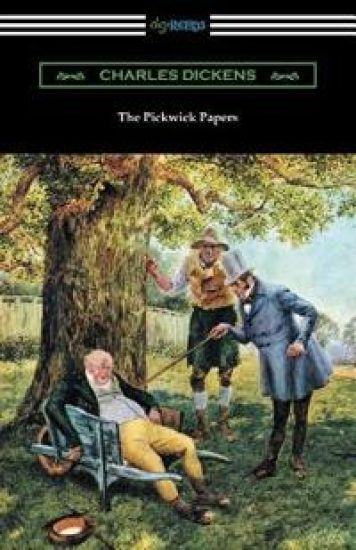
Charles Dickens's first novel, "The Pickwick Papers" was originally published in serial form between March 1836 and October 1837. Drawing on Dickens's experience as a journalist and reporter in London and the surrounding countryside, the novel is a series of loosely related comical adventures of the members of the Pickwick Club, founded by the novel's main character, Mr. Samuel Pickwick. Mr. Pickwick is a wealthy and bored old gentleman who suggests that he and the club members, Tracy Tupman, Augustus Snodgrass, and Nathaniel Winkle, venture outside London and report on their experiences to each other. From encounters with highwaymen, a duel, romantic escapades, and a brief stay in Fleet Prison, these wild and hilarious adventures form the basis of the novel's plot. "The Pickwick Papers" gained immense popularity and became one of the first publishing successes of the pre-Victorian era when the character of Sam Weller was introduced in Chapter Ten. Sam is hired on as Mr. Pickwick's valet and his wise Cockney observations and advice stand in contrast to the na ve and unworldly Mr. Pickwick. Through its numerous well-loved characters and settings, the novel affords the reader a fascinating and entertaining glimpse into 19th century England. This edition is printed on premium acid-free paper and includes an introduction by Edwin Percy Whipple.
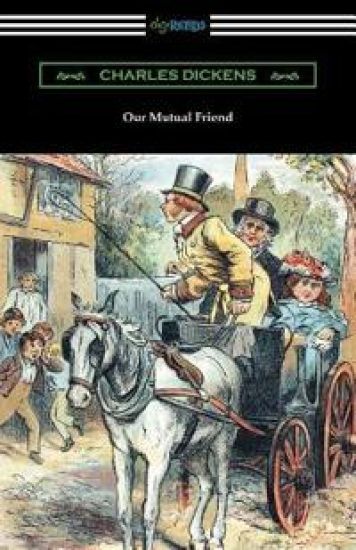
First published serially between 1864 and 1865, "Our Mutual Friend" is the last novel completed by Charles Dickens. The death of a wealthy miser, who is estranged from all except his trusted employees, Nicodemus and Henrietta Boffin, brings his son John Harmon back to London in order to claim his inheritance. The patrimony carries with it one condition, that he marries a woman he has never met, Miss Bella Wilfer. When a body is found floating in the Thames, it is presumed to be John, and the inheritance instead passes to the Boffins. The kind-hearted working class Boffins take into their household the disappointed bride to be Miss Wilfer and treat her as their own daughter, pampering her with their newfound wealth. They also accept the generous offer of John Rokesmith to attend to their financial affairs for free. Rokesmith, who also goes by the alias of Julius Handford, is in fact the heir John Harmon, presumed to be dead. Dickens's novel is a thematically rich one, addressing the struggle of man between societal expectations and the desire to follow one's heart. Rich with a symbolism of rebirth, "Our Mutual Friend" brilliantly dramatizes the impact that wealth plays upon society. This edition is printed on premium acid-free paper and includes an introduction by Edwin Percy Whipple.
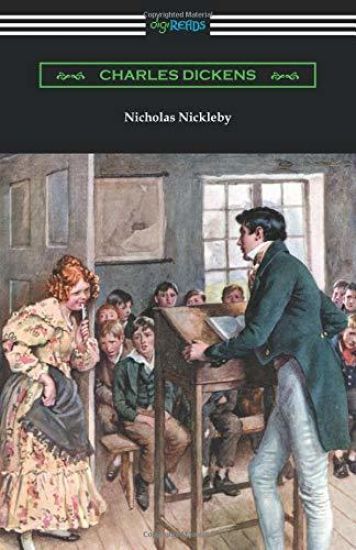
Though only Dickens' third novel, "Nicholas Nickleby" is a well-crafted and significant precursor to his other great works. The tale follows the fortunes of a young man, the son of an imprudent gentleman who leaves his family without resources. Fiercely devoted to his mother and sisters, as well as his true friends, Nicholas is occasionally emotional and even violent, yet always idealistic. He seeks the aid of his villainous uncle, Ralph Nickleby, who comes to hate his nephew and wishes him serious harm. Nicholas attempts more than once to achieve gainful employment, being first disgusted by the abuse of the schoolmaster Squeers, later surprised by the acting and antics of Vincent Crummles, and finally assisted by the merchant Cheeryble brothers. Dickens employs a cast of characters, both good and unsavory, in this adventurous story of Nicholas Nickleby, who helps those in need, despises wickedness, grows in self-awareness, and eventually falls in love, in a plot that is by turns melodramatic and comedic. An uplifting tale full of poignant indictments on Victorian society, "Nicholas Nickleby" has all the best characteristics of Dickens' other classics. This edition is printed on premium acid-free paper and includes an introduction by Edwin Percy Whipple.
Dickens' Weihnachtsgeschichte. Mit Illustrationen von Arthur Rackham
Charles Dickens
aionas
2018
nidottu
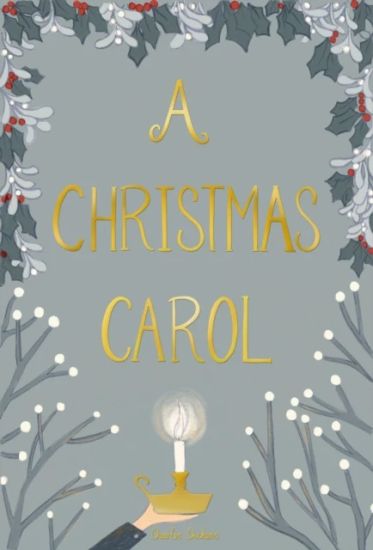
A Christmas Carol is the most famous, heart-warming and chilling festive story of them all. In these pages we meet Ebenezer Scrooge, whose name is synonymous with greed and parsimony: 'Every idiot who goes about with "Merry Christmas" on his lips, should be boiled with his own pudding, and buried with a stake of holly through his heart'. This attitude is soon challenged when the ghost of his old partner, Jacob Marley, returns from the grave to haunt him on Christmas Eve. Scrooge is then visited in turn by three spirits of Christmas Past, Present and Future, each one revealing the error of his ways and gradually melting the frozen heart of this old miser, leading him towards his redemption. On the journey we take with Scrooge we encounter a rich array of Dickensian characters including the poor Cratchit family with the ailing Tiny Tim and the generous and jolly Fezziwig. When Charles Dickens wrote A Christmas Carol in 1843 he fashioned an enduring gift to the world, capturing the essence of the love, kindness and generosity of the Christmas season. It is a timeless classic and the story's uplifting magic remains as potent today as when it was first published.
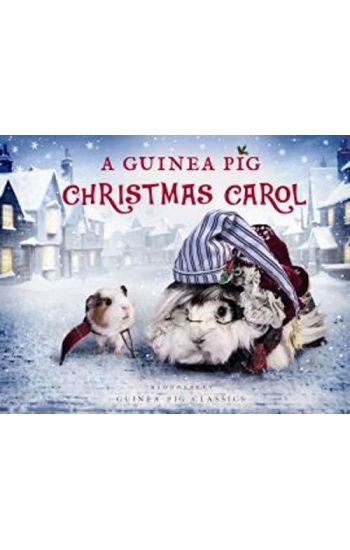
A Guinea Pig Christmas Carol
Charles Dickens; Tess Newall; Alex Goodwin
Bloomsbury Publishing PLC
2018
sidottu
-- Charles Dickens’s heartwarming winter tale... with guinea pigs in the starring roles! Miserable to the core and wholly unwilling to celebrate Christmas, the miserly Ebenezer Scrooge says ‘Bah! Humbug!’ to the festive season. But then one chilly night he is visited by three Spirits, who take him on a journey through time so he can learn the error of his ways and discover the true meaning of Christmas.
The Signal-Man by Charles Dickens. "The Signal-Man" is a horror/mystery story by Charles Dickens, first published as part of the Mugby Junction collection in the 1866 Christmas edition of All the Year Round. The story begins with the narrator calling "Halloa Below there " into a railway cutting. The signalman standing on the railway below does not look up, as the narrator expects, but rather turns about and stares into the railway tunnel that is his responsibility to monitor. The narrator calls down again and asks permission to descend. The signalman seems reluctant. The railway hole is a cold, gloomy, and lonely place. The signalman still seems to be in fear of the narrator, who tries to put him at ease. The signalman feels that he had seen the narrator before, but the narrator assures him that this is impossible.
Ah It's pleasant to drop into my own easy-chair my dear though a little palpitating what with trotting up-stairs and what with trotting down, and why kitchen stairs should all be corner stairs is for the builders to justify though I do not think they fully understand their trade and never did, else why the sameness and why not more conveniences and fewer draughts and likewise making a practice of laying the plaster on too thick I am well convinced which holds the damp, and as to chimney-pots putting them on by guess-work like hats at a party and no more knowing what their effect will be upon the smoke bless you than I do if so much, except that it will mostly be either to send it down your throat in a straight form or give it a twist before it goes there. And what I says speaking as I find of those new metal chimneys all manner of shapes (there's a row of 'em at Miss Wozenham's lodging-house lower down on the other side of the way) is that they only work your smoke into artificial patterns for you before you swallow it and that I'd quite as soon swallow mine plain, the flavour being the same, not to mention the conceit of putting up signs on the top of your house to show the forms in which you take your smoke into your inside.
Great Expectations: Large Print
Charles Dickens
Createspace Independent Publishing Platform
2018
nidottu
Great Expectations: Large Print Charles Dickens Charles John Huffam Dickens was an English writer and social critic. He created some of the world's best-known fictional characters and is regarded by many as the greatest novelist of the Victorian era. His works enjoyed unprecedented popularity during his lifetime, and by the 20th century critics and scholars had recognised him as a literary genius. His novels and short stories are still widely read today.
Oliver Twist, an orphan boy at birth, is handed over to an orphanage. His childhood takes place between cold hunger and abuse. After escaping from the orphanage, he goes to London and meets a boy who convinces him to go to a house to receive food and a place to sleep. He already knows someone who runs a group of children who perform mischief. After several adventures he is unjustly accused of stealing a handkerchief from Mr. Brownlow, who arrives just in time to defend him, Oliver feels very happy with Mr. Brownlow, but he is still harassed by the group of criminals who kidnap him forcing him to participate in a sale plan hurt and is abandoned. He returns to the house where the events took place and is helped by the family that decides to protect from the authorities. He recovers slowly, recovering events that appear as luck strokes for Oliver.
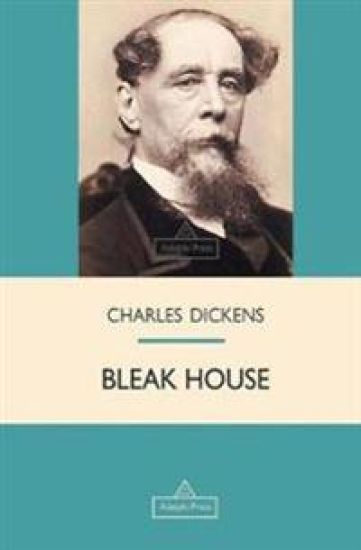
The central theme of Bleak House is satirical exposure of the English Chancery court system. Chancery or equity courts were one half of the English civil justice system, existing side-by-side with law courts. Chancery courts heard actions having to do with wills and estates, or with the uses of private property and were notoriously slow and inefficient. The novel has many characters and several sub-plots, and the story is told partly by the novel's heroine, Esther Summerson, and partly by an omniscient narrator. At the centre of Bleak House is a long-running legal case, Jarndyce and Jarndyce, which came about because someone wrote several conflicting wills. This novel helped support a judicial reform movement, which culminated in the enactment of legal reform in the 1870s.