Kirjojen hintavertailu – 12 859 827 kirjaa ja 27 kauppaa
Kirjailija
Charles Dickens
Kirjat ja teokset yhdessä paikassa: 4 944 kirjaa, julkaisuja vuosilta 1843–2027, suosituimpiin kuuluu Saiturin joulu. Vertaile teosten hintoja ja tarkista saatavuus suomalaisista kirjakaupoista.
Rare edition with unique illustrations and elegant classic cream paper. This is the extraordinary story of a very nearly ordinary princess named Alicia. Given a magic fish-bone by a good fairy, Alicia can have whatever she wishes--provided she wishes for it at the right time. But it's never clear when the right time is, and sometimes the best magic is no magic at all.... Includes vintage illustration
Rare edition with unique illustrations and elegant classic cream paper. A satiric masterpiece about the allure and peril of money, Our Mutual Friend revolves around the inheritance of a dust-heap where the rich throw their trash. When the body of John Harmon, the dust-heap's expected heir, is found in the Thames, fortunes change hands surprisingly, raising to new heights "Noddy" Boffin, a low-born but kindly clerk who becomes "the Golden Dustman." Charles Dickens's last complete novel, Our Mutual Friend encompasses the great themes of his earlier works: the pretensions of the nouveaux riches, the ingenuousness of the aspiring poor, and the unfailing power of wealth to corrupt all who crave it. With its flavorful cast of characters and numerous subplots, Our Mutual Friend is one of Dickens's most complex-and satisfying-novels. Includes vintage illustration
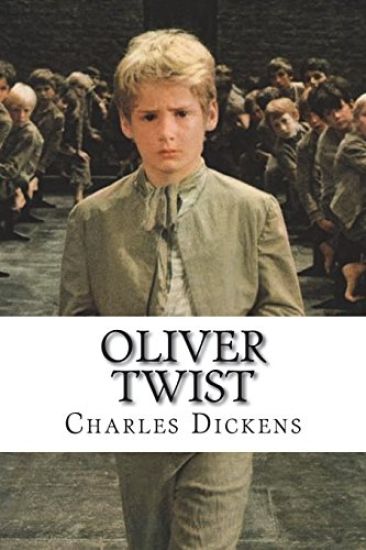
Oliver Twist; or, the Parish Boy's Progress is author Charles Dickens's second novel, and was first published as a serial 1837-39. The story centres on orphan Oliver Twist, born in a workhouse and sold into apprenticeship with an undertaker. After escaping, Twist travels to London, where he meets "The Artful Dodger", a member of a gang of juvenile pickpockets led by the elderly criminal, Fagin. Oliver Twist is notable for its unromantic portrayal by Dickens of criminals and their sordid lives, as well as for exposing the cruel treatment of the many orphans in London in the mid-19th century. The alternative title, The Parish Boy's Progress, alludes to Bunyan's The Pilgrim's Progress, as well as the 18th-century caricature series by William Hogarth, A Rake's Progress and A Harlot's Progress. In this early example of the social novel, Dickens satirises the hypocrisies of his time, including child labour, the recruitment of children as criminals, and the presence of street children. The novel may have been inspired by the story of Robert Blincoe, an orphan whose account of working as a child labourer in a cotton mill was widely read in the 1830s. It is likely that Dickens's own youthful experiences contributed as well. Oliver Twist has been the subject of numerous adaptations for various media, including a highly successful musical play, Oliver , and the multiple Academy Award-winning 1968 motion picture. Disney also put its spin on the novel with the animated film called Oliver & Company in 1988.
A selection of Christmas stories by Charles Dickens, the most widely read English novelist. The stories featured in this collection were written in early Victorian era Britain when it was experiencing a nostalgic interest in its forgotten Christmas traditions, and at the time when new customs such as the Christmas tree and greeting cards were being introduced. This is a large print edition offering text printed in fot size 14.
A selection of Christmas stories by Charles Dickens, the most widely read English novelist. The stories featured in this collection were written in early Victorian era Britain when it was experiencing a nostalgic interest in its forgotten Christmas traditions, and at the time when new customs such as the Christmas tree and greeting cards were being introduced.
Rare edition with unique illustrations and elegant classic cream paper. Bleak House continued Dickens' successful string of fiction, following David Copperfield and preceding Hard Times, and went through several printings. Beyond the popular success of its own day, Bleak House has developed a reputation as one of Dickens' most impressive achievements as a novelist. Many fellow writers, such as G. K. Chesterton and, much later, Vladimir Nabokov, consider the book to be Dickens' best, the one in which the classic traits and concerns of a Dickens novel -- likable characters, gripping storylines, social activism, humor, panache, grotesquerie and theatricality -- come together with the greatest force. Among its many qualities, Bleak House survives perhaps most vividly as an impassioned denunciation of hypocrisy, neglect, and selfishness, both institutional and personal. Money often changes people's lives. If you inherited a substantial amount of money would it change yours? Would you work or quit your job? Would you feel entitled to various privileges because of your wealth? Would you behave differently? These and other issues are the subject of the English novel Bleak House by Charles Dickens. Bleak House, like many of Dickens' writings, is about various social issues. Bleak House is a satirical story about Dickens' view of the British judiciary system. Both Esther Summerson, one of the characters in the story, and a separate third person narrator, tell the story. Esther speaks about the experiences of her life, and the third person narrator speaks about the experiences of some of the people of the town. Includes vintage illustration
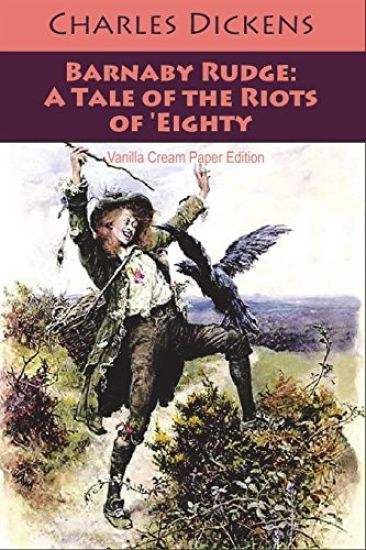
Rare edition with unique illustrations and elegant classic cream paper. Set against the backdrop of the Gordon Riots of 1780, Barnaby Rudge is a story of mystery and suspense which begins with an unsolved double murder and goes on to involve conspiracy, blackmail, abduction and retribution. Through the course of the novel fathers and sons become opposed, apprentices plot against their masters and Protestants clash with Catholics on the streets. And, as London erupts into riot, Barnaby Rudge himself struggles to escape the curse of his own past. With its dramatic descriptions of public violence and private horror, its strange secrets and ghostly doublings, Barnaby Rudge is a powerful, disturbing blend of historical realism and Gothic melodrama. Includes vintage illustration
Hard Times - For These Times (commonly known as Hard Times) is the tenth novel by Charles Dickens, first published in 1854. The book surveys English society and satirises the social and economic conditions of the era. Hard Times is unusual in several respects. It is by far the shortest of Dickens' novels, barely a quarter of the length of those written immediately before and after it. 1] Also, unlike all but one of his other novels, Hard Times has neither a preface nor illustrations. Moreover, it is his only novel not to have scenes set in London. 2] Instead the story is set in the fictitious Victorian industrial Coketown, a generic Northern English mill-town, in some ways similar to Manchester, though smaller. Coketown may be partially based on 19th-century Preston. One of Dickens's reasons for writing Hard Times was that sales of his weekly periodical, Household Words, were low, and it was hoped the novel's publication in instalments would boost circulation - as indeed proved to be the case. Since publication it has received a mixed response from critics. Critics such as George Bernard Shaw and Thomas Macaulay have mainly focused on Dickens's treatment of trade unions and his post-Industrial Revolutionpessimism regarding the divide between capitalist mill owners and undervalued workers during the Victorian era. F. R. Leavis, a great admirer of the book, included
Rare edition with unique illustrations and elegant classic cream paper. A Child's History of England is a book written by Charles Dickens. Dickens brought his skills as a novelist to his description of the key events and personages of English history, resulting in a vivid and highly readable account which enjoyed immense popularity as a serial and, later, in book form. The book was adopted as a text book in British schools and was in use well into the first half of the 20th century, despite the fact that many critics pointed out that the book was not well researched and not always historically accurate. A Child's History of England covers the period of English history from approximately 50 B. C. to around 1669 A. D., with an additional summary of the events leading up to the reign of Queen Victoria. Charles Dickens wrote A Child's History of England when he was at the height of his powers as a novelist, immediately after the publication of his huegely successful David Copperfield and the acclaimed Bleak House. He dedicated his book to "My own dear children, whom I hope it may help, bye and bye, to read with interest larger and better books on the same subject." Includes vintage illustration
Rare edition with unique illustrations and elegant classic cream paper. Dombey and Son, Charles Dickens's story of a powerful man whose callous neglect of his family triggers his professional and personal downfall, showcases the author's gift for vivid characterization and unfailingly realistic description. As Jonathan Lethem contends in his Introduction, Dickens's "genius . . . is at one with the genius of the form of the novel itself: Dickens willed into existence the most capacious and elastic and versatile kind of novel that could be, one big enough for his vast sentimental yearnings and for every impulse and fear and hesitation in him that countervailed those yearnings too. Never parsimonious and frequently contradictory, he always gives us everything he can, everything he's planned to give, and then more." Dombey and Son is the earliest novel of Dickens for which a complete set of working notes survives. Dickens called these notes "mems" witch is short for memoranda. The mems allowed him to keep track of complicated plot lines and the many characters that populate his novels. These working notes for Dombey and Son reveal that young Paul Dombey was doomed to die from the first moment that Dickens created him. Although he did live for one chapter longer than Dickens originally intended. Walter Gay was originally intended to go bad was saved from that fate. Edith, the second Mrs. Dombey, was bound for adultery and death, but Dickens spared her character at the urgings of his friend Lord Jeffrey. Includes vintage illustration
Rare edition with unique illustrations and elegant classic cream paper. Dombey and Son, Charles Dickens's story of a powerful man whose callous neglect of his family triggers his professional and personal downfall, showcases the author's gift for vivid characterization and unfailingly realistic description. As Jonathan Lethem contends in his Introduction, Dickens's "genius . . . is at one with the genius of the form of the novel itself: Dickens willed into existence the most capacious and elastic and versatile kind of novel that could be, one big enough for his vast sentimental yearnings and for every impulse and fear and hesitation in him that countervailed those yearnings too. Never parsimonious and frequently contradictory, he always gives us everything he can, everything he's planned to give, and then more." Dombey and Son is the earliest novel of Dickens for which a complete set of working notes survives. Dickens called these notes "mems" witch is short for memoranda. The mems allowed him to keep track of complicated plot lines and the many characters that populate his novels. These working notes for Dombey and Son reveal that young Paul Dombey was doomed to die from the first moment that Dickens created him. Although he did live for one chapter longer than Dickens originally intended. Walter Gay was originally intended to go bad was saved from that fate. Edith, the second Mrs. Dombey, was bound for adultery and death, but Dickens spared her character at the urgings of his friend Lord Jeffrey. Includes vintage illustration
Rare edition with unique illustrations and elegant classic cream paper. Bleak House continued Dickens' successful string of fiction, following David Copperfield and preceding Hard Times, and went through several printings. Beyond the popular success of its own day, Bleak House has developed a reputation as one of Dickens' most impressive achievements as a novelist. Many fellow writers, such as G. K. Chesterton and, much later, Vladimir Nabokov, consider the book to be Dickens' best, the one in which the classic traits and concerns of a Dickens novel -- likable characters, gripping storylines, social activism, humor, panache, grotesquerie and theatricality -- come together with the greatest force. Among its many qualities, Bleak House survives perhaps most vividly as an impassioned denunciation of hypocrisy, neglect, and selfishness, both institutional and personal. Money often changes people's lives. If you inherited a substantial amount of money would it change yours? Would you work or quit your job? Would you feel entitled to various privileges because of your wealth? Would you behave differently? These and other issues are the subject of the English novel Bleak House by Charles Dickens. Bleak House, like many of Dickens' writings, is about various social issues. Bleak House is a satirical story about Dickens' view of the British judiciary system. Both Esther Summerson, one of the characters in the story, and a separate third person narrator, tell the story. Esther speaks about the experiences of her life, and the third person narrator speaks about the experiences of some of the people of the town. Includes vintage illustration
Rare edition with unique illustrations and elegant classic cream paper. Dickens takes up on an exploration of the perils, travels, and adventures of the Pickwick Club's members: the founding chairman, former businessman and amateur scientist Mr. Pickwick; his trusted companion Sam Weller; the sportsman Winkle; the poet Snodgrass; and the lover Tracy Tupman. Includes unique illustrations.
Rare edition with unique illustrations and elegant classic cream paper. Dickens takes up on an exploration of the perils, travels, and adventures of the Pickwick Club's members: the founding chairman, former businessman and amateur scientist Mr. Pickwick; his trusted companion Sam Weller; the sportsman Winkle; the poet Snodgrass; and the lover Tracy Tupman. Includes unique illustrations.
Rare edition with unique illustrations and elegant classic cream paper. Dickens takes up on an exploration of the perils, travels, and adventures of the Pickwick Club's members: the founding chairman, former businessman and amateur scientist Mr. Pickwick; his trusted companion Sam Weller; the sportsman Winkle; the poet Snodgrass; and the lover Tracy Tupman. Includes unique illustrations.
Oliver Twist ist ein Gesellschaftsroman von Charles Dickens, der unter dem vollst ndigen Titel "Oliver Twist; or, The Parish Boy's Progress" ("Oliver Twist oder der Weg des F rsorgez glings") von Februar 1837 bis April 1839 in Fortsetzungen in der Zeitschrift "Bentley's Miscellany" erschien. Oliver Twist ist Dickens' zweiter Roman. Er wurde mehrfach f r Theater, Kino, Fernsehen und Comic adaptiert. Der Roman erz hlt die Geschichte des Findelkindes und Waisenjungen Oliver Twist, der im Armenhaus einer englischen Kleinstadt aufw chst, ohne etwas ber seine Herkunft zu wissen. Durch die katastrophalen Zust nde im Armenhaus gezwungen, bittet er um mehr Nahrung, worauf er eine Woche lang in den Kohlenkeller gesperrt wird. Au erdem wird ausgeschrieben, dass die Gemeinde denjenigen entlohne, der sich seiner annehmen w rde. Dies f hrt ihn zum ans ssigen Sarg-Tischler namens Mr. Sowerberry, der einer ehrlichen Arbeit nachgeht und den Jungen allm hlich auf seine Art liebgewinnt. Der Nebenlehrling Noah Claypole beleidigt Olivers tote Mutter, weshalb Oliver sich mit ihm pr gelt und er daf r mit Schl gen bestraft wird. Er flieht anschlie end zu Fu nach London. Oliver braucht sieben Tage, bis er dort ganz ersch pft ankommt. In London ger t er in die F nge des j dischen Hehlers Fagin (Boss der Diebe), der ihn vor dem sicheren Tod auf der Stra e bewahrt, indem er ihn verk stigt. Seine Sch tzlinge bilden eine Diebesbande, die haupts chlich aus Stra enjungen besteht. Fagin macht auch Oliver mit dem Diebeshandwerk vertraut. Der u erst brutale Eigenbr tler Bill Sikes und die ihm nahestehende Diebesgesellin Nancy, die auf eine eigenartige Weise mit Sikes verbunden ist, treten ebenfalls zu dieser Zeit in Olivers Leben. In solcher Gesellschaft lebend und lernend, wird Oliver eines Tages auf eine Diebestour mitgenommen, die fatale Folgen f r ihn hat. Nachdem das Opfer Mr. Brownlow bemerkt, dass er bestohlen wurde, wird Oliver f lschlicherweise f r den Dieb gehalten. W hrend des Verh rs auf der Polizeiwache wird Oliver in einem fiebrigen Anfall ohnm chtig und wird schlie lich durch einen Zeugen entlastet, ganz zum Wohlgefallen des mitleidigen Mr. Brownlow, welcher den Jungen unter seine Fittiche nimmt und ihn gesundpflegen l sst.
Rare edition with unique illustrations and elegant classic cream paper. The "two cities" are Paris in the time of the French Revolution, and London. Dr. Manette, a French physician, having been called in to treat a young peasant and his sister, realizes that they have been cruelly abused by the Marquis de St. Evremonde and his brother. To ensure Dr. Manette's silence, the Marquis has him confined for eighteen years in the Bastille. The doctor has just been released, demented, when the story opens. He is brought to England where he gradually recovers his health and his sanity. Charles Darnay, concealing under that false name his identity as the nephew of the cruel Marquis, has left France and renounced his heritage. He falls in love with Lucie, Dr. Manette's daughter, and they are happily married. During the Terror, he goes to Paris to save a servant condemned by the mob. Darnay himself is arrested, condemned to death, and is saved at the last moment by Sydney Carton, a reckless wastrel who acts out of devotion to Lucie. Carton smuggles Darnay out of prison and takes his place on the scaffold, declaring "It's a far, far better thing I do than I have ever done before," surely one of the most quoted lines in all the history of literature. Includes vintage illustration
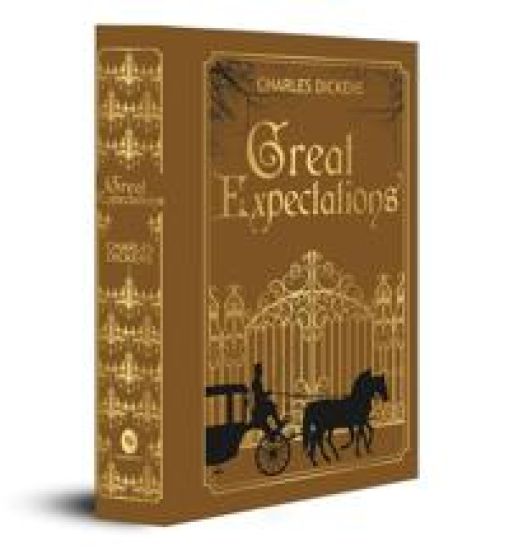
Experience the timeless classic of Great Expectations in this deluxe hardbound edition. Follow the story of Pip, a young orphan who dreams of becoming a gentleman, as he navigates the ups and downs of Victorian England. This beautifully designed edition features stunning illustrations and a ribbon marker, making it the perfect gift for any book lover. Perfect for fans of classic literature and book collectors Delve into the complexities of society and class dynamics Exquisite illustrations bring the story to life A perfect gift for Dickens fans A gripping and engrossing classic