Kirjojen hintavertailu – 12 859 827 kirjaa ja 27 kauppaa
Kirjailija
Charles Dickens
Kirjat ja teokset yhdessä paikassa: 4 944 kirjaa, julkaisuja vuosilta 1843–2027, suosituimpiin kuuluu Saiturin joulu. Vertaile teosten hintoja ja tarkista saatavuus suomalaisista kirjakaupoista.
Grandes esperanzas (en ingl s, Great Expectations) es una novela escrita por Charles Dickens. Fue publicada como serie, desde el 1 de diciembre de 1860 hasta agosto de 1861, en la revista literaria All the Year Round, que hab a sido fundada por el propio Dickens el a o anterior. La novela narra la historia Phillip Pirrip, un hu rfano aprendiz de herrero cuya aspiraci n pasar a ser convertirse en un noble caballero, describiendo su vida desde su ni ez hasta su madurez. Se puede decir que se trata de un Bildungsroman o novela de aprendizaje. La historia puede tambi n ser considerada como una semiautobiograf a de Dickens, al igual que muchas de sus obras, en la cual mezcla sus experiencias de vida con su entorno social. La trama de la historia toma desde la v spera de Navidad de 1812, cuando el protagonista tiene solo siete a os de edad, hasta el invierno de 1840.
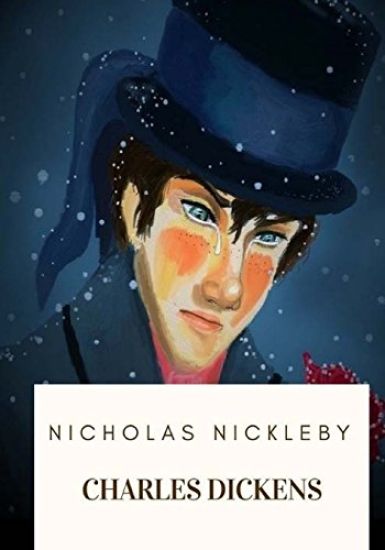
The first of Dickens' romances, Nicholas Nickleby is one of his most popular novels. The story follows young Nicholas who has become the head of the family after his father's death. Penniless and desperate, he turns to his uncle for help, but this only leads the family into even more of a mess.
At the heart of Dickens's second novel is a story as much about crime and poverty as it is about justice and charity. Orphaned at birth, Oliver Twist grows up under the loveless, relentless watch of a workhouse. He runs away with hopes for a better life in London, only to become-at the hands of the unforgettable Artful Dodger-a guileless pawn in a gang of pickpockets and robbers working for Fagin, one of Dickens's most controversial villains. Full of ingenious plot twists, at turns thrilling, tragic, tender, and sharp-eyed, Oliver Twist is among Dickens's most enduring classics; the story of a young orphan who dares to say, "Please, sir, I want some more." We are delighted to publish this classic book as part of our extensive Classic Library collection. Many of the books in our collection have been out of print for decades, and therefore have not been accessible to the general public. The aim of our publishing program is to facilitate rapid access to this vast reservoir of literature, and our view is that this is a significant literary work, which deserves to be brought back into print after many decades. The contents of the vast majority of titles in the Classic Library have been scanned from the original works. To ensure a high quality product, each title has been meticulously hand curated by our staff. Our philosophy has been guided by a desire to provide the reader with a book that is as close as possible to ownership of the original work. We hope that you will enjoy this wonderful classic work, and that for you it becomes an enriching experience
I have been looking on, this evening, at a merry company of children assembled round that pretty German toy, a Christmas Tree. The tree was planted in the middle of a great round table, and towered high above their heads. It was brilliantly lighted by a multitude of little tapers; and everywhere sparkled and glittered with bright objects. There were rosy-cheeked dolls, hiding behind the green leaves; and there were real watches (with movable hands, at least, and an endless capacity of being wound up) dangling from innumerable twigs; there were French-polished tables, chairs, bedsteads, wardrobes, eight-day clocks, and various other articles of domestic furniture (wonderfully made, in tin, at Wolverhampton), perched among the boughs, as if in preparation for some fairy housekeeping; there were jolly, broad-faced little men, much more agreeable in appearance than many real men-and no wonder, for their heads took off, and showed them to be full of sugar-plums; there were fiddles and drums; there were tambourines, books, work-boxes, paint-boxes, sweetmeat-boxes, peep-show boxes, and all kinds of boxes; there were trinkets for the elder girls, far brighter than any grown-up gold and jewels; there were baskets and pincushions in all devices; there were guns, swords, and banners; there were witches standing in enchanted rings of pasteboard, to tell fortunes; there were teetotums, humming-tops, needle-cases, pen-wipers, smelling-bottles, conversation-cards, bouquet-holders; real fruit, made artificially dazzling with gold leaf; imitation apples, pears, and walnuts, crammed with surprises; in short, as a pretty child, before me, delightedly whispered to another pretty child, her bosom friend, "There was everything, and more." This motley collection of odd objects, clustering on the tree like magic fruit, and flashing back the bright looks directed towards it from every side-some of the diamond-eyes admiring it were hardly on a level with the table, and a few were languishing in timid wonder on the bosoms of pretty mothers, aunts, and nurses-made a lively realisation of the fancies of childhood; and set me thinking how all the trees that grow and all the things that come into existence on the earth, have their wild adornments at that well-remembered time.
The Chimes: A Goblin Story of Some Bells that Rang an Old Year Out and a New Year In, a short novel by Charles Dickens, was written and published in 1844, one year after A Christmas Carol. It is the second in his series of "Christmas books" five short books with strong social and moral messages that he published during the 1840's. We are delighted to publish this classic book as part of our extensive Classic Library collection. Many of the books in our collection have been out of print for decades, and therefore have not been accessible to the general public. The aim of our publishing program is to facilitate rapid access to this vast reservoir of literature, and our view is that this is a significant literary work, which deserves to be brought back into print after many decades. The contents of the vast majority of titles in the Classic Library have been scanned from the original works. To ensure a high quality product, each title has been meticulously hand curated by our staff. Our philosophy has been guided by a desire to provide the reader with a book that is as close as possible to ownership of the original work. We hope that you will enjoy this wonderful classic work, and that for you it becomes an enriching experience.
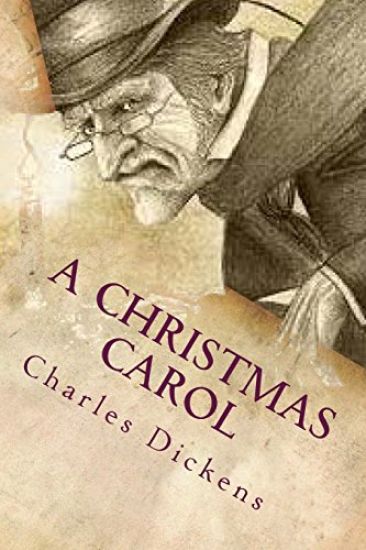
Ebenezer Scrooge, a bitter and miserable age lender in a counting house in 1843 in London, has everything that embodies the joy and spirit of Christmas in rebellion, refusing to visit his merry nephew Fred at Christmas dinner with His family, and giving him reluctantly and denying his poorly paid employee Bob Cratchit the day off to spend Christmas with his loved ones. That night, Scrooge is visited by the ghost of his former partner, Jacob Marley, who died seven years before Christmas Eve and is forced to spend his future life carrying heavy chains forged from his own greedy way. Marley warns Scrooge that he will suffer an even worse fate if he does not repent, and predicts that he will be pursued by three spirits who will help him to reflect and guide him.
Beautiful, honest Nell Trent lives with her devoted Grandfather in his Old Curiosity Shop, an enchanting shop of odds and ends. Desperate to make a better life for his Nell, Grandfather secretly gambles and gets deeply into debt with the unscrupulous Quilp. When what little money they have is lost in a game of cards, Quilp claims The Old Curiosity Shop as payment for the loans Released in installments from 1840 to 1841, Charles Dicken's The Old Curiosity Shop caused such a sensation at the time that crowds of avid readers were waiting on the docks of New York to hear news of their heroine when the ship with the last episode approached the port.
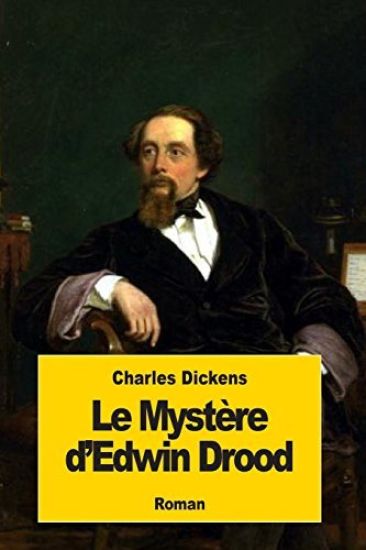
L'histoire se d roule dans la petite ville de Cloisterham, l'ombre de la cath drale. Edwin Drood se rend chez son oncle John Jasper, qu'il aime tendrement et avec lequel il a un cart d' ge tr s peu important. Ce qu'il ignore, comme d'ailleurs toute la ville, c'est que Jasper a une double vie: il est chantre de la cath drale et opiomane, client d'un bouge dans l'est de Londres. Edwin vient pour rendre visite celle qui il est fianc par testament paternel, la jeune Rosa Bud, pensionnaire dans l' tablissement de Miss Twinkelton et l ve de Jasper qui lui enseigne la musique. D sinvolte, il n'a pas conscience de ce que signifient r ellement ses fian ailles, ce qui choque profond ment Neville Landless, jeune homme r cemment arriv de Ceylan en compagnie de sa soeur jumelle Helen. Neville, qui a t bloui par Rosa, est sujet des acc s de violence et, de fait, les deux jeunes gens ont une altercation, puis un d ner est organis chez Jasper afin de les r concilier. Le lendemain, Edwin a disparu. Les recherches entreprises pour le retrouver restent vaines, et Jasper, pris de Rosa, se fait bient t pressant, ce qui oblige la jeune fille se r fugier Londres sous la protection de son tuteur, Mr Grewgious. Arrive un inconnu, Dick Datchery, qui aide l'enqu te sa fa on. Certains aspects de sa personne sembleraient rappeler un personnage d j rencontr , mais le myst re demeure. La vieille tenanci re du bouge opium finit par d couvrir l'identit de son client, r v l e par Datchery, et elle le suit en cachette jusqu' la cath drale o elle brandit un poing vengeur en sa direction.
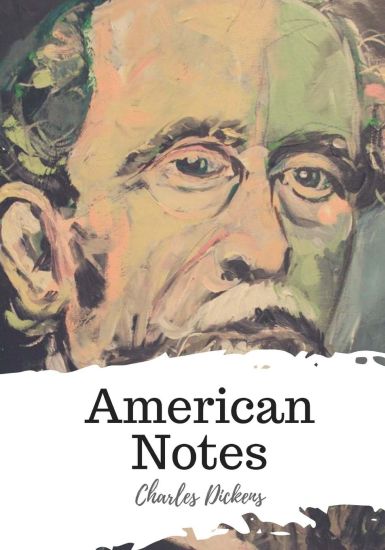
American Notes is a fascinating account of nineteenth-century America sketched with Charles Dickens's characteristic wit and charm. When Charles Dickens set out for America in 1842 he was the most famous man of his day to travel there - curious about the revolutionary new civilization that had captured the English imagination. His frank and often humorous descriptions cover everything from his comically wretched sea voyage to his sheer astonishment at the magnificence of the Niagara Falls, while he also visited hospitals, prisons and law courts and found them exemplary. But Dickens's opinion of America as a land ruled by money, built on slavery, with a corrupt press and unsavoury manners, provoked a hostile reaction on both sides of the Atlantic. American Notes is an illuminating account of a great writer's revelatory encounter with the New World.
Our Mutual Friend was Charles Dickens' last completed novel, and some believe his most sophisticated. A young man discovers that he must marry a mercenary young woman before he can claim his inheritance. He is on his way to do his father's bidding when a body discovered in the Thames is identified as his, and his inheritance passes instead to Boffins, a working class man. The effects are felt through all levels of society.
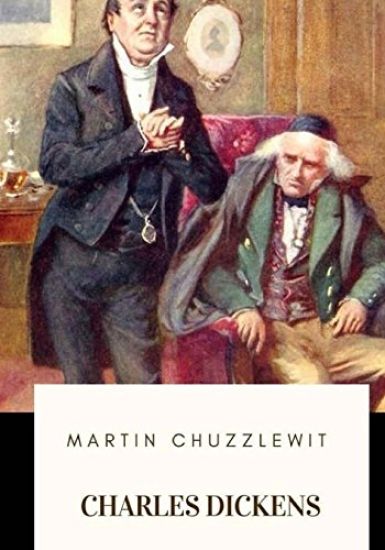
The Life and Adventures of Martin Chuzzlewit is, according to Dickens, a novel about selfishness. And every member of the Chuzzlewit family is given the chance to display their own brand thereof, among them the infamous villain Jonas Chuzzlewit. After sales of the first few serial installments were poor, Dickens moved the action to America, which he satirized as a vast wilderness peopled by likewise selfish characters.
William Dorrit has been a resident of Marshalsea debtors' prison for so long that his three children-snobbish Fanny, idle Edward and Amy (Little Dorrit)-have all grown up there, although they are free to pass in and out of the prison as they please. Amy, devoted to her father, has been supporting them both through her sewing.
The Pickwick Papers was Dickens' first published novel and the first ever publishing phenomenon with illegal copies, theatrical performances and merchandise. It follows the travels of Mr Pickwick and the Pickwick Club through the English countryside, and is made up of Dickens' usual array of exaggerated, comic characters. The various adventures and encounters are loosely related, suiting the serial format in which the novel was first published.
Barnaby Rudge by Charles Dickens Set against the backdrop of the Gordon Riots of 1780, Barnaby Rudge is a story of mystery and suspense which begins with an unsolved double murder and goes on to involve conspiracy, blackmail, abduction and retribution. Through the course of the novel fathers and sons become opposed, apprentices plot against their masters and Protestants clash with Catholics on the streets. And, as London erupts into riot, Barnaby Rudge himself struggles to escape the curse of his own past. With its dramatic descriptions of public violence and private horror, its strange secrets and ghostly doublings, Barnaby Rudge is a powerful, disturbing blend of historical realism and Gothic melodrama. We are delighted to publish this classic book as part of our extensive Classic Library collection. Many of the books in our collection have been out of print for decades, and therefore have not been accessible to the general public. The aim of our publishing program is to facilitate rapid access to this vast reservoir of literature, and our view is that this is a significant literary work, which deserves to be brought back into print after many decades. The contents of the vast majority of titles in the Classic Library have been scanned from the original works. To ensure a high quality product, each title has been meticulously hand curated by our staff. Our philosophy has been guided by a desire to provide the reader with a book that is as close as possible to ownership of the original work. We hope that you will enjoy this wonderful classic work, and that for you it becomes an enriching experience. Barnaby Rudge, Barnaby Rudge book, Barnaby Rudge pdf
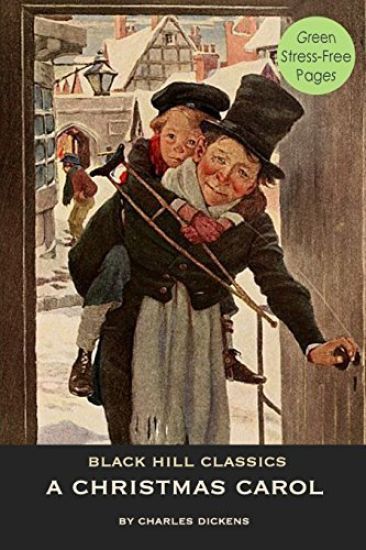
Dickens' timeless story of redemption and Christmas goodwill is now easier to read in a large dyslexia-friendly font on green pages for reduced eye-strain. "You may be an undigested bit of beef, a blot of mustard, a crumb of cheese, a fragment of underdone potato. There's more of gravy than of grave about you, whatever you are "
The kettle began it Don't tell me what Mrs. Peerybingle said. I know better. Mrs. Peerybingle may leave it on record to the end of time that she couldn't say which of them began it; but, I say the kettle did. I ought to know, I hope The kettle began it, full five minutes by the little waxy-faced Dutch clock in the corner, before the Cricket uttered a chirp. As if the clock hadn't finished striking, and the convulsive little Haymaker at the top of it, jerking away right and left with a scythe in front of a Moorish Palace, hadn't mowed down half an acre of imaginary grass before the Cricket joined in at all Why, I am not naturally positive. Every one knows that. I wouldn't set my own opinion against the opinion of Mrs. Peerybingle, unless I were quite sure, on any account whatever. Nothing should induce me.
My Lord, You were among the first, some years ago, to expatiate on the vicious addiction of the lower classes of society to Sunday excursions; and were thus instrumental in calling forth occasional demonstrations of those extreme opinions on the subject, which are very generally received with derision, if not with contempt. Your elevated station, my Lord, affords you countless opportunities of increasing the comforts and pleasures of the humbler classes of society-not by the expenditure of the smallest portion of your princely income, but by merely sanctioning with the influence of your example, their harmless pastimes, and innocent recreations.
Though best known for his heartwarming holiday tales and sweeping social novels such as A Tale of Two Cities and Great Expectations, Charles Dickens was a prolific writer who was always willing to experiment with new styles. The chilling tales collected in Three Ghost Stories are a result of his brief but successful foray into the mystery and detective genres.
Oliver Twist is born an orphan and grows up handed from bad position to worse. Eventually he ends up in the London street gang run by Fagin, who attempts to blacken the boy's pure soul in his service. Through chance and coincidence Oliver is restored to his mother's middle-class family, where he is shown love and comfort for the first time in his life. The villains' attempts to kidnap him back are foiled and all are transported or hanged.