Kirjailija
Charles Johnston
Kirjat ja teokset yhdessä paikassa: 105 kirjaa, julkaisuja vuosilta 2003–2026, suosituimpiin kuuluu Travels in Southern Abyssinia. Vertaile teosten hintoja ja tarkista saatavuus suomalaisista kirjakaupoista.
105 kirjaa
Kirjojen julkaisuvuodet: 2003–2026.

Travels in southern Abyssinia, Volume 1, a classical book, has been considered important throughout the human history, and so that this work is never forgotten we at Alpha Editions have made efforts in its preservation by republishing this book in a modern format for present and future generations. This whole book has been reformatted, retyped and designed. These books are not made of scanned copies of their original work and hence the text is clear and readable.
The Yoga Sutras of Patanjali - The Book of the Spiritual Man
Charles Johnston
Outlook Verlag
2022
pokkari

The Yoga Sutras of Patanjali - The Book of the Spiritual Man
Charles Johnston
Outlook Verlag
2022
sidottu

Of all Dr. Charles Johnston's writings, Insight most unabashedly highlights what is original and of major significance in his thinking. From the book's back cover: "When we understand them deeply, the ideas of Creative Systems Theory and the concept of Cultural Maturity come to seem like common sense. But this kind of common sense is new-a product of a fundamental leap in how we understand. Many of Creative Systems Theory's core observations are thus appropriately thought of as radical-indeed, audaciously so. They reflect contributions new to the evolving story of human thought. "Insight turns to those radical observations and just what makes them new and important. It delves into how the changes that the concept of Cultural Maturity describes will be essential to the future of the species. It examines how a creative frame brings a fundamentally new kind of depth to our understanding of why we believe what we do and the workings of human intelligence. It also looks at how Creative Systems Theory's systemic vantage lets us successfully address eternal conceptual quandaries, from the nature of free will to the ultimate relationship between the contributions of science and religion-and much more."

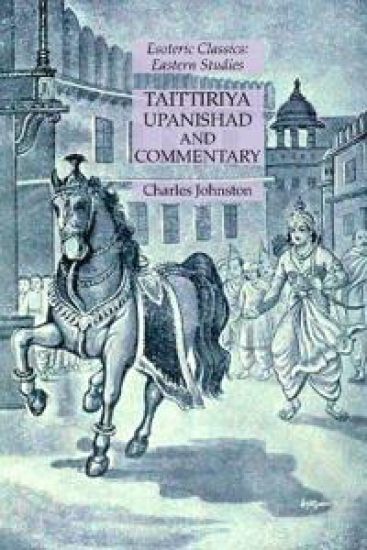
The Taittiriya Upanishad is associated with the Taittiriya school of the Yajurveda, attributed to the pupils of sage Vaishampayana. It lists as number 7 in the Muktika canon of 108 Upanishads. The Taittiriya Upanishad is the seventh, eighth and ninth chapters of Taittiriya Araṇyaka, which are also called, respectively, the Siksavalli, the Anandavalli and the Bhṛguvalli. This Upanishad is classified as part of the "black" Yajurveda, with the term "black" implying "the un-arranged, motley collection" of verses in Yajurveda, in contrast to the "white" (well arranged) Yajurveda.
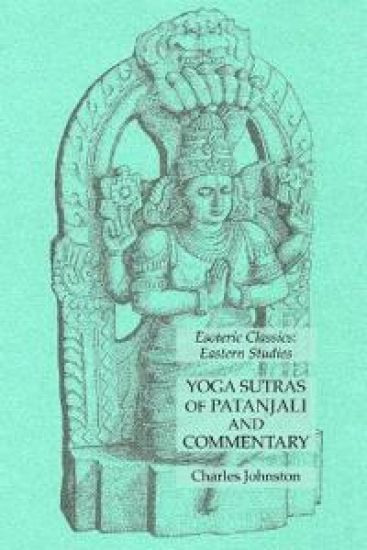
One of the foundational texts of classical yoga, this book is comprised of a collection of Sutras (aphorisms) originally written in Sanskrit, regarding the theory and practice of Yoga. They are presented here by prolific author Charles Johnston, a renowned scholar of Theosophy and translator of numerous Eastern spiritual texts.
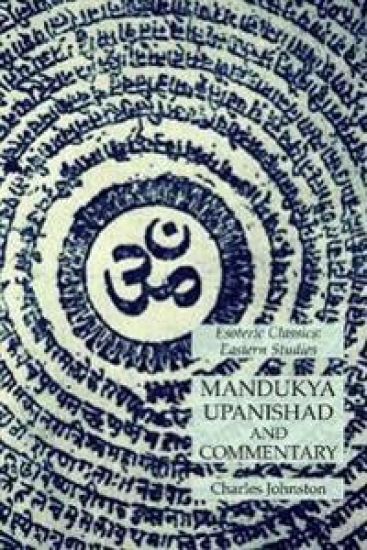
Mandukya Upanishad discusses the syllable Aum, presents the theory of four states of consciousness, and asserts that Aum is Brahman, which is the Whole, and that Brahman is this self. The Mandukya Upanishad is notable for having been recommended in the Muktikā Upanishad, through two central characters of the Ramayana, as the one Upanishad that alone is sufficient for knowledge to gain moksha, and as first in its list of eleven principal Upanishads. The text is also notable for inspiring Gaudapada's Karika, a classic for the Vedanta school of Hinduism. Mandukya Upanishad is among the often cited texts on chronology and philosophical relationship between Hinduism and Buddhism.
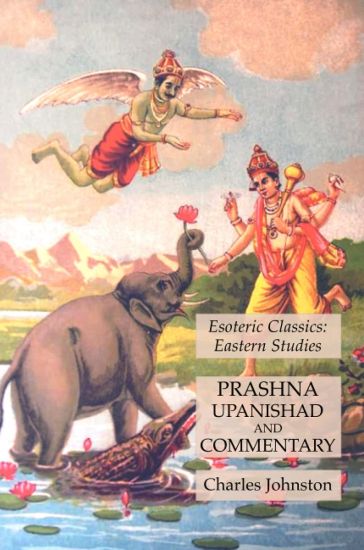
The Prashna Upanishad contains six Prashna (questions), and each is a chapter with a discussion of answers. The chapters end with the phrase, prasnaprativakanam, which literally means, "thus ends the answer to the question". The first three questions are profound metaphysical questions. The fourth section, in contrast, contains substantial philosophy. The last two sections discuss the symbol Om and Moksha concept.
Even though yoga has been mentioned in various ancient texts (The Vedas, Upanishads, the Bhagavad Gita etc.), the credit for putting together a formal, cohesive philosophy of yoga goes to Sage Patanjali. This Yoga Sutras are an important milestone in the history of Yoga. This 195 aphorism are short and easy to memorize. Patanjali's sutras are the most popular and widely recognized techniques for training one's body, evolving one's mind, and achieving fulfillment. The book contains four books: Samadhi Pada (51 sutras), Sadhana Pada (55 sutras), Vibhuti Pada (55 sutras), and Kaivalya Pada (34 sutras). LARGE PRINT EDITION, EASY TO READ LAYOUT. EXCERPT: "The Yoga Sutras of Patanjali are in themselves exceedingly brief, less than ten pages of large type in the original. Yet they contain the essence of practical wisdom, set forth in admirable order and detail. The theme, if the present interpreter be right, is the great regeneration, the birth of the spiritual from the psychical man: the same theme which Paul so wisely and eloquently set forth in writing to his disciples in Corinth, the theme of all mystics in all lands. We think of ourselves as living a purely physical life, in these material bodies of ours. In reality, we have gone far indeed from pure physical life; for ages, our life has been psychical, we have been centred and immersed in the psychic nature. Some of the schools of India say that the psychic nature is, as it were, a looking-glass, wherein are mirrored the things seen by the physical eyes, and heard by the physical ears. But this is a magic mirror; the images remain, and take a certain life of their own. Thus within the psychic realm of our life there grows up an imaged world wherein we dwell; a world of the images of things seen and heard, and therefore a world of memories; a world also of hopes and desires, of fears and regrets. Mental life grows up among these images, built on a measuring and comparing, on the massing of images together into general ideas; on the abstraction of new notions and images from these; till a new world is built up within, full of desires and hates, ambition, envy, longing, speculation, curiosity, self-will, self-interest."
Even though yoga has been mentioned in various ancient texts (The Vedas, Upanishads, the Bhagavad Gita etc.), the credit for putting together a formal, cohesive philosophy of yoga goes to Sage Patanjali. This Yoga Sutras are an important milestone in the history of Yoga. This 195 aphorism are short and easy to memorize. Patanjali's sutras are the most popular and widely recognized techniques for training one's body, evolving one's mind, and achieving fulfillment. The book contains four books: Samadhi Pada (51 sutras), Sadhana Pada (55 sutras), Vibhuti Pada (55 sutras), and Kaivalya Pada (34 sutras). LARGE PRINT EDITION, EASY TO READ LAYOUT. EXCERPT: "The Yoga Sutras of Patanjali are in themselves exceedingly brief, less than ten pages of large type in the original. Yet they contain the essence of practical wisdom, set forth in admirable order and detail. The theme, if the present interpreter be right, is the great regeneration, the birth of the spiritual from the psychical man: the same theme which Paul so wisely and eloquently set forth in writing to his disciples in Corinth, the theme of all mystics in all lands. We think of ourselves as living a purely physical life, in these material bodies of ours. In reality, we have gone far indeed from pure physical life; for ages, our life has been psychical, we have been centred and immersed in the psychic nature. Some of the schools of India say that the psychic nature is, as it were, a looking-glass, wherein are mirrored the things seen by the physical eyes, and heard by the physical ears. But this is a magic mirror; the images remain, and take a certain life of their own. Thus within the psychic realm of our life there grows up an imaged world wherein we dwell; a world of the images of things seen and heard, and therefore a world of memories; a world also of hopes and desires, of fears and regrets. Mental life grows up among these images, built on a measuring and comparing, on the massing of images together into general ideas; on the abstraction of new notions and images from these; till a new world is built up within, full of desires and hates, ambition, envy, longing, speculation, curiosity, self-will, self-interest."
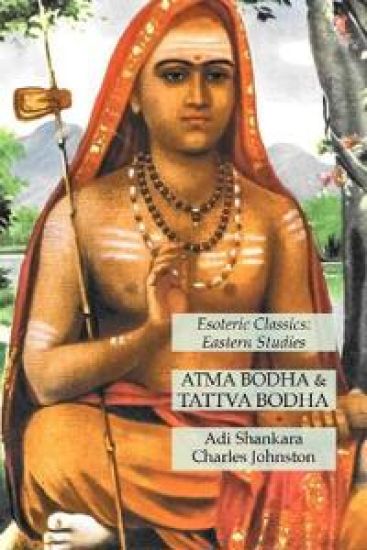
Atma Bodha & Tattva Bodha
Adi Shankara; Charles Johnston
Lamp of Trismegistus
2020
pokkari
Halvin toimitettuna 23,00 €
Atma-bodha is a short Sanskrit text attributed to Adi Shankara of Advaita Vedanta school of Hindu philosophy. The text describes the path to Self-knowledge or the awareness of Atman. Atmabodha means "Self-knowledge", self-awareness, or one with the "possession of a knowledge of soul or the supreme spirit". Tattva Bodha literally means 'Knowledge of the Truth', and it is a small but all encompassing introductory text of Vedanta.
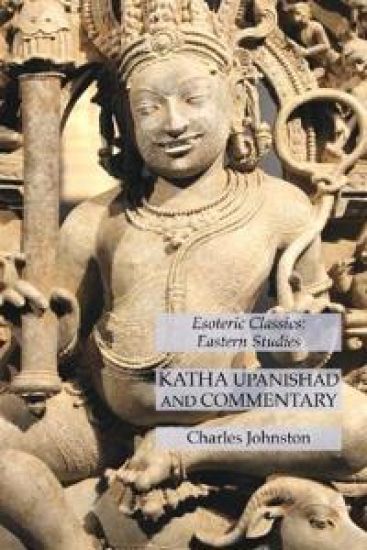
Katha Upanishad and Commentary
Charles Johnston
Lamp of Trismegistus
2020
pokkari
Halvin toimitettuna 23,70 €
The Upanishads are late Vedic Sanskrit texts of religious teaching and ideas still revered in Hinduism. Of all Vedic literature, the Upanishads alone are widely known, and their central ideas are at the spiritual core of Hinduism. Around 108 Upanishads are known, of which the first dozen or so are the oldest and most important and are referred to as the principal or main Upanishads. The Katha Upanishad is the legendary story of a little boy, Nachiketa - the son of Sage Vajasravasa, who meets Yama (the Hindu deity of death). Their conversation evolves to a discussion of the nature of man, knowledge, Atman (Soul, Self) and moksha (liberation).
The Upanishads are late Vedic Sanskrit texts of religious teaching and ideas still revered in Hinduism. Of all Vedic literature, the Upanishads alone are widely known, and their central ideas are at the spiritual core of Hinduism. Around 108 Upanishads are known, of which the first dozen or so are the oldest and most important and are referred to as the principal or main Upanishads. The Kena Upanishad is notable in its discussion of Brahman with attributes and without attributes, and for being a treatise on "purely conceptual knowledge".