Kirjojen hintavertailu – 12 903 727 kirjaa ja 27 kauppaa

Kirjailija

Charles River

Kirjat ja teokset yhdessä paikassa: 4 673 kirjaa, julkaisuja vuosilta 2013–2022, suosituimpiin kuuluu William Powell and Myrna Loy: The Lives and Careers of One of Classical Hollywood's Most Iconic Duos. Vertaile teosten hintoja ja tarkista saatavuus suomalaisista kirjakaupoista.

4 673 kirjaa

Kirjojen julkaisuvuodet: 2013–2022.

Investigating the Sinking of the Titanic: The Investigations Made in the Wake of the Titanic Disaster
*Includes pictures*Includes passengers' accounts and testimony from the investigations*Explains the different investigations' findings and the changes made*Includes a bibliography for further readingJust before midnight on April 14, 1912, the RMS Titanic, the largest ship in the world, hit an iceberg, setting in motion a chain of events that would ultimately make it history's most famous, and notorious, ship. In the over 100 years since it sank on its maiden voyage, the Titanic has been the subject of endless fascination, as evidenced by the efforts to find its final resting spot, the museums full of its objects, and the countless books, documentaries, and movies made about the doomed ocean liner. Thanks to the dramatization of the Titanic's sinking and the undying interest in the story, millions of people are familiar with various aspects of the ship's demise, and the nearly 1,500 people who died in the North Atlantic in the early morning hours of April 15, 1912. The sinking of the ship is still nearly as controversial now as it was over 100 years ago, and the drama is just as compelling. The Titanic was neither the first nor last big ship to sink, so it's clear that much of its appeal stems from the nature of ship itself. Indeed, the Titanic stands out not just for its end but for its beginning, specifically the fact that it was the most luxurious passenger ship ever built at the time. In addition to the time it took to come up with the design, the giant ship took a full three years to build, and no effort or cost was spared to outfit the Titanic in the most lavish ways. Given that the Titanic was over 100 feet tall, nearly 900 feet long, and over 90 feet wide, it's obvious that those who built her and provided all of its famous amenities had plenty of work to do. The massive ship was carrying thousands of passengers and crew members, each with their own experiences on board, and the various amenities offered among the different classes of passengers ensured that life on some decks of the ship was quite different than life on others. Much has been made through the years about the failures of those designing the Titanic to take proper safety precautions, and how these failings led to the disaster and huge loss of life. In fact, the number of lives lost was so great that it can be hard to believe that the death toll might have been higher. Nonetheless, it's true that many more would have died without the courageous efforts of those on the ships who responded to the Titanic's distress calls and sailed through the same dangerous conditions that brought down the "unsinkable" ship itself. The drama involved with the sinking of the Titanic often obscures the important aftermath of the disaster, particularly the several investigations conducted on both sides of the Atlantic that sought to figure out not only why the Titanic sank but future changes that could be made in order to protect ships and passengers in the future. In fact, the course of the investigations was interesting in itself, especially since the British and Americans reached wildly different conclusions about what went wrong and led to the ship's demise. Investigating the Sinking of the Titanic chronicles the immediate aftermath of the tragedy and the investigations and changes that followed. Along with pictures of important people, places, and events, you will learn about the investigations like never before.

Ingrid Bergman: The First International Movie Star

Ingrid Bergman: The First International Movie Star

Charles River

Createspace Independent Publishing Platform
2017
nidottu

Halvin toimitettuna 14,70 €

*Includes pictures of Bergman and important people, places, and scenes. *Includes Bergman's own quotes about her upbringing, films and relationships. *Includes a Bibliography for further reading. "Be yourself. The world worships the original." - Ingrid Bergman Since the early 20th century, film has been embraced as arguably the preeminent international art form. Not only is Hollywood cinema immensely popular around the world, but other nationalities (Bollywood being the greatest current example) have their own thriving industries. Major actors and actresses are not only icons in their parent countries but reach tremendous international fame. However, most actors who become internationally famous do so via the success of the films they make in their native land, without actually leaving their country. One of the most famous early examples is Charlie Chaplin, who reached incredible fame in Asia and Western Europe during the silent cinema era despite having never left the confines of Hollywood. Chaplin's example illustrates how the vast majority of film stars who reach international fame do so through the global success of the films they make within a given industry. This dynamic highlights the uniqueness of Ingrid Bergman's career and her significance as an international film star. Not only were films like Casablanca (1942) famous around the world, but she made films in five different languages and film industries. In this regard, she was the rare star who was willing to literally act in films produced in different countries. Bergman's fame cannot be doubted, but the international quality of her career has prevented most people from gaining a complete understanding of her filmography. Moreover, the immense success of her most famous films obscured her other achievements; one of Bergman's persistent lamentations late in her career was that even though she appeared in other films she deemed more significant, the only film of hers that people wanted to discuss was Casablanca. As a result, her early films in Sweden, the Italian Neorealist films she made with famous director and future husband Roberto Rossellini, and her French film with Jean Renoir have all been relegated to the margins. Bergman is thus recognized as a Hollywood star rather than an actress who should be identified with an array of different film industries, reducing the enormous scope of her career to a relatively small proportion of her filmography. At the same time, Bergman's personal life reflects the dynamics of the film industry and the relationship between celebrities and American culture more generally. At times during her career, Bergman was the darling of Hollywood, but at other times she was literally a pariah. It is all too common to remember Bergman for her performance in Casablanca, forgetting the fact that she was effectively exiled from Hollywood for several years during her romance with Roberto Rossellini. Her life and career amply demonstrated the expectations American culture held for their film stars during the mid-20th century. Ingrid Bergman: The First International Movie Star profiles the life and career of one of the world's most famous actresses and entertainment icons. Along with pictures of important people, places, and events, you will learn about Ingrid Bergman like you never have before, in no time at all.
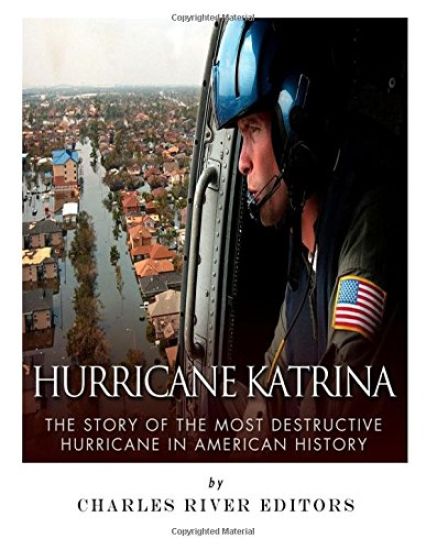
Hurricane Katrina: The Story of the Most Destructive Hurricane in American History

Hurricane Katrina: The Story of the Most Destructive Hurricane in American History

Charles River

Createspace Independent Publishing Platform
2017
nidottu
*Includes pictures *Includes accounts of the hurricane written by survivors *Includes a bibliography for further reading "The big lesson I learned from Hurricane Katrina is that we have to be thinking about the unthinkable because sometimes the unthinkable happens." - Mike Leavitt Hurricanes have been devastating communities for thousands of years, bringing about various combinations of rain and wind that can do everything from taking down some dead limbs to wiping out houses. They are also common enough that people who live for any length of time in a region prone to having hurricanes are inclined to accept them as something of a periodic nuisance rather than a serious danger. Modern construction styles allow houses to withstand winds in excess of 100 miles an hour, and early warning systems allow people to evacuate. Thus, most hurricanes of the 21st century take fewer lives than a serious highway accident. As a result, the world watched in horror as Hurricane Katrina decimated New Orleans in August 2005, and the calamity seemed all the worse because many felt that technology had advanced far enough to prevent such tragedies, whether through advanced warning or engineering. Spawning off the Bahamian coast that month, Katrina quickly grew to be one of the deadliest natural disasters in American history, killing more than 1,800 people and flooding a heavy majority of one of America's most famous cities. At first, the storm seemed to be harmless, scooting across the Floridian coast as a barely noticeable Category 1 storm, but when Katrina reached the warm waters of the Gulf of Mexico, its winds grew exponentially before slamming into the southern Louisiana coast as a massive Category 5 hurricane. In addition to the deadly nature of the hurricane, it was also incredibly destructive as a result of failed levees around the New Orleans area. By the time the storm had passed, it had wreaked an estimated $108 billion of damage across the region, and the human suffering, with nearly 2,000 deaths and a million people displaced, was available for viewing across the world. Naturally, the reactions of political leaders would be heavily scrutinized in the aftermath, and people studied the lessons to be learned from the disaster to prevent a similar occurrence in the future. Hurricane Katrina: The Story of the Most Destructive Hurricane in American History chronicles the storm from its formation to the devastating effects it had across the Gulf of Mexico. Along with pictures and a bibliography, you will learn about Hurricane Katrina like never before, in no time at all.
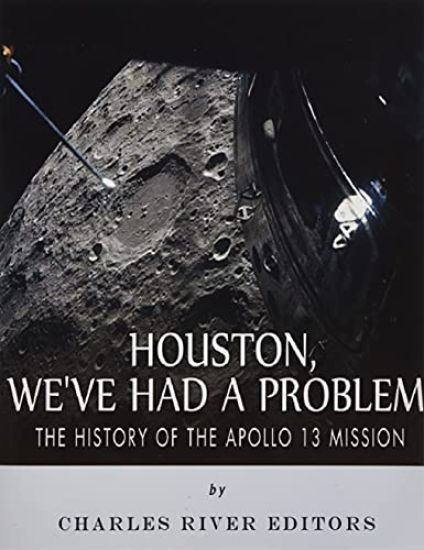
Houston, We've Had a Problem: The History of the Apollo 13 Mission

Houston, We've Had a Problem: The History of the Apollo 13 Mission

Charles River

Createspace Independent Publishing Platform
2017
nidottu
*Includes pictures *Includes accounts of the mission written by the astronauts and members of Mission Control *Includes online resources and a bibliography for further reading *Includes a table of contents "The only experiment we completed on Apollo 13 was not on the original mission list." - James Lovell, Jr. In the summer of 1969, Apollo 11 successfully landed men on the Moon for the first time in history, and Apollo 12 successfully landed astronauts on the Moon just a few months after Apollo 11's successful mission. Apollo 12 was actually more successful than Apollo 11 from the standpoint of fulfilling the mission objectives, but it was naturally overshadowed since it did not come first. Another reason Apollo 12 is mostly forgotten today can be credited to the dramatic and fateful Apollo 13 mission, which took twists and turns nobody could have predicted when it launched on April 11, 1970. Apollo 13's mission was to land on the Moon near the Fra Mauro highlands, which were hills that had somehow formed in the middle of a huge crater tens of miles wide. The mission was supposed to test for seismic activity and take samples to analyze the crater and try to find an explanation for the formation of the hills. Of course, as is widely known today, Apollo 13 never made the landing. The ever-dependable Saturn V properly thrust Apollo 13 out of the Earth's orbit and toward the Moon, but two days into the voyage, the crew heard a loud bang. At first, the crew was not sure what had happened, leading Commander James Lovell to famously transmit to Mission Control, "Houston, we've had a problem." As it turned out, one of the main oxygen tanks had ruptured in the Service Module, causing a catastrophic failure. The Command/Service Module's fuel cells all shut down, leaving the command/Service Module to run on backup batteries. In other words, Apollo 13 was adrift between the Earth and the Moon with limited battery power. With severely limited supplies and power, Apollo 13 shut down the Command/Service Module altogether, and the entire crew had to rely on camping out in the Lunar Module, which was only equipped to support two astronauts. The Moon landing was obviously out of the question, but Apollo 13 still had to orbit around the Moon to head back to Earth, a trip that would take four more days. Power and water were the two most critical shortages, forcing the crew to maintain the Lunar Module at low energy. The crew also had to worry about carbon dioxide building up and poisoning them, because the Lunar Module's system to remove carbon dioxide was designed to support two people for a few days, not three people for four days. Once Apollo 13 rounded the Moon and headed back to Earth, the crew and Mission Control managed to restart the Command/Service Module, rerouting power from the Lunar Module to the Command/Service Module. The crew also had to manually realign the spacecraft for reentry, as Lovell had done for Apollo 8. Before reentry, the Service Module was jettisoned from the spacecraft, and pictures of it were taken to see what went so terribly wrong. The crew then jettisoned the Lunar Module that had saved their lives, leaving it to burn up in the Earth's atmosphere. On the afternoon of April 17, Apollo 13's Command Module made a nerve-wracking but successful reentry into Earth's atmosphere, allowing Lovell to consider the mission a "successful failure." Gene Kranz, the Lead Flight Controller at Mission Control, considered Apollo 13's safe return to be "NASA's finest hour." Houston, We've Had a Problem: The History of the Apollo 13 Mission analyzes the conception of the Apollo program and the events that brought about one of the most famous space missions in history. Along with pictures of important people, places, and events, you will learn about Apollo 13 like never before, in no time at all.
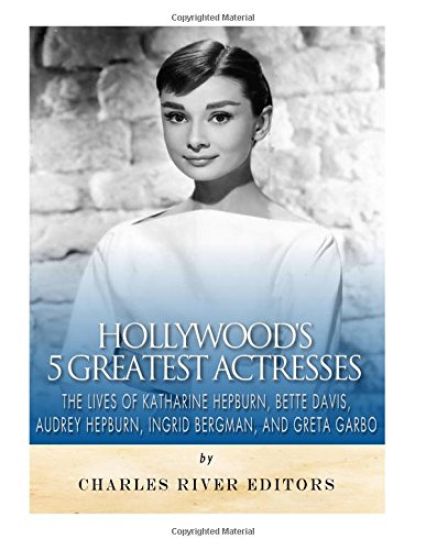
Hollywood's 5 Greatest Actresses: The Lives of Katharine Hepburn, Bette Davis, Audrey Hepburn, Ingrid Bergman, and Greta Garbo
*Includes pictures. *Includes an introduction for each actress. *Includes quotes by the actresses about their lives and careers. *Includes bibliographies of each actress for further reading. In 1999, the American Film Institute released its list of the 50 greatest Hollywood stars of the 20th century, and selecting the best actresses out of the bunch was certainly a tall task. The competition was so stacked that women like Ginger Rogers, Grace Kelly and Rita Hayworth were not even among the Top 10. So who were the Top 5 women selected by the AFI? Aside from being one of the most recognized and acclaimed actresses in history, Katharine Hepburn's career is also of great importance because she forced Americans to reevaluate their expectations for female behavior, both in films themselves and off the movie set as well. As society began to pay greater attention to the importance of strong roles for women, Hepburn's career gained an even greater importance as a fiercely individual figure who offered a daring alternative to the conventions of femininity that had long existed in American culture. Bette Davis presided over Hollywood at a time in which the film industry was at its most influential. Every actress from Katharine Hepburn to Ingrid Bergman and Ginger Rodgers, themselves now considered among Hollywood's greatest icons, lived in the shadow of Bette Davis. For someone whose career ended over 30 years ago, Audrey Hepburn continues to retain her popularity and exert a strong influence over how people view beauty and sophistication. She remains an American icon, despite the fact that she did not even move to the United States until 1953 (at the age of 24) and spent the majority of her life living in Europe, while her characters in films such as Roman Holiday (1953) and Breakfast at Tiffany's (1961) are still held up as the paragon of delicate femininity and elegance. At times during her career, Bergman was the darling of Hollywood, but at other times she was literally a pariah. It is all too common to remember Bergman for her performance in Casablanca, forgetting the fact that she was effectively exiled from Hollywood for several years during her romance with Roberto Rossellini. Of all the great movie stars, there may be none more enigmatic than Greta Garbo, who remains internationally famous despite the fact her life and career raise more questions than answers. How did a Swedish actress with very little film acting experience in her native land arrive in the United States and achieve instant stardom? Hollywood's 5 Greatest Actresses: The Lives of Katharine Hepburn, Bette Davis, Audrey Hepburn, Ingrid Bergman, and Greta Garbo profiles the live and careers of America's most iconic actresses. Along with pictures of important people, places, and events, you will learn about the 5 actresses like you never have before.
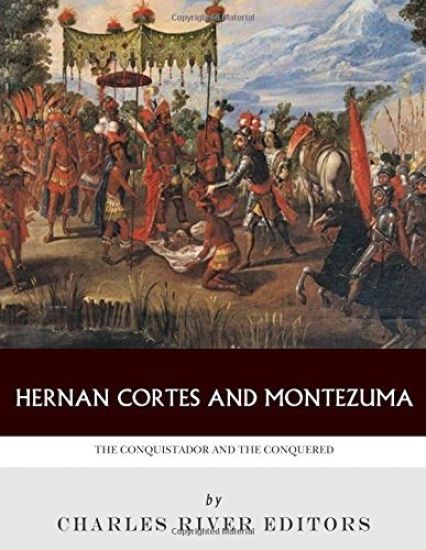
Hernan Cortes and Montezuma: The Conquistador and the Conquered

Hernan Cortes and Montezuma: The Conquistador and the Conquered

Charles River

Createspace Independent Publishing Platform
2017
nidottu
*Includes pictures of Montezuma, Cort s and important people, places, and events. *Includes Cort s's Second Letter to Charles V, one of the most descriptive firsthand accounts of the Aztecs and Tenochtitlan. *Discusses the Aztec Empire, the city of Tenochtitlan, and the human sacrifice rituals. *Includes a Bibliography for further reading. "Among these temples there is one which far surpasses all the rest, whose grandeur of architectural details no human tongue is able to describe; for within its precincts, surrounded by a lofty wall, there is room enough for a town of five hundred families." - Hern n Cort s "Cort s and all of us captains and soldiers wept for him, and there was no one among us that knew him and had dealings with him who did not mourn him as if he were our father, which was not surprising, since he was so good. It was stated that he had reigned for seventeen years, and was the best king they ever had in Mexico..." - Bernal D az del Castillo During the Age of Exploration, some of the most famous and infamous individuals were Spain's best known conquistadors. Naturally, as the best known conquistador, Hern n Cort s (1485-1547) is also the most controversial. Like Christopher Columbus before him, Cort s was lionized for his successes for centuries without questioning his tactics or motives, while indigenous views of the man have been overwhelmingly negative for the consequences his conquests had on the Aztecs and other natives in the region. Just about the only thing everyone agrees upon is that Cort s had a profound impact on the history of North America. Of course, the lionization and demonization of Cort s often take place without fully analyzing the man himself, especially because there are almost no contemporaneous sources that explain what his thinking and motivation was. If anything, Cort s seemed to have been less concerned with posterity or the effects of the Spanish conquest on the natives than he was on relations with the Mother Country itself. Of the few things that are known about Cort s, it appears that he was both extremely ambitious and fully cognizant of politics and political intrigue, even in a New World thousands of miles west of Spain itself. Cort s spent much of his time in Mexico and the New World defending himself against other Spanish officials in the region, as well as trying to portray and position himself in a favorable light back home. The Spanish conquest of the Aztecs and some of the myths and legends surrounding it have made Moctezuma II (and variations of his name like Montezuma) instantly recognizable around the globe. Still, his life is shrouded in mystery; Bernal Diaz del Castillo's The Conquest of New Spain and Miguel Leon-Portilla's translation of the Aztec observation of the conquest, The Broken Spears, recorded but a few details about the last Aztec ruler's life. Also, these two sources are only concerned with the circumstances surrounding the Spanish conquest of the Aztecs and therefore only deal with the very end of Moctecuma II's life and reign. Thus, his early life largely remains a mystery. So what is known about the famous Aztec ruler? Naturally, there is still a fierce debate over what happened during the conquest of the Aztec, and one of the most controversial episodes of the conquest was Moctezuma's death. But all of the sources agree that Moctezuma - sometimes called Moctezuma the Younger - generally possessed a reputation as a valiant warrior and was considered a courageous combat leader among his people. Myths and legends have helped fill in the blanks, regardless of their accuracy, and many of them have since become the best known details of Moctezuma's life. Cortes and Montezuma chronicles the lives and legacies of the conquistador and the emperor whose empire he conquered. Along with pictures, a bibliography and more, you will learn about Cortes and Montezuma like you never have be
Grant & Sherman: The Harbingers of Total War

Grant & Sherman: The Harbingers of Total War

Charles River

Createspace Independent Publishing Platform
2017
nidottu
*Includes pictures of Grant, Sherman, and important people, places, and events in their lives. *Includes an analysis of their careers before, during, and after the Civil War. *Includes an analysis of their military legacies. *Includes a bibliography on each man for further reading. Despite the fact that the Civil War began over 150 years ago, it remains one of the most widely discussed topics in America today, with Americans arguing over its causes, reenacting its famous battles, and debating which general was better than others. Americans continue to be fascinated by the Civil War icons who made the difference between victory and defeat in the war's great battles, and historians still debate the causes of the Union victory in the war. While there is still much debate, all agree that the Union's two greatest generals were Ulysses S. Grant and William Tecumseh Sherman. In the 19th century, one of the surest ways to rise to prominence in American society was to be a war hero, like Andrew Jackson and William Henry Harrison. But few would have predicted such a destiny for Hiram Ulysses Grant (1822-1885), who had been a career soldier with little experience in combat and a failed businessman when the Civil War broke out in 1861. 4 years later, the man would be known by a different name, and held in a far different light. Grant went about a steady rise up the ranks through a series of successes in the West. His victory at Fort Donelson, in which his terms to the doomed Confederate garrison earned him the nickname "Unconditional Surrender" Grant, could be considered the first major Union victory of the war, and Grant's fame and rank only grew after that at battlefields like Shiloh and Vicksburg. Along the way, Grant nearly fell prey to military politics and the belief that he was at fault for the near defeat at Shiloh, but President Lincoln famously defended him, remarking, "I can't spare this man. He fights." Lincoln's steadfastness ensured that Grant's victories out West continued to pile up, and after Vicksburg and Chattanooga, Grant had effectively ensured Union control of the states of Kentucky and Tennessee, as well as the entire Mississippi River. At the beginning of 1864, Lincoln put him in charge of all federal armies, and he led the Army of the Potomac against Robert E. Lee in the Overland campaign, the siege of Petersburg, and famously, the surrender of the Army of Northern Virginia at Appomattox. William Tecumseh Sherman (February 8, 1820 - February 14, 1891) holds a unique position in American history. Synonymous with barbarity in the South, Sherman is lauded as a war hero in the North, and modern historians consider him the harbinger of total war. As a General in the Union Army during the American Civil War (1861-65), Sherman was recognized for his outstanding command of military strategy but criticized for the harshness of the "scorched earth" policies that he implemented in conducting total war against the Confederate States, especially in 1864 and 1865. Military historian B. H. Liddell Hart famously declared that Sherman was "the first modern general." Grant & Sherman tells the remarkable story of the two generals who designed and executed the strategy for defeating the Confederacy, and the manner in which they revolutionized warfare along the way. Along with an original introduction and bibliography for each general, and pictures of important people, places, and events in their lives, you will learn about the careers and legacies of Grant & Sherman like you never have before.
From the Rapidan to Petersburg: The Overland Campaign and the First Battles for Petersburg
*Covers Grant's advance from the Rapidan to besieging Petersburg, including the entire Overland Campaign and the battles before the siege of Petersburg in May-June 1864. *Includes pictures of the battles' important generals. *Includes several maps of the battles. *Includes accounts of the fighting written by generals and soldiers. *Includes a Bibliography of each battle for further reading. The Overland Campaign that pitted Robert E. Lee against Ulysses S. Grant is one of the most famous campaigns of the Civil War, and perhaps its greatest chess match. While Grant sought to destroy Lee's Army of Northern Virginia along the way to Richmond, Lee aimed to defend his capital while staying alert for a golden opportunity to strike a decisive blow against Grant's Army of the Potomac. The result was an incredibly costly campaign that saw 4 major battles and near continuous fighting in May and June 1864. At the Battle of the Wilderness (May 5-7, 1864), Ulysses S. Grant and Robert E. Lee had fought to a standstill in their first encounter, failing to dislodge each other despite incurring nearly 30,000 casualties between the Union Army of the Potomac and the Confederate Army of Northern Virginia. Despite the fierce fighting, Grant continued to push his battered but resilient army south, hoping to beat Lee's army to the crossroads at Spotsylvania Court House, but Lee's army beat Grant's to Spotsylvania and began digging in, setting the scene for on and off fighting from May 8-21 that ultimately inflicted more casualties than the Battle of the Wilderness. In fact, with over 32,000 casualties among the two sides, it was the deadliest battle of the Overland Campaign. After Spotsylvania, Grant and Lee both raced to the next natural defensive line, the North Anna River, where Lee sprang a trap for Grant by establishing an inverted V as a defensive line, with the salient touching the North Anna River. As fate would have it, Grant would fall into Lee's trap, only for Lee to be debilitated by illness at the crucial moments, allowing Grant to realize the potential mistake and avoid a major pitched battle. By the time the two armies reached Cold Harbor near the end of May 1864, Grant incorrectly thought that Lee's army was on the verge of collapse. On June 3, 1864, sensing he could break Lee's army, Grant ordered a full out assault. 7,000 Union soldiers were killed or wounded as 30,000 Confederate soldiers successfully held the line against 50,000 Union troops, losing just 1,500 men in the process. Refusing to attack Lee in frontal assaults, and aware that Lee dared not venture out to counterattack, Grant nearly captured Richmond in mid-June by stealing a march on Lee's army and crossing the James River. With that, Grant's forces had a golden opportunity to capture Petersburg, a critical railroad hub and supply line for Richmond, before Lee even realized where they were. All that stood in their way was an elaborate set of defensive fortifications manned by just a few thousand men under the command of P. G. T. Beauregard, who had been the Confederate hero of Fort Sumter an First Bull Run but had fallen out of favor well before June 1864. As it would turn out, the fog of war, poor luck, and a skillful impromptu defense by Beauregard and his men, which at times consisted of young boys, old men, and wounded veterans, stopped Benjamin Butler from taking Petersburg on June 9 and then stopped Grant from taking Petersburg from June 15-18. Amazingly, Beauregard managed to defend Petersburg while being heavily outnumbered, at times having less than 15% of the armies opposing him. From the Rapidan to Petersburg covers all of the drama and fighting during the months of May and June 1864, when the stakes were never higher. You will learn about the Overland Campaign and the first battles for Petersburg like never before.
French Legends: The Life and Legacy of Maximilien Robespierre

French Legends: The Life and Legacy of Maximilien Robespierre

Charles River

Createspace Independent Publishing Platform
2017
nidottu
*Includes pictures of Robespierre and other important people, places, and events in his life. *Includes Robespierre's most famous and controversial quotes about the French Revolution, Louis XVI, and more. "Citizens, did you want a revolution without a revolution?" - Maximilien Robespierre A lot of ink has been spilled covering the lives of history's most influential figures, but how much of the forest is lost for the trees? In Charles River Editors' French series, readers can get caught up to speed on the lives of France's most important men and women in the time it takes to finish a commute, while learning interesting facts long forgotten or never known. In many ways it is fitting that Maximilien Robespierre (1758-1794) is one of the best known figures of the French Revolution, if not its most famous. The early years of the Revolution were fueled by Enlightenment ideals, seeking the social overthrow of the caste system that gave the royalty and aristocracy decisive advantages over the lower classes. Few were as vocal in their support of Enlightenment ideals as Robespierre, who was heavily versed in Rousseau and Montesquieu, a champion of the bourgeoise, and an advocate of human rights who opposed both slavery and the death penalty. But history remembers the French Revolution in a starkly different way, as the same leaders who sought a more democratic system while out of power devolved into establishing an incredibly repressive tyranny of their own once they acquired it. For that reason, the Reign of Terror became the most memorable aspect of the Revolution, and at the head of it all was Robespierre, whose position on the Committee of Public Safety made him the Reign of Terror's instrumental figure, until he himself became a victim of the Revolution's extremism. Robespierre has remained one of the Revolution's most controversial figures, an enigma in both life and death. Known as "The Incorruptible" to supporters and a bloodthirsty dictator to his opponents, what all could agree on was that he was a vital figure during one of history's most momentous events. French Legends: The Life and Legacy of Maximilien Robespierre looks at the life and legacy of one of history's most famous revolutionaries, explaining his role in the French Revolution and analyzing his legacy. Along with pictures of important people, places, and events, you will learn about Robespierre like you never have before, in no time at all.
French Legends: The Life and Legacy of King Louis XVI

French Legends: The Life and Legacy of King Louis XVI

Charles River

Createspace Independent Publishing Platform
2017
nidottu
*Includes famous art depicting King Louis XVI and important people, places, and events in his life. *Explains his reign and role in the American Revolution and French Revolution. *Analyzes his execution and legacy. "I die perfectly innocent of the so-called crimes of which I am accused. I pardon those who are the cause of my misfortunes." - Louis XVI A lot of ink has been spilled covering the lives of history's most influential figures, but how much of the forest is lost for the trees? In Charles River Editors' French series, readers can get caught up to speed on the lives of France's most important men and women in the time it takes to finish a commute, while learning interesting facts long forgotten or never known. Louis XVI is one of the most famous Kings of France, but for reasons he would have much rather avoided. Coming of age in the wake of the reign of the Sun King, Louis XIV, and his father, Louis XV, Louis XVI initially intended to be one of France's most enlightened Kings. Instead, he was destined to be the only French King ever executed. Indeed, it is his death and his role in fomenting the French Revolution (along with his infamous Queen, Marie Antoinette) that continue to play the central role in Louis XVI's legacy. The abrupt demise of Louis XVI and his reign capped a tumultuous but important historical period for both France and the rest of the world. It was Louis XVI's wish to reform France in the mold of the Enlightenment and his failure to push those reforms against a reluctant aristocracy that emboldened and spurred those who would rebel against him. At the same time, his support for the American cause during the American Revolution in the 1770s was integral in securing that nation's freedom and further adding to France's financial woes. Ironically, France's role in assuring the success of the American Revolution provided a hopeful example for those who would overthrow him less than 15 years later. The same cautious conservatism that marred his reign in the eyes of so many ultimately led to the chain of events that made him a victim of the guillotine. With French society in open revolt by the late 1780s, the King appeared indecisive at a number of crucial moments, including during a famous attempted escape that was thwarted at Vergennes, and he had to literally run for his life when a mob stormed the royal palace at Tuileries. Soonafter he was stripped of his dignity and his royal name, convicted of high treason in a sham trial as Citizen Louis Capet. Ironically, in death, some historians have asserted that his execution and the sympathy it engendered helped bring about the Restoration a generation later. French Legends: The Life and Legacy of King Louis XVI looks at the life and reign of one of history's most famous Kings, explaining his role in two of history's most famous revolutions and analyzing his legacy. Along with pictures of important people, places, and events, you will learn about Louis XVI like you never have before, in no time at all.
French Legends: The Life and Legacy of Joan of Arc

French Legends: The Life and Legacy of Joan of Arc

Charles River

Createspace Independent Publishing Platform
2017
nidottu
*Includes pictures and art depicting Joan of Arc and important people, places, and events in her life. *Discusses her life, career, trial, and death. "King of England, if you do not do these things, I am the commander of the military; and in whatever place I shall find your men in France, I will make them flee the country, whether they wish to or not." - Joan of Arc A lot of ink has been spilled covering the lives of history's most influential figures, but how much of the forest is lost for the trees? In Charles River Editors' French series, readers can get caught up to speed on the lives of France's most important men and women in the time it takes to finish a commute, while learning interesting facts long forgotten or never known. Joan of Arc is one of the most famous women in history: a French folk legend, a Catholic saint, and a military heroine. Yet almost nothing is truly known about the Maid of Orleans besides her ultimate fate, being burned at the stake when she was still a teenager. The Hundred Years War between France and England was one of the great wars of the feudal ages, a conflict literally spanning a century in which an untold number of men on each side died. That makes it all more amazing that a teenaged peasant girl came to the front lines. Claiming God instructed her to save France from England, she convinced the uncrowned Charles to send her to the siege of Orleans, and she subsequently led the French army to a string of important victories that made it possible for Charles VII to be coronated as the King of France. Joan then exited the stage almost as quickly as she entered it, being captured by the Burgundians and handed over to the English to be put to death for heresy. Over the centuries, the memory of Joan of Arc has been firmly embedded in French lore, where she is still constantly invoked, and she remains a staple of world history and pop culture. While she is constantly portrayed in film and art, scholars debate the accuracy of historical accounts about her, and her legend and mythology hang above all of it. French Legends: The Life and Legacy of Joan of Arc looks at the life of the famous French heroine, attempting to separate fact from fiction and analyzing her legacy. Along with pictures of important people, places, and events, you will learn about Joan of Arc like you never have before, in no time at all.
French Legends: The Life and Legacy of Jean-Paul Marat

French Legends: The Life and Legacy of Jean-Paul Marat

Charles River

Createspace Independent Publishing Platform
2017
nidottu
*Includes pictures of Marat and important people, places, and events in his life. *Includes a detailed analysis of Marat's notorious assassination and his legacy. *Includes a Bibliography for further reading. "People, give thanks to the gods Your most redoubtable enemy has fallen beneath the scythe of Fate." - Jean-Paul Marat A lot of ink has been spilled covering the lives of history's most influential figures, but how much of the forest is lost for the trees? In Charles River Editors' French series, readers can get caught up to speed on the lives of France's most important men and women in the time it takes to finish a commute, while learning interesting facts long forgotten or never known. King Louis XVI gave the French Revolution a scapegoat. Robespierre gave the French Revolution a leader. And Jean-Paul Marat (1743-1793) gave the French Revolution a voice. One of the most memorable and notorious revolutionaries, Marat became one of the Revolution's best known figures through his speeches, writings, and scathing attacks on everyone he perceived as "enemies of the revolution". It's possible that the Jacobins might not have come to power in 1793 without Marat's fiery work championing the lower classes and branding his political foes with the harshest demagoguery. No revolutionary was more passionate, determined and willing to die for the cause. Marat's work during the French Revolution and his notorious death at the height of it remain the best known details of his life. Indeed, the image of the Death of Marat by Jacques-Louis David is one of the most commonly associated with the Revolution. But those facts have obscured what the man himself was really like. A trained scientist who served as a doctor before the Revolution, Marat counted among his acquaintances luminaries like Goethe and Benjamin Franklin. At the same time, Marat was an Enlightened political philosopher who advocated for basic human rights and reforms such as fair trials by jury. Of course, all of his work took a backseat to his writing as "Friend of the People" at the beginning of the Revolution, setting Marat down his fateful path. Perhaps no revolutionary has a more controversial legacy; Marat has long been praised by those who appreciate his work on behalf of the masses, and reviled by those who point out his violence and the course of the Jacobin-led Reign of Terror. French Legends: The Life and Legacy of Jean-Paul Marat looks at the life and work of one of history's most famous revolutionaries, explaining his role in the French Revolution and analyzing his legacy. Along with pictures of important people, places, and events, you will learn about Marat like you never have before, in no time at all.
The Russian Revolution of 1917: The History of the Russian Empire's Collapse and the Establishment of the Soviet Union
*Includes pictures *Includes contemporary accounts *Includes online resources and a bibliography for further reading The 17th century was marked by multiple pro-democratic revolutions exploding in both hemispheres. In Europe and its neighbors to the east, border-changing wars were fought incessantly. In the late 19th and early 20th centuries, the underlying premises of political, governmental and social structures within several European and Asian states were shaken to the core after centuries of royalty and one-family rule. By the onset of World War I, royal families began to experience a long, slow decline, with some quietly fading into the status of national symbols and others experiencing political overthrow. Some were horrified by the suddenness of a changing public, while others barely noticed. In the ensuing chaos brought about by the Great War, the last ruling family in Russia suffered the most brutal form of regime change at the hands of the Bolsheviks following a revolution in 1917, as the public outcry for individual equality mirrored the violence of the French Revolution from a prior century. The Romanov dynasty, which had enjoyed unbroken control over the throne since the early 1600s, represented a dilemma for a dissatisfied and restless workforce that nevertheless viewed the royal family through the lens of an ancient mystique. Indeed, there was plenty of mystique, as the Romanov saga was rife with intrigue, including the controversy surrounding Grigory Rasputin, suspicion directed toward the German roots of Tsarina Alexandra, and fascination with the young children of the tsar, their image buoyed by the powerful new medium of photography. However, this mystical and fictitious portrait of the beloved ruler and happy peasant collided with Vladimir Lenin's Bolshevik uprising, a movement largely devoid of mercy or sentiment, in 1917. The course of events of 1917 in Russia - the February Revolution and the October Revolution - resulted in the destruction of the Russian Empire and the emergence of the Union of Soviet Socialist Republics, decisive events that still impact the world today. This change of state structure in Russia determined the course of history for the next century, and debate regarding these events is ongoing. Some believe the Bolsheviks' rise to power was a favorable event for the people, while others believe it was the worst possible option. After the collapse of the Soviet Union, the issue became an acute political problem. The Liberals believed the arrival of Bolshevik power to have been violent and not natural for Russia. They believe it was a conspiracy led by officials who did not have the interests of the people at heart, and they use this interpretation to justify the Soviet Union's collapse. The Russian Revolution of 1917: The History of the Russian Empire's Collapse and the Establishment of the Soviet Union examines the history of some of the 20th century's most seminal events. Along with pictures depicting important people, places, and events, you will learn about the Russian Revolution like never before.
The Russian Revolution of 1917: The History of the Russian Empire's Collapse and the Establishment of the Soviet Union
*Includes pictures *Includes contemporary accounts *Includes online resources and a bibliography for further reading The 17th century was marked by multiple pro-democratic revolutions exploding in both hemispheres. In Europe and its neighbors to the east, border-changing wars were fought incessantly. In the late 19th and early 20th centuries, the underlying premises of political, governmental and social structures within several European and Asian states were shaken to the core after centuries of royalty and one-family rule. By the onset of World War I, royal families began to experience a long, slow decline, with some quietly fading into the status of national symbols and others experiencing political overthrow. Some were horrified by the suddenness of a changing public, while others barely noticed. In the ensuing chaos brought about by the Great War, the last ruling family in Russia suffered the most brutal form of regime change at the hands of the Bolsheviks following a revolution in 1917, as the public outcry for individual equality mirrored the violence of the French Revolution from a prior century. The Romanov dynasty, which had enjoyed unbroken control over the throne since the early 1600s, represented a dilemma for a dissatisfied and restless workforce that nevertheless viewed the royal family through the lens of an ancient mystique. Indeed, there was plenty of mystique, as the Romanov saga was rife with intrigue, including the controversy surrounding Grigory Rasputin, suspicion directed toward the German roots of Tsarina Alexandra, and fascination with the young children of the tsar, their image buoyed by the powerful new medium of photography. However, this mystical and fictitious portrait of the beloved ruler and happy peasant collided with Vladimir Lenin's Bolshevik uprising, a movement largely devoid of mercy or sentiment, in 1917. The course of events of 1917 in Russia - the February Revolution and the October Revolution - resulted in the destruction of the Russian Empire and the emergence of the Union of Soviet Socialist Republics, decisive events that still impact the world today. This change of state structure in Russia determined the course of history for the next century, and debate regarding these events is ongoing. Some believe the Bolsheviks' rise to power was a favorable event for the people, while others believe it was the worst possible option. After the collapse of the Soviet Union, the issue became an acute political problem. The Liberals believed the arrival of Bolshevik power to have been violent and not natural for Russia. They believe it was a conspiracy led by officials who did not have the interests of the people at heart, and they use this interpretation to justify the Soviet Union's collapse. The Russian Revolution of 1917: The History of the Russian Empire's Collapse and the Establishment of the Soviet Union examines the history of some of the 20th century's most seminal events. Along with pictures depicting important people, places, and events, you will learn about the Russian Revolution like never before.
El Cristianismo Olvidado: La Historia de los Evangelios de Nag Hammadi

El Cristianismo Olvidado: La Historia de los Evangelios de Nag Hammadi

Gustavo Vazquez Lozano; Charles River

Createspace Independent Publishing Platform
2017
nidottu
Muchas personas interesadas en los temas b blicos han le do sobre los Rollos del Mar Muerto y sus guardianes, los misteriosos esenios, esa secta del juda smo que escondi en cuevas su valiosa biblioteca, antes de lanzarse a la batalla final contra los romanos, seguros de que Dios intervendr a en el momento decisivo. La historia y la literatura encontrada entre esas rocas calizas han producido toneladas de literatura. Menos personas saben de un hallazgo igual de fascinante y enigm tico, realizado cerca de la misma regi n del planeta, y apenas con unos meses de diferencia: una colecci n de antiqu simos c dices con tratados cristianos hasta entonces desconocidos, encontrada accidentalmente por unos campesinos cerca de la ciudad de Nag Hammadi, Egipto. Entre los c dices se encontraba, despu s de haber estado perdido por diecis is siglos, el Evangelio de Tom s, adem s de otros t tulos desconocidos como El Evangelio de Felipe y los Hechos de Pedro y los Doce Ap stoles. En este caso no eran esenios quienes los hab an confiado al cuidado de las cuevas y de los siglos en el siglo IV de nuestra era, sino monjes que practicaban una variante del cristianismo hoy olvidada, llamada gnosticismo. Su filosof a les promet a un mundo mejor que el que estaban viviendo: un Egipto ocupado por una Roma que sangraba al pa s; en materia doctrinal, estaban bajo la autoridad de un patriarca distante en Alejandr a que los trataba con desprecio. "Eran los hippies de su poca", coment James Robinson, uno de los m s reconocidos expertos en la colecci n de Nag Hammadi. A los monjes les interesaba m s la praxis que con la ortodoxia. Para ellos lo importante era el ascetismo, escapar del mundo. Su filosof a tachaba de malvado, fraudulento y d bil al dios del Antiguo Testamento, y cre a que la serpiente era el gran Instructor, el verdadero h roe del G nesis, la bestia que hab a hecho accesible el conocimiento (gnosis) a los humanos. Los gn sticos eran m sticos que hab an perdido la esperanza en el mundo. Sus escritos fueron prohibidos cuando la iglesia defini los libros autorizados para ser le dos en las congregaciones. Por alg n motivo, en lugar de destruirlos, los monjes de Nag Hammadi decidieron legarlos a la posteridad, quiz en espera de mejores tiempos. Al igual que ese otro gran descubrimiento del siglo XX, los Rollos del Mar Muerto, los evangelios y otros tratados de Nag Hammadi fueron descubiertos accidentalmente, por gente sencilla que estaba haciendo labores del campo; en el caso del Mar Muerto, buscando una cabra perdida; en el segundo, obteniendo fertilizante. Ambos hallazgos ocurrieron en lugares relativamente cercanos -Israel y Egipto- y de manera simult nea, con unos meses de diferencia. Los dos pasaron peripecias para salir a la luz. Tanto la biblioteca de los esenios como la de la comunidad que enterr los c dices de Egipto tuvieron que esperar d cadas para ser publicados en forma completa, y es posible que en un inicio ambas colecciones hayan sufrido da os irreparables. En ltimo t rmino, los Rollos del Mar Muerto y los evangelios y tratados de Nag Hammadi fueron sin duda los dos descubrimientos arqueol gicos m s importantes del siglo XX en materia de textos antiguos. La biblioteca de Nag Hammadi es tan importante para el estudio del cristianismo primitivo, como los escritos de los esenios para la comprensi n del juda smo en la poca de la ocupaci n romana. Las diferencias entre ambas colecciones tambi n son importantes: desde el punto de vista de la historia de las religiones, los respectivos textos fueron compuestos a los lados opuestos de ese parteaguas que fue el siglo I, momento de dos acontecimientos decisivos: el nacimiento del cristianismo y la destrucci n del templo de Jerusal n.
El Cristianismo Olvidado: La Historia de los Evangelios de Nag Hammadi

El Cristianismo Olvidado: La Historia de los Evangelios de Nag Hammadi

Gustavo Vazquez Lozano; Charles River

Createspace Independent Publishing Platform
2017
nidottu
Muchas personas interesadas en los temas b blicos han le do sobre los Rollos del Mar Muerto y sus guardianes, los misteriosos esenios, esa secta del juda smo que escondi en cuevas su valiosa biblioteca, antes de lanzarse a la batalla final contra los romanos, seguros de que Dios intervendr a en el momento decisivo. La historia y la literatura encontrada entre esas rocas calizas han producido toneladas de literatura. Menos personas saben de un hallazgo igual de fascinante y enigm tico, realizado cerca de la misma regi n del planeta, y apenas con unos meses de diferencia: una colecci n de antiqu simos c dices con tratados cristianos hasta entonces desconocidos, encontrada accidentalmente por unos campesinos cerca de la ciudad de Nag Hammadi, Egipto. Entre los c dices se encontraba, despu s de haber estado perdido por diecis is siglos, el Evangelio de Tom s, adem s de otros t tulos desconocidos como El Evangelio de Felipe y los Hechos de Pedro y los Doce Ap stoles. En este caso no eran esenios quienes los hab an confiado al cuidado de las cuevas y de los siglos en el siglo IV de nuestra era, sino monjes que practicaban una variante del cristianismo hoy olvidada, llamada gnosticismo. Su filosof a les promet a un mundo mejor que el que estaban viviendo: un Egipto ocupado por una Roma que sangraba al pa s; en materia doctrinal, estaban bajo la autoridad de un patriarca distante en Alejandr a que los trataba con desprecio. "Eran los hippies de su poca", coment James Robinson, uno de los m s reconocidos expertos en la colecci n de Nag Hammadi. A los monjes les interesaba m s la praxis que con la ortodoxia. Para ellos lo importante era el ascetismo, escapar del mundo. Su filosof a tachaba de malvado, fraudulento y d bil al dios del Antiguo Testamento, y cre a que la serpiente era el gran Instructor, el verdadero h roe del G nesis, la bestia que hab a hecho accesible el conocimiento (gnosis) a los humanos. Los gn sticos eran m sticos que hab an perdido la esperanza en el mundo. Sus escritos fueron prohibidos cuando la iglesia defini los libros autorizados para ser le dos en las congregaciones. Por alg n motivo, en lugar de destruirlos, los monjes de Nag Hammadi decidieron legarlos a la posteridad, quiz en espera de mejores tiempos. Al igual que ese otro gran descubrimiento del siglo XX, los Rollos del Mar Muerto, los evangelios y otros tratados de Nag Hammadi fueron descubiertos accidentalmente, por gente sencilla que estaba haciendo labores del campo; en el caso del Mar Muerto, buscando una cabra perdida; en el segundo, obteniendo fertilizante. Ambos hallazgos ocurrieron en lugares relativamente cercanos -Israel y Egipto- y de manera simult nea, con unos meses de diferencia. Los dos pasaron peripecias para salir a la luz. Tanto la biblioteca de los esenios como la de la comunidad que enterr los c dices de Egipto tuvieron que esperar d cadas para ser publicados en forma completa, y es posible que en un inicio ambas colecciones hayan sufrido da os irreparables. En ltimo t rmino, los Rollos del Mar Muerto y los evangelios y tratados de Nag Hammadi fueron sin duda los dos descubrimientos arqueol gicos m s importantes del siglo XX en materia de textos antiguos. La biblioteca de Nag Hammadi es tan importante para el estudio del cristianismo primitivo, como los escritos de los esenios para la comprensi n del juda smo en la poca de la ocupaci n romana. Las diferencias entre ambas colecciones tambi n son importantes: desde el punto de vista de la historia de las religiones, los respectivos textos fueron compuestos a los lados opuestos de ese parteaguas que fue el siglo I, momento de dos acontecimientos decisivos: el nacimiento del cristianismo y la destrucci n del templo de Jerusal n.
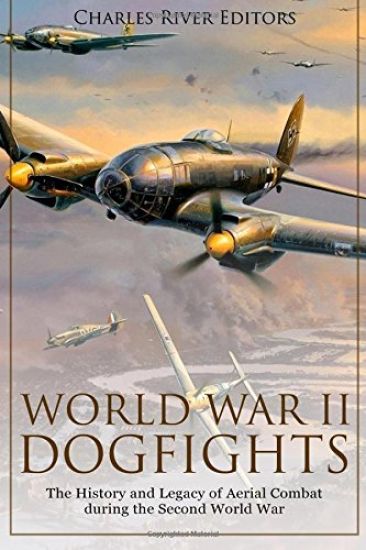
World War II Dogfights: The History and Legacy of Aerial Combat during the Second World War
*Includes pictures *Includes accounts of the fighting *Includes online resources and a bibliography for further reading Like lethal insects undergoing a series of metamorphoses into ever more mature and dangerous forms, military aircraft moved rapidly from stage to stage of their development as the 20th century progressed. The catalyst of war provided the swiftest impetus to this evolution. The new mechanized armies existing from the later period of World War I onward seized on the fresh technology and sought to squeeze every possible drop of advantage from it that the limits of science and the era's materials would allow. Many military thinkers and even aeronautical enthusiasts believed that blimps would remain the chief military aerial asset more or less forever. These men thought airplanes would play a secondary role at best, and might even prove a uselessly expensive gimmick soon to fade back into obscurity, leaving the majestic bulk of the dirigible as sole master of the skies. Thus, when World War I began, airplane improvements occurred in an ad hoc, almost accidental manner during the war. However, when pilots' mounting of armaments on airplanes proved a successful means of defeating other aircraft and even attacking men on the ground, a much more active and systematic development of warplanes began across the continent. Each advance prompted a countermeasure, as the two sides strove for primacy in a deadly, unforgiving environment which rewarded real advances in equipment and tactics with survival and punished poor ideas with death. Before long, relatively powerful, heavily armed aircraft buzzed through the skies over battle-stained Europe, tearing each other apart with furious gusts of machine gun fire and sending many of the vaunted dirigibles plunging, burning, to the ground. The new era of fighting aircraft arrived in dramatic fashion, raising successful pilots to celebrity or heroic status, and laying the groundwork for the tremendous potential of airpower to achieve its next logical expansion in World War II and beyond. By the time World War II arrived, the fighter airplane appeared as a much different beast than the purpose-built aircraft-hunting machines of 1917 and 1918. Though propellers still provided motive force, greatly increased engine power allowed these aircraft to slice through the sky at speeds of 200 mph, 300 mph, or even in excess of 400 mph when flying flat-out. Service ceilings jumped to 25,000 feet, 30,000 feet, or higher, altitudes unthinkable to World War I's aviators. Engineering and research and development began working scientifically to shave time off the climb rate and address a host of other problems and possibilities. At the start of the war, as the German Luftwaffe first flew against Poland and then the Royal Air Force, aircraft were already swift, metal-skinned hunter-killers in the sky, with enclosed cockpits, armor, and powerful loadouts of machine guns, 20mm cannons, and, soon, rockets. But an even bigger transformation awaited - the birth of the jet age, a future glimpsed briefly in the spectacular but doomed appearance of the Messerschmitt Me 262 near the war's end. World War II Dogfights: The History and Legacy of Aerial Combat during the Second World War looks at how technology and tactics evolved during the war. Along with pictures of important people, places, and events, you will learn about World War II dogfights like never before.
Black September: The History and Legacy of the Conflict Between the Palestinians and Jordan in 1970
*Includes pictures *Includes online resources and a bibliography for further reading "We had thousands of incidents of breaking the law, of attacking people. It was a very unruly state of affairs in the country and I continued to try. I went to Egypt, I called in the Arabs to help in any way they could - particularly as some of them were sponsoring some of these movements in one form or another - but without much success, and towards the end I felt I was losing control. In the last six months leading up to the crisis the army began to rebel. I had to spend most of my time running to those units that had left their positions and were going to the capital, or to some other part of Jordan, to sort out people who were attacking their families or attacking their soldiers on leave. I think that the gamble was probably the army would fracture along." - King Hussein of Jordan On May 14, 1948, the British Mandate officially expired. That same day, the Jewish National Council issued the Declaration of the Establishment of the State of Israel. About 10 minutes later, President Truman officially recognized the State of Israel, and the Soviet Union also quickly recognized Israel. However, the Palestinians and the Arab League did not recognize the new state, and the very next day, armies from Egypt, Syria, Lebanon and Iraq invaded the former British Mandate to squelch Israel, while Saudi Arabia assisted the Arab armies. Jordan would also get involved in the war, fighting the Israelis around Jerusalem. Initially, the Arab armies numbered over 20,000 soldiers, but the Zionist militia groups like the Lehi, Irgun and Haganah made it possible for Israel to quickly assemble the Israel Defense Forces, still known today simply as the IDF. By the end of 1948, the Israelis had over 60,000 soldiers and the Arab armies numbered over 50,000. In early 1949, Israel began signing armistices with Egypt, Jordan, and Syria, which left Israel in control of nearly 75% of the lands that were to be partitioned into the two states under the 1947 plan. Jordan now occupied Judea and Samaria, which later became known as the West Bank due to its position on the western bank of the Jordan River. Jordan also occupied three quarters of Jerusalem, with the Israelis controlling only about a quarter in the western part of the city. To the west, Egypt occupied the Gaza Strip. The new armistice lines became known as the "Green Line," and the conflict has continued to involve those lines and the issues that were contested in a war now nearly 70 years old. In early June 1967, the Israelis captured Jordanian intelligence that indicated an invasion was imminent. On June 5, the Israelis launched a preemptive attack that knocked out the air forces of its Arab neighbors. Over the next six days, the Israelis overwhelmed the Egyptians in the west, destroying thousands of tanks and capturing the Gaza Strip and the entire Sinai Peninsula. At the same time, Israel drove the Jordanians out of Jerusalem and the West Bank, and it captured the Golan Heights from Syria near the border of Lebanon. With realities changing on the ground, Palestinian resistance changed tactics and locations, and the tension caused by Palestinian attacks originating from Jordan would eventually lead to the expulsion of the PLO from Jordan. In conjunction with that, the notorious Palestinian group, Black September, would launch one of the most famous terrorist attacks of the 20th century at the Olympics in Munich in 1972, and that would touch off some of the Israeli Mossad's most legendary operations as the Israelis sought to track down those responsible for the attack. Black September: The History and Legacy of the Conflict Between the Palestinians and Jordan in 1970 looks at the fighting and its effects on the Middle East. Along with pictures and a bibliography, you will learn about Black September like never before.
Black September: The History and Legacy of the Conflict Between the Palestinians and Jordan in 1970
*Includes pictures *Includes online resources and a bibliography for further reading "We had thousands of incidents of breaking the law, of attacking people. It was a very unruly state of affairs in the country and I continued to try. I went to Egypt, I called in the Arabs to help in any way they could - particularly as some of them were sponsoring some of these movements in one form or another - but without much success, and towards the end I felt I was losing control. In the last six months leading up to the crisis the army began to rebel. I had to spend most of my time running to those units that had left their positions and were going to the capital, or to some other part of Jordan, to sort out people who were attacking their families or attacking their soldiers on leave. I think that the gamble was probably the army would fracture along." - King Hussein of Jordan On May 14, 1948, the British Mandate officially expired. That same day, the Jewish National Council issued the Declaration of the Establishment of the State of Israel. About 10 minutes later, President Truman officially recognized the State of Israel, and the Soviet Union also quickly recognized Israel. However, the Palestinians and the Arab League did not recognize the new state, and the very next day, armies from Egypt, Syria, Lebanon and Iraq invaded the former British Mandate to squelch Israel, while Saudi Arabia assisted the Arab armies. Jordan would also get involved in the war, fighting the Israelis around Jerusalem. Initially, the Arab armies numbered over 20,000 soldiers, but the Zionist militia groups like the Lehi, Irgun and Haganah made it possible for Israel to quickly assemble the Israel Defense Forces, still known today simply as the IDF. By the end of 1948, the Israelis had over 60,000 soldiers and the Arab armies numbered over 50,000. In early 1949, Israel began signing armistices with Egypt, Jordan, and Syria, which left Israel in control of nearly 75% of the lands that were to be partitioned into the two states under the 1947 plan. Jordan now occupied Judea and Samaria, which later became known as the West Bank due to its position on the western bank of the Jordan River. Jordan also occupied three quarters of Jerusalem, with the Israelis controlling only about a quarter in the western part of the city. To the west, Egypt occupied the Gaza Strip. The new armistice lines became known as the "Green Line," and the conflict has continued to involve those lines and the issues that were contested in a war now nearly 70 years old. In early June 1967, the Israelis captured Jordanian intelligence that indicated an invasion was imminent. On June 5, the Israelis launched a preemptive attack that knocked out the air forces of its Arab neighbors. Over the next six days, the Israelis overwhelmed the Egyptians in the west, destroying thousands of tanks and capturing the Gaza Strip and the entire Sinai Peninsula. At the same time, Israel drove the Jordanians out of Jerusalem and the West Bank, and it captured the Golan Heights from Syria near the border of Lebanon. With realities changing on the ground, Palestinian resistance changed tactics and locations, and the tension caused by Palestinian attacks originating from Jordan would eventually lead to the expulsion of the PLO from Jordan. In conjunction with that, the notorious Palestinian group, Black September, would launch one of the most famous terrorist attacks of the 20th century at the Olympics in Munich in 1972, and that would touch off some of the Israeli Mossad's most legendary operations as the Israelis sought to track down those responsible for the attack. Black September: The History and Legacy of the Conflict Between the Palestinians and Jordan in 1970 looks at the fighting and its effects on the Middle East. Along with pictures and a bibliography, you will learn about Black September like never before.
Los Filisteos: La Historia de los Enemigos Más Notorios de los Antiguos Israelitas

Los Filisteos: La Historia de los Enemigos Más Notorios de los Antiguos Israelitas

Charles River

Createspace Independent Publishing Platform
2017
nidottu
"Goliat se detuvo ante los soldados israelitas, y los desafi ' Para qu est n ordenando sus filas para la batalla? No soy yo un filisteo? Y no est n ustedes al servicio de Sa l? Por qu no escogen a alguien que se me enfrente? Si es capaz de hacerme frente y matarme, nosotros les serviremos a ustedes; pero, si yo lo venzo y lo mato, ustedes ser n nuestros esclavos y nos servir n'. Dijo adem s el filisteo: ' Yo desaf o hoy al ej rcito de Israel Elijan a un hombre que pelee conmigo ' (...) David le contest 'T vienes contra m con espada, lanza y jabalina, pero yo vengo a ti en el nombre del Se or Todopoderoso, el Dios de los ej rcitos de Israel, a quien has desafiado. Hoy mismo el Se or te entregar en mis manos; y yo te matar y te cortar la cabeza. Hoy mismo echar los cad veres del ej rcito filisteo a las aves del cielo y a las fieras del campo, y todo el mundo sabr que hay un Dios en Israel'". (I Samuel 17 Santa Biblia NVI) Hoy en d a, el t rmino "filisteo" es con frecuencia usado como un eufemismo para describir a una persona particularmente tosca, inculta, ignorante y posiblemente violenta. La mayor a de las personas probablemente no conoce la etimolog a de la palabra cuando la usan, y aquellos que s , probablemente s lo conozcan a los filisteos como villanos del Antiguo Testamento, enemigos eternos de los hebreos antes e inmediatamente despu s de que stos formaran el Reino de Israel. Otros tal vez conozcan a los filisteos gracias a la historia B blica de David y Goliat, puesto que el "gigante" era no s lo mucho m s grande que David, sino tambi n un l der filisteo que comandaba una gran hueste de hombres. Aunque el Viejo Testamento proporciona una fuente fiable para algunos aspectos de la cultura filistea, naturalmente los pinta como un grupo de guerreros sedientos de sangre cuyo nico prop sito era oprimir al pueblo hebreo/israelita. Al corroborarse con fuentes antiguas de Egipto y Mesopotamia, en conjunto con estudios arqueol gicos modernos, una examinaci n revela que la reputaci n que los filisteos recibieron del Antiguo Testamento era parcialmente merecida, pero tambi n que su cultura abarcaba mucho m s. De hecho, la evidencia indica que as como los filisteos eran una sociedad guerrera que luch con los israelitas por un n mero de a os, tambi n desarrollaron aspectos avanzados de su cultura, incluyendo un gobierno sofisticado, una religi n nica, y arte (especialmente alfarer a). Puede que los filisteos no hayan desarrollado un vasto imperio como lo hicieran los egipcios, babilonios y asirios, pero sus contribuciones a la historia del Antiguo Oriente Pr ximo ciertamente no fue m nima tampoco. La presencia e influencia de los filisteos en la historia del Antiguo Oriente fue breve, y su salida del registro hist rico fue especialmente r pida, pero mientras estuvieron presentes fueron una considerable fuerza en la regi n. Los filisteos: La historia de los enemigos m s notorios de los antiguos israelitas ofrece una mirada a la historia de una de las m s famosas sociedades mencionadas en la Biblia, en conjunto con im genes de personas importantes, lugares y eventos. Aprender s sobre los filisteos como nunca antes, y en poco tiempo.