Kirjojen hintavertailu – 12 903 727 kirjaa ja 27 kauppaa
Kirjailija
Charles River
Kirjat ja teokset yhdessä paikassa: 4 673 kirjaa, julkaisuja vuosilta 2013–2022, suosituimpiin kuuluu William Powell and Myrna Loy: The Lives and Careers of One of Classical Hollywood's Most Iconic Duos. Vertaile teosten hintoja ja tarkista saatavuus suomalaisista kirjakaupoista.
*Includes pictures *Includes accounts of life in the trenches *Includes an online bibliography for further reading World War I, also known in its time as the "Great War" or the "War to End all Wars", was an unprecedented holocaust in terms of its sheer scale. Fought by men who hailed from all corners of the globe, it saw millions of soldiers do battle in brutal assaults of attrition which dragged on for months with little to no respite. Tens of millions of artillery shells and untold hundreds of millions of rifle and machine gun bullets were fired in a conflict that demonstrated man's capacity to kill each other on a heretofore unprecedented scale, and as always, such a war brought about technological innovation at a rate that made the boom of the Industrial Revolution seem stagnant. The enduring image of World War I is of men stuck in muddy trenches, and of vast armies deadlocked in a fight neither could win. It was a war of barbed wire, poison gas, and horrific losses as officers led their troops on mass charges across No Man's Land and into a hail of bullets. While these impressions are all too true, they hide the fact that trench warfare was dynamic and constantly evolving throughout the war as all armies struggled to find a way to break through the opposing lines. Most books and documentaries about the war focus on the carnage of the trenches, depicting the ceaseless bombardment and sniping, and the assaults and counterattacks that took millions of lives. This was the experience of most frontline soldiers during that great conflict, but it was not the only experience. There was another war going on beneath the trenches, a war of tunnels and mines fought by men who didn't see sunlight for days at a time and who lived in constant fear of cave-ins and enemy detection. These men, who had mostly been miners in civilian life, lived a twilight existence, working long hours in silence and near darkness while great battles raged overhead. They suffered from fatigue, stress, and the knowledge that they could be killed at any time by an unseen enemy. Despite this, they persevered, and the mines they laid under enemy trench systems turned the tide of at least one major battle. Though World War I is almost synonymous with trench warfare, that method of combat was nothing new. There had been extensive use of trenches during the later stages of the American Civil War (1864-1865), and trench warfare was constant during the Second Boer War (1899-1902), the Russo-Japanese War (1904-1905), and the Balkan Wars (1912-1913). These conflicts showed that modern firepower combined with entrenched positions gave a decisive advantage to the defender, yet European observers failed to learn any lessons from these conflicts, and the scale of trench warfare in World War I far eclipsed anything seen before or since, especially on the Western Front. World War I was the first truly industrial war, and it created a paradigm which reached its zenith with World War II and towards which virtually all equipment, innovation and training were dedicated throughout the Cold War and the remainder of the 20th century. To this day, modern warfare remains synonymous with tanks and mass infantry battles, although a confrontation of this nature has not occurred (except briefly during Operation Desert Storm) since World War II. World War I on the Ground: The History and Legacy of Life in the Trenches analyzes the technological advancements in weaponry that produced the deadliest conflict in history up to that time. Along with pictures of important people, places, and events, you will learn about life in the trenches like never before.
*Includes pictures *Includes accounts of life in the trenches *Includes an online bibliography for further reading World War I, also known in its time as the "Great War" or the "War to End all Wars", was an unprecedented holocaust in terms of its sheer scale. Fought by men who hailed from all corners of the globe, it saw millions of soldiers do battle in brutal assaults of attrition which dragged on for months with little to no respite. Tens of millions of artillery shells and untold hundreds of millions of rifle and machine gun bullets were fired in a conflict that demonstrated man's capacity to kill each other on a heretofore unprecedented scale, and as always, such a war brought about technological innovation at a rate that made the boom of the Industrial Revolution seem stagnant. The enduring image of World War I is of men stuck in muddy trenches, and of vast armies deadlocked in a fight neither could win. It was a war of barbed wire, poison gas, and horrific losses as officers led their troops on mass charges across No Man's Land and into a hail of bullets. While these impressions are all too true, they hide the fact that trench warfare was dynamic and constantly evolving throughout the war as all armies struggled to find a way to break through the opposing lines. Most books and documentaries about the war focus on the carnage of the trenches, depicting the ceaseless bombardment and sniping, and the assaults and counterattacks that took millions of lives. This was the experience of most frontline soldiers during that great conflict, but it was not the only experience. There was another war going on beneath the trenches, a war of tunnels and mines fought by men who didn't see sunlight for days at a time and who lived in constant fear of cave-ins and enemy detection. These men, who had mostly been miners in civilian life, lived a twilight existence, working long hours in silence and near darkness while great battles raged overhead. They suffered from fatigue, stress, and the knowledge that they could be killed at any time by an unseen enemy. Despite this, they persevered, and the mines they laid under enemy trench systems turned the tide of at least one major battle. Though World War I is almost synonymous with trench warfare, that method of combat was nothing new. There had been extensive use of trenches during the later stages of the American Civil War (1864-1865), and trench warfare was constant during the Second Boer War (1899-1902), the Russo-Japanese War (1904-1905), and the Balkan Wars (1912-1913). These conflicts showed that modern firepower combined with entrenched positions gave a decisive advantage to the defender, yet European observers failed to learn any lessons from these conflicts, and the scale of trench warfare in World War I far eclipsed anything seen before or since, especially on the Western Front. World War I was the first truly industrial war, and it created a paradigm which reached its zenith with World War II and towards which virtually all equipment, innovation and training were dedicated throughout the Cold War and the remainder of the 20th century. To this day, modern warfare remains synonymous with tanks and mass infantry battles, although a confrontation of this nature has not occurred (except briefly during Operation Desert Storm) since World War II. World War I on the Ground: The History and Legacy of Life in the Trenches analyzes the technological advancements in weaponry that produced the deadliest conflict in history up to that time. Along with pictures of important people, places, and events, you will learn about life in the trenches like never before.
*Includes pictures *Includes descriptions and accounts of the Porcelain Tower *Includes online resources and a bibliography for further reading "This porcelain tower is the best of all, displaying the talents and intelligence of Chinese craftsmen...and all of them... I will write a poem to record it, juxtaposing it with all the wonders of the world...and let it be known that I, as a Christian, could be inspired by a pagan temple in China." - Dutch traveler, artist, and historian Johan Nieuhof The tremendous temples, captivating churches, magnificent mosques, and palatial places of worship around the world come in all shapes and sizes, and pay tribute to an array of gods and deities, but they all share one thing in common. These glorious structures, the pride and joy of a religion, are sacred spaces for prayer, meditation, and the veneration of one's god or gods. As such, they are designed and adorned with the most divine and irreplaceable hallmarks to honor their holy fathers and mothers. While the world today is a far cry from perfect, laws, for the most part, protect these places from those who hold misguided beliefs or harbor misplaced resentment towards its communities. The oppression of religious groups is a sin only few nations are not guilty of at some point in time. It is also an archaic mindset many would like to believe has been left in the past and has since evolved. While not yet nonexistent, they are arguably much more subtle in most developed countries today. But once upon a time - perhaps surprisingly to some, not too long ago - the harmonious coexistence of these religious buildings was a dream that seemed impossible to achieve due to the distortion of scriptures and canons. Worst of all, as evident in history, time and time again, many of those who held the most toxic of these convictions were those who held the highest authority. The cold-blooded massacres of so-called heretics and infidels, the fatal stifling of rich religious cultures, and the heartless destruction of centuries-old prayer houses and the priceless artifacts within them are just some of the many consequences that resulted from the rampant abuse of power practiced by past (and some present) sovereigns and ecclesiastical authorities. Most are well aware of the atrocities caused by the Crusades, the Thirty Years' War, and other horrible wars and revolts inspired by spiritual clashes in the West. The story of the Porcelain Tower of Nanjing includes all of these aspects, and then some. Its origins come from a cradle of creativity and enlightenment fostered by one fabled emperor from the Ming Dynasty bloodline; indeed, it was the pi ce de r sistance of his career. The Porcelain Tower's history also bore witness to an epoch of turbulence in Eastern history, set in one of the oldest countries in existence - China. The inimitable pagoda towered proudly over the city for some 4 centuries, but it was precisely this perilous patch that would claim what was once considered one of the Seven Wonders of the World. The Porcelain Tower of Nanjing: The History and Legacy of One of China's Most Famous Buildings chronicles the remarkable story of the unique structure. Along with pictures depicting important people, places, and events, you will learn about the Porcelain Tower like never before.
"La Revoluci n Industrial fue otro de esos extraordinarios saltos en la historia de la civilizaci n.: --Stephen Gardiner La dominaci n mundial es una visi n que la mayor a de los reyes, reinas y emperadores solo pueden tener en sue os y es un camino poco recorrido por una raz n muy simple. Requiere, sobre todo, paciencia, lo mismo que habilidad, tenacidad y un plan de acci n impenetrable. El nico que alguna vez estuvo cerca de este imposible nivel de prestigio no es otro que el legendario Imperio Brit nico. Fue en el reinado de Enrique VII de Inglaterra cuando se plante por primera vez esta ambiciosa idea de expansi n global. En marzo de 1496, el rey otorg una carta de exploraci n a John Cabot, que pilotear a exitosamente un viaje que dar a como resultado la ocupaci n de una isla deshabitada en Terranova. Aunque el segundo viaje de Cabot termin en desastre, el coraje y la determinaci n que demostr en estas empresas inspiraron a los exploradores ingleses a organizar m s operaciones y a adue arse de los mares, ya que esperaban ver hasta qu l mites pod an llegar. El Imperio Brit nico: Historia y legado del surgimiento y ca da del Imperio m s famoso del mundo moderno examina la historia y legado de una de las eras m s importantes de la historia moderna. Junto con fotos de gente importante, lugares y eventos, usted aprender acerca del Imperio Brit nico como nunca antes.
"Como las hojas de los rboles as es la raza del hombre, - Ahora con el verdor de la juventud, ahora marchit ndose en el suelo; La siguiente primavera otra raza: A su turno caen, y a su turno surgen." - La Il ada Quiz s los m s famosos poemas picos jam s escritos, la Il ada y la Odisea han sido le dos por cerca de 3.000 a os, haciendo de ambos, dos de los escritos m s antiguos del mundo occidental. Los poemas hicieron f cilmente reconocibles a personajes como P ris, Helena, Odiseo, Aquiles, H ctor, y yax, y han influenciado a otros poetas antiguos como Virgilio, cuya Eneida claramente est modelada a partir de ellos. Los poemas picos literalmente pusieron a Troya en el mapa, motivando a Heinrich Schliemann a buscar y finalmente a encontrar la ciudad de Troya en el siglo XIX. Escritas seg n se cree hacia el siglo VIII o VII AEC, la Il ada y la Odisea sirvieron al entretenimiento y gu a moral de toda clase a los antiguos griegos, y a la fundaci n de la literatura occidental. Aunque hay debates acad micos acerca de la autor a de esta pica, por lo general se la atribuye a Homero. Dado que vivi hace casi 2800 a os, no es mucho lo que en realidad se sabe de Homero; incluso su lugar de nacimiento es objeto de discusi n, mas debido al dialecto griego en el que las obras que se le atribuyen fueron escritas, la creencia generalizada es que vivi en Jonia. El otro aspecto de la vida de Homero sobre la que casi todos concuerdan es que era un poeta ciego, posiblemente tambi n un bardo. Esto hace surgir la pregunta de c mo escribi su poes a pica, pero los especialistas asumen que probablemente la dict a un escriba, ya que el formato sugiere que est n compuestas por varias formas mucho m s breves de poes a oral. Incluso la gente que no sabe mucho de mitolog a griega antigua puede identificar a Aquiles, el Caballo de Troya, y a varios dioses que juegan un papel en la historia de la Guerra de Troya. La naturaleza sempiterna de la historia llev a que muchas grandes personalidades proclamaran ser descendientes de algunos de los personajes contenidos en ella; por ejemplo, se dice que Alejandro Magno dorm a cada noche, durante sus campa as, con una copia de la Il ada, una descripci n de la legendaria guerra que describe el ep tome de la guerra pre-hoplita, y que todav a se ense a en las academias militares de todo el mundo. La historia completa, desde sus caprichosos comienzos a su catastr fico final, ha llegado a los lectores modernos a trav s de las fuentes que han sobrevivido, y combinadas, ofrecen una biopsia del antiguo mito griego y de muchos de sus m s bellos elementos. A la mayor a de la gente se le podr a perdonar el creer equivocadamente que la Il ada abarca la historia completa de la Guerra de Troya, pero la Il ada cuenta la historia de apenas cuatro d as en el noveno a o de la contienda. En muchos aspectos, la Il ada es la historia de la "c lera de Aquiles," y de hecho es el subt tulo de algunas ediciones, pero para tener una idea completa de lo que ocurri en Troya entre los antiguos h roes Aquiles, H ctor, Menelao, y P ris, entre otros, los lectores deben acudir a fuentes (a menudo fragmentarias) que se extienden desde el siglo VIII AEC al per odo romano en el siglo I EC. De hecho, armar la historia es una de las intenciones de este poema pico. Otra intenci n de la Il ada es destacar la naturaleza del relato como un trabajo de mitolog a no de historia. Aunque sin duda hay elementos hist ricos en el relato, as como tambi n momentos que son como la semilla de la actividad cultual en la antigua Grecia, el nfasis est en los m todos narrativos que lo hacen mezcla perdurable e ic nica de mito, leyenda y folclore. Ya que la Guerra de Troya incide en muchos de los antiguos mitos recogidos en la literatura y el teatro desde el Per odo Arcaico en adelante, siempre es importante comprender que la Guerra de Troya en s e
*Includes pictures *Includes descriptions and accounts of the Porcelain Tower *Includes online resources and a bibliography for further reading "This porcelain tower is the best of all, displaying the talents and intelligence of Chinese craftsmen...and all of them... I will write a poem to record it, juxtaposing it with all the wonders of the world...and let it be known that I, as a Christian, could be inspired by a pagan temple in China." - Dutch traveler, artist, and historian Johan Nieuhof The tremendous temples, captivating churches, magnificent mosques, and palatial places of worship around the world come in all shapes and sizes, and pay tribute to an array of gods and deities, but they all share one thing in common. These glorious structures, the pride and joy of a religion, are sacred spaces for prayer, meditation, and the veneration of one's god or gods. As such, they are designed and adorned with the most divine and irreplaceable hallmarks to honor their holy fathers and mothers. While the world today is a far cry from perfect, laws, for the most part, protect these places from those who hold misguided beliefs or harbor misplaced resentment towards its communities. The oppression of religious groups is a sin only few nations are not guilty of at some point in time. It is also an archaic mindset many would like to believe has been left in the past and has since evolved. While not yet nonexistent, they are arguably much more subtle in most developed countries today. But once upon a time - perhaps surprisingly to some, not too long ago - the harmonious coexistence of these religious buildings was a dream that seemed impossible to achieve due to the distortion of scriptures and canons. Worst of all, as evident in history, time and time again, many of those who held the most toxic of these convictions were those who held the highest authority. The cold-blooded massacres of so-called heretics and infidels, the fatal stifling of rich religious cultures, and the heartless destruction of centuries-old prayer houses and the priceless artifacts within them are just some of the many consequences that resulted from the rampant abuse of power practiced by past (and some present) sovereigns and ecclesiastical authorities. Most are well aware of the atrocities caused by the Crusades, the Thirty Years' War, and other horrible wars and revolts inspired by spiritual clashes in the West. The story of the Porcelain Tower of Nanjing includes all of these aspects, and then some. Its origins come from a cradle of creativity and enlightenment fostered by one fabled emperor from the Ming Dynasty bloodline; indeed, it was the pi ce de r sistance of his career. The Porcelain Tower's history also bore witness to an epoch of turbulence in Eastern history, set in one of the oldest countries in existence - China. The inimitable pagoda towered proudly over the city for some 4 centuries, but it was precisely this perilous patch that would claim what was once considered one of the Seven Wonders of the World. The Porcelain Tower of Nanjing: The History and Legacy of One of China's Most Famous Buildings chronicles the remarkable story of the unique structure. Along with pictures depicting important people, places, and events, you will learn about the Porcelain Tower like never before.
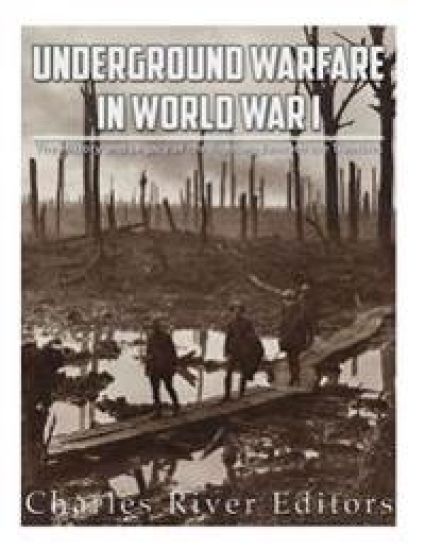
*Includes pictures *Includes accounts of mining by soldiers on both sides *Includes online resources and a bibliography for further reading "It was a pretty gloomy business. We started sinking this shaft and it filled with water, so we pumped it out with hand pumps-lift and force. We got down about 10 feet or so. It was heartbreaking-I hated it. But I had to keep my men going. The Boche Germans] saved us. We were making a lot of noise with spiling timbering the tunnels]. The Boche opposite us were Saxons, rather friendly, and they put up a notice on a blackboard 'No good your mining. We've tried. It can't be done.' The notice was in English. I reported this to my OC and it went up to HQ and they stopped the mine." - Major General F. Gordon Hyland World War I, also known in its time as the "Great War" or the "War to End all Wars", was an unprecedented holocaust in terms of its sheer scale. Fought by men who hailed from all corners of the globe, it saw millions of soldiers do battle in brutal assaults of attrition which dragged on for months with little to no respite. Tens of millions of artillery shells and untold hundreds of millions of rifle and machine gun bullets were fired in a conflict that demonstrated man's capacity to kill each other on a heretofore unprecedented scale, and as always, such a war brought about technological innovation at a rate that made the boom of the Industrial Revolution seem stagnant. World War I was the first truly industrial war, and it created a paradigm which reached its zenith with World War II and towards which virtually all equipment, innovation and training were dedicated throughout the Cold War and the remainder of the 20th century. To this day, modern warfare remains synonymous with tanks and mass infantry battles, although a confrontation of this nature has not occurred (except briefly during Operation Desert Storm) since World War II. The enduring image of World War I is of men stuck in muddy trenches, and of vast armies deadlocked in a fight neither could win. It was a war of barbed wire, poison gas, and horrific losses as officers led their troops on mass charges across No Man's Land and into a hail of bullets. While these impressions are all too true, they hide the fact that trench warfare was dynamic and constantly evolving throughout the war as all armies struggled to find a way to break through the opposing lines. Most books and documentaries about the war focus on the carnage of the trenches, depicting the ceaseless bombardment and sniping, and the assaults and counterattacks that took millions of lives. This was the experience of most frontline soldiers during that great conflict, but it was not the only experience. There was another war going on beneath the trenches, a war of tunnels and mines fought by men who didn't see sunlight for days at a time and who lived in constant fear of cave-ins and enemy detection. These men, who had mostly been miners in civilian life, lived a twilight existence, working long hours in silence and near darkness while great battles raged overhead. They suffered from fatigue, stress, and the knowledge that they could be killed at any time by an unseen enemy. Despite this, they persevered, and the mines they laid under enemy trench systems turned the tide of at least one major battle. Underground Warfare in World War I: The History and Legacy of the Fighting Beneath and Between the Trenches examines one of the most forgotten aspects of the fighting on the ground during the Great War. Along with pictures of important people, places, and events, you will learn about World War I's underground warfare like never before.
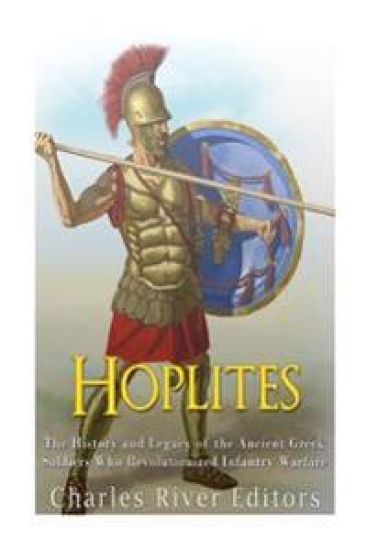
*Includes pictures *Includes online resources and a bibliography for further reading "The walls of Sparta were its young men, and its borders the points of their spears." - attributed to King Agesilaos Although the armies of the ancient Greek, or "Hellenic", city-states (poleis, singular polis) included both cavalry (hippeis) and light infantry (psiloi, peltastes, gymnetes), their mainstay was undoubtedly the heavy infantry known today as hoplites. Armed to the teeth with their distinctive round shield (aspis or hoplon), high-crested helmet (corys) and long spear (dory), the hoplites were some of the most efficient soldiers of their time. They fought in the tight phalanx formation, and beyond the confines of their small poleis, Greek hoplites were also prized as mercenaries throughout the ancient world. Most historians believe that the hoplite became the dominant infantry soldier in nearly all the Greek city-states around the 8th century BCE. Hoplites were responsible for acquiring their own equipment, so not every hoplite might have been equally armed, but considering the style of warfare, they needed as much uniformity as possible. Like most infantry outside of Greece, the hoplites also carried spears, but while the Persian weapons were short and light for example, the Greek spears were thick shafts anywhere between seven and nine feet long. These spears were topped by a 9-inch spearhead, with a "lizard-sticker" buttspike at the bottom which could be used as a secondary spearhead if the main weapon was snapped off, or to plant the spear upright when at rest. Each hoplite also carried a shortsword, designed specifically for thrusting in the close confines of a melee (the Spartan weapon, the xiphos, was so short as to be virtually a dagger, its blade barely over a foot long). For the Greeks, a hoplite was only as strong as the hoplite next to him; without hoplites on the sides, both flanks were exposed, and heavy infantry units are not mobile. Thus, they implemented the phalanx formation, one of history's most important military innovations. The phalanx was a line of infantry as wide across as the battlefield dictated, anything from five to 30 men deep, with each rank of men officered by a veteran. The formation also included an additional, expert file-closer at the back of each file, to keep the formation cohesive. The Spartans, due to the ferocity of their training and the intensity of their drill, were peerless at phalanx warfare. They were Greece's only full-time soldiers, with most other cities fielding citizen militias instead, so they avoided the traditional hoplite problem of edging to the right, into the "shadow" of their rankmate's shield. This edging meant that undisciplined formations often found themselves outflanked, and all armies, including the Spartans, fielded their elite unit (in the Spartans' case the hippeis) to the far right to keep the line steady. The left was traditionally reserved for the skiritai, the Spartan rangers, who considered it their post of honor. It was only with the advent of the more mobile Roman legion, and the defeat of phalanxes in battles like Cynoscephalae (197 BCE) and Pydna (168 BCE), that the hoplite phalanx was finally outclassed, although not without a long fight: the last of Alexander's successor kingdoms, Ptolemaic Egypt, only fell in 31 BCE. Hoplites: The History and Legacy of the Ancient Greek Soldiers Who Revolutionized Infantry Warfare examines how hoplites changed the world. Along with pictures depicting important people, places, and events, you will learn about hoplites like never before.
*Includes pictures *Includes accounts of mining by soldiers on both sides *Includes online resources and a bibliography for further reading "It was a pretty gloomy business. We started sinking this shaft and it filled with water, so we pumped it out with hand pumps-lift and force. We got down about 10 feet or so. It was heartbreaking-I hated it. But I had to keep my men going. The Boche Germans] saved us. We were making a lot of noise with spiling timbering the tunnels]. The Boche opposite us were Saxons, rather friendly, and they put up a notice on a blackboard 'No good your mining. We've tried. It can't be done.' The notice was in English. I reported this to my OC and it went up to HQ and they stopped the mine." - Major General F. Gordon Hyland World War I, also known in its time as the "Great War" or the "War to End all Wars", was an unprecedented holocaust in terms of its sheer scale. Fought by men who hailed from all corners of the globe, it saw millions of soldiers do battle in brutal assaults of attrition which dragged on for months with little to no respite. Tens of millions of artillery shells and untold hundreds of millions of rifle and machine gun bullets were fired in a conflict that demonstrated man's capacity to kill each other on a heretofore unprecedented scale, and as always, such a war brought about technological innovation at a rate that made the boom of the Industrial Revolution seem stagnant. World War I was the first truly industrial war, and it created a paradigm which reached its zenith with World War II and towards which virtually all equipment, innovation and training were dedicated throughout the Cold War and the remainder of the 20th century. To this day, modern warfare remains synonymous with tanks and mass infantry battles, although a confrontation of this nature has not occurred (except briefly during Operation Desert Storm) since World War II. The enduring image of World War I is of men stuck in muddy trenches, and of vast armies deadlocked in a fight neither could win. It was a war of barbed wire, poison gas, and horrific losses as officers led their troops on mass charges across No Man's Land and into a hail of bullets. While these impressions are all too true, they hide the fact that trench warfare was dynamic and constantly evolving throughout the war as all armies struggled to find a way to break through the opposing lines. Most books and documentaries about the war focus on the carnage of the trenches, depicting the ceaseless bombardment and sniping, and the assaults and counterattacks that took millions of lives. This was the experience of most frontline soldiers during that great conflict, but it was not the only experience. There was another war going on beneath the trenches, a war of tunnels and mines fought by men who didn't see sunlight for days at a time and who lived in constant fear of cave-ins and enemy detection. These men, who had mostly been miners in civilian life, lived a twilight existence, working long hours in silence and near darkness while great battles raged overhead. They suffered from fatigue, stress, and the knowledge that they could be killed at any time by an unseen enemy. Despite this, they persevered, and the mines they laid under enemy trench systems turned the tide of at least one major battle. Underground Warfare in World War I: The History and Legacy of the Fighting Beneath and Between the Trenches examines one of the most forgotten aspects of the fighting on the ground during the Great War. Along with pictures of important people, places, and events, you will learn about World War I's underground warfare like never before.
*Includes pictures *Includes accounts of the shipwreck *Includes online resources and a bibliography for further reading "The U-boat can fairly be described as Hitler's last card and he will play it for all he is worth." - Sir Stafford Cripps On the morning of November 9, 1942, the Dunedin Star, a 13,000-ton refrigerated cargo ship, was tugged off her moorings and nudged into the mouth of the Mersey River, that iconic entrance way to Liverpool Harbor and the British gateway to the outside world. On her port side, Fort Perch hung ghostly and silent in the dawn light, and the old Leashow Lighthouse blinked forlornly on the North Wirral headland. As she passed the harbor walls and entered open water, the harbor pilot shook the captain's hand and wished him Godspeed before clambering down to the pilot boat chugging softly alongside the ship. Orders were given, and in the engine room, the great wheels began to turn. Under power, the Dunedin Star passed alongside the Liver Building and the low bluffs of Crosby before gliding out into the shipping lanes. Within an hour, as the fog was beginning to clear, she entered upon the grey and restless waters of the Irish Sea, heading toward Saint Georges Channel and the wide-open, naked expanse of the North Atlantic Ocean. The Dunedin Star belonged to the Blue Star Line, a Liverpool-based company that had so far suffered a disproportionate loss of tonnage thanks to the attrition of war. That year alone, Blue Star could list the Avila Star, the Viking Star, the Andaluc a Star, the Empire Star and the Pacific Star all casualties of U-Boat attacks, and by the end of the year, the Ionic, Doric, Sultan, Adelaide, Wellington, Avelona, Arandora, Auckland, Napier, Almeda, Afric, Rodney, Imperial, Tacoma, and Scottish Stars would join that list. At the outbreak of war in 1939, there had been 38 Blue Star ships afloat, but by the end of the war, there would be only 9, and in total, 646 Blue Star seamen would lose their lives as a consequence of these losses. The Dunedin Star was en route to Egypt, via the Cape and Aden, a lengthy diversion around the southern tip of Africa made necessary by the effective closure of the Mediterranean to non-naval shipping. In North Africa, Allied and Axis powers remained at one another's throats, as the balance of the war was decided in a see-saw action of advance and retreat across the great deserts of Libya and Egypt. All told, it was indeed a nervous and sober compliment of crew and passengers that steamed cautiously over the most dangerous oceanic region ever known. And as time would tell, they had every right to be, because they were about to undergo some of the most famous trials and tribulations of the war. The Shipwreck of the MV Dunedin Star: The History of the Famous British Ship during World War II chronicles one of the most famous rescue stories of the war. Along with pictures depicting important people, places, and events, you will learn about the Dunedin Star like never before.