Kirjojen hintavertailu – 12 903 727 kirjaa ja 27 kauppaa
Kirjailija
Charles River
Kirjat ja teokset yhdessä paikassa: 4 673 kirjaa, julkaisuja vuosilta 2013–2022, suosituimpiin kuuluu William Powell and Myrna Loy: The Lives and Careers of One of Classical Hollywood's Most Iconic Duos. Vertaile teosten hintoja ja tarkista saatavuus suomalaisista kirjakaupoista.
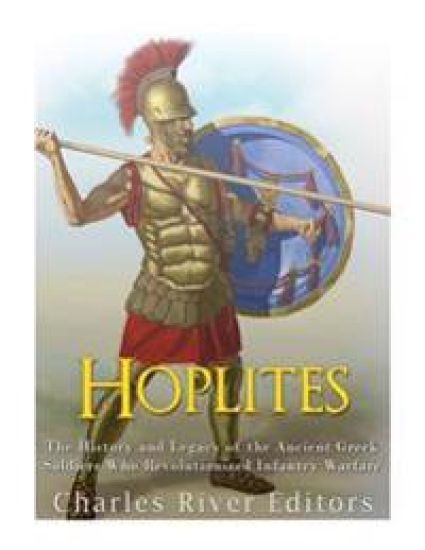
*Includes pictures *Includes online resources and a bibliography for further reading "The walls of Sparta were its young men, and its borders the points of their spears." - attributed to King Agesilaos Although the armies of the ancient Greek, or "Hellenic", city-states (poleis, singular polis) included both cavalry (hippeis) and light infantry (psiloi, peltastes, gymnetes), their mainstay was undoubtedly the heavy infantry known today as hoplites. Armed to the teeth with their distinctive round shield (aspis or hoplon), high-crested helmet (corys) and long spear (dory), the hoplites were some of the most efficient soldiers of their time. They fought in the tight phalanx formation, and beyond the confines of their small poleis, Greek hoplites were also prized as mercenaries throughout the ancient world. Most historians believe that the hoplite became the dominant infantry soldier in nearly all the Greek city-states around the 8th century BCE. Hoplites were responsible for acquiring their own equipment, so not every hoplite might have been equally armed, but considering the style of warfare, they needed as much uniformity as possible. Like most infantry outside of Greece, the hoplites also carried spears, but while the Persian weapons were short and light for example, the Greek spears were thick shafts anywhere between seven and nine feet long. These spears were topped by a 9-inch spearhead, with a "lizard-sticker" buttspike at the bottom which could be used as a secondary spearhead if the main weapon was snapped off, or to plant the spear upright when at rest. Each hoplite also carried a shortsword, designed specifically for thrusting in the close confines of a melee (the Spartan weapon, the xiphos, was so short as to be virtually a dagger, its blade barely over a foot long). For the Greeks, a hoplite was only as strong as the hoplite next to him; without hoplites on the sides, both flanks were exposed, and heavy infantry units are not mobile. Thus, they implemented the phalanx formation, one of history's most important military innovations. The phalanx was a line of infantry as wide across as the battlefield dictated, anything from five to 30 men deep, with each rank of men officered by a veteran. The formation also included an additional, expert file-closer at the back of each file, to keep the formation cohesive. The Spartans, due to the ferocity of their training and the intensity of their drill, were peerless at phalanx warfare. They were Greece's only full-time soldiers, with most other cities fielding citizen militias instead, so they avoided the traditional hoplite problem of edging to the right, into the "shadow" of their rankmate's shield. This edging meant that undisciplined formations often found themselves outflanked, and all armies, including the Spartans, fielded their elite unit (in the Spartans' case the hippeis) to the far right to keep the line steady. The left was traditionally reserved for the skiritai, the Spartan rangers, who considered it their post of honor. It was only with the advent of the more mobile Roman legion, and the defeat of phalanxes in battles like Cynoscephalae (197 BCE) and Pydna (168 BCE), that the hoplite phalanx was finally outclassed, although not without a long fight: the last of Alexander's successor kingdoms, Ptolemaic Egypt, only fell in 31 BCE. Hoplites: The History and Legacy of the Ancient Greek Soldiers Who Revolutionized Infantry Warfare examines how hoplites changed the world. Along with pictures depicting important people, places, and events, you will learn about hoplites like never before.
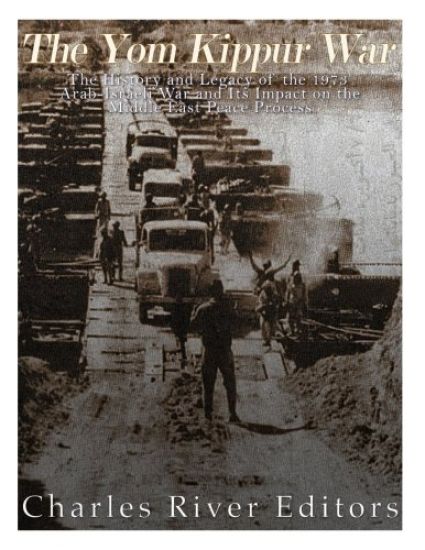
*Includes pictures *Includes accounts of the fighting *Includes online resources and a bibliography for further reading "War is not an independent phenomenon, but the continuation of politics by different means." - Carl von Clausewitz, On War In May 2011, President Barack Obama gave speeches about the Middle East that discussed the Israeli-Palestinian conflict, using terms like "final status issues," "1967 lines with mutually agreed swaps," and "demographic realities." Obama's speeches were strongly denounced by both the Palestinians and the Israelis, while political commentators across the world debated what Obama's speeches actually meant. Welcome to the Middle East conflict, a conflict that is technically 63 years old and counting but has its roots in over 2,000 years of history. With so much time and history, the peace process has become laden with unique, politically sensitive concepts like the right of return, contiguous borders, secure borders, demilitarized zones, and security requirements, with players like the Quartet, Palestinian Authority, Fatah, Hamas, the Arab League and Israel. Over time, it has become exceedingly difficult for even sophisticated political pundits and followers to keep track of it all. On October 6, 1973, Syria and Egypt caught Israel off guard during the Jewish holy holiday of Yom Kippur, surprise attacking the Sinai Peninsula and Golan Heights. Although they initially made gains, the Israelis turned the tide within a week, going on the counteroffensive and winning the war within 3 weeks. The Yom Kippur War was the last concerted invasion of Israel by conventional Arab armies, but it underscored how entangled the West and the Soviet Union had gotten in the region. The British and French had been allied with Israel in the 1950s, including during the Suez Canal War, and the United States assisted Israel by providing weapons as early as the 1960s. As a way of counteracting Western influence, the Soviets developed ties with the Arab nations. After the Yom Kippur War, President Jimmy Carter's administration sought to establish a peace process that would settle the conflict in the Middle East, while also reducing Soviet influence in the region. On September 17, 1978, after secret negotiations at the presidential retreat Camp David, Egyptian President Anwar Sadat and Israeli Prime Minister Menachem Begin signed a peace treaty between the two nations, in which Israel ceded the Sinai Peninsula to Egypt in exchange for a normalization of relations, making Egypt the first Arab adversary to officially recognize Israel. Carter also tried to create a peace process that would settle the rest of the conflict vis- -vis the Israelis and Palestinians, but it never got off the ground. For the Camp David Accords, Begin and Sadat won the Nobel Peace Prize. Begin had once been a leader of the paramilitary group Irgun, while Sadat had succeeded Nasser. Ultimately, the peace treaty may have cost Sadat his life: he was assassinated in 1981 by fundamentalist military officers during a victory parade. The Yom Kippur War: The History and Legacy of the 1973 Arab-Israeli War and Its Impact on the Middle East Peace Process looks at the last conventional war fought between the Israelis and Arabs, and the aftermath. Along with pictures and a bibliography, you will learn about the Yom Kippur War like never before.
*Includes pictures *Includes accounts of the shipwreck *Includes online resources and a bibliography for further reading "The U-boat can fairly be described as Hitler's last card and he will play it for all he is worth." - Sir Stafford Cripps On the morning of November 9, 1942, the Dunedin Star, a 13,000-ton refrigerated cargo ship, was tugged off her moorings and nudged into the mouth of the Mersey River, that iconic entrance way to Liverpool Harbor and the British gateway to the outside world. On her port side, Fort Perch hung ghostly and silent in the dawn light, and the old Leashow Lighthouse blinked forlornly on the North Wirral headland. As she passed the harbor walls and entered open water, the harbor pilot shook the captain's hand and wished him Godspeed before clambering down to the pilot boat chugging softly alongside the ship. Orders were given, and in the engine room, the great wheels began to turn. Under power, the Dunedin Star passed alongside the Liver Building and the low bluffs of Crosby before gliding out into the shipping lanes. Within an hour, as the fog was beginning to clear, she entered upon the grey and restless waters of the Irish Sea, heading toward Saint Georges Channel and the wide-open, naked expanse of the North Atlantic Ocean. The Dunedin Star belonged to the Blue Star Line, a Liverpool-based company that had so far suffered a disproportionate loss of tonnage thanks to the attrition of war. That year alone, Blue Star could list the Avila Star, the Viking Star, the Andaluc a Star, the Empire Star and the Pacific Star all casualties of U-Boat attacks, and by the end of the year, the Ionic, Doric, Sultan, Adelaide, Wellington, Avelona, Arandora, Auckland, Napier, Almeda, Afric, Rodney, Imperial, Tacoma, and Scottish Stars would join that list. At the outbreak of war in 1939, there had been 38 Blue Star ships afloat, but by the end of the war, there would be only 9, and in total, 646 Blue Star seamen would lose their lives as a consequence of these losses. The Dunedin Star was en route to Egypt, via the Cape and Aden, a lengthy diversion around the southern tip of Africa made necessary by the effective closure of the Mediterranean to non-naval shipping. In North Africa, Allied and Axis powers remained at one another's throats, as the balance of the war was decided in a see-saw action of advance and retreat across the great deserts of Libya and Egypt. All told, it was indeed a nervous and sober compliment of crew and passengers that steamed cautiously over the most dangerous oceanic region ever known. And as time would tell, they had every right to be, because they were about to undergo some of the most famous trials and tribulations of the war. The Shipwreck of the MV Dunedin Star: The History of the Famous British Ship during World War II chronicles one of the most famous rescue stories of the war. Along with pictures depicting important people, places, and events, you will learn about the Dunedin Star like never before.
*Includes pictures *Includes excerpts of the Popol Vuh *Includes online resources and a bibliography for further reading Many ancient civilizations have influenced and inspired people in the 21st century. The Greeks and Romans continue to fascinate the West today. But of all the world's civilizations, none have intrigued people more than the Mayans, whose culture, astronomy, language, and mysterious disappearance all continue to captivate people. In 2012 especially, there was a renewed focus on the Mayans, whose advanced calendar led many to speculate the world would end on the same date the Mayan calendar ends. The focus on the "doomsday" scenario, however, overshadowed the Mayans' true contribution to astronomy, language, sports, and art. Unlike most of the world's sacred books - the Quran, the Bible or the I-Ching for example - nobody knows the universal name, if there ever was one, for the Maya's collection of myths. Instead, the title that has been passed down, the "Popol Vuh," appears to be the specific title given to a particular copy of these tales. Its meaning, roughly translated as the Council Book, refers to the special role of this text: it was the shared property of the council of lords that ruled the Quich kingdom and was apparently regularly consulted by that body for advice to guide their rule. However, in the opening sections, the scribes who penned the text also give it several other names, including "the Light That Came from Beside the Sea," "Our Place in the Shadows" and "The Dawn of Life" (pg 63). All of these names were originally in K'ichean Maya, the language spoken by the Maya of the Quich Kingdom and its neighboring regions. The first of these names refers to a pilgrimage by the second generation of Quich lords in Part V to the Yucatan coast to acquire a copy of at least a portion of the original text. The second refers to Part IV, the period before the first Dawn (the "Shadows") when the ancestral Quich earned their particular right to rule. The final name refers to Part I, when the first gods created all of the various parts of life. This multiplicity of names and titles for sacred works is not uncommon, and perhaps comparable to the Bible being referred to as "the Good Book" or (in reference to the New Testament) "the Good News" or the "Gospel." The name Popol Vuh is itself controversial as the original text actually spells the name three different ways: "Popol Vuh", of course, but also "Pop Wuj" and "Popol Wuj." In general, the most correct form in contemporary Quiche spelling is probably "Popol Wuj", but as the text is best known in English with the word "Vuh", this convention will be maintained here (Eenriik 2014). There are a number of translations and editions of the Popol Vuh, which vary considerably in quality. Many early editions were not informed by the latest scholarship in Maya linguistics and sometimes the ways they translate names in particular can vary. This text will use the Second Edition (1996), translated by Dennis Tedlock and published by Simon and Schuster, for all of its quotations and page citations. The Popol Vuh: The History and Legacy of the Maya's Creation Myth and Epic Legends examines what's contained within and how the Popol Vuh survived to the present day. Along with pictures depicting important people, places, and events, you will learn about the Popol Vuh like never before.
*Includes pictures *Includes excerpts of the Popol Vuh *Includes online resources and a bibliography for further reading Many ancient civilizations have influenced and inspired people in the 21st century. The Greeks and Romans continue to fascinate the West today. But of all the world's civilizations, none have intrigued people more than the Mayans, whose culture, astronomy, language, and mysterious disappearance all continue to captivate people. In 2012 especially, there was a renewed focus on the Mayans, whose advanced calendar led many to speculate the world would end on the same date the Mayan calendar ends. The focus on the "doomsday" scenario, however, overshadowed the Mayans' true contribution to astronomy, language, sports, and art. Unlike most of the world's sacred books - the Quran, the Bible or the I-Ching for example - nobody knows the universal name, if there ever was one, for the Maya's collection of myths. Instead, the title that has been passed down, the "Popol Vuh," appears to be the specific title given to a particular copy of these tales. Its meaning, roughly translated as the Council Book, refers to the special role of this text: it was the shared property of the council of lords that ruled the Quich kingdom and was apparently regularly consulted by that body for advice to guide their rule. However, in the opening sections, the scribes who penned the text also give it several other names, including "the Light That Came from Beside the Sea," "Our Place in the Shadows" and "The Dawn of Life" (pg 63). All of these names were originally in K'ichean Maya, the language spoken by the Maya of the Quich Kingdom and its neighboring regions. The first of these names refers to a pilgrimage by the second generation of Quich lords in Part V to the Yucatan coast to acquire a copy of at least a portion of the original text. The second refers to Part IV, the period before the first Dawn (the "Shadows") when the ancestral Quich earned their particular right to rule. The final name refers to Part I, when the first gods created all of the various parts of life. This multiplicity of names and titles for sacred works is not uncommon, and perhaps comparable to the Bible being referred to as "the Good Book" or (in reference to the New Testament) "the Good News" or the "Gospel." The name Popol Vuh is itself controversial as the original text actually spells the name three different ways: "Popol Vuh", of course, but also "Pop Wuj" and "Popol Wuj." In general, the most correct form in contemporary Quiche spelling is probably "Popol Wuj", but as the text is best known in English with the word "Vuh", this convention will be maintained here (Eenriik 2014). There are a number of translations and editions of the Popol Vuh, which vary considerably in quality. Many early editions were not informed by the latest scholarship in Maya linguistics and sometimes the ways they translate names in particular can vary. This text will use the Second Edition (1996), translated by Dennis Tedlock and published by Simon and Schuster, for all of its quotations and page citations. The Popol Vuh: The History and Legacy of the Maya's Creation Myth and Epic Legends examines what's contained within and how the Popol Vuh survived to the present day. Along with pictures depicting important people, places, and events, you will learn about the Popol Vuh like never before.