Kirjojen hintavertailu – 12 903 725 kirjaa ja 27 kauppaa
Kirjailija
Charles River
Kirjat ja teokset yhdessä paikassa: 4 673 kirjaa, julkaisuja vuosilta 2013–2022, suosituimpiin kuuluu William Powell and Myrna Loy: The Lives and Careers of One of Classical Hollywood's Most Iconic Duos. Vertaile teosten hintoja ja tarkista saatavuus suomalaisista kirjakaupoista.
*Includes pictures depicting important people, places, and events. *Includes accounts of Jamestown written by settlers, including John Smith. *Explains the facts, mysteries, and myths surrounding John Smith's relationship with Pocahontas. *Includes a bibliography for further reading. "When you send againe I entreat you rather send but thirty Carpenters, husbandmen, gardiners, fishermen, blacksmiths, masons and diggers up of trees, roots, well provided; than a thousand of such as wee have: for except wee be able both to lodge them and feed them, the most will consume with want of necessaries before they can be made good for anything." - John Smith John Smith is one of the most common names in the English language and akin to the use of John Doe, but every Briton and American is familiar with the explorer and mercenary Captain John Smith, who helped found the first permanent English colony in the New World at Jamestown in 1607. Jamestown is fondly remembered today for being the first permanent English settlement in the colonies, but it was not fondly remembered by those who lived and died there. The English quickly learned it would be difficult to establish a permanent settlement because of the poor weather, the swampy terrain, the hostile natives living nearby, and the general inexperience and ineptitude of the English settlers. During their first winter, everyone nearly starved, and more than half of the settlers died. By the end of the winter of 1609-1610, known as the "starving time", barely 10% of the settlers were still alive. Nevertheless, Jamestown is remembered today because the settlement did survive through the hardships and go on to serve as the capital of the English colony for much of the 17th century. At the same time, one of the biggest reasons for its survival and fame today can be attributed to the local Native Americans, particularly Pocahontas, who has added both a human and romanticized, mythological element to Jamestown. She was the daughter of the paramount chief (mamanatowick) Powhatan, leader of an Algonquian-speaking native group in eastern Virginia. It was this group that Smith and the other English settlers came into contact with, and Smith credited her with saving him from being killed by the Native Americans. After that, Smith was able to establish relatively friendly relations and trade with the local inhabitants, ensuring Jamestown's survival. Jamestown has often been cast as the backdrop of this unique relationship, one that the colonists sought to portray as representative of relations with Native Americans. Subsequent retellings of the story have often fictitiously cast Smith and Pocahontas lovers and even husband and wife, portraying both characters in a more romantic and positive light. While their relationship has been the subject of countless historical texts and even children's books, it has no historical basis in fact, and there is still even some doubt over whether she saved Smith's life in the famous encounter that has ensured her name remains instantly recognizable nearly 400 years after her death. Jamestown: The History and Legacy of England's First Permanent American Settlement comprehensively analyzes the history of the settlement and its famous inhabitants. Along with pictures and a bibliography, you will learn about Jamestown like you never have before, in no time at all.
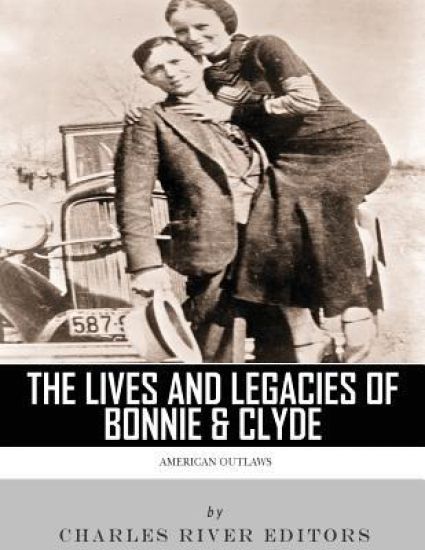
*Includes descriptions of Bonnie and Clyde and some of their most famous escapades by Barrow Gang member W. D. Jones *Includes Bonnie's poems "The Trail's End" and "Suicide Sal" *Includes pictures of Bonnie and Clyde, and important people, places, and events in their lives. *Includes a Bibliography for further reading. "You've read the story of Jesse James Of how he lived and died If you're still in need of something to read Here's the story of Bonnie and Clyde." - Bonnie Parker, "The Trail's End" America has always preferred heroes who weren't clean cut, an informal ode to the rugged individualism and pioneering spirit that defined the nation in previous centuries. While the Founding Fathers of the 18th century were revered, the early 19th century saw the glorification of frontier folk heroes like Davy Crockett and Daniel Boone. After the Civil War, the outlaws of the West were more popular than the marshals, with Jesse James and Billy the Kid finding their way into dime novels. And at the height of the Great Depression in the 1930s, there were the "public enemies", common criminals and cold blooded murderers elevated to the level of folk heroes by a public frustrated with their own inability to make a living honestly. There was no shortage of well known public enemies like John Dillinger and Baby Face Nelson, but none fascinated the American public as much as Bonnie and Clyde. While the duo and their Barrow Gang were no more murderous than other outlaws of the era, the duo's romantic relationship and the discovery of photographs at one of their hideouts added a more human dimension to Bonnie and Clyde, even as they were gunning down civilians and cops alike. When Bonnie and Clyde were finally cornered and killed in a controversial encounter with police, a fate they shared with many other outlaws of the period, their reputations were cemented. In some way though, the sensationalized version of their life on the run is less interesting than reality, which included actual human drama within the gang. American Outlaws: The Lives and Legacies of Bonnie and Clyde looks at the lives and crimes of the famous outlaws, but it also humanizes them and examines their relationship. Along with pictures of Bonnie Parker, Clyde Barrow and important people, places, and events in their lives, you will learn about two of America's most notorious outlaws like you never have before, in no time at all.

*Includes a Suggested Playlist of some of Pac's lesser known songs. *Discusses both the New York shooting and Las Vegas shooting in detail, explaining who was likely responsible for the shooting. *Discusses the beefs during Pac's life and the various conspiracy theories surrounding his death. At the renowned Coachella music festival in 2012, crowds looked on with awe and stunned silence as the world's most famous rapper took the stage to deliver a fiery performance of two of his well known hits alongside friend and former collaborator Snoop Dogg. The legendary Tupac Shakur had just overshadowed every other performer at the festival, despite the fact he'd been dead for over 15 years. The "2Pac Hologram" was only the latest buzzworthy headline that Tupac has generated long after he was infamously gunned down just off the strip in Las Vegas back in September 1996. Since his death, Shakur's estate has released far more music posthumously than Pac released in his all-too-brief career, amazing fans and music critics alike. In addition to the music that still keeps finding the light of day, the hologram performance was another fitting example that music fans continue to refuse to let him go, with some even going so far as to speculate that he faked his death. Why does Pac continue to hold such a high place in pop culture among anyone who grew up in the last 40 years? The answers can be found in his turbulent life, unsolved murder, and the fact that most of the topics of his music continue to be relevant today. Born to a single mother who later developed an addiction to crack, Pac's childhood was marred by constant moving, living in squalor, and eventually being homeless as a teenager in "The Jungle", Marin City. Always a fan of performing, Pac channeled his rage, energy, and charisma into a rap career, fueled by his inability to forget how he grew up and the social ills he witnessed. Rising from roadie for Digital Underground to his own spectacular single career, Pac rode his controversy and classic music to the national forefront, becoming front page news for both his arrests and hit records. Becoming the first man to have a #1 album while in jail, Pac was eventually bailed out by Suge Knight, CEO of Death Row Records, and from 1995-1996 became rap music's biggest name. He would release the first original double CD in rap history with All Eyez on Me in February 1996 and the classic Makaveli album, recorded and produced in just a week, in November 1996. Both went #1, but Pac wasn't around to see Makaveli's success, having been infamously gunned down after a Mike Tyson fight on September 7, 1996 in Las Vegas. His murder remains unsolved. Having become a rap icon cut down in the prime of his life and career, with the music to match the story of his life, Pac's name and legacy are sure to endure. Legends of Music: The Life and Legacy of Tupac Shakur details the life, career, and legacy of the world's most famous rapper, detailing how his upbringing shaped his philosophy and music, the theories surrounding his death, the conspiracy theories that he faked his death, and descriptions of Pac in the studio. Learn about Tupac Shakur like you never have before, in no time at all.
*Includes pictures *Includes accounts of the Capitol's construction and history written in the 19th century *Includes a bibliography for further reading *Includes a table of contents "The cornerstone was laid by Washington in 1793; the terrace was finished nearly a hundred years later, in 1891; and yet the Capitol will never be complete while the nation lasts. The impress of each succeeding generation will be found upon its walls, marking the intellectual, artistic and governmental advancement of the age. The great pile is national, American, human. On its walls is written the nation's history. Its corridors resound to the footsteps of her living heroes and sages; its every stone echoes the departed voices of her greatest dead." - George Hazelton For over two centuries, the capital of America has been located in Washington, D. C., and among all the iconic landmarks and monuments associated with the city, nothing is as conspicuous as the Capitol, the magnificent building that houses Congress and sits on Capitol Hill at the epicenter of the city. At the same time, even though the Capitol is now one of the most recognizable buildings in the world, the image everyone is familiar with took decades to achieve, and its grand scope belies its rather chaotic history. In fact, the Capitol was partially burned by the British during the War of 1812, and its now famous dome was still under construction while the nation fought itself during the Civil War. Moreover, it's easy to forget that the expansion of the country resulted in the addition of new Congressmen, requiring the expansion of the Capitol as the seat of the legislative branch. The Capitol truly remained a work in progress until the end of the 19th century, and until recently, it was possible to drive cars nearly to the steps leading up to the building. That changed in the wake of the attacks of September 11, 2001, and since then, much has been done to secure the grounds, including extending the property line outward, placing permanent barriers around the building, and adding a visitor center through which tourists can be routed. Even in this new era, however, it is easy for visitors in the Capitol to sense the history around every corner; as Kansas Congressman Kevin Yoder once put it, "Certainly in the Capitol you do get moments were you sort of take a deep breath and think of all the historic figures who have been in that building, like Abraham Lincoln, who have stood right in those same rooms to make the landmark decisions." The history of the Capitol also serves as a reminder that the building, like the nation, both shapes and is shaped by history. There are still singed walls from the War of 1812 under the marble fa ade, and microscopic examination could no doubt find cracks from the vibration of distant cannon fire during the Civil War. Of course, there is no way to calculate the wear and tear caused by the millions of feet that trudge through the Capitol's sacred halls each year, but through it all, the Capitol has managed to endure, just like the nation it represents. The United States Capitol Building: The History and Legacy of the Seat of Congress looks at the winding history of the building and how it has changed over time. Along with pictures of important people, places, and events, you will learn about the Capitol like never before, in no time at all.
*Includes pictures*Includes excerpts of contemporary accounts*Includes online resources and a bibliography"The many rumors regarding the flying disc became a reality yesterday when the intelligence office of the 509th Bomb group of the Eighth Air Force, Roswell Army Air Field, was fortunate enough to gain possession of a disc through the cooperation of one of the local ranchers and the sheriff's office of Chaves County." - A press release issued by the Roswell Army Air Field, July 8, 1947"We flew over it and within thirty seconds, you knew that was the place ... it was right by a dry lake. Man alive, we looked at that lake, and we all looked at each other. It was another Edwards, so we wheeled around, landed on that lake, taxied up to one end of it. It was a perfect natural landing field ... as smooth as a billiard table without anything being done to it". - Kelly Johnson, Lockheed's U-2 spy plane designerThe essence of the event commonly known as the Roswell Crash is that someone saw something in the sky during the summer of 1947. Days later someone else found some odd foil, paper and wood on the grounds of a ranch in the New Mexico desert nearly a hundred miles from Roswell. A day or two after that, the debris was taken to a military airbase in Roswell, New Mexico, where it remained overnight before the military flew it to another airbase in Ohio. The story of the Roswell Crash tends to focus on New Mexico, not on the traveling debris found on the ground. Ironically, the Roswell Crash never happened in Roswell. That's not to say there was no 1947 crash. Something did appear on the ground that appeared to have come from the sky-but it wasn't found anywhere near Roswell. Part of what was found was eventually moved to the airbase in Roswell where it remained overnight, inspiring the name the Roswell Crash. Few things in American history are as controversial as Roswell. The one undeniable fact is that something happened near Roswell, New Mexico, in 1947, but beyond that, the facts become murky as memories and evidence lose their luster over the years. That said, the impact of an unidentified object continues to mystify residents, visitors and the curious, and it has not only put Roswell on the map but has kept it there for thousands of tourists. Unlike many aspects of other conspiracy theories, Area 51 is a frequently-documented fact. UFO seekers can theorize to their heart's content about what might have gone on there or whether Area 51 even exists, but Area 51 is quite real. In simple terms, it is a place where the United States government conducted-and continues to conduct-tests, in a remote environment where civilians are not in jeopardy and enemies from foreign countries cannot observe or sabotage weaponry or strategy the U. S. might use against them. Assuming that other countries were doing the same, the U. S. also used this remote site to test equipment like the U-2 that would make it possible to spy on other countries and for other countries to do harm to the United States. In civilian terms, it is merely a location on a map in a remote part of the Nevada desert, near the tiny hamlet of Rachel. The tiny little group of local residents is so small that one source notes that Rachel has never even been home to a post office. Roswell & Area 51: The History and Mystery of the Two Most Famous UFO Conspiracy Sites in America looks at the places that have been an endless source of conspiracies for decades. Along with pictures of important people, places, and events, you will learn about Roswell and Area 51 like never before.
"G es Gracia, la Estrella Llameante es la Antorcha de la Raz n. Aquellos que poseen este conocimiento son en verdad Illuminati." - Adam Weishaupt "La palabra misma 'secreto' repugna en una sociedad libre y abierta; y nosotros como pueblo, de manera natural y a lo largo de la historia nos opusimos a las sociedades secretas, a los juramentos secretos, y a los procedimientos secretos..." - Presidente John F. Kennedy El surgimiento de sociedades secretas ha sido siempre una de las facetas m s fascinantes de la civilizaci n, un fen meno que ha estado presente desde el nacimiento de la humanidad. Incluso siglos despu s de ser fundadas, algunas de ellas contin an siendo bien conocidas, como la sociedad de los Caballeros Templarios, un grupo de guerreros armados que proced an de Tierra Santa. La Calavera y los Huesos y los Francmasones son tambi n nombres que de inmediato hacen sonar la campana. Pero de todas las sociedades secretas de la historia, la leyenda detr s de una sobrepasa al resto: los Illuminati. De las innumerables sociedades secretas que se han levantado y ca do desde la aurora de los tiempos, ninguna podr a acercarse a la notoriedad de los Illuminati. En a os recientes sobre todo, la legendaria orden ha protagonizado miles y miles de libros, art culos, documentales, pel culas, m sica y memes en internet. Es uno de los principales blancos de los especialistas en conspiraci n, al igual que la supuesta responsable de los simb licos mensajes subliminales ocultos en los medios de comunicaci n. Sin importar la veracidad detr s de cualquier teor a de la conspiraci n, no se puede negar el profundo impacto del grupo durante m s de dos siglos. Incluso aquellos que no encuentran nada impropio en la historia de los Illuminati, comprenden la importancia del misterio alrededor de todo lo que concierne a la sociedad, desde sus or genes en Baviera hasta su fundador, Adam Weishaupt, pasando por aquellos que llevaron a la sociedad a su apogeo. Numerosas teor as de conspiraci n surgidas en torno a los Illuminati, han sido desde hace mucho fuente de especulaci n, y la tendencia contin a en la actualidad. Los Illuminati: la Historia de una de las m s notorias sociedades secretas del mundo examina la verdadera historia de la influyente fraternidad, la de su creador, y la de los miembros que levantaron la estructura de la afamada sociedad. Este trabajo se pasea tambi n por el destino de los Illuminati en la edad moderna, de lo rid culo a lo desconcertante pasando por lo convincente. Junto a im genes que muestran gente, lugares, y eventos, usted aprender sobre los Illuminati como nunca antes.
La frontera entre M xico y Estados se extiende a lo largo de poco m s de doscientos a os de historia y dos mil millas de terreno, equivalentes a 3,180 kil metros. Esta l nea creada por el hombre, protagonista de una complicada historia, se ha fortalecido y solidificado con el paso de los a os. Sus significados tambi n han cambiado. En un principio era una idea, el fin aproximado e inh spito de un vasto imperio espa ol y el inicio de la "tierra de nadie". Despu s fue un trazo en un papel, una raya porosa, sin barreras f sicas, que en tiempos de paz se convirti en sitio de intercambio y cooperaci n, y en pocas de conflicto en terreno de choque no s lo de dos pueblos distintos, sino del Norte y el Sur de la geopol tica internacional. Hace dos siglos la frontera de Estados Unidos y M xico estaba formada por vastos desiertos y regiones peligrosas donde nadie quer a vivir, una l nea vagamente definida y poco vigilada. Hoy, en la segunda d cada del siglo XXI, a pesar de estar situada en uno de los h bitats m s inclementes, es la m s transitada del mundo; un pa s en s mismo considerando el volumen de operaciones econ micas que se llevan a cabo en sus proximidades, sin mencionar que se trata de una de las regiones m s vigiladas del planeta, incluso una zona de "guerra de baja intensidad", como la han denominado algunos expertos. Habr a que considerar, tan s lo para comparar, la frontera entre B lgica y Holanda, donde el cruce puede realizarse simplemente yendo de un caf a otro, sin que nadie se d cuenta cu ndo se ha cambiado de pa s. O la de Polonia y Ucrania, cuya frontera abierta est formada por hermosas planicies verdes decoradas con figuras labradas en la tierra. C mo pas la de M xico y EE. UU. -en relativamente poco tiempo- de un desierto a una franja superpoblada, violenta, din mica, boyante, culturalmente din mica, por donde pasa toda clase de mercanc as, legales e ilegales, en ambas direcciones? Curiosamente, hubo un tiempo en que los dos pa ses ni siquiera eran vecinos. Francia estaba entre ambos, en posesi n del extenso terreno de la Louisiana, donde Napole n esperaba restablecer un imperio franc s en el continente. En esa poca M xico ten a el oficial pero artificioso nombre de Nueva Espa a -aunque ya desde el siglo XVI los atlas nombraban el territorio como "Am rica Mexicana"- y Estados Unidos era un pa s aproximadamente del tama o del actual Reino Unido e Irlanda combinados. Las convulsiones en Europa pronto pusieron lado a lado a los dos pa ses m s notables del continente, los que m s dieron de qu hablar en todo el siglo XIX. Pero as como los ciudadanos normales de ambos pa ses han descubierto a lo largo de la historia buenas oportunidades en la vecindad, tambi n los grupos criminales de ambos lados han explotado este potencial, ofreciendo y demandando bienes en un intercambio perverso que hace da o a las dos naciones. Esto es en parte lo que ha llevado a la radicalizaci n de las posturas, llegando a sugerirse, en 2015, la construcci n de un nuevo muro como el de Berl n, pero inmensamente mayor, separando ya no al Este y al Oeste, sino al Norte y al Sur. La historia de la frontera entre Estados Unidos y M xico est todav a escribi ndose. sta es, hasta 2017, la pel cula de esta frontera nica; no la m s grande del mundo (la de Canad es mayor), ni la que separa a los m s ricos de los m s pobres (lejos est de la situaci n entre Sud frica y Suazilandia, por ejemplo), pero s la m s peculiar porque ha sabido unir con eficacia lo que parec a imposible conciliar.
*Includes pictures*Includes online resources and a bibliography for further reading "While nation-states have always desired boundaries, the significance and shape of those borders have changed over time." - Rachel St. JohnThe history of the border between Mexico and the United States extends alongside 200 years and 2,000 miles - the tortuous epic of a man-made line that has not only hardened and become more solid over time, but has changed meanings too. In the beginning, it was an idea - the approximate and inhospitable edge of the vast Spanish Empire and the beginning of no man's land. Then, it was a line on paper - a porous boundary with no physical barriers. In times of peace, it was a place of trade and cooperation; in times of conflict, it was the point where two different peoples clashed, as well as the meeting of the North and South of international geopolitics. Two centuries ago, the border was formed by vast deserts and dangerous regions in which nobody wanted to live - a vaguely defined and surveyed boundary. Today, in the second decade of the 21st century, despite being located in one of the most inclement habitats in the world, it is also the world's busiest. It functions like a country in itself considering the volume of economic operations carried out across the line, not to mention being one of the most monitored regions of the planet. Some experts have even called it a low-warfare zone. Consider, for comparison's sake, the border between Belgium and the Netherlands, where crossing means going from one pub to another, and it is hardly realized when one leaves one nation or the other. Or consider the open limits of Poland and Ukraine, which consists of beautiful green pastures decorated with all kinds of art. How did the border of Mexico and the United States transition from a wilderness to an overpopulated, violent, dynamic, buoyant, culturally dynamic land in such a relatively short time, where a plethora of legal and illegal goods cross in both directions? Curiously, there was a time when the two countries were not even neighbors. France was between them, possessing the vast land of the Louisiana territory, where Napoleon wanted to establish a French empire in the Americas. At that time, Mexico had the official but artificial name of "New Spain" - misleading, since atlases from the 16th century had already named it "America Mexicana"- and the United States was approximately the size of the present-day United Kingdom and Ireland combined. The disturbances in Europe soon put the two most conspicuous countries of the continent side by side, and these two North American nations garnered the world's attention in the 19th century. Certainly not everything has been bad in the relationship between the two nations. In fact, the border has developed its own traditions, history, and personality into one not entirely Mexican or entirely American. Timothy Brown, a scholar of the frontier and globalization, correctly points out that "to most Mexicans, their northern states, with half their nation's land but only one-fifth its people, seem too American, a bit alien, vaguely un-Mexican," and likewise, "to many Americans, their own Southwest sometimes seems similarly alien and terribly Hispanic." Thus, on numerous occasions, both countries have found along the line a way of helping each other for mutual benefit. By promoting the colonization of the far north from the late 19th to the early 20th century, President Porfirio D az helped the southern United States develop a thriving agricultural economy sustained by a Mexican labor force. The United States-Mexico Border: The Controversial History and Legacy of the Boundary between America and Mexico looks at the crucial boundary. Along with pictures of important people, places, and events, you will learn about the border like never before.
*Includes pictures*Includes ancient descriptions of Attica and Athens*Includes online resources and a bibliography for further reading According to Herodotus, the Persians offered the Athenians an alliance in 480 BCE. The other Greek city-states (polei) were understandably concerned that the Athenians, who had proved so crucial in defeating the Persians at Salamis, might take up the offer. The Athenians, however, responded, "If we were offered all the gold in the world or the most beautiful and fertile land imaginable, we would never be willing to join our common enemy and be party to the enslavement of Greece. First there is the burning and desecration of our temples and the images of our gods which compels us to extract from the perpetrators the greatest vengeance we can rather than come to terms with them. Then there is our Greek heritage, the bond of blood and language, our holy altars and sacrifices, and our common way of life, which it would ill become Athens to betray, as long as a single Athenian survives there will be no terms with Xerxes." In this statement, Athenian attitudes toward what it meant to be Greek are clearly and eloquently articulated. The core of being Greek lay in the fact that they shared a common outlook on life, rather than a common country. To an extent, that attitude has even prevailed into modern times; the 20th century Greek monarch, for example, held the title of "King of the Hellenes" rather than "King of Hellas." What, therefore, was the role - if any - of the land itself in shaping Greek (and particularly Athenian) attitudes toward themselves and their way of life? Did the land play any significant part at all in forming Greeks and Athenians? To answer these questions, it is essential to examine the impact of climate and landscape in the region known as Attica on the creation of Greek culture. The Greek world in the Classical period is not synonymous with modern day Greece but extended far more widely and included anywhere Greek was spoken, including southern Italy, Sicily, France, Spain, the eastern coast of modern day Turkey, and the settlements along the Black Sea and the Libyan coast. By the beginning of the 8th century BCE, Greeks were scattered throughout the Mediterranean and beyond. However, despite the fantastic tales and legends that came back to the homeland, most Greeks were constrained by the need to earn a living from their farms, the consequent daily calls on their time and - most importantly - the physical barriers imposed on them by the landscape in which they lived. It is in this context that any examination of the impact on Athens, or Attica, by its geography must be viewed. The Athenian polis was contiguous with Attica, a large triangular peninsula which pushed southeastward from the Greek mainland to the Aegean Sea. The city of Athens itself lay on a coastal plain surrounded by four mountains: Hymettos, Pentelikon, Parnes, and Aigaleos. In the 5th century, the city covered an area of approximately 2 square miles surrounding the Acropolis and was defended by a wall of approximately 4 miles in length. Athens is the best known of the ancient Greek cities and, as a result, Athens and Greece are often, yet incorrectly, seen as interchangeable terms. In many ways, Athens was exceptional in comparison with its fellow Greek city-states. The Athenians boasted of being autochthonous - that is, they claimed to be the original inhabitants of Attica and argued they had not come to the area from another region. This strong identification with the region of Attica, coupled with the actual physical geography of the area, was central to the way in which Athens developed, and it provides the underlying basis for any explanation as to why Athens became so exceptional in terms of its legacy and impact upon the world.