Kirjojen hintavertailu – 12 903 725 kirjaa ja 27 kauppaa
Kirjailija
Charles River
Kirjat ja teokset yhdessä paikassa: 4 673 kirjaa, julkaisuja vuosilta 2013–2022, suosituimpiin kuuluu William Powell and Myrna Loy: The Lives and Careers of One of Classical Hollywood's Most Iconic Duos. Vertaile teosten hintoja ja tarkista saatavuus suomalaisista kirjakaupoista.
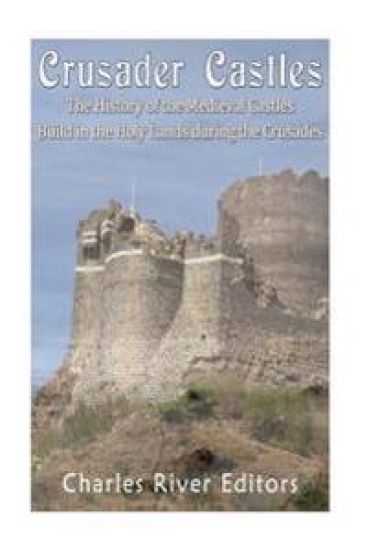
*Includes pictures *Profiles the various defensive features of castles and the technologies and weapons used by the sides attacking and defending them *Includes online resources and a bibliography for further reading A series of mountain chains frame the Levantine coast, growing in height as they approach modern-day Lebanon. These provided a natural defense along the important coast, and the few passes through these mountain ranges were the focal points of movement and communication. For this reason, these locations were where many crusader castles were erected. Bristling with fortifications, these impressive structures were occupied by orders of knights that came to the Holy Land with the Pope's blessing, and who have gained a most romantic status over history. These Crusaders were called al-Faranj ("Franks") by the Arabs in the Holy Land, reflecting the French origins of many of the knights, even though the knights, soldiers, and pilgrims came to the Holy Land from all over Europe, and in particular from southern Italy, Germany, and England. For the men who built and manned these castles, they were much more than buildings surrounded by stone walls or wooden palisades. They were also more than a headquarters for knights and their armies during battle, or a storehouse for goods in the remoteness of the Levant. These castles were the central focal point for those who held them and those trying to conquer them, and it would not be an exaggeration to claim that castles were the nexus for much activity and conflict within the Holy Lands. At the same time, the castles were filled with the hustle and bustle of activity caused by a wide range of actors even in times of relative peace and stability. Men-at-arms were the soldiers who manned the castle, protected the borders of the Crusader States, and followed the orders of their noble knight lords, but the castles also served as a gathering place for skilled craftsmen such as blacksmiths, potters, stone masons, bakers, carpenters, and the like. Many served as religious centers in their own right, containing at least one chapel of either Christian or Muslim faith. The Muslim efforts to reclaim and rule the Levant were just as important and interesting as those of the Crusaders. Initially led by the atabegs of Aleppo, and later by the renowned Saladin (known also as Salah Ed-Din), various Muslim forces took and retook the Holy City of Jerusalem. The cycle of conflicts between the Crusader states and the Muslim armies was disrupted in 1260 CE when the Mongols, having roved without obstruction across Eurasia, invaded the region with the support of the Armenians and some of the Crusader States. However, they were eventually defeated by the mighty Mamelukes of Egypt, who in turn focused their attention on consolidating their control over the Near East and eradicating the European presence in the region. Finally, in 1302 CE the Mamelukes conquered the last Crusader stronghold at Arwad, leaving one last remaining Crusader state - the Kingdom of Cyprus, which held out until it was invaded by the Ottomans in 1571 CE. Crusader Castles: The History of the Medieval Castles Built in the Holy Lands during the Crusades examines the construction of the castles, daily life inside of them, and the fighting over them during the Crusades. Along with pictures of important people, places, and events, you will learn about Crusader castles like never before.
*Includes pictures *Includes Villa's quotes about his own life *Includes online resources and a bibliography for further reading *Includes a table of contents "My sole ambition is to rid Mexico of the class that has oppressed her and given the people a chance to know what real liberty means. And if I could bring that about today by giving up my life, I would do it gladly." - Pancho Villa "Pancho Villa," people whispered at the beginning of the 20th century, "can march 100 miles without stopping, live 100 days without food, go 100 nights without sleep, and kill 100 men without remorse." The legend of Francisco Villa is full of heroism, tragedy and romance. It is the story of a poor farmer boy who became a bandit out of necessity, after avenging an injustice on his family; a military genius who flew from an oppressive government to lead the largest revolutionary army in his country's history, and defeated dictatorship to become Mexico s liberator, only to fall again in disgrace when his troops abandoned him or were massacred by the enemy. Pancho Villa and his cavalry, Mexicans point out with a certain amount of pride, invaded the United States, and although they came and tried to capture him, they never found him. This is, at least, the version that most of them know, but it's certainly not the same as in their textbooks. The story of Francisco Villa bypassed official censorship from generation to generation, like leaves sailing at full speed on the surface of a stream. But the historical reconstruction is full of nuances. Was he a freedom fighter, or a bandit? Was he a Mexican Robin Hood, or a thief and a murderer? Was he present when his troops invaded U. S. territory? Was the advance of his famous "Dorados" (the "golden ones," the name of his troops) the cause for joy, or terror among the people as they passed the countryside towards Mexico City? Pancho Villa s personality has been controversial since the very beginning of his career as a General of the revolutionary army. Many biographies have been written about him, the first of which dates back to only a few years after his death. Counting the number books who take one of those two sides-butcher or freedom fighter-would be impossible, but they would probably form two piles of equal size. Through them, readers can learn divergent tales about one of the most widely known Mexicans, both in his country and abroad. For many Mexicans, he is a hero. In schools, teachers still speak cautiously about him to new generations of children, who are amazed by the tough guy with hat and pistols. And the old, those who had heard about his exploits from their parents, declare that Villa himself will ride again through the mountains of Mexico, on the day when the poor can no longer stand and a new revolution explodes. As Octavio Paz eloquently put it, "The brutality and uncouthness of many of the revolutionary leaders has not prevented them from becoming popular myths. Villa still gallops through the north, in songs and ballads; Zapata dies at every popular fair. ... It is the Revolution, the magical word, the word that is going to change everything, that is going to bring us immense delight and a quick death." Pancho Villa: The Legendary Life of the Mexican Revolution's Most Famous General chronicles the controversial life of one of Mexico's most legendary fighters. Along with pictures of important people, places, and events, you will learn about Pancho Villa like never before, in no time at all.
*Includes pictures *Includes contemporary accounts of the agreements and their effects *Includes online resources and a bibliography for further reading When President Thomas Jefferson went ahead with the Louisiana Purchase, he wasn't entirely sure what was on the land he was buying, or whether the purchase was even constitutional. Ultimately, the Louisiana Purchase encompassed all or part of 15 current U. S. states and two Canadian provinces, including Arkansas, Missouri, Iowa, Oklahoma, Kansas, Nebraska, parts of Minnesota that were west of the Mississippi River, most of North Dakota, nearly all of South Dakota, northeastern New Mexico, Northern Texas, the portions of Montana, Wyoming, and Colorado east of the Continental Divide, and Louisiana west of the Mississippi River, including the city of New Orleans. In addition, the Purchase contained small portions of land that would eventually become part of the Canadian provinces of Alberta and Saskatchewan. The purchase, which immediately doubled the size of the United States at the time, still comprises around 23 percent of current American territory. With so much new territory to carve into states, the balance of Congressional power became a hot topic in the decade after the purchase, especially when the people of Missouri sought to be admitted to the Union in 1819 with slavery being legal in the new state. While Congress was dealing with that, Alabama was admitted in December 1819, creating an equal number of free states and slave states. Thus, allowing Missouri to enter the Union as a slave state would disrupt the balance. The Senate ultimately got around this issue by establishing what became known as the Missouri Compromise. Legislation was passed that admitted Maine as a free state, thus balancing the number once Missouri joined as a slave state. Moreover, slavery would be excluded from the Missouri Territory north of the parallel 36 30 north, which was the Southern border of Missouri itself. As a slave state, Missouri would obviously serve as the lone exception to that line. The Missouri Compromise of 1820 staved off the crisis for the time being, but by setting a line that excluded slave states above the parallel, it would also become incredibly contentious. Despite the attempt to settle the slavery question with the Missouri Compromise, the young nation kept pushing further westward, and with that more territory was acquired. After the Mexican-American War ended in 1848, the sectional crisis was brewing like never before, with California and the newly-acquired Mexican territory now ready to be organized into states. The country was once again left trying to figure out how to do it without offsetting the slave-free state balance was tearing the nation apart. The Compromise of 1850 was authored by the legendary Whig politician Henry Clay. In addition to admitting California to the Union as a free state to balance with Texas, it allowed Utah and New Mexico to decide the issue of slavery on the basis of what became known as "popular sovereignty", which meant the settlers could vote on whether their state should be a free state or slave state. Though a Whig proposed popular sovereignty in 1850, popular sovereignty as an idea would come to be championed by and associated with Democratic Illinois Senator Stephen Douglas. The Compromise also abolished the slave trade, though not the existence of slavery itself, in Washington, D. C. The Whigs commended the Compromise, thinking it was a moderate, pragmatic proposal that did not decidedly extend the existence of slavery and put slow and steady limits on it. Furthermore, it made the preservation of the Union the top priority. Ultimately, the Kansas-Nebraska Act eliminated the Missouri Compromise line of 1820, which the Compromise of 1850 had maintained. The dam would burst completely after Abraham Lincoln's election in 1860.
*Includes pictures *Includes Rommel's quotes about his life and the war *Includes online resources and a bibliography for further reading "Be an example to your men in your duty and in private life. Never spare yourself, and let the troops see that you don't in your endurance of fatigue and privation. Always be tactful and well-mannered, and teach your subordinates to be the same. Avoid excessive sharpness or harshness of voice, which usually indicates the man who has shortcomings of his own to hide." - Erwin Rommel One of his biographers called him "a complex man: a born leader, a brilliant soldier, a devoted husband, a proud father; intelligent, instinctive, brave, compassionate, vain, egotistical, and arrogant." As that description suggests, every account of Erwin Rommel's life must address what appears to be its inherent contradictions. Fittingly, and in the same vein, he remains one of the best remembered generals of World War II and history at large, despite the fact he was on the losing side, and he was defeated at the most famous battle of his career, the decisive Battle of El Alamein. Nonetheless, the Desert Fox has been a legend on both sides of the Atlantic for over 70 years, thanks to the crucial role he played in history's deadliest conflict. Before his legendary encounters against the British and Americans in North Africa, Rommel gained much fame for his role in the invasions of Poland and France before was sent to North Africa in February 1941. In describing Rommel, the Italian officer Alessandro Predieri talked about his "two very rare and precious gifts" "The first is luck, which you will remember, Napoleon prescribed to his generals... The second gift is that of being able to keep his bearings in the midst of all the confusion of modern desert warfare. His instinct tells him immediately where a difficult situation is going to develop, and off he goes with his Kampfstaffel Headquarters Group], which he treats like a Praetorian Guard, and puts things right, charging around like a junior officer." With the Axis forces trying to push through Egypt towards the Suez Canal and the British Mandate of Palestine, American forces landed to their west in North Africa, which ultimately compelled Rommel to try to break through before the Allies could build up and overwhelm them with superior numbers. The Second Battle of El Alamein was a turning point in the two-year conflict between Allied forces and a combined German-Italian force in North Africa. While the scale of the battle paled in comparison to the battles of the Eastern Front, where the majority of German troops were concentrated, it still marked an important victory in World War II, especially from the British perspective. After leaving North Africa, Rommel spent much of the later part of the war strengthening German defenses across the Atlantic in anticipation of an amphibious Allied landing, which would come in June 1944. But the murky role he played in the notorious July 20 plot on Adolf Hitler's life in 1944, the closest an assassination attempt got to killing the Nazi Fuhrer, would bring about the Desert Fox's untimely demise in October 1944, even as the Soviets and Western Allies were tightening the vise on Germany. Compelled to take cyanide by authorities, the Desert Fox insisted he was innocent until his dying day, and his popularity forced the Nazi government to claim his death was brought about by a heart attack or a cerebral embolism. In fact, Rommel was given an official state funeral, and Winston Churchill would go on to praise him, "He also deserves our respect because, although a loyal German soldier, he came to hate Hitler and all his works, and took part in the conspiracy to rescue Germany by displacing the maniac and tyrant. For this, he paid the forfeit of his life."