Kirjojen hintavertailu – 12 903 725 kirjaa ja 27 kauppaa

Kirjailija

Charles River

Kirjat ja teokset yhdessä paikassa: 4 673 kirjaa, julkaisuja vuosilta 2013–2022, suosituimpiin kuuluu William Powell and Myrna Loy: The Lives and Careers of One of Classical Hollywood's Most Iconic Duos. Vertaile teosten hintoja ja tarkista saatavuus suomalaisista kirjakaupoista.

4 673 kirjaa

Kirjojen julkaisuvuodet: 2013–2022.

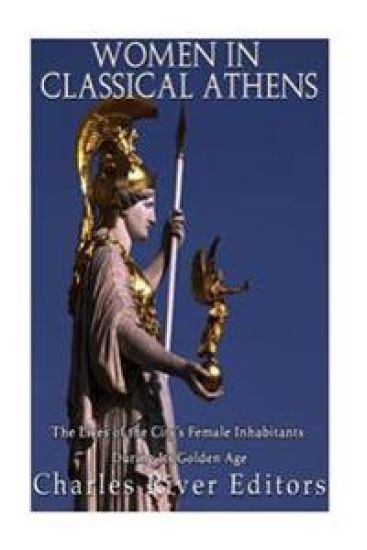
Women in Classical Athens: The Lives of the City's Female Inhabitants During Its Golden Age
*Includes pictures *Includes ancient accounts describing women in Athens *Includes online resources and a bibliography for further reading *Includes a table of contents "What I would prefer is that you should fix your eyes every day on the greatness of Athens as she really is, and should fall in love with her. When you realize her greatness, then reflect that what made her great was men with a spirit of adventure, men who knew their duty, men who were ashamed to fall below a certain standard. If they ever failed in an enterprise, they made up their minds that at any rate the city should not find their courage lacking to her, and they gave to her the best contribution that they could." - The Funeral Oration of Pericles, quoted by Thucydides In virtually all fields of human endeavor, ancient Athens was so much at the forefront of dynamism and innovation that the products of its most brilliant minds remain not only influential but entirely relevant to this day. In the field of medicine, the great physician Hippocrates not only advanced the practical knowledge of human anatomy and care-giving but changed the entire face of the medical profession. The great philosophers of Athens, men like Aristotle, Socrates, and Plato, interrogated themselves with startling complexity about the nature of good and evil, questioned the existence of divinity, advocated intelligent design, and went so far as to argue that all life was composed of infinitesimal particles. Great architects and sculptors such as Phidias produced works of art of such breathtaking realism and startling dynamism that they later formed the driving force behind the resurgence of sculpture during the Renaissance and served as masters to artists such as Michelangelo, Bernini, and Donatello. The plays of dramatists such as Aristophanes not only displayed an acerbic wit and a genius for political satire so pronounced that their works continue to be performed - and topical - to this day, but served as the inspiration for virtually all playwrights from Shakespeare to the present day. And this does not take into account the host of equally brilliant mathematicians, natural philosophers, historians, astronomers and politicians that the city's great schools nurtured and produced. Of course, what most people remember about the Golden Age of Athens today is the accomplishments of the city's men, which disregards nearly half the population. Pericles, in his funeral oration as quoted by the ancient historian Thucydides, sums up what is generally considered to be the attitude of men to their women in Classical Athens: "I should say something about the virtue appropriate to women and I shall simply give one brief piece of advice. Your renown will be great if you do not behave in an inferior way to that natural to your sex and your glory will be to be least mentioned amongst men concerning either your virtue or your faults". Any exploration of the lives of women in Classical Athens has to take into consideration the legal framework which governed such matters as marriage, inheritance and basic rights within society, as well as the woman, herself, within the oikos. However, as a starting point, the simple issues relating to the day to day lives of the women in this period provide an initial understanding of how all of these other factors played a part in the overall pattern of life for at least a Classical Athenian, upper class, woman. The lives of lower and middle class women, as well as those that did not fall into the defined social hierarchy, were markedly different from that of their aristocratic sisters in some respects. Underlying, however, for all women, was an attitude that sought to keep them apolitical, segregated and secluded as much as was practically possible. Women in Classical Athens: The Lives of the City's Female Inhabitants During Its Golden Age looks at the history of the other half of the city's residents and their experiences.

King Arthur and Robin Hood: The History and Folklore of England's Most Famous Folk Legends

King Arthur and Robin Hood: The History and Folklore of England's Most Famous Folk Legends

Jesse Harasta; Charles River

Createspace Independent Publishing Platform
2016
nidottu
*Includes pictures *Includes a table of contents King Arthur is one of the most famous names in history, and his name still evokes visions of fantasy, chivalry, bravery, and more even today. Arthur remains a pop culture fixture around the globe, made famous in various Arthurian tales written by writers like Chretien de Troyes. Arthur came to embody the ideals of the Middle Ages: strength, chivalry, bravery, and more. Along the way, his Excalibur sword, the Holy Grail, his queen, and more have all become household words. Arthur has long been identified as a folk hero, and there are countless tales that comprise the Arthurian legend, but was there an actual person that the original stories were based on? People still search for the seeds of truth in the Knights of the Round Table, and the historical figure that inspired the Arthurian tales. Of course, as with all great myths, and even those with a kernel of truth behind them, there is no "real" Arthur. Arthur is now comprised of the works written by diverse storytellers, most of which have built upon the ancient stories and possibly history. It is from there that a primordial seed of myth remains at the heart of all the retellings. At the same time, Arthur's story is one of transformation, as he is brought from the Middle Ages into the Renaissance and more modern times. And that story also includes the famous contemporaries in his stories and other important historical figures, like Geoffrey of Monmouth, the imprisoned Sir Thomas Mallory and Walt Disney. When looking for the historical and mythical Arthur, scholars try to understand how the Arthur of these tales and of others like Disney's Sword in the Stone and Monty Python and the Holy Grail came to be. What are the origins of the Arthur legend and what can they tell people about the past? What is the historical basis for King Arthur, if any? There are few characters in the English language more iconic than Robin Hood. Emerging out of the ballads of the High Middle Ages and surviving through numerous permutations to the present day, the green-clad archer has become an icon. Today he represents a playful, irreverent and cunning resistance to corruption and injustice, associated primarily with stealing from the rich and giving to the poor. Robin Hood's selfless acts of helping the masses at the expense of himself (by not keeping his treasure) have led to contemporary figures like Bill Gates being called "Modern Day Robin Hoods", and when a British man robbed a bank in 2013 and handed out the money to homeless people before he was arrested and imprisoned, the name Robin Hood was naturally in the news once more. Robin Hood is a celebrated folk hero and a kind of good thief, but the earliest stories about Robin Hood depict a far different character. The first Robin Hood was often a brutal and selfish yet also honorable figure, an anti-hero loved (perhaps paradoxically) by many social classes and loathed by authorities. When the notorious Gunpowder Plot was discovered at the beginning of the 17th century, the Earl of Salisbury condemned Guy Fawkes and the conspirators for being "Robin Hoods". The transformation of Robin Hood over the centuries has left many scholars attempting to find the origins behind the original story. Like King Arthur, some have even sought a historical figure that might serve as the basis for Robin Hood, while others have sought out mythological origins to see if Robin Hood's character evolved out of a mythological figure. When looking for the historical and mythical figure, scholars try to understand how the Robin Hood of these tales and came to be. What are the origins of Robin Hood and what can they tell people about the past? What is the historical basis for Robin Hood, if any?
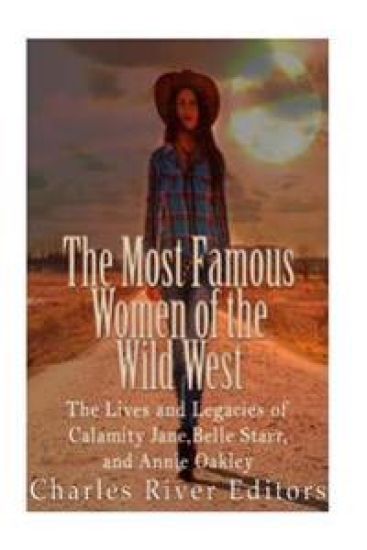
The Most Famous Women of the Wild West: The Lives and Legacies of Calamity Jane, Belle Starr, and Annie Oakley
*Includes pictures *Includes the women's quotes about their own lives *Includes online resources and a bibliography for further reading The most famous woman of the Wild West was also possibly the most colorful and mysterious. "Considered a remarkable good shot and a fearless rider for a girl of my age", Calamity Jane claimed to be a veteran of the Indian Wars, a scout, and the wife of Wild Bill Hickok, all on the way to becoming a dime novel heroine. While all of those legends have stuck, it's unclear to what extent if any they are actually true, and even her contemporaries doubted the authenticity of her statements. More than anything, people in frontier towns like Deadwood looked on with amusement at the girl who was more often than not drunk and was described by one of Wild Bill's friends as "simply a notorious character, dissolute and devilish." Her frequent drinking binges and her insistence that messing with her would "court calamity" had helped establish her nickname even before she arrived in Deadwood in the mid-1870s. Ultimately, Calamity Jane's tall tales, eccentric personality, and association with Wild Bill would all make her a popular figure in the last quarter of the 19th century, and she became so well known that she started taking part in traveling shows of the kind made famous by Buffalo Bill Cody. America has always preferred heroes who weren't clean cut, an informal ode to the rugged individualism and pioneering spirit that defined the nation in previous centuries. The early 19th century saw the glorification of frontier folk heroes like Davy Crockett and Daniel Boone, and after the Civil War, the outlaws of the West were more popular than the marshals. Outlaws like Jesse James and Billy the Kid robbed and fought their way into dime novels, but one of the most notorious and unique outlaws of them all was Myra Maybelle Shirley, a Southern girl who knew her way around horses and guns. Through her associations with other outlaws like the Starr clan and the James and Younger gang, Shirley entered law enforcement's radar herself. Shirley would get her famous nickname Belle Starr as a result of marrying outlaw Sam Starr, and it was that name that found itself plastered all across Wanted posters in the West. Though she was a crack shot and a renowned rider, Belle Starr was usually engaged in "lesser" crimes like stealing horses, rustling, fencing stolen goods and hiding other outlaws. She also became infamous for rumors about the various outlaws she romanced, which allegedly included Cole Younger. There was little about the childhood of Phoebe Ann Mosey that indicated that she would grow up to become Annie Oakley, one of the best sharpshooters the world has ever seen and an icon of the West. Her parents, Jacob and Susan, were Quakers who migrated from Pennsylvania to Darke County, Ohio after a fire destroyed their inn and their livelihood. Their daughter, who would become a national celebrity in her own life for "The Little Sure Shot of the West", learned her gun skills out of necessity, using them to hunt for food around the Cincinnati area thousands of miles away from the dusty towns, saloons and shootouts that have become symbols the Wild West. However, Annie would make her own mark by hitting so many marks back east, and by 18 she had made a name for herself by besting other sharpshooters, including Frank Butler, who performed a traveling act and became smitten by the young teen who beat him. Annie and Frank would marry when she was 16, and they continued to perform together until becoming part of Buffalo Bill's famous show, where Annie became acquainted with other legends like Sitting Bull. Annie would perform off and on for Buffalo Bill's show, but she also took her exploits to Europe and even the burgeoning film industry, performing "The Little Sure Shot of the West" for Thomas Edison's brand new kinetoscope, which could make a film.
Major John André: The Life and Death of the Famous British Spymaster during the Revolutionary War
*Includes pictures *Includes contemporary accounts about Andr 's career and execution *Includes online resources and a bibliography for further reading *Includes a table of contents "I pray you to bear me witness that I meet my fate like a brave man." - Andr Spying and treachery are as much a part of warfare as weapons and death. This has always been the case since the earliest battles and is not likely to change in the future. And yet, even within this irregular system, there are certain rules, especially in past eras such as the American Revolution. First, while spying on behalf of one's country is perfectly respectable, betraying one's nation is treason. Second, honorable men do not involve those too innocent to understand the consequences of their actions in their schemes. Third, no man wearing his own uniform can be considered a spy, for his garments make it clear who he is and preclude deception. All three of these rules played into the story of the machinations and death of Major John Andr . No one who knew Andr personally would ever have dreamed he would one day hang. He was raised by devoutly religious parents and was a loyal Englishman and solid officer in His Majesty's army. He had, it was rumored, an unfortunate romantic liaison that ended with a cancelled engagement, and during the early days of the American Revolutionary War, he had served his king in Canada before being captured and held as a prisoner of war. Once he was returned to his command, he was promoted in recognition of his strength of character under duress. His reputation was so sterling, in fact, that he was given a very sensitive role, that of gathering intelligence for the British Army as they tried to put down the rebellious American colonies. This assignment, and an alleged relationship to a beautiful young Loyalist in Philadelphia named Peggy Shippen, would lead him to one of the colonists' biggest war heroes, Benedict Arnold. Arnold had arguably been more instrumental for the colonies' successes from 1775-1778 than anyone else, even perhaps George Washington, but a confluence of events left him willing to betray the cause he had fought and bled so hard for after he became military commander of Philadelphia. In one of the most controversial and scrutinized episodes of the war, Arnold married Peggy Shippen despite her Loyalist sympathies, and while Arnold was willing to break the first rule, Andr broke the second rule by using Shippen to pass messages, possibly even playing on her own affections for him. Ultimately, it was in breaking the third rule of espionage that Andr made his fatal mistake, for when he met near West Point to facilitate Arnold's betrayal, he changed his clothes one fateful night in September 1780, he changed his destiny and earned a place in the history books at the cost of his life. He was tried and convicted of being a spy, and he was sentenced to hang by men who had more respect for him than they did for their turncoat countryman. In the end, they agreed with Washington himself, who insisted that he was "more unfortunate than criminal." Major John Andr The Life and Death of the Famous British Spymaster during the Revolutionary War profiles the influential part the dashing British spymaster played in the Revolution. Along with pictures of important people, places, and events, you will learn about Andr like never before, in no time at all.
World War II in 1940: The History of the Fighting that Culminated with the German Conquest of Western Europe and the Battle of Britain
*Includes pictures *Includes accounts of the fighting by soldiers on both sides *Includes online resources and a bibliography for further reading One of the most famous people in the world came to tour the city of Paris for the first time on June 28, 1940. Over the next three hours, he rode through the city's streets, stopping to tour L'Op ra Paris. He rode down the Champs- lys es toward the Trocadero and the Eiffel Tower, where he had his picture taken. After passing through the Arc de Triomphe, he toured the Pantheon and old medieval churches, though he did not manage to see the Louvre or the Palace of Justice. Heading back to the airport, he told his staff, "It was the dream of my life to be permitted to see Paris. I cannot say how happy I am to have that dream fulfilled today." Four years after his tour, Adolf Hitler would order the city's garrison commander, General Dietrich von Choltitz, to destroy Paris, warning his subordinate that the city "must not fall into the enemy's hand except lying in complete debris." Of course, Paris was not destroyed before the Allies liberated it, but it would take more than 4 years for them to wrest control of France from Nazi Germany after they took the country by storm in about a month in 1940. The surrender of more than 1,200,000 isolated troops followed quickly in June 1940, yet in the midst of this disaster, the Allies contrived one coup that took even the victorious Wehrmacht aback: the evacuation of over 300,000 soldiers from the port of Dunkirk. This escape, hailed as "miraculous" at the time, provided England with a solid defensive force, the French with the kernel of a "Free French" army for the future, and the Western Allies with an invaluable boost to their morale during one of the war's darkest moments. Hitler's Order of the Day on June 5th, 1940 placed no special emphasis on the end of the Dunkirk evacuation save as the milestone marking full German triumph in the north. While a leader never celebrates the successes of his enemies, the Fuhrer's terse commentary - and subsequent, very real expectations that the British would sue for peace and possibly even overthrow Churchill - suggest that he attached little significance to the BEF slipping through his fingers: "Soldiers of the West Front Dunkirk has fallen... with it has ended the greatest battle of world history. Soldiers My confidence in you knew no bounds. You have not disappointed me." With the clarity of historical hindsight, events proved Churchill correct. Operation Dynamo, as the British named the Dunkirk evacuation mission, bolstered British morale and defenses sufficiently to keep the "Sceptered Isle" in the war. The sacrifice made by "The Few", the British and Allied fighter pilots who won the Battle of Britain in 1940, remains close to the hearts of the British public, and the piece by the BBC is typical of the national sentiment manifested in air shows, museums, TV programs and books. Even as the last of "The Few" pass on, it seems unlikely that the legend they helped to create will be forgotten anytime soon. Thankfully, the RAF stood toe to toe with the Luftwaffe and ensured Hitler's planned invasion was permanently put on hold. The Allied victory in the Battle of Britain inflicted a psychological and physical defeat on the Luftwaffe and Nazi regime at large, and as the last standing bastion of democracy in Europe, Britain would provide the toehold for the June 1944 invasion of Europe that liberated the continent. For those reasons alone, the Battle of Britain was one of the decisive turning points of history's deadliest conflict. World War II in 1940: The History of the Fighting that Culminated with the German Conquest of Western Europe and the Battle of Britain chronicles one of the war's pivotal years, when the fate of the free world hung in the balance.