Kirjojen hintavertailu – 12 903 725 kirjaa ja 27 kauppaa
Kirjailija
Charles River
Kirjat ja teokset yhdessä paikassa: 4 673 kirjaa, julkaisuja vuosilta 2013–2022, suosituimpiin kuuluu William Powell and Myrna Loy: The Lives and Careers of One of Classical Hollywood's Most Iconic Duos. Vertaile teosten hintoja ja tarkista saatavuus suomalaisista kirjakaupoista.
"Pancho Villa", dec a la gente en M xico a principios del siglo XX, "puede andar 100 kil metros sin parar, vivir 100 d as sin comer, aguantar 100 noches sin dormir y matar 100 hombres sin ning n remordimiento". La leyenda de Francisco Villa est saturada de hero smo, tragedia y romanticismo; es la historia de un campesino pobre que se convierte en bandolero por necesidad, por haber vengado una injusticia sobre su familia; la del genio militar que primero huye del gobierno opresor, y despu s, frente al ej rcito revolucionario m s grande en la historia de su pa s, lo derrota y se convierte en el liberador de M xico, s lo para volver a caer en la desgracia cuando sus tropas lo abandonan o son liquidadas por el enemigo. La caballer a de Pancho Villa, agregan los mexicanos con algo de orgullo, invadi Estados Unidos, y aunque vinieron a buscarlo, jam s lo pudieron encontrar. sta es, cuando menos, la versi n que conoce la mayor parte de sus compatriotas, que ciertamente no es la de sus libros de texto.
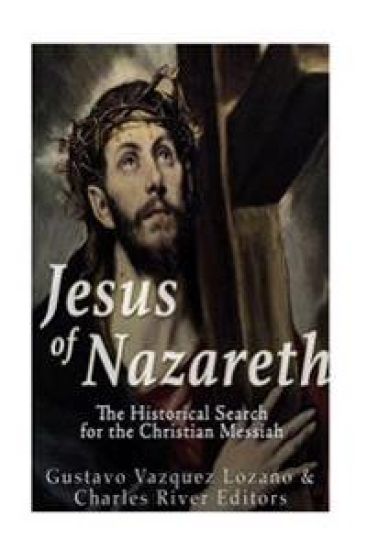
*Includes pictures *Analyzes the Biblical accounts of Jesus and the sources the Gospels relied on *Includes online resources and a bibliography for further reading *Includes a table of contents The life story of Jesus of Nazareth, considered by billions of Christians to be the Messiah prophesized in the Old Testament of the Bible, is perhaps the most famous in history. Described in detail in the New Testament, Jesus comes from both divine yet humble roots, born in a manger to a young woman, but in time he leads a fervent following as tales of his miracles spread across the Holy Land. Of course, a central aspect of Jesus's life is the situation in Israel and its ongoing conflict with Rome, which helped compel and inspire Jews to seek a savior that would deliver them from their enemies. The country is dismembered and hides religious renegades in the wilderness, waiting inside caves for the final battle against Rome. Apocalyptic effervescence has never been so intense in Israel as now. Jesus speaks in parables and enacts them, and they are understandable to the ears and eyes of a 1st century Jews. His words certainly don t talk about resignation or about future life in heaven, but about a plan, a program. His aphorisms don t command good behavior or spiritual contemplation, like the Buddha. They speak of judgment, first, and then the restoration of Israel, though perhaps not in the way that their listeners expect. He compares his movement with the mustard plant, this pernicious botanical species that the Latin naturalists describe as a destructive pest, since it invades agricultural land and attracts birds, thus destroying the crops. He compares the Kingdom of God with yeast, which remains hidden inside the bread until the decisive moment, when it can no longer be ignored. He speaks preferably to the lowest of the low, the nobodies: the prostitutes, children, lepers and beggars, and he asks them to be ready, to watch and be alert for the signs. The crucifixion and resurrection that follow create the climactic resolution of Jesus' life story and cement his status as the Christ, at least in the eyes of the burgeoning religious movement that would sweep across the region in the coming decades. An anonymous writer would compose the first gospel, Mark, and the major theme would be the way of Jesus to his death. His followers, whose movement would originally be called "the way," would also bring about a new religion that has lasted 20 centuries, and while it is focused on the figure of Jesus, the rural man of Israel who started it all, the historical Jesus was gradually enshrined under layers of sermons, chants, legends and philosophies that would be alien to Jews in Jesus's day. Like ideological strata, they covered the historical facts, obscuring the Jesus of history under the Christ of faith. Given the fact that the Bible's account is so well known, it's perhaps unsurprising that people in the modern day have become more interested in trying to uncover lesser known details about Jesus, arguably the most important figure in history. This has ranged from arguments over his life to arguments over his very existence, making the historical search for Jesus all the more important. From supporters citing 1st century sources like Tacitus to skeptics comparing Jesus to past religions' heroes and other mythological figures, people continue to try bolstering their case, no matter which side they fall on. Jesus of Nazareth: The Historical Search for the Christian Messiah chronicles the life of Jesus and the historicity of the man believed to be the savior of Christianity. Along with pictures of important people, places, and events, you will learn about Jesus like never before, in no time at all.
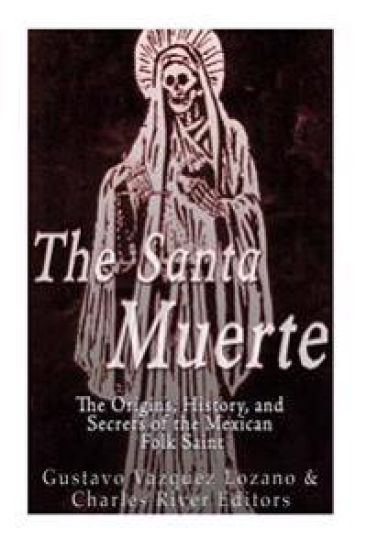
*Includes pictures *Includes contemporary accounts and descriptions of the cult *Includes online resources and a bibliography for further reading European and American scholars are fascinated by her. She is exotic; they look at her with the romantic look of the anthropologist and the sociologist; she is Mexican, colorful, and third-worldly (not to mention that she is a fantastic reason to get funding from their universities). Many see in her, correctly, a prodigious syncretism, so common in the troubled history of Latin America. The Catholic hierarchy, the predominant religion in Mexico, is horrified; the church calls her a satanic cult figure, associated with organized crime. Similarly, governmental authorities watch cautiously, deny official recognition to her "churches," and destroy her solitary shrines in northern Mexico, in roads riddled with crime. However, among her followers -besides prisoners, drug traffickers and many well-meaning men and women seeking other spiritual alternatives- there are some working on the side of the law, especially soldiers and police officers. Enter La Santa Muerte, the "Holy Death", a skeletal figure dressed like a Catholic saint, whom her faithful raised to the altars without asking anyone for permission. From her followers, she gets not only candles, prayers and petitions, as any other saint; they also call her loving names that to the outside observer would seem to be a joke: beautiful, skinny, cute girl, little mother, and at the height of the confusion, "virgin". What then is the Santa Muerte movement? As a practice, it has borrowed extensively from Catholicism, Santeria and even New Age, depending on the leader of the moment and the region, from Central America to Chicago. In the variety most similar to Catholicism, people find images of the skeleton dressed in a green robe with stars and golden borders, with rays of light coming out of her head: a negative image of the Virgin of Guadalupe. "It's our little mother, our skinny, she always takes care of us," says an anonymous woman who refers to Santa Muerte in the same way Mexican Catholics refer to The Virgin. Although fleshless, Santa Muerte is, without a doubt, a female figure (in the Spanish language, "death" is a feminine noun). But the garments of the Virgin of Guadalupe are not the only thing that the "white girl" borrowed. In fact, one of the main features of this cult is its extraordinary elasticity. It will adapt to anything. Anyone can dogmatize. Everybody contributes according to his or her feelings and experiences. Young cholos (street punks) prefer a version more reminiscent of some Iron Maiden albums, and the elderly of the Tepito neighborhood, another more similar to those found at small town churches, with flowers in her hair, and a robe with embroidery. Therefore, for the casual observer watching the candles, the flowers, listening to the murmur of prayers and noticing the insistence on receiving miracles, Santa Muerte is like another Catholic saint, despite the fact the cult of the Holy Death is not only not approved by any Christian denomination but is not even tolerated. This is the story of Santa Muerte, the so-called cult of crisis, a red-hot combo of a kermesse (Mexican carnival), Catholicism and New Age; a hedonist practice but involving bodily sacrifice too. It is an expression of economic, psychological and social forces, bigger than perhaps any of her acolytes suspect. The Santa Muerte: The Origins, History, and Secrets of the Mexican Folk Saint looks at the folk saint and the manner in which her cult grew. Along with pictures of important people, places, and events, you will learn about Santa Muerte like never before.
*Includes pictures *Includes accounts of the battles written by black soldiers *Includes online resources and a bibliography for further reading *Includes a table of contents "Who would be free themselves must strike the blow.... I urge you to fly to arms and smite to death the power that would bury the Government and your liberty in the same hopeless grave. This is your golden opportunity." - Frederick Douglass After the Battle of Fort Sumter made clear that there would be war between the North and South, support for both the Union and Confederacy rose. Two days after the surrender of the fort, President Abraham Lincoln issued a call-to-arms asking for 75,000 volunteers, a request that would rely on Northern states to organize and train their men. While most Americans had hoped to avert war, many abolitionists had come to view war as inevitable, and the news from Fort Sumter suggested a chance to rectify the country's original sin through the defeat of the South. Though abolitionists were a minority that was mostly confined to New England and often branded as radicals, they had long sought to end slavery and secure basic civil rights for blacks. One of the most famous abolitionists, the escaped slave Frederick Douglass, realized immediately what kind of opportunity the Civil War presented to all blacks, whether they were slaves or free: "Once let the black man get upon his person the brass letter, U. S., let him get an eagle on his button, and a musket on his shoulder and bullets in his pocket, there is no power on earth that can deny that he has earned the right to citizenship." In 1861, Lincoln was particularly concerned about alienating the border slave states that had not joined the Confederacy, particularly Kentucky and Missouri. The fighting at Fort Sumter had already driven Virginia into the Confederacy, and Lincoln rightly worried that the conscription of black soldiers might alienate whites in the North and the border states. As he famously put it, "I hope to have God on my side, but I must have Kentucky." When Generals John C. Fr mont and David Hunter issued proclamations emancipating slaves in their military regions and permitting them to sign up for active duty, the Lincoln Administration swiftly and sternly revoked their orders. Ultimately, and perhaps not surprisingly, the War Department would only change its tune once it felt that doing so was a military necessity. Most notably, even before Lincoln issued the Emancipation Proclamation, the Union had organized its first black regiment; in July of 1862, General David Hunter, the same one whose emancipation order had caused a political crisis in 1861, impressed slaves in the South Carolina Sea Islands and enlisted them in the Union Army to deprive the Confederates of the ability to rely on them. While it was obviously a sensitive issue to emancipate slaves in border states, Lincoln clearly understood the military value gained by adding Southern slaves to the Union war effort, and it was a logical stepping stone from Hunter's actions to simply recruiting blacks to aid the North. In time, the addition of black soldiers would help turn the tide of the war, adding hundreds of thousands of soldiers to the ranks, and the U. S. Colored Troops would fight in some of the most famous battles of the war, including at Fort Wagner, Fort Pillow, and at the Battle of the Crater during the siege of Petersburg. While there continues to be controversy over the way Southern slaves were utilized by the Confederacy, it's unquestionable that freedmen and escaped slaves were crucial to lifting the North to victory from 1863-1865. The United States Colored Troops: The History and Legacy of the Black Soldiers Who Fought in the American Civil War traces the development of black regiments during the war and the impact they had on the second half of it.
*Includes pictures *Includes Villa's own quotes about his life and career *Includes online resources and a bibliography for further reading *Includes a table of contents "My sole ambition is to rid Mexico of the class that has oppressed her and given the people a chance to know what real liberty means. And if I could bring that about today by giving up my life, I would do it gladly." - Pancho Villa "Pancho Villa," people whispered at the beginning of the 20th century, "can march 100 miles without stopping, live 100 days without food, go 100 nights without sleep, and kill 100 men without remorse." The legend of Francisco Villa is full of heroism, tragedy and romance. It is the story of a poor farmer boy who became a bandit out of necessity, after avenging an injustice on his family; a military genius who flew from an oppressive government to lead the largest revolutionary army in his country's history, and defeated dictatorship to become Mexico s liberator, only to fall again in disgrace when his troops abandoned him or were massacred by the enemy. Pancho Villa and his cavalry, Mexicans point out with a certain amount of pride, invaded the United States, and although they came and tried to capture him, they never found him. This is, at least, the version that most of them know, but it's certainly not the same as in their textbooks. The story of Francisco Villa bypassed official censorship from generation to generation, like leaves sailing at full speed on the surface of a stream. But the historical reconstruction is full of nuances. Was he a freedom fighter, or a bandit? Was he a Mexican Robin Hood, or a thief and a murderer? Was he present when his troops invaded U. S. territory? Was the advance of his famous "Dorados" (the "golden ones," the name of his troops) the cause for joy, or terror among the people as they passed the countryside towards Mexico City? Pancho Villa s personality has been controversial since the very beginning of his career as a General of the revolutionary army. Many biographies have been written about him, the first of which dates back to only a few years after his death. Counting the number books who take one of those two sides-butcher or freedom fighter-would be impossible, but they would probably form two piles of equal size. Through them, readers can learn divergent tales about one of the most widely known Mexicans, both in his country and abroad. For many Mexicans, he is a hero. In schools, teachers still speak cautiously about him to new generations of children, who are amazed by the tough guy with hat and pistols. And the old, those who had heard about his exploits from their parents, declare that Villa himself will ride again through the mountains of Mexico, on the day when the poor can no longer stand and a new revolution explodes. As Octavio Paz eloquently put it, "The brutality and uncouthness of many of the revolutionary leaders has not prevented them from becoming popular myths. Villa still gallops through the north, in songs and ballads; Zapata dies at every popular fair. ... It is the Revolution, the magical word, the word that is going to change everything, that is going to bring us immense delight and a quick death." Pancho Villa: The Life and Legacy of the Famous Mexican Revolutionary chronicles the controversial life of one of Mexico's most legendary fighters. Along with pictures of important people, places, and events, you will learn about Pancho Villa like never before, in no time at all.
*Includes pictures *Includes accounts of the conference by participants *Includes online resources and a bibliography for further reading *Includes a table of contents "Do you think they will stop just to please you, or us for that matter? Do you expect us and Great Britain to declare war on Joe Stalin if they cross your previous frontier? Even if we wanted to, Russia can still field an army twice our combined strength, and we would just have no say in the matter at all." - President Franklin D. Roosevelt to the Polish ambassador in Washington, D. C. (Gardner, 1993, 208-209). Separated by vast gulfs of political, cultural, and philosophical divergence, the three chief Allied nations of World War II - the United States, the Soviet Union, and Great Britain - attempted to formulate a joint policy through a series of three conferences during and immediately after the conflict. The second meeting, named the Yalta Conference after its Black Sea venue, occurred in February 1945 and was both the most well-known and most influential of them all. Adolf Hitler's Third Reich had scant time remaining when the "Big Three" met to discuss the future of Germany, Europe, and the postwar world as a whole. No doubt existed regarding the war's outcome; the Americans had shattered the Wehrmacht's desperate last throw in the west, the Ardennes Offensive, during the Battle of the Bulge in the weeks immediately preceding Yalta, and the Soviet front lay just 50 miles east of Berlin, with the Red Army preparing for its final push into the Reich's capital after a successful surprise winter campaign. Among the agreements, the Conference called for Germany's unconditional surrender, the split of Berlin, and German demilitarization and reparations. Stalin, Churchill and Roosevelt also discussed the status of Poland, and Russian involvement in the United Nations. By this time Stalin had thoroughly established Soviet authority in most of Eastern Europe and made it clear that he had no intention of giving up lands his soldiers had fought and died for. The best he would offer Churchill and Roosevelt was the promise that he would allow free elections to be held. He made it clear, though, that the only acceptable outcome to any Polish election would be one that supported communism. The final question lay in what to do with a conquered Germany. Both the Western Allies and Stalin wanted Berlin, and knew that whoever held the most of it when the truce was signed would end up controlling the city. Thus they spent the next several months pushing their generals further and further toward this goal, but the Russians got there first. Thus, when the victorious allies met in Potsdam in 1945, it remained Britain and America's task to convince Stalin to divide the country, and even the city, between them. They accomplished this, but at a terrible cost: Russia got liberated Austria. Given its context and importance, the Yalta Conference represented a contentious matter in its own day, and it remains so among historians both professional and amateur. As just one example, while some lauded Roosevelt's political dexterity, many others viewed him as excessively na ve in his dealings with Stalin, or even as a pro-communist quisling. Yalta neither delayed nor created the Cold War; the collision between two utterly incompatible systems of thought - one that, despite its flaws, placed its faith in freedom, human rights, and majority rule, and the other that believed in paranoid dictatorship enforced through systematic state violence and terror - seemed inevitable either way. If anything, Yalta enabled the three leaders to project a momentary phantasm of unity, permitting them to postpone their intractable hostility for a few months in order to first defeat Germany. The Yalta Conference: The History of the Allied Meeting that Shaped the Fate of Europe After World War II looks at the controversial conference and its results.
*Includes pictures *Includes contemporary accounts of the war written by colonists *Includes online resources, footnotes and a bibliography for further reading *Includes a table of contents "With many such reasons, but whatever be the cause, the English have contributed much to their misfortunes, for they first taught the Indians the use of armes, and admitted them to be present at all their musters and trainings, and shewed them how to handle, mend and fix their muskets, and have been furnished with all sorts of armes by permission of the government, so that the Indians are become excellent firemen. And at Natick there was a gathered church of praying Indians, who were exercised as trained bands, under officers of their owne; these have been the most barbarous and cruel enemies to the English of any others. Capt. Tom, their leader, being lately taken and hanged at Boston, with one other of their chiefs." - An account of the war written by Edward Randolph, an English emissary for King James II What was the bloodiest war in American history? Most people with at least a little knowledge of history would quickly say that it was the Civil War (1861-65), and they would certainly be correct overall. In recently-updated numbers, it is thought that over 750,000 Americans died in the Civil War from battle wounds, diseases and other causes. In a single day at the battle of Antietam on September 17, 1862, almost 27,000 soldiers were killed, wounded and missing. However, when historians go farther back in time and include colonial wars and look at casualties per capita, the correct answer would be the much-lesser known conflict known as "King Philip's War" (1675-76). While a significant 2.5% of the U. S. population perished in the Civil War, 5% of New England's white settler population died during King Philip's War, during which 13 towns were destroyed and 600 dwellings were burned by the natives. A larger, indeterminate number of the native population also died in the war. A hundred thousand pounds, an enormous sum of money in those days, was expended by the colonies in defeating the Indians. Edward Randolph, who was sent to the colonies a few years after the war, bemoaned just how ruinous and unnecessary the fighting had been: "The losse to the English in the severall colonies, in their habitations and stock, is reckoned to amount to 150,000 there having been about 1200 houses burned, 8000 head of cattle, great and small, killed, and many thousand bushels of wheat, peas and other grain burned (of which the Massachusets colony hath not been damnifyed one third part, the great losse falling upon New Plymouth and Connecticot colonies) and upward of 3000 Indians men women and children destroyed, who if well managed would have been very serviceable to the English, which makes all manner of labour dear. The war at present is near an end. In Plymouth colony the Indians surrender themselves to Gov. Winslow, upon mercy, and bring in all their armes, are wholly at his disposall, except life and transportation; but for all such as have been notoriously cruell to women and children, so soon as discovered they are to be executed in the sight of their fellow Indians." King Philip's War: The History and Legacy of the 17th Century Conflict Between Puritan New England and the Native Americans examines one of the most important wars fought in the colonial era. Along with pictures of important people, places, and events, you will learn about King Philip's War like never before, in no time at all.