Kirjojen hintavertailu – 12 903 725 kirjaa ja 27 kauppaa
Kirjailija
Charles River
Kirjat ja teokset yhdessä paikassa: 4 673 kirjaa, julkaisuja vuosilta 2013–2022, suosituimpiin kuuluu William Powell and Myrna Loy: The Lives and Careers of One of Classical Hollywood's Most Iconic Duos. Vertaile teosten hintoja ja tarkista saatavuus suomalaisista kirjakaupoista.
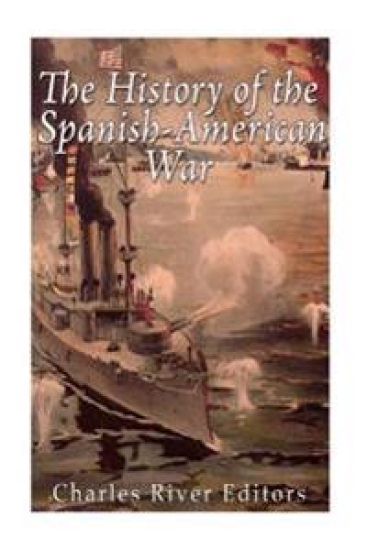
*Includes pictures *Includes accounts of the USS Maine's explosion and the war written by soldiers and sailors *Includes online resources and a bibliography for further reading *Includes a table of contents "A splendid little war." - John Hay, U. S. Ambassador to the United Kingdom, describing the war in a letter to Theodore Roosevelt In 1898, one of Spain's last possessions in the New World, Cuba, was waging a war for independence, and though Cuba was technically exempted from the Monroe Doctrine because it was already a Spanish territory when the Monroe Doctrine was issued, many Americans believed that the United States should side with Cuba against Spain. Initially, Republican President William McKinley wanted to avoid any wars, and for its part, Spain also wanted to avoid any conflict with United States and its powerful navy. However, Spain also wanted to keep Cuba, which it regarded as a province of Spain rather than a colony. Cuba was very important to the Spanish economy as well, as it produced valuable commodities such as sugar and also had a booming port at Havana. All the while, American economic interests were being harmed by the ongoing conflict between Cuban nationalists and Spain. Merchants' trading with Cuba was suffering now that the island was undergoing conflict, and the American press capitalized on the ongoing Cuban struggle for independence, which had been flaring up time and again since 1868. In an effort to sell papers, the press frequently sensationalized stories, which came to be known as "yellow journalism." During the run-up to war, yellow journalism spread false stories about the Cuban conflict in order to sell newspapers in the competitive New York City market. Despite President McKinley's wishes to avoid a war, he was forced to support a war with Spain after the American navy vessel USS Maine suffered an explosion in Havana harbor. McKinley had sent the ship there to help protect American citizens in Cuba from the violence that was taking place there, but the explosion devastated the ship, which sunk quickly in the harbor. 266 American sailors aboard the USS Maine died. Although the cause of the explosion was never determined, yellow journalists in the American press blamed Spain, claiming the ship was sabotaged. President McKinley was unable to resist popular pressure after a U. S. Navy report also claimed that the ship had been subject to an explosion outside of its hull which ignited powder magazines inside the ship. Later investigations proved inconclusive, but President McKinley was now forced to accept war with Spain. Congress declared war, and the U. S. Navy began a blockade of Cuba and Puerto Rico. The U. S. Pacific fleet sailed to the Philippines, which were then a Spanish possession. Despite supply problems from operating so far from existing U. S. Naval bases, the U. S. fleet defeated the Spanish fleet in Manila. The U. S. Army, meanwhile, landed 15,000 troops on Cuba to battle fewer than 2,000 Spanish regulars. New York politician Theodore Roosevelt, who had been advocating for war with Spain to support the Cuban revolutionaries, joined the U. S. Army and participated in its Cuba campaign, becoming well known for his participation with the "Rough Riders". Despite the superiority of the Spanish rifles, they were overwhelmed by the number of U. S. Army forces supported by artillery and Gatling guns. Although the Spanish fought the U. S. Army to a stalemate in Puerto Rico, Spain was forced to make peace after the U. S. Navy destroyed both its Pacific and Atlantic fleets. The military defeat in Cuba meant that Spain would have to give Cuba its independence, and the destruction of its navy meant that Spain would have to cede its overseas colonies to the United States. The United States subsequently gained possession of the Philippines, Puerto Rico and Guam, marking the true beginning of American imperialism.
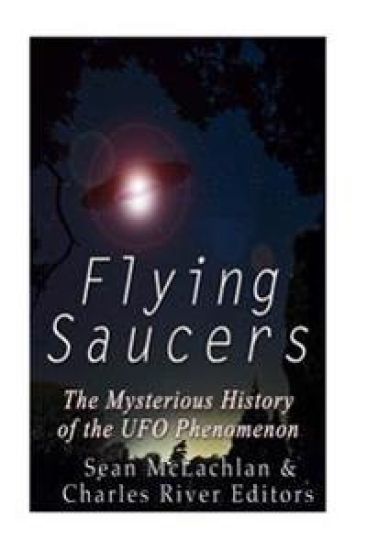
*Includes pictures*Includes accounts of purported UFO sightings and Roswell*Includes online resources and a bibliography for further reading*Includes a table of contents"The point is that the idea of space vehicles shaped like flying saucers was imprinted in the national psyche for many years prior to 1947, when the Roswell incident took place. It didn't take much stretching for the first observers of UFOs to assume that the unknown objects hovering in the sky had the same disk shape as the science fictional vehicles." - Frank Wu, illustrator for science fiction magazines When people think about unidentified flying objects (UFOs), they tend to think of flying discs piloted by gray beings with large heads and enormous eyes. They tend to think that these sightings only started relatively recently and that belief in UFOs is some sort of modern religion brought on, perhaps, by the very justifiable fears of a nuclear age. But a study of the phenomenon quickly reveals that humanity has been seeing UFOs since the beginning of recorded history and perhaps a lot longer than that. Modern Ufology focuses on mysterious lights on Ceres or tales of alien abduction, but this wasn't always the case. Looking at how belief in the UFO phenomenon has changed and how it has stayed the same sheds new light on how culture and belief changes over time. You don't have to believe humans are actually being visited by aliens from another planet to recognize the importance of UFOs in human society. Any widespread belief that endures for centuries is worthy of study, and as always, cases exist that can't be explained away as simple "belief" ... Everyone is familiar with theories about UFOs, or "flying saucers" as they were often called then, but even this name dates back only to 1947. Before that time, they were called "ghost rockets" or "ghost airplanes" or "ghost airships." Before the age of flight, the flying objects were called various things such as "flying chariots." No matter what terminology is used, every generation has clearly had its own belief that mankind is not alone. For example, few things in American history are as controversial as the Roswell Crash. The one undeniable fact is that something happened near Roswell, New Mexico, in 1947, but beyond that, the facts become murky as memories and evidence lose their luster over the years. That said, the impact of an unidentified object continues to mystify residents, visitors and the curious, and it has not only put Roswell on the map but has kept it there for thousands of tourists. Nonetheless, skepticism about the official version of the incident prevails, and a countless number of people continue to believe the American government covered up a crash landing by aliens. As John B. Alexander, Ph. D., a former project manager at the Los Alamos National Laboratory and consultant to the CIA, put it, "Attempting to come to any complete resolution of the incident is a fool's errand, as whatever the truth may have been has become so distorted over time that facts have merged inextricably with fiction." Flying Saucers: The Mysterious History of the UFO Phenomenon looks at the unidentified flying object craze. Along with pictures of important people, places, and events, you will learn about flying saucers like never before, in no time at all.
*Includes pictures *Includes accounts of the campaign written by soldiers and generals *Includes online resources and a bibliography for further reading *Includes a table of contents "Jackson and his army, in one month, have routed Milroy-annihilated Banks-discomfited Fr mont, and overthrown Shields Was there ever such a series of victories won by an inferior force by dauntless courage and consummate generalship?" - An anonymous newspaper correspondent for the Richmond Whig, June 6, 1862 Confederate general Thomas Jonathan Jackson had been a virtual unknown upon his arrival at the front line of First Bull Run, but by the spring of 1862, thanks to his actions at that battle, "Stonewall" was already becoming known across the battlefields. Ultimately, it would be the Valley Campaign of 1862 that made him a legend. In the early months of 1862, Jackson was given command of an army numbering about 17,000 in the Shenandoah Valley. His task was daunting. The loss at Bull Run prompted a changing of the guard, with George B. McClellan, the "Young Napoleon", put in charge of reorganizing and leading the Army of the Potomac. That spring, the Army of the Potomac conducted an ambitious amphibious invasion of Virginia's Peninsula, circumventing the Confederate defenses to the north of Richmond by attacking Richmond from the southeast. General Johnston's outnumbered army headed toward Richmond to confront McClellan, but the Union still had three armies totaling another 50,000 around the Shenandoah Valley, which represented a threat to Richmond from the north. It was these armies that Jackson would be tasked with stopping. Jackson would go on to lead his undermanned army through what military strategists and historians consider the most incredible campaign of the Civil War. From late March to early June, Jackson kept all three Union armies bottled up and separated from each other in the Shenandoah Valley by marching up and down the Valley about 650 miles in 50 days, earning his army the nickname "foot cavalry." After the amazing campaign in the Shenandoah Valley in June of 1862, Lee recalled Stonewall's men to travel by rail to Richmond in an effort to envelop the right flank of the Army of the Potomac. Upon taking command, Lee immediately took the offensive, attacking the Army of the Potomac repeatedly in a flurry of battles known as the Seven Days Battles. Fearing he was heavily outnumbered, McClellan began a strategic retreat, and despite badly defeating the Confederates at the Battle of Malvern Hill, the last battle of the Peninsula Campaign, it was clear that the Army of the Potomac was quitting the campaign. The failure of McClellan's campaign devastated the morale of the North, as McClellan had failed to advance despite originally having almost double the manpower. McClellan's Peninsula Campaign has been analyzed meticulously and is considered one of the grandest failures of the Union war effort, with McClellan made the scapegoat. In actuality, there was plenty of blame to go around, including Lincoln and his administration, which was so concerned about Jackson's army in the Valley that several Union armies were left in the Valley to defend Washington D. C. and even more were held back from McClellan for fear of the capital's safety. The Administration also micromanaged the deployment of certain divisions, and with Stanton's decision to shut down recruiting stations in early 1862, combined with the Confederacy concentrating all their troops in the area, the Army of the Potomac was eventually outnumbered in front of Richmond. The 1862 Shenandoah Valley Campaign: The History of the Civil War Campaign that Made Stonewall Jackson a Confederate Legend analyzes the history of one of the most famous campaigns of the war. Along with pictures of important people, places, and events, you will learn about the Valley Campaign like never before.