Kirjojen hintavertailu – 12 903 725 kirjaa ja 27 kauppaa
Kirjailija
Charles River
Kirjat ja teokset yhdessä paikassa: 4 673 kirjaa, julkaisuja vuosilta 2013–2022, suosituimpiin kuuluu William Powell and Myrna Loy: The Lives and Careers of One of Classical Hollywood's Most Iconic Duos. Vertaile teosten hintoja ja tarkista saatavuus suomalaisista kirjakaupoista.
*Includes pictures *Includes ancient accounts of the Vandals and the sack of Rome *Includes online resources and a bibliography for further reading *Includes a table of contents "For they are all of the Arian faith, and have one language called Gothic; and, as it seems to me, they all came originally from one tribe, and were distinguished later by the names of those who led each group." - Procopius Today, most people are familiar with the term "vandalism", but are ignorant as to the word's etymology. Yes, vandalism refers to the wanton destruction of property in the modern world, but the word's origin is much more complex, as it was originally the name of an important Germanic tribe that flourished in Europe and North Africa in the fifth and sixth centuries AD. As the Vandals rampaged throughout Western Europe and later into North Africa, they left a swath of destruction in their wake, which is how the term "vandalism" became associated with destruction.. The Vandals were a truly ferocious band of people who used the art of war to achieve its goals in ways that seem cruel and barbaric to modern sensibilities, but it was just one of many groups of people at the time who employed these tactics to seize power and land throughout Europe and the Mediterranean region. An examination of the Vandals through a combination of Latin language Catholic Church sources and Byzantine chroniclers, combined with studies by modern historians, reveals that the Vandals were much more than blood thirsty barbarians whose primary goal was the destruction of Rome. It is true that the Vandals sacked Rome in 455 AD, but even that act was a unique historical accomplishment in itself as they were only the third people to inflict such destruction on one of the world's greatest cities. Despite living on the lawless marchlands of the Roman Empire, the Vandals were able to establish two different kingdoms, and introduce a fairly complicated code of royal succession, that gave stability to their people for some time. The Vandals also proved to be an extremely clever people in their use of violence and war, as they rarely engaged in violence for its own sake. They also often employed clever tactics on the battlefield to defeat the larger and more sophisticated armies of the Romans, and later, the Byzantines. The examination will also reveal that the Vandals were as adept at the arts of diplomacy and statecraft as they were with warfare. If they could obtain an advantage through negotiation, then they would choose that route over a war that threatened to decimate their forces. Despite having the image of the cruel barbarian warrior, the Vandals were not without God in their lives. Although the Vandals were Christians, they followed a different sect of Christianity, which often put them at odds with Rome and Constantinople, but throughout most of their history they stood fast to their theological beliefs. The bloodthirsty reputation accompanying the Vandals throughout the centuries has largely been the result of their theological beliefs that diverged from the orthodoxies practiced during the period by the church leaders in Rome and Constantinople. Though the Vandal culture was truly as important as any other in Europe and the Mediterranean region at the time, as was the case with many of the Germanic tribes that lived on the fringes of Rome, the Vandals were destined to find themselves the victims of the nascent Byzantine Empire in the end. The Vandals: The History and Legacy of Antiquity's Most Famous Barbarians looks at the history of the "barbarians" who brought Rome to its knees in the late 5th century CE and helped bring about the final collapse of the Roman Empire. Along with pictures depicting important people, places, and events, you will learn about the Vandals like never before, in no time at all.
*Includes pictures *Includes accounts of the Resistance's activities throughout the war *Includes online resources and a bibliography for further reading *Includes a table of contents "Whatever happens, the flame of French Resistance must not be extinguished and will not be extinguished." - General Charles de Gaulle, radio broadcast from London, June 18th, 1940 (Argyle, 2014, 81). The French Army crumbled swiftly under the powerful blows delivered to it in 1940 by Adolf Hitler's self-confident Wehrmacht. Launching a massive feint into Belgium to lure mobile French armies and the British Expeditionary Force (BEF) away from the actual point of attack, the weakly protected Ardennes Forest, the Germans struck past the Maginot Line. In a lightning campaign, Guderian's panzers punched through to the coast, dividing Allied forces with a steel cordon across France and forcing the evacuation of the BEF from the port of Dunkirk. Not all French people proved willing to surrender to the Nazi invaders, however. While large numbers "collaborated" - working for German or Vichy companies to provide for themselves or their families - and some wholeheartedly backed the new regime out of opportunism, fascist conviction, or other motivations, a courageous minority operated in secret to resist their conquerors and the quisling state at Vichy: "De Gaulle described them as being bound together by a taste for risk and adventure ...] national pride sharpened by the suffering of their nation and 'an overwhelming confidence in the strength and cunning of their own plot'. ...] 'With him, it is ...] serving the Resistance and national honour, uncompromisingly demanding, ' wrote one. 'With him, we would have to get used to breathing the rarefied air of the summits.'" (Fenby, 2012, 109). The French Resistance never grew into a single unified organization. Rather, it remained divided in several major and numerous minor factions, each with their own philosophy and agenda. While these factions all shared the same goal - opposition to the Germans their Vichy pawns - they viewed each other with some suspicion and sometimes cooperated only grudgingly. During the war years, however, the Resistance kept the spirit of an independent and defiant France smoldering under the surface of Nazi domination, waiting for the opportunity to emerge again, regardless of the precise political beliefs of its members. Though exaggerated in scope and effectiveness by postwar legends seeking to minimize the widespread (usually involuntary) collaboration among the French people, the Resistance actually embodied a patriotic spirit determined to defeat Nazi totalitarianism and make France once again the nation of "libert , galit , fraternit " under the tricolor flag. Despite the faults, foibles, and occasional cruelty or criminality of individual Resistance members, the shared goal of defeating Nazi authoritarianism provided the glue needed to more or less unify the disparate factions. This defining aim also gave the movement resilience to weather the brutal suppression meted out by the Gestapo, the infamous Klaus Barbie, and the Vichy Milice. The French Resistance: The History of the Opposition Against Nazi Germany's Occupation of France during World War II looks at the legendary Resistance and its efforts to undermine Vichy France. Along with pictures of important people, places, and events, you will learn about the French Resistance like never before, in no time at all.
*Includes pictures*Profiles the Salem Witch Trials and other historic phenomena in New England*Includes online resources and a bibliography for further reading*Includes a table of contents"I think one of the reasons Stephen King's stories work so well is that he places his stories in spooky old New England, where a lot of American folk legends came from." - Ted NaifehNew England has always had a special place in the national memory. The states of Connecticut, Maine, Massachusetts, New Hampshire, Rhode Island, and Vermont have a long history as some of the earliest colonies in the New World. Their rich folklore and colorful history is woven into the national identity, and destinations such as Plymouth Rock, the lighthouses of Maine, and Vermont's autumn leaves are quintessential symbols of the United States. But New England has always had a dark side, a strange side. Monsters and ghosts lurk in its woods and old houses, and strange monuments that may be from a forgotten civilization puzzle local investigators. All the while, the early inhabitants themselves were always superstitious, as evidenced by history's most famous witch trials. Today the Salem Witch Trials are often remembered as being a relic of a superstitious past, and Salem has transformed itself into a tourist haven and Halloween destination by capitalizing off the Salem Witch trials, but it was deadly serious in 1692, when 19 men and women found themselves taken to "Gallows Hill" and hanged for being witches. Another man who was over 80 years old was pressed to death for refusing to be tried for witchcraft, and from February 1692-May 1693, hundreds of others were accused of witchcraft. Dozens of them were imprisoned for months until the mass hysteria finally died down. Mysterious New England: A History of the Region's Mysteries, Hauntings, and Strange Creatures profiles a sampling of strange, unexplained, and just plain odd stories of New England that have fascinated people in and around the region for centuries. Along with pictures of important people, places, and events, you will learn about mysterious New England like never before, in no time at all.
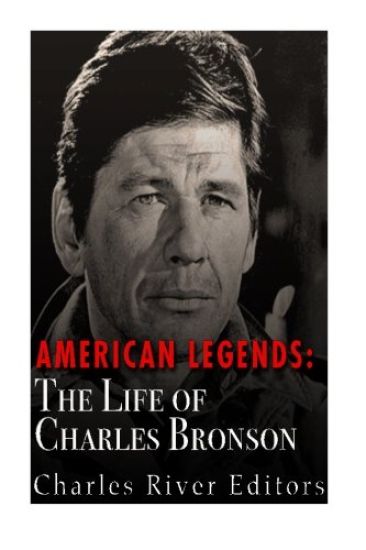
*Includes pictures*Includes Bronson's own quotes about his life and career*Includes footnotes, online resources and a bibliography for further reading*Includes a table of contents"Maybe I'm too masculine. Casting directors cast in their own, or an idealized image. Maybe I don't look like anybody's ideal." - Charles Bronson"I look like the kind of guy who has a bottle of beer in my hand." - Charles Bronson The leading men of the 1940s and '50s ably represented the visual and cultural expectations of those decades in their iconic films. Some were handsome and glib with quasi-classical dialogue, some could sing, and a few could dance, while others brought an imposing athletic presence to thrillers, westerns, and urban crime dramas. However, with the advent of the early 1960s, popular culture entered a heightened age of verismo, a more frank and severe view of societal reality. Motion picture studios on both sides of the Atlantic, aware of the changing times, were quick to reflect it. The harsher light of violent new genres required a different sort of male protagonist, a character type who could put his humanity and uncertainty aside to act as a more ruthless hero than his predecessors. Paralleling real concerns over crime and an increasing disrespect for life and property, the public fell in love with the new "avenging angel" image, and with Charles Bronson, the actor born at the perfect time in which to symbolize it in the grittier new films. By the time Bronson emerged from a series of miniscule, uncredited roles in the mid-1950s, the singing cowboy was two generations gone, save vestiges in television serials, such as Roy Rogers and Dale Evans. The dancing romantic lead of the Gene Kelly and Fred Astaire variety would soon exhaust itself as a genre in an age increasingly bent on realism and a more severe form of escape. Bronson possessed none of the gifts common to the heroes of the previous era. Light-heartedness did not become him, and by all accounts, he was neither a singer nor dancer. He could not offer the heft of Gary Cooper or John Wayne, although he shared a reserved quality with the former. He did not possess the pristine good looks of Gregory Peck. In fact, one good-natured description making the rounds in Bronson's heyday likened him to "A Clark Gable who has been left out in the sun too long." To accompany the rough-hewn appearance of Bronson's new class of hero, the typical script gave his remarkably enduring persona, little to say in terms of dialogue that would reveal his inner thoughts. With minimal text, even those he attempts to help are unsure of his intentions, and few clues are offered by which the viewer can come to know his mind. As the grotesqueness of his characters' violent acts increased, so did the heinous deeds of the criminals he fought, upping the ante to an eager public in search of a simple cure for its social ills. In a career of almost eighty films and a total body of work totaling 160 appearances including television, Bronson pushed the envelope of what graphic action the studios were willing to offer, what the censors would accept, and what the sensibilities of movie-goers were able to endure more than anyone in his era. Critics almost uniformly eviscerated most of these films as dramatic eyesores, and invariably equated Bronson's level of talent to their distasteful contents and ill fortunes at the box office. Only in recent years, as the genre has grown even more extreme, has Bronson's work been reviewed in a more kindly light. Critics aside, however, once established in the U. S. after a series of triumphs in Europe, Bronson never lost the adoration of either the international or domestic movie-going public who, he noted, are the ones buying the tickets, and are therefore the only people of importance. American Legends: The Life of Charles Bronson examines the life and career of the iconic actor.
*Includes pictures*Includes accounts of Nazis' escapes*Discusses the question of whether ODESSA actually existed*Includes online resources and a bibliography for further reading Cloak and dagger espionage, assassination, dangerous adventure, and strange deceptions such as the Operation Mincemeat plan wherein the corpse of a Welsh pauper fitted with a uniform and false papers deceived the Nazi hierarchy about the location of the Western Allies' first landing in Europe, all constitute as real a part of World War II's kaleidoscopically varied history as battles and clear-cut policies. With such a complex and dramatic struggle, human nature dictates a crop of conspiracy theories also arise. The ODESSA, or Organisation der Ehemaligen SS-Angeh rigen (Organization for Former SS Members), appears quite plausible compared to some World War II legends. Next to tales of Hitler attempting to draw power from the Spear of Longinus or the Holy Grail, or the Japanese burying gold in foreign countries which thousands of treasure seekers cannot locate in the years since, the idea of an organization enabling the escape of SS and other Nazi individuals stands as modest and believable. The escape of hundreds of Nazis to South America and the Middle East represents a factual matter of history, not legend. Some of the Nazi hierarchy's vilest members, such as Dr. Josef Mengele and the mass murderer Adolf Eichmann, slipped out of Europe and spent years or decades safe from retribution. There, some evidence strongly suggests, they worked to bring the overthrow of Western democracy, frequently with the wholehearted support of Islamic extremists and the aid of money in Swiss bank accounts. Simon Wiesenthal, the famous Nazi hunter, asserted the ODESSA existed. Some historians propose that Wiesenthal may in fact be the original source positing the network's reality. The reality of the ODESSA, and its successor organizations such as "Die Spinne" ("The Spider") remains a subject of historical debate and contention. Some notable and extremely qualified historians maintain firmly that the ODESSA represents a phantasm, while other authors speak just as confidently of its existence. Regardless of whether the ODESSA existed in the formal sense Wiesenthal and the American CIA posited, an organized program of Nazi rescue certainly developed in the immediate postwar period. While the Catholic Church and even U. S. intelligence had some hand in enabling some escapes to Argentina, the preponderance of fleeing Nazis sought refuge in the Middle East. Using Italy or Franco's right-wing Spain as stopping off points, financed by two former Third Reich bankers, and masterminded by a man who likely qualified as Hitler's direct successor, the extremist Grand Mufti Haj Amin al-Husaini, the real ODESSA - whether an officially constructed organization or a simple shorthand for an informal but powerful network animated by a common purpose - represented a new alliance between the defeated Nazis and a number of Islamic extremist groups and governments. Among Simon Wiesenthal's other insights, the tireless and perceptive Nazi hunter shared one with his friend and colleague Alan Levy: "Then we talked of 'leftist fascism' and how the Russians and their Stalinist puppets in Eastern Europe issued decrees with the same wording used by the Nazi occupiers. As Simon put it: 'The world is round. If you go right, right, right, you come out on the left.'" (Levy, 2002, 14). In other words, the real ODESSA transformed the Nazis from a primarily European racist phenomenon into a Middle Eastern and quasi-Islamic racist phenomenon. In the process, they came to view all European culture with the same lethal hostility as they held towards Jews, and they even contemplated assisting a Soviet conquest of Europe, proving Wiesenthal's axiom functionally true in more than one sense.