Kirjojen hintavertailu – 12 903 725 kirjaa ja 27 kauppaa

Kirjailija

Charles River

Kirjat ja teokset yhdessä paikassa: 4 673 kirjaa, julkaisuja vuosilta 2013–2022, suosituimpiin kuuluu William Powell and Myrna Loy: The Lives and Careers of One of Classical Hollywood's Most Iconic Duos. Vertaile teosten hintoja ja tarkista saatavuus suomalaisista kirjakaupoista.

4 673 kirjaa

Kirjojen julkaisuvuodet: 2013–2022.

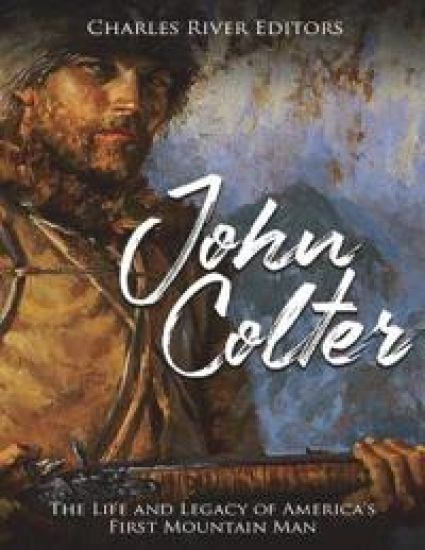
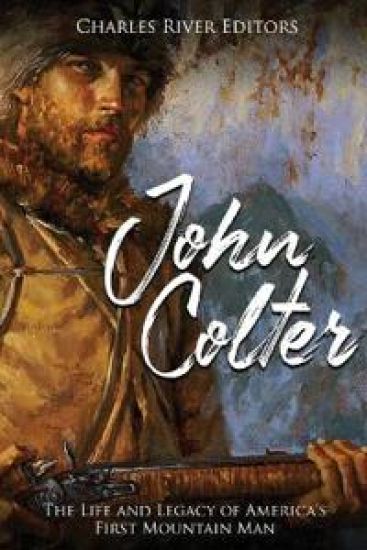
John Colter: The Life and Legacy of America's First Mountain Man

John Colter: The Life and Legacy of America's First Mountain Man

Charles River

Createspace Independent Publishing Platform
2018
nidottu
*Includes pictures*Includes contemporary accounts*Includes online resources and a bibliography for further reading"Again he turned his head, and saw the savage not twenty yards from him. Determined if possible to avoid the expected blow, he suddenly stopped, turned round, and spread out his arms. The Indian, surprised by the suddenness of the action, and perhaps at the bloody appearance of Colter, also attempted to stop; but exhausted with running, he fell whilst endeavouring to throw his spear, which stuck in the ground, and broke in his hand. Colter instantly snatched up the pointed part, with which he pinned him to the earth, and then continued his flight." - John Bradbury, 1817 The time of the American mountain man was not to reach its peak until the mid-19th century, but the man who served as the prototype for the cultural genre hailed from an earlier age in which the new United States had scarcely established its most basic structural tenets. A member of the original Lewis and Clark Corps of Discovery commissioned by Thomas Jefferson, John Colter's multiple journeys to the northwest country of present-day Montana, Wyoming, and Idaho were first-time events in the development of the continent. With Lewis and Clark, Colter was met with every challenge the North American wilderness had to offer, including "constant rain and plaguing insects," a range of cultures never before explored, an extreme mountain climate at unfamiliar elevations, and teeming wildlife boasting its share of predators. Added to Colter's skills as a woodsman was a developing talent for communicating with previously unknown indigenous societies. He was undoubtedly assisted in this essential function by the presence of Sacajawea, a Lehmhi Shoshoni woman of the Agaidika, or Salmon-Eaters. She was married to the French translator Toussaint Charbonneau in a non-consensual contract, purchased with a second woman to serve as a working wife. Based on the experience gained from the Lewis and Clark expedition, Colter became a valued figure in future treks as part of the international trade for "plews," the frontier word for beaver pelts. As one of the best hunters and trackers from the expedition, he was to be sent out on missions covering vast distances in his subsequent returns to the northwest. Although the precise routes of his solo journeys are difficult to confirm, Colter was likely the first explorer to witness the thermal marvels of the Yellowstone region and the Grand Tetons towering above present-day Jackson Hole. His accounts of the boiling geysers and bubbling pools of the northern Rockies remained the butt of frontier jokes until discovered by the next wave of surprised frontiersmen. Compared to the fantasies of Paul Bunyan and Pecos Bill that entertained a fascinated public in the east, the hair-raising events of Colter's time in the West were authentic and more than equal to popular fantasies of wilderness lore. His travels on foot were likened to the Aegean wanderings of Homer's Odysseus, and in a comparison closer to home, he was often referred to as the Daniel Boone of the West. As the first mountain man, many factual considerations concerning his travels remain as matters of contention, and Colter never produced a written account, but the maps of William Clark and the recollections of the few who knew him have helped to clarify a story two centuries old. John Colter: The Life and Legacy of America's First Mountain Man chronicles the remarkable story of the legendary explorer. Along with pictures of important people, places, and events, you will learn about John Colter like never before.
John Colter: The Life and Legacy of America's First Mountain Man

John Colter: The Life and Legacy of America's First Mountain Man

Charles River

Createspace Independent Publishing Platform
2018
nidottu
*Includes pictures*Includes contemporary accounts*Includes online resources and a bibliography for further reading"Again he turned his head, and saw the savage not twenty yards from him. Determined if possible to avoid the expected blow, he suddenly stopped, turned round, and spread out his arms. The Indian, surprised by the suddenness of the action, and perhaps at the bloody appearance of Colter, also attempted to stop; but exhausted with running, he fell whilst endeavouring to throw his spear, which stuck in the ground, and broke in his hand. Colter instantly snatched up the pointed part, with which he pinned him to the earth, and then continued his flight." - John Bradbury, 1817 The time of the American mountain man was not to reach its peak until the mid-19th century, but the man who served as the prototype for the cultural genre hailed from an earlier age in which the new United States had scarcely established its most basic structural tenets. A member of the original Lewis and Clark Corps of Discovery commissioned by Thomas Jefferson, John Colter's multiple journeys to the northwest country of present-day Montana, Wyoming, and Idaho were first-time events in the development of the continent. With Lewis and Clark, Colter was met with every challenge the North American wilderness had to offer, including "constant rain and plaguing insects," a range of cultures never before explored, an extreme mountain climate at unfamiliar elevations, and teeming wildlife boasting its share of predators. Added to Colter's skills as a woodsman was a developing talent for communicating with previously unknown indigenous societies. He was undoubtedly assisted in this essential function by the presence of Sacajawea, a Lehmhi Shoshoni woman of the Agaidika, or Salmon-Eaters. She was married to the French translator Toussaint Charbonneau in a non-consensual contract, purchased with a second woman to serve as a working wife. Based on the experience gained from the Lewis and Clark expedition, Colter became a valued figure in future treks as part of the international trade for "plews," the frontier word for beaver pelts. As one of the best hunters and trackers from the expedition, he was to be sent out on missions covering vast distances in his subsequent returns to the northwest. Although the precise routes of his solo journeys are difficult to confirm, Colter was likely the first explorer to witness the thermal marvels of the Yellowstone region and the Grand Tetons towering above present-day Jackson Hole. His accounts of the boiling geysers and bubbling pools of the northern Rockies remained the butt of frontier jokes until discovered by the next wave of surprised frontiersmen. Compared to the fantasies of Paul Bunyan and Pecos Bill that entertained a fascinated public in the east, the hair-raising events of Colter's time in the West were authentic and more than equal to popular fantasies of wilderness lore. His travels on foot were likened to the Aegean wanderings of Homer's Odysseus, and in a comparison closer to home, he was often referred to as the Daniel Boone of the West. As the first mountain man, many factual considerations concerning his travels remain as matters of contention, and Colter never produced a written account, but the maps of William Clark and the recollections of the few who knew him have helped to clarify a story two centuries old. John Colter: The Life and Legacy of America's First Mountain Man chronicles the remarkable story of the legendary explorer. Along with pictures of important people, places, and events, you will learn about John Colter like never before.

Belén: La Historia y Legado del Lugar de Nacimiento de Jesús

Belén: La Historia y Legado del Lugar de Nacimiento de Jesús

Charles River

Createspace Independent Publishing Platform
2018
nidottu
"Pero t , Bel n Efrata, aunque eres peque a entre las familias de Jud , de ti me saldr el que ha de ser gobernante en Israel. Y sus or genes son desde tiempos antiguos, desde los d as de la eternidad". - El Libro de Miqueas, Cap tulo 5 Bel n es una de las ciudades m s antiguas del mundo, una que ha sido conquistada y gobernada por cananeos, jud os, romanos, rabes, cruzados, los mamelucos de Egipto, y los otomanos. Tan solo en el ltimo siglo, ha sido controlada por varias partes diferentes. Los brit nicos tomaron Bel n durante la Primera Guerra Mundial y controlaron la ciudad desde 1920 hasta 1948, y tras la guerra de 1948 entre Israel y sus vecinos, Jordania anexion Bel n y la control hasta la Guerra de los Seis D as en 1967. Fue durante la Guerra de los Seis D as que Israel tom el control de Bel n, conservando el poder sobre la ciudad hasta 1995, cuando, de conformidad con los Acuerdos de Paz de Oslo, el control de la ciudad y de Cisjordania circundante fue entregado a la Autoridad Nacional Palestina. Los palestinos contin an administrando los asuntos de Bel n hasta el d a de hoy. Qu fue lo que hizo de este peque o asentamiento sin pretensiones, el foco de tanta atenci n y conflictos? La principal raz n por la que Bel n es tan famosa hoy en d a son los pasajes b blicos que relacionan la ciudad como el lugar de nacimiento de Jesucristo. Adem s, la iglesia cristiana m s antigua en uso continuo en el mundo es la Iglesia de la Natividad en Bel n. Como la ciudad misma, la Iglesia de la Natividad ha pasado por numerosos ciclos de creaci n y ruina. Construida sobre la Cueva de la Natividad por primera vez por la madre del emperador Constantino, Helena, en mayo de 339, la iglesia existi durante casi dos siglos antes de ser destruida durante la revuelta samaritana en el 529 a. C. La iglesia fue luego reconstruida por el emperador bizantino Justiniano en 565, y es esta estructura la que ha sobrevivido en gran parte hasta nuestros d as. Hoy, la Iglesia de la Natividad es Patrimonio de la Humanidad declarado por la UNESCO, junto con la ruta de peregrinaci n que conduc a entre Bel n y Jerusal n. La iglesia y su complejo circundante de conventos, monasterios y capillas son de apariencia similar a fortalezas, lo que refleja la turbulenta historia no solo de Bel n, sino de las comunidades religiosas conectadas con el sitio. Fue un punto focal en los conflictos de las Cruzadas, y al igual que muchas otras ciudades en Tierra Santa, cay en declive tras ser expulsados de sta los ej rcitos europeos. A pesar de estar bajo el dominio rabe, las comunidades cristianas griegas y sirias han continuado viviendo y operando en el sitio, que fue respetado tanto por las religiones cristianas como isl micas. Tambi n fue un sitio importante para el juda smo, siendo el lugar donde tuvieron lugar muchos eventos del Antiguo Testamento. Bel n es el lugar de sepultura de Raquel, esposa de Jacob, y es donde tuvo lugar la historia de Rut y su suegra Naomi. Tambi n se conoc a como la ciudad de David porque fue el lugar donde el rey David fue ungido por Samuel. No hace falta decir que toda su historia y significancia religiosa la convierten en uno de los lugares m s importantes del planeta. Bel n: La historia y legado del lugar de nacimiento de Jes s revisa la historia de la ciudad y su importancia en la antig edad. En conjunto con im genes que representan personas, lugares y eventos importantes, aprender sobre Bel n como nunca antes.
Belén y Nazaret: la historia y el legado del lugar de nacimiento y la ciudad natal de Jesucristo
"Nathanael le dijo, ' Puede salir algo bueno de Nazaret' Felipe le dijo, 'Ven y ver s'" (Juan 1,46) " Y l] vino y vivi en una ciudad, Nazaret. As fue para que se cumpliera lo dicho por los profetas: 'Ser llamado Nazareno'". (Mateo 2,23) "' Qu asuntos tienes con nosotros, Jesus de Nazaret? Has venido a destruirnos? S qui n eres T , el Santo de Dios '" - (Marcos 1,24) El pueblo de Nazaret, localizado en Galilea en el Norte de Israel, es hoy en d a un floreciente asentamiento con m s de 60.000 habitantes. Pero hace m s de 2000 a os era un pueblo insignificante de solo unos pocos centenares de habitantes, la mayor a granjeros y algunos jornaleros que viajaban a los cercanos poblados romanos en busca de trabajo. A pesar de ello, fue en esta localidad tan improbable donde vivi la Sagrada Familia. A n m s importante es que fue aqu donde la Anunciaci n tuvo lugar: el momento en el que el ngel Gabriel revel a Mar a que ella ser a la virgen madre de Jes s. Muchos tambi n sostienen que Nazaret fue el sitio donde Jes s pas la mayor parte de su infancia, aprendiendo el oficio de su padre, asistiendo a los servicios la sinagoga local, y desarrollando los fundamentos de su fe. Jos , Mar a y Jes s habr an seguido el estilo de vida jud o de esa poca, pero despu s de Cristo, Nazaret se fue convirtiendo en el centro de las peregrinaciones a la Tierra Santa. A trav s de los a os ha sido el escenario de algunas de las m s impresionantes manifestaciones de fe frente a la opresi n y el peligro, representando la turbulencia de los primeros a os del Cristianismo en la regi n, y de las campa as militares en la Tierra Santa durante las Cruzadas y el per odo Otomano. A trav s de todo eso, Nazaret ha continuado siendo un sitio extremadamente importante para la fe cristiana, considerando que hay cinco lugares vinculados a la vida y tiempos de Jesucristo: la Iglesia de San Gabriel, la Bas lica de la Anunciaci n, la Iglesia de San Jos , la antigua sinagoga, y un precipicio en el l mite de la ciudad, adonde Jes s fue llevado para ser ejecutado por blasfemo. Bel n es una de las ciudades m s antiguas del mundo, una que ha sido conquistada y gobernada por cananeos, jud os, romanos, rabes, cruzados, los mamelucos de Egipto, y los otomanos. Tan solo en el ltimo siglo, ha sido controlada por varias partes diferentes. Los brit nicos tomaron Bel n durante la Primera Guerra Mundial y controlaron la ciudad desde 1920 hasta 1948, y tras la guerra de 1948 entre Israel y sus vecinos, Jordania anexion Bel n y la control hasta la Guerra de los Seis D as en 1967. Fue durante la Guerra de los Seis D as que Israel tom el control de Bel n, conservando el poder sobre la ciudad hasta 1995, cuando, de conformidad con los Acuerdos de Paz de Oslo, el control de la ciudad y de Cisjordania circundante fue entregado a la Autoridad Nacional Palestina. Los palestinos contin an administrando los asuntos de Bel n hasta el d a de hoy. Qu fue lo que hizo de este peque o asentamiento sin pretensiones, el foco de tanta atenci n y conflictos? La principal raz n por la que Bel n es tan famosa hoy en d a son los pasajes b blicos que relacionan la ciudad como el lugar de nacimiento de Jesucristo. Adem s, la iglesia cristiana m s antigua en uso continuo en el mundo es la Iglesia de la Natividad en Bel n. Como la ciudad misma, la Iglesia de la Natividad ha pasado por numerosos ciclos de creaci n y ruina. Construida sobre la Cueva de la Natividad por primera vez por la madre del emperador Constantino, Helena, en mayo de 339, la iglesia existi durante casi dos siglos antes de ser destruida durante la revuelta samaritana en el 529 a. C. La iglesia fue luego reconstruida por el emperador bizantino Justiniano en 565, y es esta estructura la que ha sobrevivido en gran parte hasta nuestros d as. Hoy, la Iglesia de la Natividad es Patrimonio de la Humanidad declara
Belén y Nazaret: la historia y el legado del lugar de nacimiento y la ciudad natal de Jesucristo
"Nathanael le dijo, ' Puede salir algo bueno de Nazaret' Felipe le dijo, 'Ven y ver s'" (Juan 1,46) " Y l] vino y vivi en una ciudad, Nazaret. As fue para que se cumpliera lo dicho por los profetas: 'Ser llamado Nazareno'". (Mateo 2,23) "' Qu asuntos tienes con nosotros, Jesus de Nazaret? Has venido a destruirnos? S qui n eres T , el Santo de Dios '" - (Marcos 1,24) El pueblo de Nazaret, localizado en Galilea en el Norte de Israel, es hoy en d a un floreciente asentamiento con m s de 60.000 habitantes. Pero hace m s de 2000 a os era un pueblo insignificante de solo unos pocos centenares de habitantes, la mayor a granjeros y algunos jornaleros que viajaban a los cercanos poblados romanos en busca de trabajo. A pesar de ello, fue en esta localidad tan improbable donde vivi la Sagrada Familia. A n m s importante es que fue aqu donde la Anunciaci n tuvo lugar: el momento en el que el ngel Gabriel revel a Mar a que ella ser a la virgen madre de Jes s. Muchos tambi n sostienen que Nazaret fue el sitio donde Jes s pas la mayor parte de su infancia, aprendiendo el oficio de su padre, asistiendo a los servicios la sinagoga local, y desarrollando los fundamentos de su fe. Jos , Mar a y Jes s habr an seguido el estilo de vida jud o de esa poca, pero despu s de Cristo, Nazaret se fue convirtiendo en el centro de las peregrinaciones a la Tierra Santa. A trav s de los a os ha sido el escenario de algunas de las m s impresionantes manifestaciones de fe frente a la opresi n y el peligro, representando la turbulencia de los primeros a os del Cristianismo en la regi n, y de las campa as militares en la Tierra Santa durante las Cruzadas y el per odo Otomano. A trav s de todo eso, Nazaret ha continuado siendo un sitio extremadamente importante para la fe cristiana, considerando que hay cinco lugares vinculados a la vida y tiempos de Jesucristo: la Iglesia de San Gabriel, la Bas lica de la Anunciaci n, la Iglesia de San Jos , la antigua sinagoga, y un precipicio en el l mite de la ciudad, adonde Jes s fue llevado para ser ejecutado por blasfemo. Bel n es una de las ciudades m s antiguas del mundo, una que ha sido conquistada y gobernada por cananeos, jud os, romanos, rabes, cruzados, los mamelucos de Egipto, y los otomanos. Tan solo en el ltimo siglo, ha sido controlada por varias partes diferentes. Los brit nicos tomaron Bel n durante la Primera Guerra Mundial y controlaron la ciudad desde 1920 hasta 1948, y tras la guerra de 1948 entre Israel y sus vecinos, Jordania anexion Bel n y la control hasta la Guerra de los Seis D as en 1967. Fue durante la Guerra de los Seis D as que Israel tom el control de Bel n, conservando el poder sobre la ciudad hasta 1995, cuando, de conformidad con los Acuerdos de Paz de Oslo, el control de la ciudad y de Cisjordania circundante fue entregado a la Autoridad Nacional Palestina. Los palestinos contin an administrando los asuntos de Bel n hasta el d a de hoy. Qu fue lo que hizo de este peque o asentamiento sin pretensiones, el foco de tanta atenci n y conflictos? La principal raz n por la que Bel n es tan famosa hoy en d a son los pasajes b blicos que relacionan la ciudad como el lugar de nacimiento de Jesucristo. Adem s, la iglesia cristiana m s antigua en uso continuo en el mundo es la Iglesia de la Natividad en Bel n. Como la ciudad misma, la Iglesia de la Natividad ha pasado por numerosos ciclos de creaci n y ruina. Construida sobre la Cueva de la Natividad por primera vez por la madre del emperador Constantino, Helena, en mayo de 339, la iglesia existi durante casi dos siglos antes de ser destruida durante la revuelta samaritana en el 529 a. C. La iglesia fue luego reconstruida por el emperador bizantino Justiniano en 565, y es esta estructura la que ha sobrevivido en gran parte hasta nuestros d as. Hoy, la Iglesia de la Natividad es Patrimonio de la Humanidad declara
Belén: La Historia y Legado del Lugar de Nacimiento de Jesús

Belén: La Historia y Legado del Lugar de Nacimiento de Jesús

Charles River

Createspace Independent Publishing Platform
2018
nidottu
"Pero t , Bel n Efrata, aunque eres peque a entre las familias de Jud , de ti me saldr el que ha de ser gobernante en Israel. Y sus or genes son desde tiempos antiguos, desde los d as de la eternidad". - El Libro de Miqueas, Cap tulo 5 Bel n es una de las ciudades m s antiguas del mundo, una que ha sido conquistada y gobernada por cananeos, jud os, romanos, rabes, cruzados, los mamelucos de Egipto, y los otomanos. Tan solo en el ltimo siglo, ha sido controlada por varias partes diferentes. Los brit nicos tomaron Bel n durante la Primera Guerra Mundial y controlaron la ciudad desde 1920 hasta 1948, y tras la guerra de 1948 entre Israel y sus vecinos, Jordania anexion Bel n y la control hasta la Guerra de los Seis D as en 1967. Fue durante la Guerra de los Seis D as que Israel tom el control de Bel n, conservando el poder sobre la ciudad hasta 1995, cuando, de conformidad con los Acuerdos de Paz de Oslo, el control de la ciudad y de Cisjordania circundante fue entregado a la Autoridad Nacional Palestina. Los palestinos contin an administrando los asuntos de Bel n hasta el d a de hoy. Qu fue lo que hizo de este peque o asentamiento sin pretensiones, el foco de tanta atenci n y conflictos? La principal raz n por la que Bel n es tan famosa hoy en d a son los pasajes b blicos que relacionan la ciudad como el lugar de nacimiento de Jesucristo. Adem s, la iglesia cristiana m s antigua en uso continuo en el mundo es la Iglesia de la Natividad en Bel n. Como la ciudad misma, la Iglesia de la Natividad ha pasado por numerosos ciclos de creaci n y ruina. Construida sobre la Cueva de la Natividad por primera vez por la madre del emperador Constantino, Helena, en mayo de 339, la iglesia existi durante casi dos siglos antes de ser destruida durante la revuelta samaritana en el 529 a. C. La iglesia fue luego reconstruida por el emperador bizantino Justiniano en 565, y es esta estructura la que ha sobrevivido en gran parte hasta nuestros d as. Hoy, la Iglesia de la Natividad es Patrimonio de la Humanidad declarado por la UNESCO, junto con la ruta de peregrinaci n que conduc a entre Bel n y Jerusal n. La iglesia y su complejo circundante de conventos, monasterios y capillas son de apariencia similar a fortalezas, lo que refleja la turbulenta historia no solo de Bel n, sino de las comunidades religiosas conectadas con el sitio. Fue un punto focal en los conflictos de las Cruzadas, y al igual que muchas otras ciudades en Tierra Santa, cay en declive tras ser expulsados de sta los ej rcitos europeos. A pesar de estar bajo el dominio rabe, las comunidades cristianas griegas y sirias han continuado viviendo y operando en el sitio, que fue respetado tanto por las religiones cristianas como isl micas. Tambi n fue un sitio importante para el juda smo, siendo el lugar donde tuvieron lugar muchos eventos del Antiguo Testamento. Bel n es el lugar de sepultura de Raquel, esposa de Jacob, y es donde tuvo lugar la historia de Rut y su suegra Naomi. Tambi n se conoc a como la ciudad de David porque fue el lugar donde el rey David fue ungido por Samuel. No hace falta decir que toda su historia y significancia religiosa la convierten en uno de los lugares m s importantes del planeta. Bel n: La historia y legado del lugar de nacimiento de Jes s revisa la historia de la ciudad y su importancia en la antig edad. En conjunto con im genes que representan personas, lugares y eventos importantes, aprender sobre Bel n como nunca antes.
American Legends: The Life of Cary Grant

American Legends: The Life of Cary Grant

Charles River

Createspace Independent Publishing Platform
2018
nidottu
*Includes pictures of important people, places, and events. *Includes Cary Grant's quotes about his own life and working with other Hollywood stars. *Includes a bibliography for further reading. "Everyone wants to be Cary Grant. Even I want to be Cary Grant." - Cary Grant A lot of ink has been spilled covering the lives of history's most influential figures, but how much of the forest is lost for the trees? In Charles River Editors' American Legends series, readers can get caught up to speed on the lives of America's most important men and women in the time it takes to finish a commute, while learning interesting facts long forgotten or never known. Movie stars are revered for their ability to captivate audiences, and perhaps no actor has done it as well as Cary Grant, the epitome of the suave, debonair actor who may have been rivaled only by dancer extraordinaire Fred Astaire. Grant offered a version of the male actor that stood in stark contrast with the gangster heroes and hard-boiled film noir detectives that populated the screen throughout his career. Impeccably groomed and always clad in dapper attire, Grant possessed a magnetism that was undeniably attractive, all while managing to come across as well-heeled and socially respectable. As a result, there was an archetypal quality to Cary Grant that endeared him to both male and female viewers. After all, he was able to star in major movies well into his 60s, and even after he retired, Grant never lost his charm and continued to maintain a universal appeal that has almost never been rivaled. Cary Grant occupies an almost sacred place in American film history, but it is still important to recognize that the persona that has enchanted audiences for decades was in fact a creation. Grant was not born with the charm and elegance he later exuded, and the contrast between his upbringing and the man he would later become is arguably the most remarkable aspect of his life story. Born into a dysfunctional family, Grant had a tumultuous childhood that saw him tasked with perpetually overcoming major adversity. With a mother who was too ill to care for him and a father whose interests lay elsewhere, he was in many respects charged with raising himself, a dynamic entirely antithetical to the affluent characters he famously portrayed in films such as The Philadelphia Story (1939), To Catch a Thief (1953), and An Affair to Remember (1957). The progression from Grant's youth to his glamorous adult life was a complex transformation of its own, and it is a Hollywood rags-to-riches story of its own. At the same time, Grant's rise to stardom was due to an intricate web of factors, including his own natural acting ability, developments in the motion picture industry, and the fortuitous opportunity to consistently work with gifted directors who molded his image. Like nearly every big star, Grant was an exceptionally gifted actor and someone who benefited from a fortunate string of career opportunities that he took advantage of to full effect. American Legends: The Life of Cary Grant examines the life and career of Hollywood's most iconic leading man. Along with pictures of important people, places, and events, you will learn about Cary Grant like never before, in no time at all.
American Legends: The Life of Tony Curtis

American Legends: The Life of Tony Curtis

Charles River

Createspace Independent Publishing Platform
2018
nidottu
*Includes pictures *Includes Curtis' quotes about his own life and career *Includes online resources and a bibliography for further reading *Includes a table of contents "If you know how to live in Vegas you can have the best time." - Tony Curtis A lot of ink has been spilled covering the lives of history's most influential figures, but how much of the forest is lost for the trees? In Charles River Editors' American Legends series, readers can get caught up to speed on the lives of America's most important men and women in the time it takes to finish a commute, while learning interesting facts long forgotten or never known. At the height of Hollywood's "golden age" of the 1940s through the early '60s, many of the industry's brightest stars could boast of unique stories describing how they were discovered. Their distinctiveness as on-screen personalities was an important part of that stardom, but one unlikely actor, a mismatch of contrasts, dialects, looks, and personal behavior, was to become an icon of the age, revered and disdained, but in the end, fondly remembered by the movie industry and fan base. Tony Curtis was, in the beginning, considered by most of his colleagues as a hack actor, but in time, one who took it upon himself to develop into a true screen artist. At his height as a matinee idol, Curtis was blessed with "piercing blue eyes and good looks," a physicality described by the New York Times as "classically handsome." He was to set a new criteria in place for male beauty in his era, a "feminized" but rugged heroism, able to portray grisly scenes with a "pretty boy" appearance, then immediately turn "cute" and excel in light comedy. Off-screen, Curtis was one of Hollywood's most prodigious womanizers, with a "predatory sexual magnetism" that was both alluring and feared, a quality that translated directly onto the screen, where Curtis presented a mix of himself as "part rogue and part earnest, sensitive hunk." His many liaisons, numbering over a thousand, included the yet undiscovered Marilyn Monroe in her teen years, Natalie Wood, and Janet Leigh of Psycho fame. In addition to his work as an actor, Curtis became a successful painter, and held his time spent creating canvasses in higher esteem than any of his cinematic performances. The New York Museum of Modern Art has his work in its collections, and many have sold at considerable prices. He was also an accomplished amateur flautist and an occasional novelist, maintaining a professionally consistent work ethic, despite an adult life filled with alcohol and drug use. In a career filled with quirky, romantic, and unsettling roles, Curtis took part in over one hundred films. Many were based on average scripts at best, but even for these, he is beloved in retrospect, and most admired for his work in Some Like It Hot, Spartacus, The Defiant Ones, and Houdini, among others. Such was Curtis' charm that a generation of movie-goers, and even critics, looked the other way as he played everything from Shakespearian kings to Arab spin-offs, medieval knights, and Roman and Viking slaves to tremendous acclaim, all with a Bronx accent and a particularly American swagger. American Legends: The Life of Tony Curtis examines the life and career of America's most famous actors. Along with pictures of important people, places, and events, you will learn about Tony Curtis like never before, in no time at all.
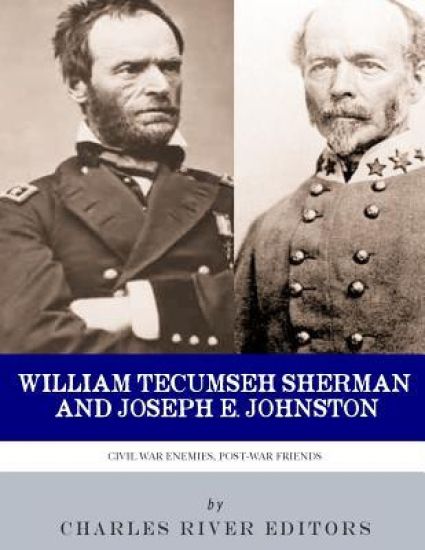
Civil War Enemies, Post-War Friends: William Tecumseh Sherman and Joseph E. Johnston

Civil War Enemies, Post-War Friends: William Tecumseh Sherman and Joseph E. Johnston

Charles River

Createspace Independent Publishing Platform
2018
nidottu
*Weaves the lives and careers of Sherman and Johnston together into one entertaining and educational narrative. *Includes pictures of the generals and important people and places in their lives. *Includes maps of important battles they fought in. *Discusses their relationship during and after the war. *Includes Bibliographies of each general for further reading. William Tecumseh Sherman (February 8, 1820 - February 14, 1891) holds a unique position in American history. Synonymous with barbarity in the South, Sherman is lauded as a war hero in the North, and modern historians consider him the harbinger of total war. As a General in the Union Army during the American Civil War (1861-65), Sherman was recognized for his outstanding command of military strategy but criticized for the harshness of the "scorched earth" policies that he implemented in conducting total war against the Confederate States, especially in 1864 and 1865. Military historian B. H. Liddell Hart famously declared that Sherman was "the first modern general." Sherman spent a majority of the war out west, although it is often forgotten that he was a brigade commander at the First Battle of Bull Run, and that the Civil War actually finished with General Joseph E. Johnston surrendering to Sherman weeks after Appomattox. Having fought against each other and negotiated with each other, Sherman and Johnston became good friends after the war, and when the elderly Johnston served as a pallbearer at Sherman's funeral, he contracted an illness that eventually killed him. During the Civil War, one of the tales that was often told among Confederate soldiers was that Joseph E. Johnston was a crack shot who was a better bird hunter than just about everyone else in the South. However, as the story went, Johnston would never take the shot when asked to, complaining that something was wrong with the situation that prevented him from being able to shoot the bird when it was time. The story is almost certainly apocryphal, but it was aptly used to demonstrate the Confederates' frustration with a man who everyone regarded as a capable general. Johnston would become known more for losing by not winning; he was never badly beaten in battle, but he had a habit of strategically withdrawing until he had nowhere left to retreat. When Johnston had retreated in the face of McClellan's army before Richmond in 1862, he finally launched a complex attack that not only failed but left him severely wounded, forcing him to turn over command of the Army of Northern Virginia to Robert E. Lee. Johnston and Confederate President Jefferson Davis had a volatile relationship throughout the war, but Johnston was too valuable to leave out of service and at the beginning of 1864 he was given command of the Army of Tennessee. When Johnston gradually retreated in the face of Sherman's massive army (which outnumbered his 2-1) before Atlanta in 1864, Davis removed Johnston from command of the Army of Tennessee and gave it to John Bell Hood. Civil War Enemies, Post-War Friends chronicles the lives and careers of the two famous generals, including their famous encounters in the field, their assessments of each other, and their final surrender negotiations. Along with pictures of important people, places, and events in his life, you will learn about Sherman and Johnston like you never have before.
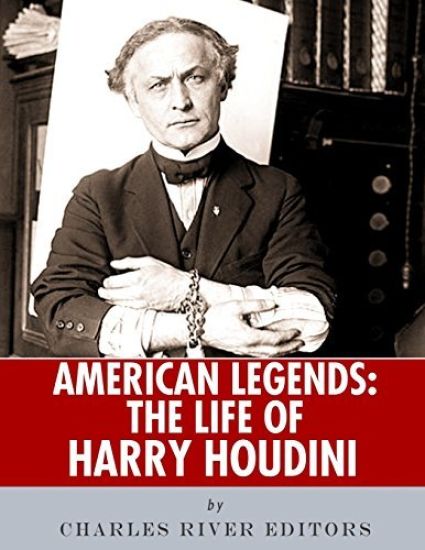
American Legends: The Life of Harry Houdini

American Legends: The Life of Harry Houdini

Charles River

Createspace Independent Publishing Platform
2018
nidottu
*Includes pictures of Houdini and his most famous escape acts. *Includes descriptions of Houdini's most famous stunts. *Includes a Bibliography for further reading. "I knew, as everyone knows, that the easiest way to attract a crowd is to let it be known that at a given time and a given place some one is going to attempt something that in the event of failure will mean sudden death. That's what attracts us to the man who paints the flagstaff on the tall building, or to the 'human fly' who scales the walls of the same building." - Harry Houdini A lot of ink has been spilled covering the lives of history's most influential figures, but how much of the forest is lost for the trees? In Charles River Editors' American Legends series, readers can get caught up to speed on the lives of America's most important men and women in the time it takes to finish a commute, while learning interesting facts long forgotten or never known. There is no shortage of professional magicians and stunt men in the 21st century, but all of them owe something to the most famous stunt man of them all, Harry Houdini. A century after he began to thrill audiences with his patented escape acts, Houdini's name remains synonymous with seemingly miraculous escapes and getaways, and his name is instantly recognizable even among those who have never seen pictures of his stunts. Houdini wasn't the first of his kind, but after he got his start as "Harry Handcuff Houdini" during a traveling European tour, he added the kind of showmanship and flair that have become standard fare among performers of his kind. His initial repertoire of escaping handcuffs eventually gave way to far grander feats, involving skyscrapers, straitjackets, and being buried alive. With fame came skepticism, and Houdini was frequently accused of being a fake and fixing his escapes. Some even believed he was helped by supernatural forces. Skeptics were bolstered by the fact that, like his escapes and magic tricks, Houdini remained a man shrouded in mystery, constantly changing his own life story to reinvent himself as he thought fit. Though Houdini insisted his stunts were real and constantly went after those who besmirched him or his profession, his success couldn't help but breed both legends and criticism simultaneously. By the end of his life, Houdini had transformed himself into a national celebrity, and he tried to dabble in acting and other pursuits, but he was destined to be forever associated with the profession he helped pioneer. And fittingly, mystery and controversy surrounded the exact cause of his death, as it had so much of his life. American Legends: The Life of Harry Houdini profiles the life, legends, stunts, and controversies of history's most famous escape artist, with pictures of important people, places, and events. You will learn about Houdini like you never have before, in no time at all.
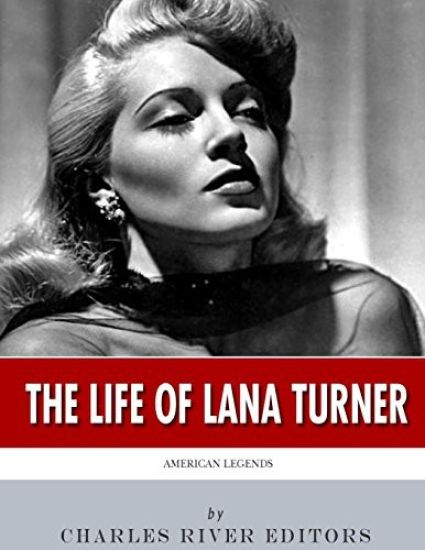
American Legends: The Life of Lana Turner

American Legends: The Life of Lana Turner

Charles River

Createspace Independent Publishing Platform
2018
nidottu
*Includes pictures. *Includes Turner's quotes about her own life and career. *Includes a bibliography for further reading. "My life has been a series of emergencies." - Lana Turner A lot of ink has been spilled covering the lives of history's most influential figures, but how much of the forest is lost for the trees? In Charles River Editors' American Legends series, readers can get caught up to speed on the lives of America's most important men and women in the time it takes to finish a commute, while learning interesting facts long forgotten or never known. During the Golden Era of Hollywood, few actresses proved as versatile as Lana Turner, who got her start playing the wholesome innocent young beauty as a teenager before shifting to femme fatale roles and starring in horror classics like Dr. Jekyll and Mr. Hyde. Discovered as a result of her beauty, Louis B. Mayer immediately saw her as a potential replacement for Jean Harlow, and Turner's earliest roles played off her sexiness, with an influence that reached all the way to Argentina, where Eva Peron sought to emulate her style. At the same time, however, Turner felt disrespected by the focus on her looks and desperately wanted to show she could be a critically acclaimed actress. That eventually occurred when she was nominated for an Oscar for Best Actress in Peyton Place (1957), and Turner would go on to have an acting career that spanned nearly 55 years, with her final appearance coming only a few years before her death. Throughout her life, Turner sought critical acclaim to prove that she was more than a pretty face, yet she is perhaps most famous now for living the kind of life that kept gossip rags and rumor mills in business. Turner lived fast and openly flaunted her sex life on the way to marrying 7 different men, but her most notorious relationship was with Johnny Stompanato, a shady figure with ties to the mob that ended up stabbed to death during an argument with Turner. Turner's teenage daughter had stabbed Stompanato and claimed she feared for her mother's life, and nobody was ever convicted, but the case generated all kinds of headlines, a fitting kind of exclamation point on the type of life Turner lived. American Legends: The Life of Lana Turner examines the life and career of one of America's most famous actresses. Along with pictures of important people, places, and events, you will learn about Lana Turner like never before, in no time at all.
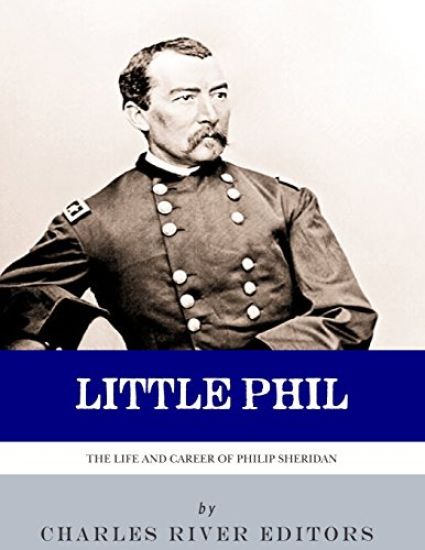
Little Phil: The Life and Career of General Philip Sheridan

Little Phil: The Life and Career of General Philip Sheridan

Charles River

Createspace Independent Publishing Platform
2018
nidottu
*Includes pictures of Sheridan and important people, places, and events in his life. "A brown, chunky little chap, with a long body, short legs, not enough neck to hang him, and such long arms that if his ankles itch he can scratch them without stooping." - Abraham Lincoln describing Phil Sheridan In the most popular narratives of the Civil War, Union Generals Ulysses S. Grant and William Tecumseh Sherman are celebrated as the Union's most successful generals and men who revolutionized total warfare with the use of scorched earth tactics. Sherman's March to the Sea continues to be one of the most famous campaigns of the war, and he is still widely reviled in the South because of it. Lost in this common narrative is the fact that Sherman's March was preceded by a scorched earth campaign that made Virginia howl, led by "Little Phil" Sheridan. The 5'5 Sheridan was one of the smallest and toughest fighters in the Union Army, whose capabilities as both a general of infantry and cavalry made him one of the most valuable and versatile officers in the North. A close associate of Grant's in the West, Sheridan was so critical that Grant brought him east in 1864 and gave him command of the Union cavalry to face off against the vaunted JEB Stuart. Despite his successes in the West and during the Overland Campaign, Sheridan's most famous campaign was in the Shenandoah Valley, which had seen much fighting and Stonewall Jackson's famous 1862 Valley Campaign. In 1864, however, Sheridan and his Army of the Shenandoah defeated Jubal Early and systematically destroyed the economic infrastructure and viability of the Valley, which had been considered the "breadbasket" of Virginia during the war's earlier years. Residents of the Valley simply referred to Sheridan's campaign as "The Burning". After Sheridan's cavalry proved instrumental in surrounding Lee's army and forcing its surrender at Appomattox, Sheridan had cemented his legacy as one of the greatest Union generals of the Civil War. But he was far from done. During Reconstruction, he was a military governor responsible for trying to pacify Southern civilians in the wake of the Civil War, and it should come as no surprise that Sheridan and Southerners didn't see eye to eye. Sheridan himself famously stated, "If I owned Texas and Hell, I would rent Texas and live in Hell." Sheridan also ran afoul of President Andrew Johnson, who later removed him from his post. The tough and acerbic Sheridan was also one of the highest ranked officers who fought the Indian Wars in the decades after the Civil War. Notorious for uttering "The only good Indians I ever saw were dead", which has since been misattributed into more generalized and bigoted forms, Sheridan's biographers have taken pains to try to point out that Little Phil wasn't a racist, though there can be no denying he ruthlessly waged war on the Great Plains to subdue Native American tribes. Enemies on the battlefield rarely got the best of Sheridan, but his hard living finally caught up with him around the end of the 1880s, when Sheridan, in his 50s, began suffering massive heartattacks. By the time he died in 1888, he had been General-in-Chief and Commanding General of the U. S. Army, the very upper echelons of the military, and he was celebrated as one of the Civil War's foremost heroes. Little Phil: The Life and Career of General Philip Sheridan provides a comprehensive account of the fighting general's military career, but it also humanizes "Little Phil", the quintessential military man. Along with pictures of important people, places, and events in his life, you will learn about Phil Sheridan like you never have before, in no time at all.
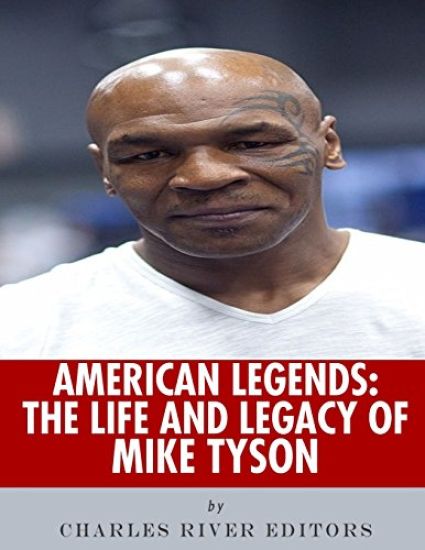
American Legends: The Life of Mike Tyson

American Legends: The Life of Mike Tyson

Charles River

Createspace Independent Publishing Platform
2018
nidottu
*Discusses Tyson's life in and out of the ring. *Includes Tyson's most colorful quotes. *Includes pictures of Tyson and important people in his life. "Everybody in boxing probably makes out well except for the fighter." - Mike Tyson A lot of ink has been spilled covering the lives of history's most influential figures, but how much of the forest is lost for the trees? In Charles River Editors' American Legends series, readers can get caught up to speed on the lives of America's most important men and women in the time it takes to finish a commute, while learning interesting facts long forgotten or never known. Iron Mike Tyson was one of the most feared opponents to ever step into a boxing ring. With unbelievable power that floored or stopped all but two of his first 28 professional opponents, Tyson began an unprecedented ascent to the top of the boxing world, becoming the youngest champion in history with a second round TKO over Trevor Berbick, the last man to box and defeat Muhammad Ali. That victory, in November 1986, prompted one British sports reporter to write, "The noble and manly art of boxing can at least cease worrying about its immediate future, now it has discovered a heavyweight champion fit to stand alongside Dempsey, Tunney, Louis, Marciano and Ali." Tyson became one of the biggest names in sports during the 1980s and could literally do no wrong in the ring, compiling a 37-0 record with 33 KO/TKOs. On top of that, he was the face of the iconic Nintendo game Mike Tyson's Punch-Out , a favorite among every video gamer in Generations X and Y. It was a stunning rise for a kid who grew up poor with no father in rough neighborhoods of New York City. Taunted for his now instantly recognizable high voice and lisp, Tyson was quick to fight and a petty criminal who became orphaned upon his mother's death when he was 16. Somehow, 4 years later, he was the heavyweight champion of the world. Unfortunately, as everyone knows today, the unprecedented nature of his rise is rivaled only by his stunning fall from grace. In February 1990, Tyson was knocked out by Buster Douglas in one of boxing's greatest upsets. Though he won his next few fights, his career was derailed by his conviction for raping Desiree Washington, landing him in prison for 3 of his prime fighting years. When Tyson got out of prison, his career simply became surreal. After winning a few belts back, he lost two bouts to Evander Holyfield, infamously biting part of Holyfield's ear off out of frustration during the rematch. He had another stint in jail before the end of the '90s, and his odd comments before his loss to Lennox Lewis ensured that the man once billed as an all time great was now more of a one man circus than anything else. In 2003, near the end of a career that had netted him $300 million, Tyson declared bankruptcy, hitting rock bottom. Today Tyson is nostalgically remembered as one of boxing's great heavyweights, but that shares the pedestal with his controversial quotes and antics. American Legends: The Life of Mike Tyson looks at the life and career of Iron Mike both inside and outside of the ring, including all his famous ups and infamous downs.
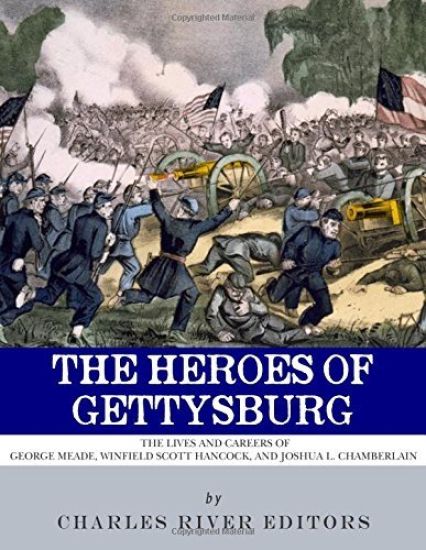
The Heroes of Gettysburg: The Lives and Careers of George Meade, Winfield Scott Hancock and Joshua L. Chamberlain
*Covers the entire careers of all three in one entertaining and educational narrative. *Includes pictures of Meade, Hancock, Chamberlain, and important people, places, and events in their lives. *Includes a Bibliography of each man for further reading. Despite the fact that the Civil War began over 150 years ago, it remains one of the most widely discussed topics in America today, with Americans arguing over its causes, reenacting its famous battles, and debating which general was better than others. Americans continue to be fascinated by the Civil War icons who made the difference between victory and defeat in the war's great battles. Naturally, as the most famous and biggest battle of the Civil War, Gettysburg has been studied intensely for nearly 150 years, as every decision by the battle's generals has been dissected over and over again. With that, the men most responsible for the Union victory there have been immortalized. Ironically, one of the generals who often escapes the attention of Civil War fans who compile the lists of best generals is the man who won the war's most famous battle, George G. Meade (1815-1872). During the first half of the war, Meade rose from command of a brigade to command of a division and finally command of the entire Army of the Potomac just days before the Battle of Gettysburg. Naturally, he is best known for defeating Robert E. Lee's Army of Northern Virginia at Gettysburg in July 1863, although he's not nearly as well remembered as his Confederate counterpart. After the Battle of Chancellorsville, Winfield Scott Hancock fortuitously became the new II Corps commander in the Army of the Potomac, just in time to deliver his greatest performance of all. At Gettysburg, Hancock was the commanding general in the field on Day 1, as Meade and the rest of the Union army arrived later that night. On Day 2, Hancock's men assisted Sickles' III Corps when Sickles disobeyed orders and moved it forward, creating a gap in the Union lines. And on Day 3, Hancock's greatest day of the war, he was seriously injured and nearly bled to death while leading his men in their decisive repulse of Pickett's Charge. Chamberlain had a respectable Civil War career and life, but he had been largely forgotten in the decades after the Civil War, with the focus on more influential commanding generals and their principal subordinates. Then a remarkable thing happened with the 1974 publication of Michael Sharaa's The Killer Angels, a Pulitzer Prize winning historical fiction that focuses on the Battle of Gettysburg and its influential generals and leaders. In one fell swoop, Michael Sharaa breathed life back into the reputations of men like John Buford and Joshua Chamberlain, cast as the Union heroes of Day 1 and Day 2 respectively that made victory at Gettysburg possible. In the novel, Chamberlain's regiment holds the high ground against a series of desperate Confederate charges, and when they ran out of gunpowder, Chamberlain ordered a brave bayonet charge that drove the Confederates in their front from the fight. With that, the Union's left flank was saved. The Heroes of Gettysburg comprehensively covers the leadership of all three at Gettysburg, but it also chronicles their entire lives and careers, humanizing the stoic Chamberlain, physically intimidating Hancock, and the surly but modest Meade. Along with bibliographies and pictures of important people, places, and events, you will learn about the Heroes of Gettysburg like you never have before.
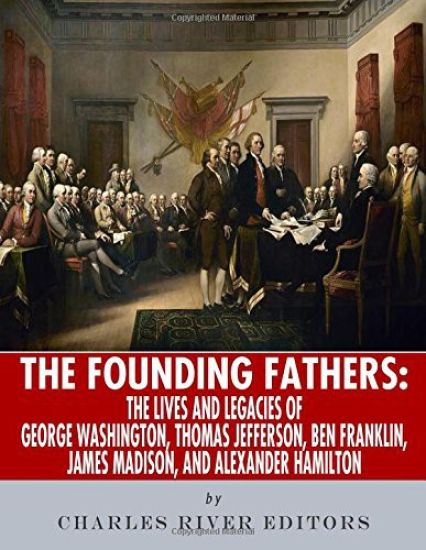
The Founding Fathers: The Lives and Legends of George Washington, Thomas Jefferson, Ben Franklin, James Madison, and Alexander Hamilton
*Includes an original introduction and biography for each Founding Father. *Includes pictures of the Founding Fathers and important people, places and events in their lives. A lot of ink has been spilled covering the lives of history's most influential figures, but how much of the forest is lost for the trees? In Charles River Editors' American Legends series, readers can get caught up to speed on the lives of America's most important men and women in the time it takes to finish a commute, while learning interesting facts long forgotten or never known. The Founding Fathers have held a special place in American society since the nation gained its freedom, and many of them had become national heroes even before then. Over 200 years later, Americans still look with reverence to these men, often debating with each other what the Founding Fathers would think about a certain issue, or how they would judge a certain law or legislation. In many respects, these men have become icons, whose words, thoughts and deeds are rarely questioned. Every American is taught a pristine narrative of the life and legacy of George Washington and can easily recite the highlights and myths of Washington's life. Thomas Jefferson was instrumental in authoring the Declaration of Independence, laying out the ideological groundwork of the notion of states' rights, leading one of the first political parties, and overseeing the expansion of the United States during his presidency. Before the United States of America even existed, the first American celebrity was Benjamin Franklin, who dabbled throughout his life in many fields as an author, printer, political theorist, politician, postmaster, scientist, musician, inventor, satirist, civic activist, statesman, and diplomat. Despite being one of the youngest delegates at the Constitutional Convention, James Madison was the Convention's most influential thinker, and the man most responsible for the final draft of the U. S. Constitution, forever earning the name "Father of the Constitution). And if the American Dream has come to represent the ability to climb the social ladder with skill and hard work, no Founding Father represented the new America more than Alexander Hamilton, an orphan who rose to become one of the influential Founding Fathers at the Constitutional Convention, the driving force behind the Federalist Papers, and the leader of a political party before engaging in the country's most famous duel. Like all legends, the staggering accomplishments of the Founding Fathers not only earned them monuments and memorials but helped enshrine their legacies, to the point that they are looked at almost as demigods above reproach. The Founding Fathers examines all of the colossal events and actions these men took, but it also analyzes what these men were really like, and how their personalities and passions helped shape the destiny of the country they founded and led. Along with pictures of the Founding Fathers and important people, places and events in their lives, you will learn about the Founding Fathers like you never have before, in no time at all.
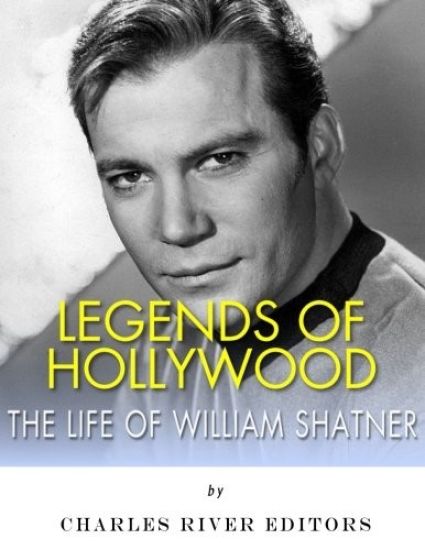
Legends of Hollywood: The Life of William Shatner

Legends of Hollywood: The Life of William Shatner

Charles River

Createspace Independent Publishing Platform
2018
nidottu
*Includes pictures *Includes Shatner's own quotes about his life and career *Includes a bibliography for further reading "I'm not a Starfleet commander, or T. J. Hooker. I don't live on Starship NCC-170...or own a phaser. I don't know anybody named Bones, Sulu, or Spock. And no, I've never had green alien sex, but I'm sure it'd be quite an evening. I speak English and French, not Klingon I drink Labatt's, not Romulan Ale And when someone says to me 'live long and prosper', I seriously mean it when I say, 'get a life'. My doctor's name is not McCoy, it's Ginsberg. And tribbles were puppets, not real animals. PUPPETS And when I speak, I never, ever talk like Every. Word. Is. Its. Own. Sentence. I live in California, but I was raised in Montreal. And I believe in Priceline.com, where you never have to pay full price for airline tickets, hotels, and car rentals I've appeared on stage at Stratford, at Carnegie Hall, Albert Hall, and the Monkland Theatre in NDG. And, yes, I've gone where no man has gone before, but... I was in Mexico and her father gave me permission My name is William Shatner, and I am Canadian " - William Shatner It almost goes without saying that nobody occupies a place in pop culture that remotely resembles the one William Shatner finds himself in. As an actor who has been about as critically acclaimed as he has been lampooned, Shatner seems to relish every aspect of his image, whether he's making fun of himself and others on a celebrity roast or appearing in humorous commercials as a spokesman for Priceline.com. Given the length and scope of his career, it's easy to forget that Shatner started as a pretty typical dramatic actor in his early years, including appearances in Judgment at Nuremberg, episodes of The Twilight Zone and Alfred Hitchcock Presents and even the Western series Outlaws. It's almost impossible to believe now, but Shatner was once heralded as the peer of leading men like Steve McQueen and Paul Newman. Of course, that all changed when Shatner took the role he has been most famously associated with ever since. Shatner was cast as Captain Kirk on the original television series Star Trek in an episode that was aired in 1966, and though the show was canceled in 1970, its unanticipated resurgence revived both the franchise and Shatner's career. As Shatner joked, "Captain Kirk has been a source of pleasure and income for a long time." Even when he took other roles over the next few decades, including starring as a police officer in the television series T. J. Hooker, Shatner could never shake the effects that being typecast as Captain Kirk had on his career, at least in middle age. In addition to being permanently associated with Kirk, Shatner and his career were viewed as something of a joke, and he was often criticized for overacting. Shatner was frequently nominated for Razzies, including one for "Worst Actor of the Century", and when he took his most recognizable role of the 21st century as Denny Crane in The Practice, a writer in The New York Times Magazine described his role as "William Shatner the man... playing William Shatner the character playing the character Denny Crane, who was playing the character William Shatner." That said, Shatner's character was beloved not just on The Practice but also on Boston Legal, winning him 2 Emmy awards and a Golden Globe, as well as nominations for a string of several straight years. Legends of Hollywood: The Life of William Shatner examines the life and career of the famous actor. Along with pictures of important people, places, and events, you will learn about Heston like never before, in no time at all.
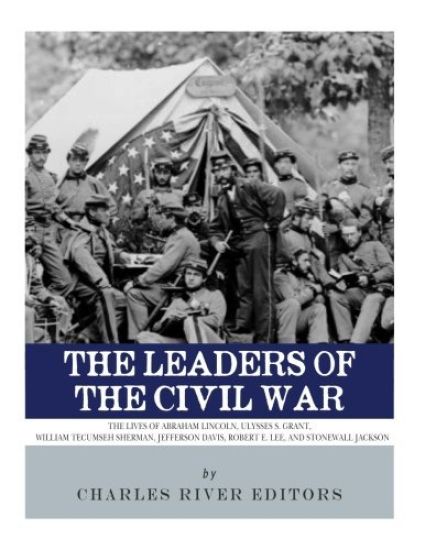
The Leaders of the Civil War: The Lives of Abraham Lincoln, Ulysses S. Grant, William Tecumseh Sherman, Jefferson Davis, Robert E. Lee, and Stonewal
*Includes pictures of important people, places, and events. *Includes an original introduction for each leader. *Includes a bibliography for each leader. Despite the fact that the Civil War began over 150 years ago, it remains one of the most widely discussed topics in America today, with Americans arguing over its causes, reenacting its famous battles, and debating which general was better than others. Americans continue to be fascinated by the Civil War leaders who made the difference between victory and defeat. Abraham Lincoln (1809-1865) is one of the most famous Americans in history and one of the country's most revered presidents. Schoolchildren can recite the life story of Lincoln, the "Westerner" who educated himself and became a self made man, rising from lawyer to leader of the new Republican Party before becoming the 16th President of the United States. Lincoln successfully navigated the Union through the Civil War but didn't live to witness his crowning achievement, becoming the first president assassinated when he was shot at Ford's Theater by John Wilkes Booth on April 14, 1865. In the 19th century, one of the surest ways to rise to prominence in American society was to be a war hero, like Andrew Jackson and William Henry Harrison. But few would have predicted such a destiny for Hiram Ulysses Grant, who had been a career soldier with little experience in combat and a failed businessman when the Civil War broke out in 1861. William Tecumseh Sherman (February 8, 1820 - February 14, 1891) holds a unique position in American history. Synonymous with barbarity in the South, Sherman is lauded as a war hero in the North, and modern historians consider him the harbinger of total war. As a General in the Union Army during the American Civil War (1861-65), Sherman was recognized for his outstanding command of military strategy but criticized for the harshness of the "scorched earth" policies that he implemented in conducting total war against the Confederate States, especially in 1864 and 1865. Military historian B. H. Liddell Hart famously declared that Sherman was "the first modern general." Jefferson Davis (1808-1889) holds a unique place in American history, as the man best remembered for being the president of the Confederacy during the Civil War. While other famous Confederates like Robert E. Lee and Stonewall Jackson are still celebrated across the reunited country, Davis continues to be the object of scorn, derided over his attempt to flee after the Civil War and criticized as ineffective by historians. Among the Confederates still lauded by today's Southerners, Davis is well down the list. With the exception of George Washington, perhaps the most famous general in American history is Robert E. Lee (January 19, 1807 - October 12, 1870), despite the fact he led the Confederate Army of Northern Virginia against the Union in the Civil War. As the son of U. S. Revolutionary War hero Henry "Light Horse Harry" Lee III, and a relative of Martha Custis Washington, Lee was imbued with a strong sense of honor and duty from the beginning. And as a top graduate of West Point, Lee had distinguished himself so well before the Civil War that President Lincoln asked him to command the entire Union Army. Lee famously declined, serving his home state of Virginia instead after it seceded. Thomas Jonathan Jackson is one of the most famous generals of the Civil War, but many of the people he continues to fascinate probably don't remember his whole name. That's because Jackson earned his famous "Stonewall" moniker at the First Battle of Manassas or Bull Run, when Brigadier-General Bee told his brigade to rally behind Jackson, whose men were standing like a stone wall. Ironically, it's still unclear whether that was a compliment for standing strong or an insult for not moving his brigade, but the nickname stuck for the brigade and the general itself.
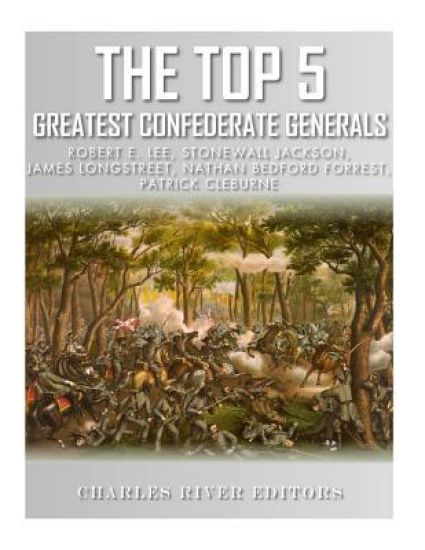
The Top 5 Greatest Confederate Generals: Robert E. Lee, Stonewall Jackson, James Longstreet, Nathan Bedford Forrest, and Patrick Cleburne
*Includes pictures and maps. *Includes bibliographies on each general for further reading. With the exception of George Washington, perhaps the most famous general in American history might be Robert E. Lee, despite the fact he led the Confederate Army of Northern Virginia against the Union in the Civil War. Lee had distinguished himself so well before the Civil War that President Lincoln asked him to command the entire Union Army. Lee famously declined, serving his home state of Virginia instead after it seceded. Lee's most famous subordinate, Thomas Jonathan Jackson earned his famous "Stonewall" moniker at the First Battle of Bull Run, when Brigadier-General Bee told his brigade to rally behind Jackson, whose men were standing like a stone wall. Lee's other most famous subordinate was James Longstreet, the man Lee called his "old war horse." Had Longstreet died on the field in early May 1864, he would almost certainly be considered one of the South's biggest heroes. However, it was his performance at Gettysburg and arguments with other Southern generals after the Civil War that tarnished his image. One of the only bright spots in the West for the Confederacy was Irish immigrant Patrick Cleburne, whose successes earned him the nickname "Stonewall of the West". Where so many Confederates were failing, Cleburne's strategic tactics and bold defensive fighting earned him fame and recognition throughout the South, even leading Lee to call him "a meteor shining from a clouded sky." Confederate Lieutenant General Nathan Bedford Forrest is possibly the war's most controversial soldier. A self-made man with no formal military training, Forrest spent the entire war fighting in the West, becoming the only individual in the war to rise from the rank of Private to Lieutenant General. Forrest has been credited with having killed 30 Union soldiers in combat and having 29 horses shot out from under him.
The Roswell Crash: The History of America's Most Famous Conspiracy Theory

The Roswell Crash: The History of America's Most Famous Conspiracy Theory

Charles River

Createspace Independent Publishing Platform
2018
nidottu
*Includes pictures*Includes contemporary accounts of the crash and the official government report on it*Includes online resources and a bibliography for further reading*Includes a table of contents"The many rumors regarding the flying disc became a reality yesterday when the intelligence office of the 509th Bomb group of the Eighth Air Force, Roswell Army Air Field, was fortunate enough to gain possession of a disc through the cooperation of one of the local ranchers and the sheriff's office of Chaves County. The flying object landed on a ranch near Roswell sometime last week. Not having phone facilities, the rancher stored the disc until such time as he was able to contact the sheriff's office, who in turn notified Maj. Jesse A. Marcel of the 509th Bomb Group Intelligence Office. Action was immediately taken and the disc was picked up at the rancher's home. It was inspected at the Roswell Army Air Field and subsequently loaned by Major Marcel to higher headquarters." - A press release issued by the Roswell Army Air Field, July 8, 1947 The essence of the event commonly known as the Roswell Crash is that someone saw something in the sky during the summer of 1947. Days later someone else found some odd foil, paper and wood on the grounds of a ranch in the New Mexico desert nearly a hundred miles from Roswell. A day or two after that, the debris was taken to a military airbase in Roswell, New Mexico, where it remained overnight before the military flew it to another airbase in Ohio. The story of the Roswell Crash tends to focus on New Mexico, not on the traveling debris found on the ground. Ironically, the Roswell Crash never happened in Roswell. That's not to say there was no 1947 crash. Something did appear on the ground that appeared to have come from the sky-but it wasn't found anywhere near Roswell. Part of what was found was eventually moved to the airbase in Roswell where it remained overnight, inspiring the name the Roswell Crash. Few things in American history are as controversial as Roswell. The one undeniable fact is that something happened near Roswell, New Mexico, in 1947, but beyond that, the facts become murky as memories and evidence lose their luster over the years. That said, the impact of an unidentified object continues to mystify residents, visitors and the curious, and it has not only put Roswell on the map but has kept it there for thousands of tourists. At the very least, the Roswell Crash has become a meme. Even among those who do not believe there was a crash at all, the vast majority of people recognize the reference especially after the television show The X-Files and assume that it allegedly did (or did not) crash within the city limits of Roswell. To most people, Roswell means UFOs. While much of the information disseminated has been in the form of press releases published in newspapers, the FBI eventually relented and released their records involving the Roswell crash. In 2011, more than 2,000 individual documents about this event were scanned and published as the digital project "The Vault," part of nearly 7,000 items on various subjects in the Freedom of Information Act's Library. Nonetheless, skepticism about the official version of the incident prevails, and a countless number of people continue to believe the American government covered up a crash landing by aliens. As John B. Alexander, Ph. D., a former project manager at the Los Alamos National Laboratory and consultant to the CIA, put it, "Attempting to come to any complete resolution of the incident is a fool's errand, as whatever the truth may have been has become so distorted over time that facts have merged inextricably with fiction." The Roswell Crash: The History of America's Most Famous Conspiracy Theory chronicles the controversial crash. Along with pictures of important people, places, and events, you will learn about Roswell like never before, in no time at all.
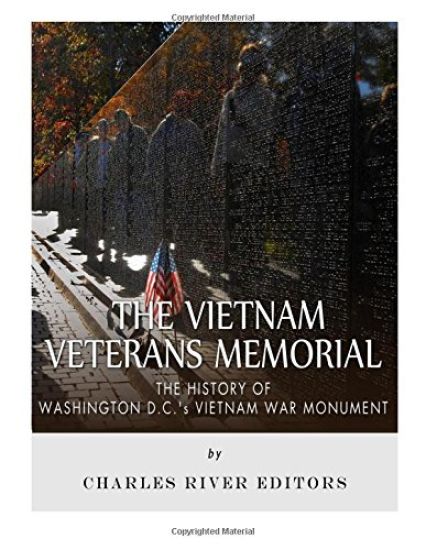
The Vietnam Veterans Memorial: The History of Washington D.C.'s Vietnam War Monument

The Vietnam Veterans Memorial: The History of Washington D.C.'s Vietnam War Monument

Charles River

Createspace Independent Publishing Platform
2018
nidottu
*Includes pictures *Includes accounts of the memorial's history written by people who worked on the project *Includes a bibliography for further reading *Includes a table of contents Before the Vietnam War, most Americans would have been hard pressed to locate Vietnam on a map. South Vietnamese President Diem's regime was extremely unpopular, and war broke out between Communist North Vietnam and South Vietnam around the end of the '50s. Kennedy's administration tried to prop up the South Vietnamese with training and assistance, but the South Vietnamese military was feeble. A month before his death, Kennedy signed a presidential directive withdrawing 1,000 American personnel, and shortly after Kennedy's assassination, new President Lyndon B. Johnson reversed course, instead opting to expand American assistance to South Vietnam. Johnson had sent fewer than 5,000 Marines to Vietnam in early 1965, but he quickly upped it to 200,000 by the end of the year. There was no going back. Although hundreds of thousands protested the war in 1967, including Martin Luther King, Jr., a majority of the public still supported it, due in large part to the Johnson's administration public confidence. But as General Westmoreland talked of victory at the end of 1967, the Viet Cong launched a massive assault across South Vietnam in January 1968. Known as the Tet Offensive, the Viet Cong suffered hundreds of thousands of casualties, and the American forces never lost a battle, but American support for the war still plummeted. By the end of the decade, Vietnam had left tens of thousands of Americans dead, spawned a counterculture with millions of protesters, and destroyed a presidency. And more was still yet to come. The Vietnam War remains one of the most controversial events in American history, and it bitterly divided the nation, so it's somewhat ironic that the most famous monument commemorating the war is also one of the most serene spots in the nation's capital. Indeed, the famous Vietnam Wall is a place of almost eerie silence where even children cease their chatter. Rising out of the ground like an ancient obelisk, it calls upon its visitors to stop talking and to look and gaze upon the magnitude of America's great mistake, a war that began in whispers and ended in tears. As professors Cheree Carlson and John Hocking pointed out in their 1987 paper, "'A Message for My Brother: ' The Vietnam Veterans' Memorial as Rhetorical Situation," "The Vietnam Veterans Memorial is not a 'traditional; war memorial. No shining flags fly no bronze statue of brave heroes stands tall beside it no heroism is lauded. In fact, it is not a memorial to the war at all but rather a memorial to the 2.7 million Americans who served in Vietnam and especially to those who were killed...it focuses our attention on those who did not survive the war. The Vietnam War is reduced to its inevitable result. The Memorial suggests the message 'In war young men die; here are their names.'" At the same time, the monument speaks volumes not just about the nature of war but the utter catastrophe that occurred in Southeast Asia. Whereas the World War II memorial has a grand design that honors contributions and soldiers by state, visitors who may have come from there or the bustling Lincoln Memorial nearby are often struck by the length of the wall, a solemn but powerful reminder that Vietnam claimed nearly 60,000 American lives. Given that, it should come as no surprise that the Vietnam Veterans Memorial is one of the most visited places in the city, with millions coming and paying tribute each year. The Vietnam Veterans Memorial: The History of Washington D. C.'s Vietnam War Monument traces the history and construction of the famous wall. Along with pictures of important people, places, and events, you will learn about the history of the Vietnam Veterans Memorial like never before, in no time at all.