Kirjojen hintavertailu – 12 903 725 kirjaa ja 27 kauppaa

Kirjailija

Charles River

Kirjat ja teokset yhdessä paikassa: 4 673 kirjaa, julkaisuja vuosilta 2013–2022, suosituimpiin kuuluu William Powell and Myrna Loy: The Lives and Careers of One of Classical Hollywood's Most Iconic Duos. Vertaile teosten hintoja ja tarkista saatavuus suomalaisista kirjakaupoista.

4 673 kirjaa

Kirjojen julkaisuvuodet: 2013–2022.

The Top 5 Outlaws: Jesse James, Billy the Kid, John Dillinger, and Bonnie & Clyde

The Top 5 Outlaws: Jesse James, Billy the Kid, John Dillinger, and Bonnie & Clyde

Charles River

Createspace Independent Publishing Platform
2018
nidottu
*Covers the lives, crimes, and deaths of the outlaws. *Explains the legends and myths surrounding all of the outlaws in an attempt to separate fact from fiction. *Includes pictures of important people, places, and events. *Includes Bibliographies for further reading. America has always preferred heroes who weren't clean cut, an informal ode to the rugged individualism and pioneering spirit that defined the nation in previous centuries. The early 19th century saw the glorification of frontier folk heroes like Davy Crockett and Daniel Boone. After the Civil War, the outlaws of the West were more popular than the marshals, with Jesse James and Billy the Kid finding their way into dime novels. And at the height of the Great Depression in the 1930s, there were the "public enemies", common criminals and cold blooded murderers elevated to the level of folk heroes by a public frustrated with their own inability to make a living honestly. Jesse James was and remains the most famous outlaw of the Wild West, with both his life of crime and his death remaining pop culture fixtures. Eventually James, his brother and their infamous gang became the most hunted outlaws in the country, but Jesse would famously be done in by the brother of his most trusted gang members. After Jesse moved in with the Ford brothers, Bob Ford began secretly negotiating turning in the famous outlaw to Missouri Governor Thomas Crittenden. On April 3, 1882, as the gang prepared for another robber, Jesse was famously shot in the back of the head by Bob Ford as he stood on a chair fixing a painting. In many ways, the narrative of the Wild West has endured more as legend than reality, and a perfect example of that can be found in the legend of William Henry McCarty Jr., better known as William H. Bonney or "Billy the Kid". Indeed, separating fact from fiction when it comes to the life of the West's most famous outlaw is nearly impossible, due in great measure to the fact that the young man himself cultivated the image of a deadly outlaw and legendary gunman himself. Though Billy the Kid may have killed anywhere from 4-9 men in his short life, he was often credited for killing more than 20. Two months after Franklin D. Roosevelt's inauguration in 1933, a petty thief who had spent almost a decade behind bars for attempted theft and aggravated assault was released from jail. By the end of the year, that man, John Dillinger, would be America's most famous outlaw: Public Enemy Number One. From the time of his first documented heist in early July 1933, until his dramatic death in late July of the following year, he would capture the nation's attention and imagination as had no other outlaw since Jesse James. There was no shortage of well known public enemies like John Dillinger and Baby Face Nelson, but none fascinated the American public as much as Bonnie and Clyde. While the duo and their Barrow Gang were no more murderous than other outlaws of the era, the duo's romantic relationship and the discovery of photographs at one of their hideouts added a more human dimension to Bonnie and Clyde, even as they were gunning down civilians and cops alike. When Bonnie and Clyde were finally cornered and killed in a controversial encounter with police, a fate they shared with many other outlaws of the period, their reputations were cemented.
The Lincoln Memorial: The History and Legacy of Washington D.C.'s Famous Monument

The Lincoln Memorial: The History and Legacy of Washington D.C.'s Famous Monument

Charles River

Createspace Independent Publishing Platform
2018
nidottu
*Includes pictures *Includes accounts of the memorial's construction by people who worked on it *Explains how the memorial's site was chosen and how it was built *Includes a table of contents "IN THIS TEMPLE AS IN THE HEARTS OF THE PEOPLE FOR WHOM HE SAVED THE UNION THE MEMORY OF ABRAHAM LINCOLN IS ENSHRINED FOREVER" - The epitaph by Royal Cortissoz engraved in the Lincoln Memorial People have always loved symbols and monuments. Even before there was any sort of written language, there were places and things considered sacred, whether it was the Mesopotamians' ziggurats or the Egyptians' pyramids. Thus, it had long been a practice to make some sort of memorial to those who had died as a way to remember and honor them. Abraham Lincoln is one of the most famous Americans in history and one of the country's most revered presidents. Schoolchildren can recite the life story of Lincoln, the "Westerner" who educated himself and became a self made man, rising from lawyer to leader of the new Republican Party before becoming the 16th President of the United States. Lincoln successfully navigated the Union through the Civil War but didn't live to witness his crowning achievement, becoming the first president assassinated when he was shot at Ford's Theater by John Wilkes Booth on April 14, 1865. Given the importance of Abraham Lincoln to the country, it's no surprise that plans to build monuments to him began within months of his death. There are countless ways that the Great Emancipator has been commemorated across America, but the most famous is the Lincoln Memorial, which would not be completed until well over half a century after his death. Lincoln had called upon Americans to bind up their wounds in his Second Inaugural Address, and in many ways the memorial was the result of the country's sectional reconciliation, making it all the more fitting. In the end, the time it took to complete the memorial was worth the wait, as the finished product included a masterfully sculpted statue of Lincoln sitting in the middle of a giant structure that immediately brings to mind an Ancient Greek or Roman temple. Situated across the National Mall from the Washington Monument, the Lincoln Memorial is perfectly positioned, and thanks to Lincoln's presidency and freeing of the slaves, the memorial has become a poignant symbol for protests, especially at the height of the Civil Rights Movement when Martin Luther King, Jr. gave his "I Have a Dream" speech. The Lincoln Memorial: The History of Washington D. C.'s Famous Monument chronicles the construction and history of one of America's most famous memorials. Along with pictures of important people, places, and events, you will learn about the Lincoln Memorial like never before, in no time at all.
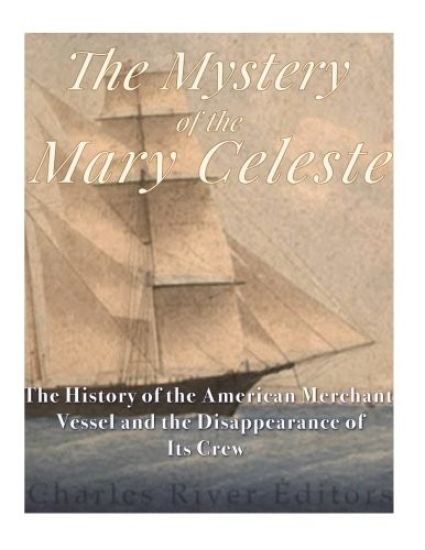
The Mystery of the Mary Celeste: The History of the American Merchant Vessel and the Disappearance of Its Crew
*Includes pictures *Includes accounts of the Mary Celeste written by those who sailed on it and those who found it *Includes online resources and a bibliography for further reading *Includes a table of contents "In the month of December in the year 1873, the British ship Dei Gratia steered into Gibraltar, having in tow the derelict brigantine Marie Celeste, which had been picked up in latitude 38 degrees 40', longitude 17 degrees 15' W. There were several circumstances in connection with the condition and appearance of this abandoned vessel which excited considerable comment at the time, and aroused a curiosity which has never been satisfied." - Sir Arthur Conan Doyle, "J. Habakuk Jephson's Statement" People love mysteries, which is a good thing since history is so replete with them. This is especially true among seafaring people, and of all the mysteries of the deep, few rise to the level of the Mary Celeste. In many ways, it is a story more suited for an episode of The X-Files than it is for any history book. There is the unlucky ship that began her sailing career under a cloud of bad fortune and accident. Then there is that handsome young captain, a man appearing to be of the highest moral fiber who chose to travel with his wife and young daughter rather than carouse with loose women. His crew was small but faithful, and his First Mate was an old friend. They set sail for Genoa late in 1872 but arrived instead in the history books, lost suddenly to a mystery that remains unsolved to this day. The first indication that anything unusual had happened came on December 5 of that year, when the Mary Celeste was found by another ship, the Dei Gratia, sailing safely and intact but completely devoid of human beings. The bed was unmade and the captain's cabin a bit untidy, but otherwise there was no sign of struggle. Or was there? A sword turned up with spots that some thought must be blood, and there were also mysterious cuts on the ship's railing, but at the same time, the ship's provisions were almost entirely untouched, leading some to theorize pirates attacked the ship and others to believe all of it consisted of normal wear and tear? The Dei Gratia towed the Mary Celeste and brought it to an admiralty court to seek a salvage prize, and eventually the court could find no evidence of foul play. At the same time, it awarded the crew of the Dei Gratia only a fraction of what the ship had been insured for, a suggestion that the court didn't completely believe the crew's account. The mystery might have been forgotten altogether shortly after, but young Arthur Conan Doyle, who would eventually earn fame for his Sherlock Holmes mysteries, helped popularize the Mary Celeste and its mysterious fate with his fictional story "J. Habakuk Jephson's Statement." Naturally, as the story spread, so did the rumors and the theories. Some believed the crew mutinied, while others speculated that the boat's own owner had those on board killed. As the decades passed, men turned up claiming to have new information, but nothing definitive was ever confirmed. Given the mystery, over the years, whatever fear was trending in popular culture found its way into the Mary Celeste story. For example, sea monsters were blamed in the 19th century, and in the 20th century, some posited that aliens from outer space had captured the unfortunate passengers and swept them off to their home planet. While this might be among the less believable theories, none of the other theories can be completely proven either, ensuring that all of the theories (and new ones) will continue to form for as long as history remembers the story. The Mystery of the Mary Celeste: The History of the American Merchant Vessel and the Disappearance of Its Crew looks at one of America's most famous mysteries. Along with pictures of important people, places, and events, you will learn about the Mary Celeste like never before.
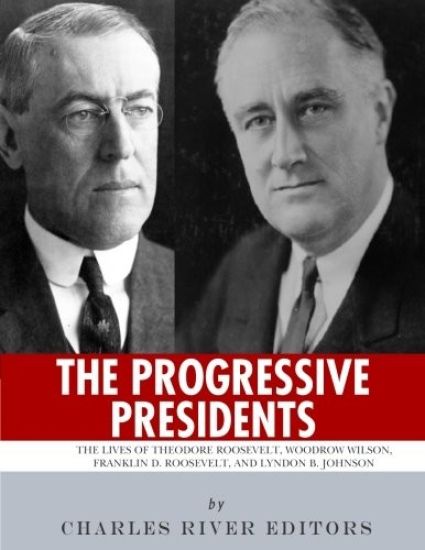
The Progressive Presidents: The Lives of Theodore Roosevelt, Woodrow Wilson, Franklin D. Roosevelt, and Lyndon B. Johnson
*Weaves the lives of the 4 progressive presidents into one entertaining and educational narrative. *Includes pictures of the presidents and important people, places, and events in their lives. *Includes some of the presidents' most colorful quotes. *Includes a Bibliography for further reading. When President McKinley was assassinated in 1901, young Vice President Theodore Roosevelt was thrust into the presidency, one that would earn him a place on Mount Rushmore, Roosevelt's "Square Deal" domestic policies favored average citizens while busting trusts and monopolies. Roosevelt also promoted conservation as an environmental stance, while his "speak softly and carry a big stick" foreign policy is still an oft used phrase today. Roosevelt even earned a Nobel Prize during his presidency. By the time Roosevelt died in 1919, he was an American icon. As one of the most influential men of the 20th century, there is no shortage of adjectives to use when describing Woodrow Wilson's two terms as president of the United States. Wilson was a pioneer of the Progressive movement both before and during his presidency, becoming a populist champion a generation before Franklin Roosevelt's New Deal. He ran for reelection by touting his neutrality during World War I, only to lead his nation into the war and become the architect of a world body that would lead to greater inter-connection among nations. Today Wilson is best remembered for his Fourteen Points, one of the most forceful arguments for an idealistic foreign policy in American history, and his fight for the League of Nations, which set the model for today's United Nations. Franklin Delano Roosevelt might be America's greatest 20th century president, but there's no question that he was the most unique. A well-connected relative of Theodore Roosevelt, FDR was groomed for greatness until he was struck down by what was widely believed to be polio at the time. Nevertheless, he persevered, rising through New York politics to reach the White House just as the country faced its greatest challenge since the Civil War, beginning his presidency with one of the most iconic lines ever spoken during an inaugural address. For over a decade, President Roosevelt threw everything he had at the Great Depression, and then threw everything the country had at the Axis powers during World War II. Ultimately, he succumbed to illness in the middle of his fourth term, just before the Allies won the war. Kennedy has been nostalgically and fondly remembered for his youth, vigor and sense of unfinished potential, but it would be President Johnson who would bring much of the agenda to fruition. To the surprise of many, the Southern Democrat relied on his wealth of Senate experience and dogged determination to help push through an ambitious and progressive social agenda that formed the backbone of modern American society. Known as the Great Society, President Johnson's legislation included the landmark Civil Rights Act of 1964, as well as the establishment of Medicare, Medicaid, environmental protection, and the "War on Poverty." Everything from the National Endowment for the Arts to the Environmental Protection Agency has its roots in Johnson's presidency. Had Johnson's presidency included just his domestic agenda, he would have unquestionably been one of America's greatest presidents. Unfortunately, as he was engineering a new social contract at home, he was ramping up American military participation in a tiny country thousands of miles away in Southeast Asia. The Progressive Presidents chronicles the lives of each president and weaves their stories and accomplishments into one entertaining narrative, examining their records and analyzing their legacies. Along with pictures of important people, places, and events, you will learn about America's most important progressive presidents like you never have before.
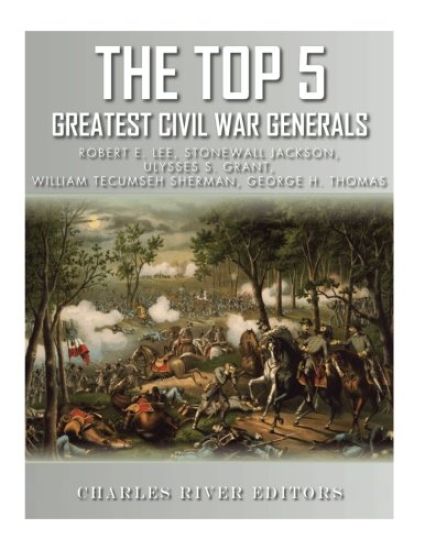
The Top 5 Greatest Civil War Generals: Robert E. Lee, Stonewall Jackson, Ulysses S. Grant, William Tecumseh Sherman, and George H. Thomas
*Includes pictures and maps of battles. *Includes a bibliography of every general. With the exception of George Washington, perhaps the most famous general in American history is Robert E. Lee, despite the fact he led the Confederate Army of Northern Virginia against the Union in the Civil War. His most famous subordinate, Stonewall Jackson, is one of the most famous generals of the war, but it's still unclear whether that was a compliment for standing strong or an insult for not moving his brigade, but the nickname stuck for the brigade and the general itself. While all eyes were fixed on the Eastern theater at places like Manassas, Richmond, the Shenandoah Valley and Antietam, Ulysses S. Grant went about a steady rise up the ranks through a series of successes in the West. Grant eventually came east to face Lee in 1864. Synonymous with barbarity in the South, William Tecumseh Sherman is lauded as a war hero in the North, and modern historians consider him the harbinger of total war. Military historian B. H. Liddell Hart famously declared that Sherman was "the first modern general." While there is a never ending stream of acclaim going to generals like Grant, Lee, and Sherman, General George H. Thomas has managed to fly under the radar. Thomas scored almost inconceivable successes at Missionary Ridge, Franklin, and Nashville. Thomas also skillfully fought at Perryville, Stones River, and in Sherman's Atlanta Campaign, but he's best remembered as "The Rock of Chickamauga". Thomas' heroics prevented the destruction of the Union army at that battle and allowed it to successfully retreat to Chattanooga.
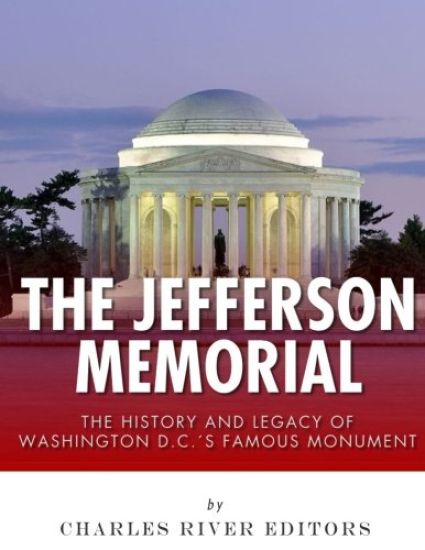
The Jefferson Memorial: The History of Washington D.C.'s Famous Monument

The Jefferson Memorial: The History of Washington D.C.'s Famous Monument

Charles River

Createspace Independent Publishing Platform
2018
nidottu
*Includes pictures *Profiles the architects who built the Memorial and the controversies surrounding it *Includes a bibliography for further reading *Includes a table of contents People have always loved symbols and monuments, and monumental architecture has always been as much symbolic as functional. The pyramids of ancient Egypt were artificial mountains expressing the link of the pharaoh to the gods, and mountains have always been associated with the divine in the human imagination. The Colossus of Rhodes, the Roman Senate House and Temple of Capitoline Jove, the Grand Teocalli and Tzompantli or skull-rack of the Aztec capital Tenochtitlan, the Forbidden City of Peking, the Parisian Arc de Triomphe de l'Etoile and the Brandenburg Gate of Berlin, all provide or provided material focuses for national ideals, beliefs, and culture. The story of the United States of America is one of a nation founded upon the loftiest ideals of representative government, attempting to fulfill its goals while encountering competing domestic and global forces. From the beginning, Americans debated how their national government should govern, balancing powers between the federal government and the states, which led to the establishment of the first political parties. At the same time, the nation has struggled to reconcile its guarantee of universal rights and individual liberties with several stark realities, including the presence of millions of slaves at the time of the Declaration of Independence. Nobody spent more time in the thick of these debates than Thomas Jefferson, one of the most famous and revered Americans. Jefferson was instrumental in all of the aforementioned debates, authoring the Declaration of Independence, laying out the ideological groundwork of the notion of states' rights, leading one of the first political parties, and overseeing the expansion of the United States during his presidency. But for all of his accomplishments, Jefferson's reputation and legacy are still inextricably intertwined with the divisive issues of his own day. As the slaveholder who wrote that all men are created equal, and his relationship with one of his slaves, Sally Hemings, Jefferson's life and career are still sometimes fiercely debated today. As a result, it's only fitting that the Jefferson Memorial would also be majestic and controversial. A tranquilly elegant neoclassical building fronted by slender pillars and topped by a gently domed roof, the Jefferson Memorial stands among other American monuments near the shores of the Tidal Basin in Washington D. C. Housing a five-ton, nineteen foot tall statue of Thomas Jefferson, the building looks as though it could be as long-established as the White House itself, but it is actually much newer. Facing opposition on several fronts when it was first proposed, including outcries from those who objected to its neoclassical style and others who lamented the clearing of flowering cherry trees necessary to make room for the edifice, the Memorial was finished and dedicated in 1943, at the height of World War II. Among the countless number of visitors who come to the Jefferson Memorial annually, few know of the checkered and troubled process of its planning and construction. Everything from lofty scholarly debate on the symbolic meaning of its architectural style to protestors preparing to chain themselves to cherry trees to block their felling swirled around the Memorial when it was no more than a set of blueprints and the first stone had yet to be laid. Generations removed from its origins, the Jefferson Memorial is now mostly viewed not only as a fixture of the nation's capital but a fitting tribute to the author of the Declaration of Independence. The Jefferson Memorial: The History of Washington D. C.'s Famous Monument chronicles the construction and history of one of America's most famous memorials.
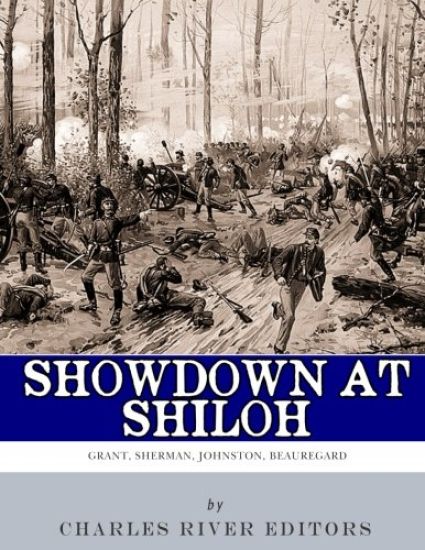
Showdown at Shiloh: The Lives and Careers of Ulysses S. Grant, William Tecumseh Sherman, Albert Sidney Johnston and P.G.T. Beauregard
*Weaves the lives of the 4 generals into one entertaining and educational narrative. *Includes maps and accounts of the fighting at Shiloh by several important generals. *Includes an original introduction for each general. *Includes Bibliographies of each general. "The turning point of our fate." - Jefferson Davis on the death of Albert Sidney Johnston at Shiloh "Probably no single battle of the war gave rise to such wild and damaging reports." - William Tecumseh Sherman After Union General Ulysses S. Grant captured Fort Henry and Fort Donelson in early 1862, Confederate General Albert Sidney Johnston, widely considered the Confederacy's best general, concentrated his forces in northern Georgia and prepared for a major offensive that culminated with the biggest battle of the war to that point, the Battle of Shiloh. On the morning of April 6, Johnston directed an all out attack on Grant's army around Shiloh Church, and though Grant's men had been encamped there, they had failed to create defensive fortifications or earthworks. They were also badly caught by surprise. With nearly 45,000 Confederates attacking, Johnston's army began to steadily push Grant's men back toward the river. As fate would have it, the Confederates may have been undone by friendly fire at Shiloh. Johnston advanced out ahead of his men on horseback while directing a charge near a peach orchard when he was hit in the lower leg by a bullet that historians now widely believe was fired by his own men. Nobody thought the wound was serious, including Johnston, who continued to aggressively lead his men and even sent his personal physician to treat wounded Union soldiers taken captive. But the bullet had clipped an artery, and shortly after being wounded Johnston began to feel faint in the saddle. With blood filling up his boot, Johnston unwittingly bled to death. The delay caused by his death, and the transfer of command to subordinate P. G. T. Beauregard, bought the Union defenders critical time on April 6, and the following day Grant's reinforced army struck back and pushed the Confederate army off the field. The Battle of Shiloh lasted two days, but the battle over the battle had just begun. Grant's army had just won the biggest battle in the history of North America, with nearly 24,000 combined casualties among the Union and Confederate forces. Usually the winner of a major battle is hailed as a hero, but Grant was hardly a winner at Shiloh. The Battle of Shiloh took place before costlier battles at places like Antietam and Gettysburg, so the extent of the casualties at Shiloh shocked the nation. Moreover, at Shiloh the casualties were viewed as needless; Grant was pilloried for allowing the Confederates to take his forces by surprise, as well as the failure to build defensive earthworks and fortifications, which nearly resulted in a rout of his army. Speculation again arose that Grant had a drinking problem, and some even assumed he was drunk during the battle. Though the Union won, it was largely viewed that their success owed to the heroics of General Sherman in rallying the men and Don Carlos Buell arriving with his army, and General Buell was happy to receive the credit at Grant's expense. As a result of the Battle of Shiloh, Grant was demoted to second-in-command of all armies in his department, an utterly powerless position. And when word of what many considered a "colossal blunder" reached Washington, several congressmen insisted that Lincoln replace Grant in the field. Lincoln famously defended Grant, telling critics, "I can't spare this man. He fights." Showdown at Shiloh comprehensively covers the decisive battle, as well as the lives, careers and legacies of the 4 most important generals of the battle. Along with maps, pictures, and more, you will learn about Sherman, Grant, Johnston and Beauregard like you never have before.
Roswell: The History of America's Most Famous UFO Incident

Roswell: The History of America's Most Famous UFO Incident

Marshall Whitehurst; Charles River

Createspace Independent Publishing Platform
2018
nidottu
*Includes pictures*Discusses the facts, the official account, and the conspiracy theories*Includes online resources and a bibliography for further reading*Includes a table of contents"The many rumors regarding the flying disc became a reality yesterday when the intelligence office of the 509th Bomb group of the Eighth Air Force, Roswell Army Air Field, was fortunate enough to gain possession of a disc through the cooperation of one of the local ranchers and the sheriff's office of Chaves County. The flying object landed on a ranch near Roswell sometime last week. Not having phone facilities, the rancher stored the disc until such time as he was able to contact the sheriff's office, who in turn notified Maj. Jesse A. Marcel of the 509th Bomb Group Intelligence Office. Action was immediately taken and the disc was picked up at the rancher's home. It was inspected at the Roswell Army Air Field and subsequently loaned by Major Marcel to higher headquarters." - A press release issued by the Roswell Army Air Field, July 8, 1947 Few things in American history are as controversial as Roswell. The one undeniable fact is that something happened near Roswell, New Mexico, in 1947, but beyond that, the facts become murky as memories and evidence lose their luster over the years. That said, the impact of an unidentified object continues to mystify residents, visitors and the curious, and it has not only put Roswell on the map but has kept it there for thousands of tourists. While much of the information disseminated has been in the form of press releases published in newspapers, the FBI eventually relented and released their records involving the Roswell crash. In 2011, more than 2,000 individual documents about this event were scanned and published as the digital project "The Vault," part of nearly 7,000 items on various subjects in the Freedom of Information Act's Library. Nonetheless, skepticism about the official version of the incident prevails, and a countless number of people continue to believe the American government covered up a crash landing by aliens. As John B. Alexander, Ph. D., a former project manager at the Los Alamos National Laboratory and consultant to the CIA, put it, "Attempting to come to any complete resolution of the incident is a fool's errand, as whatever the truth may have been has become so distorted over time that facts have merged inextricably with fiction." But fools did abound. The FBI, and anyone else who might have archived top secret memos, reports or even newspaper clippings, were barraged for years with Freedom of Information requests. When the FBI finally complied with thousands and thousands of pages freely disseminated online, they were still accused of withholding or altering the facts. Roswell: The History of America's Most Famous UFO Incident chronicles the controversial crash. Along with pictures of important people, places, and events, you will learn about Roswell like never before, in no time at all.
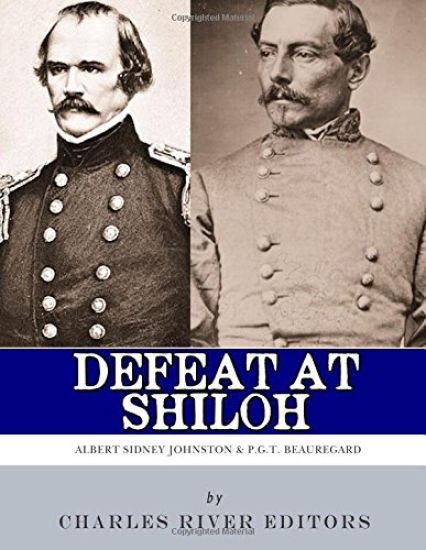
Defeat at Shiloh: Albert Sidney Johnston & P.G.T. Beauregard

Defeat at Shiloh: Albert Sidney Johnston & P.G.T. Beauregard

Charles River

Createspace Independent Publishing Platform
2017
nidottu
*Weaves the lives of the 2 commanding generals into one entertaining and educational narrative. *Includes maps and accounts of the fighting at Shiloh by several important generals. *Includes an original introduction for each general. *Includes Bibliographies of each general. "The turning point of our fate." - Jefferson Davis on the death of Albert Sidney Johnston at Shiloh "Probably no single battle of the war gave rise to such wild and damaging reports." - William Tecumseh Sherman After Union General Ulysses S. Grant captured Fort Henry and Fort Donelson in early 1862, Confederate General Albert Sidney Johnston, widely considered the Confederacy's best general, concentrated his forces in northern Georgia and prepared for a major offensive that culminated with the biggest battle of the war to that point, the Battle of Shiloh. On the morning of April 6, Johnston directed an all out attack on Grant's army around Shiloh Church, and though Grant's men had been encamped there, they had failed to create defensive fortifications or earthworks. They were also badly caught by surprise. With nearly 45,000 Confederates attacking, Johnston's army began to steadily push Grant's men back toward the river. As fate would have it, the Confederates may have been undone by friendly fire at Shiloh. Johnston advanced out ahead of his men on horseback while directing a charge near a peach orchard when he was hit in the lower leg by a bullet that historians now widely believe was fired by his own men. Nobody thought the wound was serious, including Johnston, who continued to aggressively lead his men and even sent his personal physician to treat wounded Union soldiers taken captive. But the bullet had clipped an artery, and shortly after being wounded Johnston began to feel faint in the saddle. With blood filling up his boot, Johnston unwittingly bled to death. The delay caused by his death, and the transfer of command to subordinate P. G. T. Beauregard, the Hero of Fort Sumter and First Bull Run, bought the Union defenders critical time on April 6, and the following day Grant's reinforced army struck back and pushed the Confederate army off the field. The Battle of Shiloh lasted two days, but the battle over the battle had just begun. Beauregard was scapegoated for the disastrous second day and the loss, and he would be relieved of command after the Siege of Corinth. Meanwhile, Grant was also criticized for Shiloh, which took place before costlier battles at places like Antietam and Gettysburg, so the extent of the casualties at Shiloh shocked the nation. Moreover, at Shiloh the casualties were viewed as needless; Grant was pilloried for allowing the Confederates to take his forces by surprise, as well as the failure to build defensive earthworks and fortifications, which nearly resulted in a rout of his army. Speculation again arose that Grant had a drinking problem, and some even assumed he was drunk during the battle. Though the Union won, it was largely viewed that their success owed to the heroics of General Sherman in rallying the men and Don Carlos Buell arriving with his army, and General Buell was happy to receive the credit at Grant's expense. Defeat at Shiloh comprehensively covers the decisive battle, as well as the lives, careers and legacies of the 2 Confederate generals in command. Along with maps, pictures, and more, you will learn about Johnston and Beauregard like you never have before.
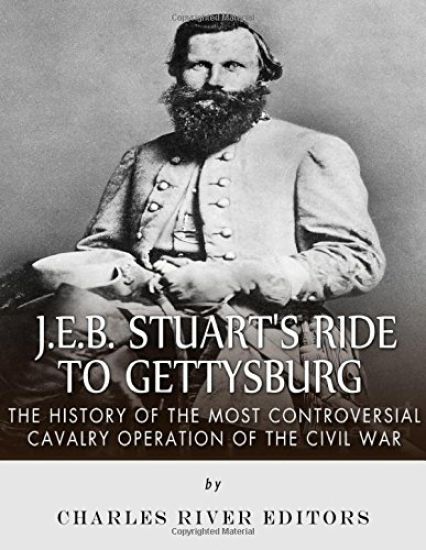
J.E.B. Stuart's Ride to Gettysburg: The History of the Most Controversial Cavalry Operation of the Civil War
*Includes pictures *Profiles the debate over the intention of Lee's orders to Stuart and who's to blame for what happened *Includes accounts of Stuart's operation written by his adjutant general and others *Includes online resources and a bibliography for further reading *Includes a table of contents "The failure to crush the Federal army in Pennsylvania in 1863, in the opinion of almost all of the officers of the Army of Northern Virginia, can be expressed in five words-the absence of the cavalry." - Confederate General Henry Heth As Robert E. Lee's army moved into Pennsylvania in June 1863, Stuart's cavalry screened his movements, thereby engaging in the more traditional cavalry roles, but it's widely believed he was hoping to remove the negative effect of Brandy Station by duplicating one of his now famous rides around the enemy army, much as he did to McClellan's Army of the Potomac during the Peninsula Campaign in 1862. This time, however, as Lee began his march north through the Shenandoah Valley in western Virginia, it is highly unlikely that is what he wanted or expected. Before setting out on June 25, the methodical Lee gave Stuart specific instructions as to the role he was to play in the Pennsylvania offensive. As the eyes of the army, the cavalry was to guard the mountain passes with part of his force while the Army of Northern Virginia was still south of the Potomac River, and then cross the river with the remainder of his army and screen the right flank of Confederate general Richard Stoddert Ewell's II Corps as it moved down the Shenandoah Valley, maintaining contact with Ewell's army as it advanced towards Harrisburg. Instead of taking the most direct route north near the Blue Ridge Mountains, however, Stuart chose a much more ambitious course of action. Stuart decided to march his three best brigades (under Generals Hampton, Fitzhugh Lee, and Col. John R. Chambliss) between the Union army and Washington, north through Rockville to Westminster, and then into Pennsylvania, a route that would allow them to capture supplies along the way and wreak havoc as they skirted Washington. To complicate matters even more, as Stuart set out on June 25 on what was probably a glory-seeking mission, he was unaware that his intended path was blocked by columns of Union infantry that would invariably force him to veer farther east than he or Lee had anticipated. Ultimately, his decision would prevent him from linking up with Ewell as ordered and deprive Lee of his primary cavalry force as he advanced deeper and deeper into unfamiliar enemy territory. According to Halsey Wigfall (son of Confederate States Senator Louis Wigfall) who was in Stuart's infantry, "Stuart and his cavalry left Lee's] army on June 24 and did not contact his] army again until the afternoon of July 2, the second day of the Gettysburg] battle." According to Stuart's own account, on June 29 his men clashed briefly with two companies of Union cavalry in Westminster, Maryland, overwhelming and chasing them "a long distance on the Baltimore road," causing a "great panic" in the city of Baltimore. On June 30, the head of Stuart's column then encountered General Judson Kilpatrick's cavalry as it passed through Hanover, during which they reportedly captured a wagon train and scattered the Union army before Kilpatrick's men were able to regroup and drive Stuart and his men out of town. Then, after a 20 mile trek in the dark, Stuart's exhausted men reached Dover, Pennsylvania on the morning of July 1. H. B. McClellan would point out in his book about Stuart that Lee's orders meant the army commander "was aware that under the most favorable circumstances Stuart must be separated from the army for at least three or four days." However, Stuart's cavalry would be gone for 7 days, and Stuart was too far removed from the Army of Northern Virginia to warn Lee of the Army of the Potomac's movements.
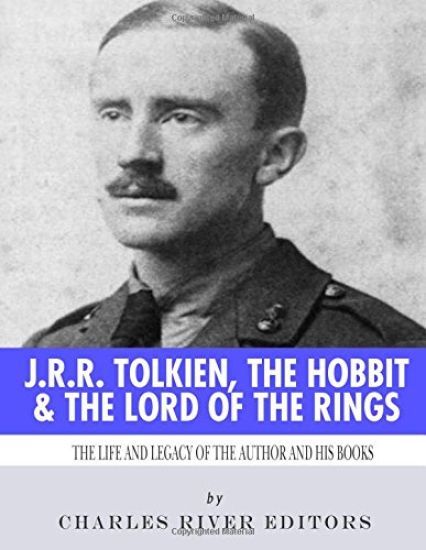
J.R.R. Tolkien, The Hobbit & The Lord of the Rings: The Life and Legacy of the Author and His Books
*Includes a biography of Tolkien that explains which real-life experiences inspired his most famous stories and characters. *Includes pictures of Tolkien and important people and places in his life. *Includes characters spotlights on the books' main characters, including Bilbo, Frodo, Gandalf, Aragorn and other important characters. *Explains the origins of Middle Earth, its creatures, and its magic. *Comprehensively covers the plot and themes of each book. "Nothing has astonished me more (and I think my publishers) than the welcome given to The Lord of the Rings. But it is, of course, a constant source of consolation and pleasure to me. And, I may say, a piece of singular good fortune, much envied by some of my contemporaries. Wonderful people still buy the book, and to a man 'retired' that is both grateful and comforting." - J. R. R. Tolkien For more than half a century, the name J. R. R. Tolkien (1892-1973) has been synonymous with epic fantasy. Known across the world for his classic The Hobbit and The Lord of the Rings trilogy, Tolkien both revived interest in fantasy literature and set the standard for the genre. Today he is widely acknowledged as the "Father" of modern fantasy and its most famous author. While Tolkien made Middle Earth famous and vice-versa, Tolkien's works were influenced by a lifetime of Tolkien's own personal experiences. His tales concern creatures of myth, yet the plot lines and characters are human at heart. Tolkien drew his inspiration from war, nature, history, love, and language, and through the lens of fantasy he examined bravery, loyalty and friendship. That essential "humanness" at the core of his writing, whether it was displayed by a man, hobbit, or even a tree, struck a chord with readers that continues to resonate today. "In a hole in the ground there lived a hobbit." So starts one of Western literature's most epic journeys, The Hobbit, a fantasy novel that has delighted adults and children alike since it was published in 1937. Ostensibly, The Hobbit is an adventurous tale about hobbit Bilbo Baggins, who leaves the cozy comforts of his home to try to win a share of a treasure guarded by a dragon named Smaug. The novel follows Bilbo and an assorted cast of magical characters and creatures, including dwarves, the wizard Gandolf, giants, goblins, and the mysterious Gollum. Tolkien brings so many different characters to life and keeps the plot moving at a fast enough pace that readers of all kinds have been easily engrossed reading the novel over the last 75 years. The popularity of The Hobbit made Tolkien's publisher and audience want a follow-up involving his Middle Earth and hobbit creations. To say Tolkien eventually outdid himself in response would be a drastic understatement. What followed was the most famous trilogy of the fantasy genre, The Lord of the Rings. Tolkien drew upon his background and spent over a decade fashioning the history of his world and the characters, including some of the old (Gandalf and Bilbo) and a lot of the new (Frodo, Aragorn, Sam). Though Tolkien's epic fantasy was published more than 50 years ago, it remains a stalwart piece of writing today. More than 150 million copies have been sold in more than 30 languages, and the trilogy is among the top-selling novels of all time. J. R. R. Tolkien, The Hobbit & The Lord of the Rings is the perfect resource for understanding Tolkien's classic books. In addition to exploring Tolkien's life and experiences, this guide explains the background of each book, including its characters and plot, its major themes, and its influential and enduring legacy.
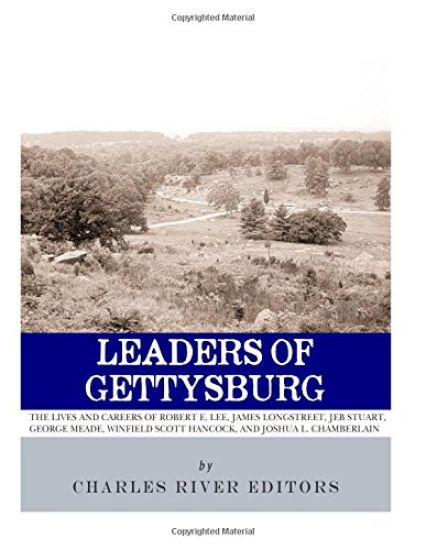
Leaders of Gettysburg: The Lives and Careers of Robert E. Lee, James Longstreet, JEB Stuart, George Meade, Winfield Scott Hancock and Joshua
*Weaves the lives and careers of all 6 generals into one entertaining and educational narrative. *Includes pictures of the generals and important people, places, and events in their lives. *Includes Bibliographies of each general for further reading. Despite the fact that the Civil War began over 150 years ago, it remains one of the most widely discussed topics in America today, with Americans arguing over its causes, reenacting its famous battles, and debating which general was better than others. Americans continue to be fascinated by the Civil War icons who made the difference between victory and defeat in the war's great battles. No battle fascinates Americans quite like Gettysburg, the most famous and biggest battle of the Civil War. Careers were tarnished, legacies were immortalized, and the Confederacy had reached its high water mark. Since the dust settled there, historians and interested scholars alike have dissected every decision and movement made by the leaders of the battle, arguing over who to credit and who to blame. Of all the battles Robert E. Lee led in, he was most criticized for Gettysburg, particularly his order of Pickett's Charge on the third and final day of the war. Despite the fact his principle subordinate and corps leader, General James Longstreet, advised against the charge, Lee went ahead with it, ending the army's defeat at Gettysburg with a violent climax that left half of the men who charged killed or wounded. After the South lost the war and Gettysburg came to be viewed as one of its biggest turning points, former Confederate generals looked to that battle to find scapegoats to blame for losing the war. Two of them were JEB Stuart and James Longstreet. Stuart's roundabout cavalry raid deprived Lee of his eyes and ears, leading to an inadvertent clash at Gettysburg, and Longstreet was charged with being slow to attack on the second day of the Battle of Gettysburg, allowing the Union to man Little Round Top. Naturally, George Meade is best known for defeating Robert E. Lee's Army of Northern Virginia at Gettysburg in July 1863, although he's not nearly as well remembered as his Confederate counterpart, and he has even been eclipsed in popularity by some of the men he commanded at Gettysburg, like Joshua Chamberlain. Chamberlain had a respectable Civil War career and life, but he had been largely forgotten in the decades after the Civil War, with the focus on more influential commanding generals and their principal subordinates. Then a remarkable thing happened with the 1974 publication of Michael Sharaa's The Killer Angels, a Pulitzer Prize winning historical fiction that focuses on the Battle of Gettysburg and its influential generals and leaders. In one fell swoop, Michael Sharaa breathed life back into the reputations of men like John Buford and Joshua Chamberlain, cast as the Union heroes of Day 1 and Day 2 respectively that made victory at Gettysburg possible. At Gettysburg, Hancock was the commanding general in the field on Day 1, as Meade and the rest of the Union army arrived later that night. On Day 2, Hancock's men assisted Sickles' III Corps when Sickles disobeyed orders and moved it forward, creating a gap in the Union lines. And on Day 3, Hancock's greatest day of the war, he was seriously injured and nearly bled to death while leading his men in their decisive repulse of Pickett's Charge. Leaders of Gettysburg comprehensively covers the decisive command decisions made by the leaders at Gettysburg, but it also chronicles the lives and careers of all six men and analyzes their lasting legacies. Along with bibliographies and pictures, you will learn about the Leaders of Gettysburg like you never have before.
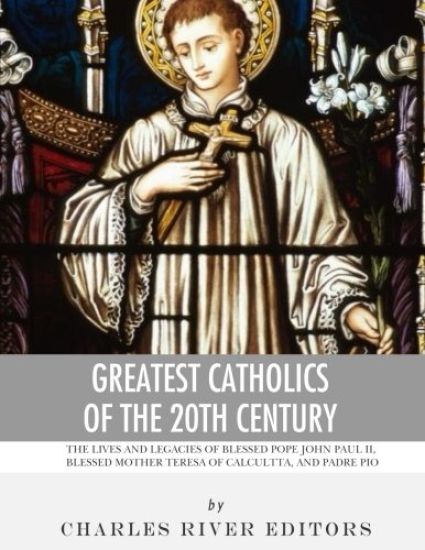
Greatest Catholics of the 20th Century: The Lives and Legacies of Blessed Pope John Paul II, Blessed Mother Teresa of Calcutta, and Padre Pio
*Includes pictures of John Paul II, Mother Teresa, Padre Pio, and important people, places and events in their lives. *Includes Bibliographies of each for further reading. *Discusses their lives, legacies, and controversial criticisms. The 20th century had no shortage of influential leaders, both good and bad. But while dictators, generals, and presidents came and went, the last quarter of the 20th century could rely on one thing: the papacy of Blessed Pope John Paul II. In becoming one of Catholicism's most popular leaders, and one shortly destined for sainthood, John Paul II indeed became one of the most famous and influential men of the 20th century. The first pope in centuries to not hail from Italy, John Paul II was responsible for a global outreach of epic proportions that brought him to over 100 countries, helped end communism in Europe, and brought people of different faiths closer together than ever before. It's often said that nobody in history has been seen and viewed in person by more people, an amazing feat for a man of humble origins born in Poland before World War II, a place that continues to especially venerate him today. For the last few decades of the 20th century, the Catholic Church was blessed to have two of its most influential leaders guiding the Church and spreading its faith and message at the same time. Pope John Paul II made history by becoming the first non-Italian pope in several centuries, guiding the church for over 25 years. But while he led the Church, a remarkable woman born Agnes Gonxha Bojaxhiu (1910-1997) became one of the Church's greatest missionaries and humanitarians. She would come to be known to the world as Mother Teresa. It would be nearly impossible to overstate the impact Mother Teresa had on the Catholic Church and the world during her life. In addition to founding the Missionaries of Charity, a sisterhood of Roman Catholics that now operates in over 125 countries and has over 4,500 sisters, Mother Teresa spent nearly half a century spreading her religious congregation across the world, while using it to help the sick and poor. Through her direct participation and planning, she opened hundreds of missions, providing essential services that ranged from hospices to schools, and from orphanages to soup kitchens. Her work won her a Nobel Peace Prize in 1979, and Mother Teresa was consistently ranked among the world's most admired people for the last 20 years of her life. Shortly after her death in 1997, the beatification process for Mother Teresa was begun, and in 2003 she was beatified as Blessed Mother Teresa of Calcultta. Francesco Forgione might be a name lost to history, but over the course of his life, he became one of Catholicism's most well known figures during the 20th century as Padre Pio. It was a remarkable path for a man who was legendarily afflicted by a series of illnesses and most famously bore the stigmata, very noticeably bearing what appeared to be the crucifixion wounds Jesus's hands suffered. Padre Pio was also known for his eccentricities, including unique forms of deep meditation and experiencing visions. Not surprisingly, despite all the spiritual work Padre Pio did, he was the subject of substantial controversy during his own life. And though he has been venerated as Saint Pio of Pietrelcina by the Catholic Church, critics have all but called him a fraud. Greatest Catholics of the 20th Century details the remarkable lives and legacies of these great Catholics, while also humanizing their struggles and discussing the controversies and criticisms that they were subjected to. Along with pictures of John Paul II, Mother Teresa, Padre Pio, and other important people, places and events in their lives, you will learn about these great Catholics like you never have before, in no time at all.
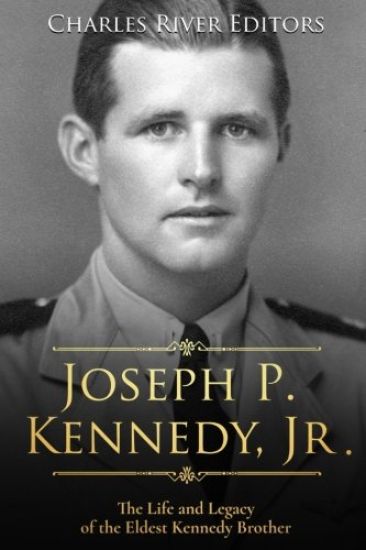
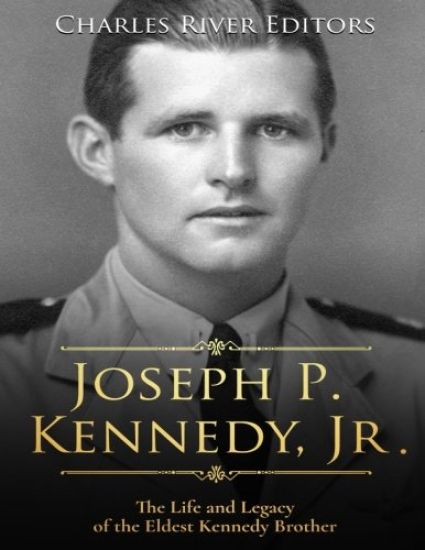
Joseph P. Kennedy, Jr.: The Life and Legacy of the Eldest Kennedy Brother

Joseph P. Kennedy, Jr.: The Life and Legacy of the Eldest Kennedy Brother

Charles River

Createspace Independent Publishing Platform
2017
nidottu
*Includes pictures *Includes online resources and a bibliography for further reading "This child is the future President of the nation." - John F. Fitzgerald, referring to his grandson, Joseph P. Kennedy, Jr. In many ways, John Fitzgerald Kennedy and his young family were the perfect embodiment of the '60s. The decade began with a sense of idealism, personified by the attractive Kennedy, his beautiful and fashionable wife Jackie, and his young children. Months into his presidency, Kennedy exhorted the country to reach for the stars, calling upon the nation to send a man to the Moon and back by the end of the decade. In 1961, Kennedy made it seem like anything was possible, and Americans were eager to believe him. The Kennedy years were fondly and famously labeled "Camelot," by Jackie herself, suggesting an almost mythical quality about the young President and his family. As it turned out, the '60s closely reflected the glossy, idealistic portrayal of John F. Kennedy, as well as the uglier truths. The country would achieve Kennedy's goal of a manned moon mission, and the landmark Civil Rights Act of 1964 finally guaranteed minorities their civil rights and restored equality, ensuring that the country "would live out the true meaning of its creed." But the idealism and optimism of the decade was quickly shattered, starting with Kennedy's assassination in 1963. The '60s were permanently marred by the Vietnam War, and by the time Robert F. Kennedy and Martin Luther King, Jr. were assassinated in 1968, the country was irreversibly jaded. The events of the decade produced protests and countercultures unlike anything the country had seen before, as young people came of age more quickly than ever. By the time Bobby Kennedy was killed, references to the infamous "Kennedy Curse" became more common, to the point that Americans are now familiar with the phrase, but if such a curse did truly exist, it did not originate with the fallen president or his younger brother. Instead, the first Kennedy to suffer an untimely death was the oldest brother, and the one originally expected to achieve a preeminent place in politics. Joseph Kennedy, Jr. was the expected heir to his father's dream of a Kennedy in the White House. His parents doted on their firstborn, even as more children followed in quick succession. They sent him to the best schools, made sure he made the right sort of friends, and constantly reminded him of his political destiny. Joseph Kennedy, Sr., who would reach the upper echelons of the federal government himself, groomed his son for a future in politics, encouraging him to refine his opinions and exposing him to the most important issues of the day. Handsome, bright, and charming, the rest of the Kennedy brothers looked up to Joe, Jr. Bobby would name his firstborn son after his oldest brother, and some of the time Bobby did serve in the Navy was aboard the USS Joseph P. Kennedy Jr., a Navy ship that would also form part of the blockade of Cuba ordered by President Kennedy at the height of the Cuban Missile Crisis. Unfortunately, as those facts suggest, Joe, Jr. would be one of millions of young men across the world who had to confront issues in the 1930s that proved more volatile than just about any other time in history. As he came of age, Joe was weighing in on Hitler and his Nazi followers, and when America entered World War II, there was no question he would fight in some capacity. For a young man with presidential aspirations, being a veteran with a sterling record was one of the best stepping stones to a nascent career in politics, and being viewed as one who was willing to fight for his country was crucial. Joe's ambitions and his well-cultivated sense of patriotism would lead him to volunteer as a Navy flier, and sadly, his future and that of his family's political dynasty would be irreversibly changed by an accident in the summer of 1944.
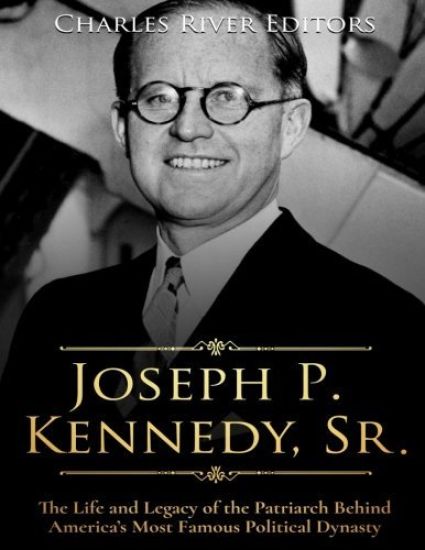
Joseph P. Kennedy, Sr.: The Life and Legacy of the Patriarch Behind America's Most Famous Political Dynasty
*Includes pictures *Includes online resources and a bibliography for further reading "We have a rich man, untrained in diplomacy, unlearned in history and politics, who is a great publicity seeker and who apparently is ambitious to be the first Catholic president of the U. S." - British MP Josiah Wedgwood's description of Joe Kennedy, Sr. as U. S. Ambassador to the United Kingdom In many ways, John Fitzgerald Kennedy and his young family were the perfect embodiment of the '60s. The decade began with a sense of idealism, personified by the attractive Kennedy, his beautiful and fashionable wife Jackie, and his young children. Months into his presidency, Kennedy exhorted the country to reach for the stars, calling upon the nation to send a man to the Moon and back by the end of the decade. In 1961, Kennedy made it seem like anything was possible, and Americans were eager to believe him. The Kennedy years were fondly and famously labeled "Camelot," by Jackie herself, suggesting an almost mythical quality about the young President and his family. As it turned out, the '60s closely reflected the glossy, idealistic portrayal of John F. Kennedy, as well as the uglier truths. The country would achieve Kennedy's goal of a manned moon mission, and the landmark Civil Rights Act of 1964 finally guaranteed minorities their civil rights and restored equality, ensuring that the country "would live out the true meaning of its creed." But the idealism and optimism of the decade was quickly shattered, starting with Kennedy's assassination in 1963. The '60s were permanently marred by the Vietnam War, and by the time Robert F. Kennedy and Martin Luther King, Jr. were assassinated in 1968, the country was irreversibly jaded. The events of the decade produced protests and countercultures unlike anything the country had seen before, as young people came of age more quickly than ever. While JFK was the member of the Kennedy dynasty to reach the White House, he was hardly the first to seek the presidency. In fact, that ambition was held by his father, Joseph P. Kennedy, Sr., the family's most controversial figure. The son of working class Irish Americans, Joe, Sr. fought his way to fame and fortune in every way available to him, both legal and illegally, morally and immorally. As he was in business, so he was with his family - devoted and underhanded, determined and cutthroat. He knew what he wanted for himself, his wife, and his children, and he was unwilling to let anyone or anything stand in the way. From his wife, he wanted children, devotion, and silence about his many affairs. From his sons, he wanted power and position. From his daughters, he expected beauty, grace, and absolute loyalty. For the most part, the Kennedy patriarch would get what he wanted, but he frequently paid a terrible price for it. Of course, Kennedy also had his own personal ambitions, which included residing in the White House. A mover and shaker in Democratic politics, he threw his support behind Franklin Roosevelt, a man he later came to hate. The most he got out of this alliance was a brief appointment as the U. S. Ambassador to the UK, where he made himself increasingly unpopular by devoutly opposing American involvement in World War II even as the situation got more desperate for the British by the day. Later, he wanted the presidency for his sons, three of which he would help bury. Finally, he wanted peace for himself and his family, a simple desire that proved to be more elusive than any of his more ambitious hopes. In the end, one of his peers may have summed it up best when he said, "I like Joe Kennedy but I have no illusions about him. He understands power. Everywhere he went, from Brahmin Boston to the Court of St. James's, he saw great hypocrisy about the philosophy of those who rule. Power is the end. What other delight is there but to enjoy the sheer sense of control?"
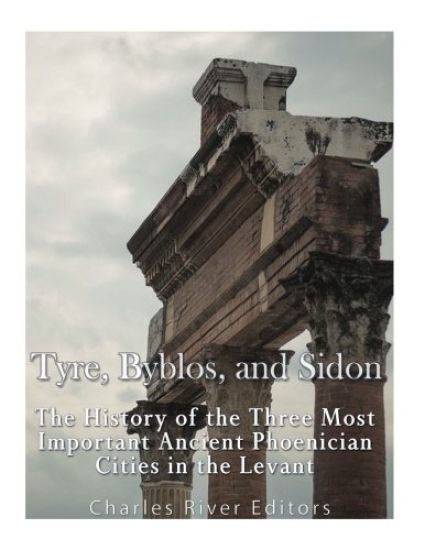
Tyre, Byblos, and Sidon: The History of the Three Most Important Ancient Phoenician Cities in the Levant
*Includes pictures *Includes ancient accounts describing the cities *Includes a bibliography for further reading Of all the peoples of the ancient Near East, the Phoenicians are among the most recognizable but also perhaps the least understood. The Phoenicians never built an empire like the Egyptians and Assyrians; in fact, the Phoenicians never created a unified Phoenician state but instead existed as independent city-state kingdoms scattered throughout the Mediterranean region. However, despite the fact there was never a "Phoenician Empire," the Phoenicians proved to be more prolific in their exploration and colonization than any other peoples in world history until the Spanish during the Age of Discovery. The Phoenicians were well-known across different civilizations throughout the ancient world, and their influence can be felt across much of the West today because they are credited with inventing the forerunner to the Greek alphabet, from which the Latin alphabet was directly derived. Nonetheless, the Phoenicians left behind few written texts, so modern historians have been forced to reconstruct their past through a variety of ancient Egyptians, Assyrian, Babylonian, Greek, and Roman sources. It's not even clear what the Phoenicians called themselves, because the name "Phoenician" is derived from the Greek word "phoinix", which possibly relates to the dyes they produced and traded (Markoe 2000, 10). The mystery of the ancient Phoenicians is further compounded by the fact that archaeologists have only been able to excavate small sections of the three primary Phoenician cities: Byblos, Sidon, and Tyre. A network of this size, with hundreds of colonies and thousands of ships, had to be well-coordinated, and it was thanks to important cities along the Mediterranean coast. One of the most crucial cities in the system was hidden beneath the Greek, Roman, and Crusader ruins of Lebanon: the ancient city of Tyre. "Seated at entrance to the sea," according to the prophet Ezekiel, Tyre was constructed on a purportedly impenetrable island. As one of the oldest cities in the world, Byblos is a fascinating place, with its successive layers of debris representing millennia of human occupation. From the earliest times this coastal strip played a key role in connecting Arabia, Anatolia, Mesopotamia, Egypt, and the Aegean. Because of this, the history of the city cannot be told in isolation of its neighbors. From the Bronze Age Byblos had a special connection with Egypt, which ceased only with the invasion of the mysterious Sea Peoples at the end of the 2nd millennium BCE. Between the Phoenicians, Asia Minor, Israel, and Roman Palestine, it is not surprising that many divergent religions have and continue to exist in the region. The history of Sidon, as with other Phoenician cities, constantly fluctuated between freedom and subjection. Its privileged, geographical position on the coast was the source of its commercial development and its openness to foreign cultures, but in doing so the prosperous city became coveted by numerous conquerors. It passed through the successive influence of Egypt, the neighboring Phoenician city-state of Tyre, and eventually flourished under Persian rule as the seat of a satrap for the whole Euphrates region. The Persian king frequently made use of the renowned Sidonian fleet during his military campaigns, and the kings of Sidon were greatly rewarded for their services. However, during the campaigns of Alexander the Great, Sidon opened its doors to the young Macedonian, who chose to depose the long lasting dynasty of Sidonian kings. It later became the battleground between the Arab caliphates and European Crusaders during the Middle Ages in a conflict that in many ways continues to shape the region to this day.
Joseph P. Kennedy, Jr.: The Life and Legacy of the Eldest Kennedy Brother

Joseph P. Kennedy, Jr.: The Life and Legacy of the Eldest Kennedy Brother

Charles River

Createspace Independent Publishing Platform
2017
nidottu
*Includes pictures *Includes online resources and a bibliography for further reading "This child is the future President of the nation." - John F. Fitzgerald, referring to his grandson, Joseph P. Kennedy, Jr. In many ways, John Fitzgerald Kennedy and his young family were the perfect embodiment of the '60s. The decade began with a sense of idealism, personified by the attractive Kennedy, his beautiful and fashionable wife Jackie, and his young children. Months into his presidency, Kennedy exhorted the country to reach for the stars, calling upon the nation to send a man to the Moon and back by the end of the decade. In 1961, Kennedy made it seem like anything was possible, and Americans were eager to believe him. The Kennedy years were fondly and famously labeled "Camelot," by Jackie herself, suggesting an almost mythical quality about the young President and his family. As it turned out, the '60s closely reflected the glossy, idealistic portrayal of John F. Kennedy, as well as the uglier truths. The country would achieve Kennedy's goal of a manned moon mission, and the landmark Civil Rights Act of 1964 finally guaranteed minorities their civil rights and restored equality, ensuring that the country "would live out the true meaning of its creed." But the idealism and optimism of the decade was quickly shattered, starting with Kennedy's assassination in 1963. The '60s were permanently marred by the Vietnam War, and by the time Robert F. Kennedy and Martin Luther King, Jr. were assassinated in 1968, the country was irreversibly jaded. The events of the decade produced protests and countercultures unlike anything the country had seen before, as young people came of age more quickly than ever. By the time Bobby Kennedy was killed, references to the infamous "Kennedy Curse" became more common, to the point that Americans are now familiar with the phrase, but if such a curse did truly exist, it did not originate with the fallen president or his younger brother. Instead, the first Kennedy to suffer an untimely death was the oldest brother, and the one originally expected to achieve a preeminent place in politics. Joseph Kennedy, Jr. was the expected heir to his father's dream of a Kennedy in the White House. His parents doted on their firstborn, even as more children followed in quick succession. They sent him to the best schools, made sure he made the right sort of friends, and constantly reminded him of his political destiny. Joseph Kennedy, Sr., who would reach the upper echelons of the federal government himself, groomed his son for a future in politics, encouraging him to refine his opinions and exposing him to the most important issues of the day. Handsome, bright, and charming, the rest of the Kennedy brothers looked up to Joe, Jr. Bobby would name his firstborn son after his oldest brother, and some of the time Bobby did serve in the Navy was aboard the USS Joseph P. Kennedy Jr., a Navy ship that would also form part of the blockade of Cuba ordered by President Kennedy at the height of the Cuban Missile Crisis. Unfortunately, as those facts suggest, Joe, Jr. would be one of millions of young men across the world who had to confront issues in the 1930s that proved more volatile than just about any other time in history. As he came of age, Joe was weighing in on Hitler and his Nazi followers, and when America entered World War II, there was no question he would fight in some capacity. For a young man with presidential aspirations, being a veteran with a sterling record was one of the best stepping stones to a nascent career in politics, and being viewed as one who was willing to fight for his country was crucial. Joe's ambitions and his well-cultivated sense of patriotism would lead him to volunteer as a Navy flier, and sadly, his future and that of his family's political dynasty would be irreversibly changed by an accident in the summer of 1944.
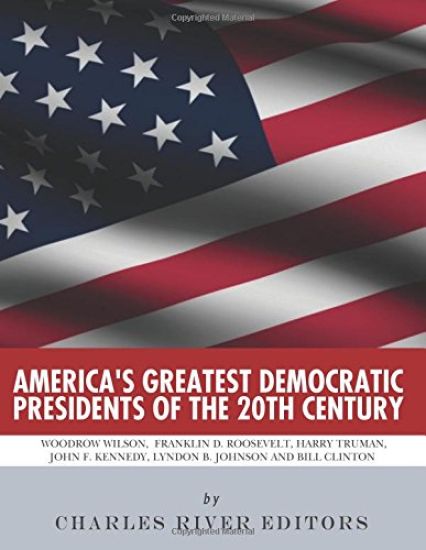
America's Greatest Democratic Presidents of the 20th Century: Woodrow Wilson, Franklin D. Roosevelt, Harry Truman, John F. Kennedy, Lyndon B. Johnson
*Weaves the lives and presidencies of all 6 Democratic Presidents into one entertaining and educational narrative. *Includes dozens of pictures of the presidents and important people, places, and events in their lives. *Analyzes the legacies and accomplishments of each president. The Democrats who were elected president in the 20th century were responsible for a seemingly never ending list of accomplishments. Woodrow Wilson established the blueprint for the progressive presidents that would follow him, particularly Franklin Roosevelt and Lyndon Johnson, while guiding the nation through World War I. FDR expanded that vision with his New Deal, completely revolutionizing the social contract between Americans and their federal government. While combating the Great Depression and the Axis powers in World War II, FDR has widely been considered one of the greatest presidents in history. When Roosevelt died in April 1945, Vice President Truman, somewhat unprepared for the Presidency, now had to fill some of the biggest shoes in American history. The new president had to usher America through victory in Europe in his first month and decide to drop atomic bombs on Hiroshima and Nagasaki a few months later, but the end of World War II produced only the first of many consequential decisions Truman would face during his nearly 8 years in office. As president, Truman would lay the groundwork for the next 50 years of American foreign policy, as the architect of Cold War containment, the man who signed off on the Marshall Plan, and the commander-in-chief during much of the Korean War. In many ways, John Fitzgerald Kennedy and his young family were the perfect embodiment of the '60s. The decade began with a sense of idealism, personified by the attractive Kennedy, his beautiful and fashionable wife Jackie, and his young children. Months into his presidency, Kennedy exhorted the country to reach for the stars, calling upon the nation to send a man to the Moon and back by the end of the decade. In 1961, Kennedy made it seem like anything was possible, and Americans were eager to believe him. The Kennedy years were fondly and famously labeled "Camelot," by Jackie herself, suggesting an almost mythical quality about the young President and his family. While Kennedy represented lofty ideals, it was LBJ who got in the weeds and made things happen. . To the surprise of many, the Southern Democrat relied on his wealth of Senate experience and dogged determination to help push through an ambitious and progressive social agenda that formed the backbone of modern American society. Known as the Great Society, President Johnson's legislation included the landmark Civil Rights Act of 1964, as well as the establishment of Medicare, Medicaid, environmental protection, and the "War on Poverty." Everything from the National Endowment for the Arts to the Environmental Protection Agency has its roots in Johnson's presidency. The most popular Democrat alive today is "The Comeback Kid", Bill Clinton. Widely hailed as the greatest politician of his era, Clinton proved to be his own worst enemy, creating unnecessary scandals through his womanizing. Clinton was one of the first politicians to truly connect with young adults, yet in the process he provided ludicrous soundbytes like "I did not inhale." Long considered the Democratic Party's greatest spokesman and surrogate, Clinton's presidency was defined by centrist "triangulation". And though he is still publicly popular and considered a great president, Clinton became just the second president to be impeached in the House of Representatives. America's Greatest Democratic Presidents of the 20th Century looks at the lives and presidencies of these historic men and analyzes their legacies. Along with pictures and a Table of Contents, you will learn about them like you never have before.
Dean Martin & Jerry Lewis: America's Favorite 1950s Comedy Team

Dean Martin & Jerry Lewis: America's Favorite 1950s Comedy Team

Charles River

Createspace Independent Publishing Platform
2017
nidottu
*Includes pictures. *Includes Martin and Lewis' quotes about their lives and careers. *Includes a bibliography for further reading. Like Frank Sinatra, Dean Martin is an American legend for his longevity and success across a garden variety of different platforms. Martin began as a nightclub singer, performed in a comedy act, starred in films, recorded hit albums, and capped his career by serving as a television host. In fact, there may be no star who was better able to transcend the different avenues of entertainment. Martin's success was made all the more amazing by the fact that he never had to change his personality or persona to find success in his different endeavors. From the beginning, Martin's public persona remained largely unchanged. He grew more famous and wealthy, but he always remained the smooth-talking Italian with the easy charm and the cool veneer. As Jerry Lewis noted in his memoirs about Martin, "Dean had this uncanny way of making everything bad look like it wasn't all that bad." If anything, Martin suggested that no matter the circumstances, people can always face their situation with leisurely charm. Jerry Lewis has been in show business for over 7 decades, a multi-talented entertainer known for comedy, acting, singing, and producing and directing films to match, but he is best known for his work with Dean Martin, and in that sense, he remains overshadowed by his more famous partner. There's no doubt part of this was due to the stark contrast between their images, as Martin was suave and traditionally masculine while Lewis was a bundle of frantic energy. Although the circumstances that initiated their partnership are unusual and purely coincidental, the natural contrasts between the two ensured a perfect and complementary comedic fit. Working as "Martin and Lewis", the team became the most popular nightclub act in America, commanding huge fees for their appearances all across the country. Perhaps the most ironic aspect of their success is that Dean Martin was not a comedian in any real sense of the word, and even during their act, he essentially served as the straight man to Jerry Lewis. The routine ensured that critics took more notice of Jerry Lewis, who intentionally came across as an awkward figure with a brand of bodily humor that was borrowed from a lineage of Yiddish humor predicated on physical slapstick. And just as Martin benefited from Lewis' comedic skills, Lewis also further developed a singing career thanks to the more famous Martin's crooning. Though it's often forgotten now, the duo eventually broke up in the mid-1950s because Lewis was starting to outshine Martin in their joint film career. Dean Martin and Jerry Lewis profiles the lives and careers of two of America's most famous entertainers. Along with pictures of important people, places, and events, you will learn about Martin and Lewis like never before.
British Legends: The Life and Legacy of Aldous Huxley

British Legends: The Life and Legacy of Aldous Huxley

Charles River

Createspace Independent Publishing Platform
2017
nidottu
*Includes pictures. *Includes a list of Huxley's best quotes. *Discusses the inspirations for Huxley's most famous works and quotes about Huxley and his works by critics. *Includes a Bibliography of Huxley's works and works about him. "Too much consistency is as bad for the mind as it is for the body. Consistency is contrary to nature, contrary to life. The only completely consistent people are the dead." - Aldous Huxley A lot of ink has been spilled covering the lives of history's most influential figures, but how much of the forest is lost for the trees? In Charles River Editors' British Legends series, readers can get caught up to speed on the lives of Great Britain's most important men and women in the time it takes to finish a commute, while learning interesting facts long forgotten or never known. In 19th century England, few families were as accomplished as the Huxley family, which included prominent figures in the arts, sciences, and literature, but the most famous of them all would come of age in the early 20th century. Aldous Huxley was one of the most unique intellectuals of his age, but he was also one of the greatest. While he was controversial for dabbling with mysticism, a belief in parapsychology and the supernatural, and for advocating the use of psychedelic drugs, nobody could deny his abilities. Having grown up among the Huxley family, Aldous was well-versed in everything from botany to zoology, which helped him write one of the seminal futuristic science fiction novels, Brave New World, which he claimed sprang forth from him because of his experience in "an ordered universe in a world of planless incoherence". Brave New World is still Huxley's best known work, and it has often drawn comparisons to the works of H. G. Wells and his friend George Orwell's Nineteen Eighty-Four. The futuristic novel, which also doubled as social commentary, was full of the kind of biting satire that had already gotten Huxley hired as a social satirist and contributor to publications like Vanity Fair. In the years after World War II, Huxley's pessimism in the current state of civilization would only grow, and he would become a more pronounced pacifist and humanist, writing at length about how the world's goals were thwarted by its own methods for achieving them. British Legends: The Life and Legacy of Aldous Huxley chronicles the life, writings, and legacy of the famous intellectual. Along with pictures, a list of quotes, a bibliography, and a Table of Contents, you will learn about Aldous Huxley like you never have before, in no time at all.