Kirjojen hintavertailu – 12 903 724 kirjaa ja 27 kauppaa

Kirjailija

Charles Taylor

Kirjat ja teokset yhdessä paikassa: 117 kirjaa, julkaisuja vuosilta 1973–2026, suosituimpiin kuuluu Neutrality and Impartiality. Vertaile teosten hintoja ja tarkista saatavuus suomalaisista kirjakaupoista.

117 kirjaa

Kirjojen julkaisuvuodet: 1973–2026.

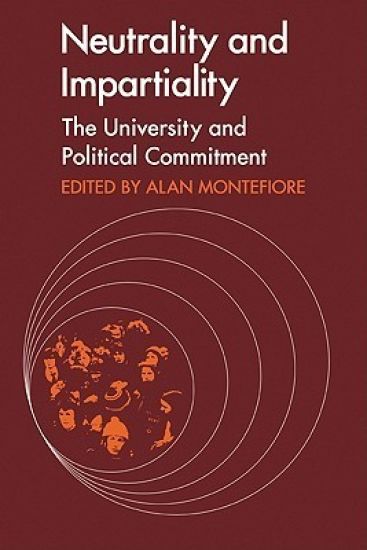
Neutrality and Impartiality

Neutrality and Impartiality

Andrew Graham; Leszek Kolakowski; Charles Taylor; C. L. Ten; W. L. Weinstein; Louis Marin

Cambridge University Press
1973
pokkari
First published in 1975, this is a book of general intellectual interest about the role of the university in contemporary society and that of university teachers in relation to their subjects, their students, and their wider political commitments. Alan Montefiore offers preliminary analyses of the family of concepts most often invoked in discussions of these problems, taking the central dispute to be between those who hold a 'liberal' view of the university and those who regard this notion as illusory, dishonest or undesirable. Six academics, representing, discuss issues of substantive conflict in light of Montefiore's initial distinctions. The volume is of particular interest to students of political and social philosophy, and political and educational theory. It is also intended for a wider readership among those who care about the political status of the universities and recognize the importance and difficulty of the problems involved in this.

The Language Animal

The Language Animal

Charles Taylor

HARVARD UNIVERSITY PRESS
2026
nidottu

Halvin toimitettuna 28,20 €

From Sources of the Self to A Secular Age, Charles Taylor has shown how we create ways of being, as individuals and as a society. Here, he demonstrates that language is at the center of this generative process. Language does not merely describe; it constitutes meaning, and the shared practice of speech shapes human experience.
Cosmic Connections

Cosmic Connections

Charles Taylor

HARVARD UNIVERSITY PRESS
2026
nidottu

Halvin toimitettuna 29,50 €

Charles Taylor delves into the poetry of the Romantics and their heirs, a foundation of his distinctive philosophy of language. Taylor holds that Romantic poetry responded to disenchantment: with old cosmic orders depleted, artists groped to articulate new meanings by bringing connections to life rather than merely reasoning abstractly about life.
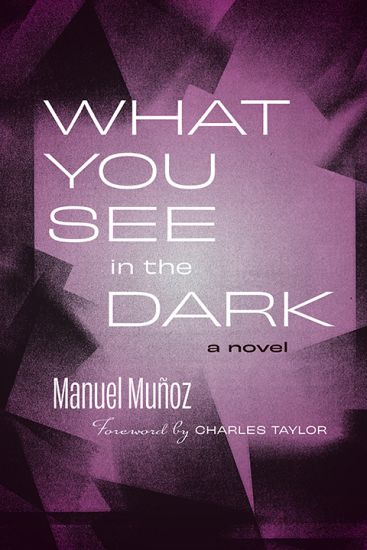
What You See in the Dark

What You See in the Dark

Manuel Muñoz; Charles Taylor

NORTHWESTERN UNIVERSITY PRESS
2025
nidottu
A doomed love story unfolds alongside the production of Psycho in 95 s Bakersfield, California Muñoz's debut novel tells the story of Teresa, an aspiring singer too far away from Los Angeles to share the city's glamour. In Dan Watson, the most desirable man in town, she believes she has found someone to help her realize those dreams. But when a famous actress arrives from Hollywood with a legendary director in tow, local gossip about Teresa and Dan turns to speculation about the celebrity visitors there to work on what will become an iconic, groundbreaking film of madness and murder at a roadside motel: Alfred Hitchcock's Psycho. Framed by a foreword from film critic Charles Taylor, Muñoz's haunting tale reflects 'the slow winding down of everything that once seemed certain.'
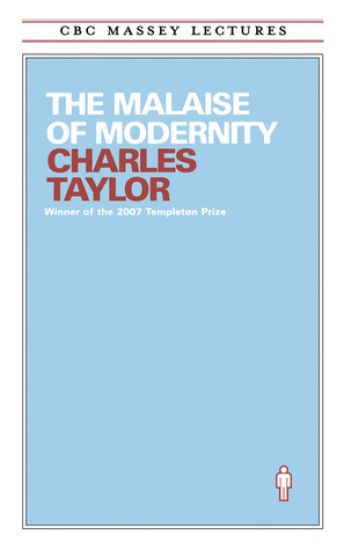
The Malaise of Modernity

The Malaise of Modernity

Charles Taylor

House of Anansi Press Inc.
2024
pokkari

Halvin toimitettuna 22,00 €

In Malaise of Modernity, Charles Taylor focuses on the key modern concept of self-fulfillment, often attacked as the central support of what Christopher Lasch has called the culture of narcissism. To Taylor, self-fulfillment, although often expressed in self-centered ways, isn't necessarily a rejection of traditional values and social commitment; it also reflects something authentic and valuable in modern culture. Only by distinguishing what is good in this modern striving from what is socially and politically dangerous, Taylor says, can our age be made to deliver its promise. In his 1991 CBC Massey Lectures, philosopher Charles Taylor elucidates the modern concept of self-fulfilment.
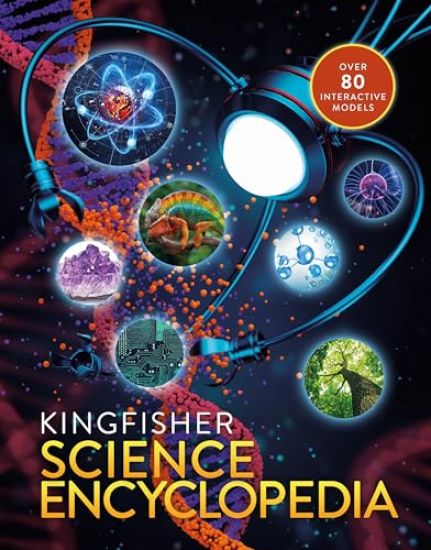
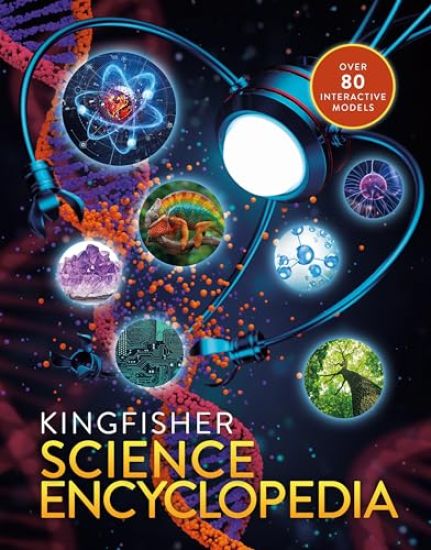
The Kingfisher Science Encyclopedia: With 80 Interactive Augmented Reality Models!
Science and technology is a part of our past, present and future. It makes up everything we do and everything we are. This revised and updated edition of The Kingfisher Science Encyclopedia is now enhanced with augmented reality, making it an exciting and essential go-to science resource for children aged 7+ and all the family. The Kingfisher Science Encyclopedia explores key scientific fields including space and time, technology, power, the human body and the environment. This newly revised fourth edition has been fully updated by expert authors to include the latest groundbreaking discoveries in the world of science, including SpaceX launches, the fight against climate change, and the advancement of AI. What's more, this new edition is enhanced with over 20 annotated 3D Augmented Reality models to enrich the learning experience. Simply download the free AR app to your smartphone or tablet, and scan the pages of the book whenever you see the AR symbol. Zoom into a beating human heart, explore the International Space Station from every angle, and much more. Kingfisher's encyclopedias are award-winning, information-packed reference books for all the family, saving hours of unguided internet trawling. The new, updated editions are beautiful versions of these trusted favourites - perfect for gifts and reference alike. If you want one science encyclopedia, this is it
Cosmic Connections

Cosmic Connections

Charles Taylor

HARVARD UNIVERSITY PRESS
2024
sidottu

Halvin toimitettuna 31,40 €

A major new work by Charles Taylor: the long-awaited follow-up to The Language Animal, exploring the Romantic poetics central to his theory of language. The Language Animal, Charles Taylor's 2016 account of human linguistic capacity, was a revelation, toppling scholarly conventions and illuminating our most fundamental selves. But, as Taylor noted in that work, there was much more to be said. Cosmic Connections continues Taylor's exploration of Romantic and post-Romantic responses to disenchantment and innovations in language. Reacting to the fall of cosmic orders that were at once metaphysical and moral, the Romantics used the symbols and music of poetry to recover contact with reality beyond fragmented existence. They sought to overcome disenchantment and groped toward a new meaning of life. Their accomplishments have been extended by post-Romantic generations into the present day. Taylor's magisterial work takes us from Hoelderlin, Novalis, Keats, and Shelley to Hopkins, Rilke, Baudelaire, and Mallarme, and on to Eliot, Milosz, and beyond. In seeking deeper understanding and a different orientation to life, the language of poetry is not merely a pleasurable presentation of doctrines already elaborated elsewhere. Rather, Taylor insists, poetry persuades us through the experience of connection. The resulting conviction is very different from that gained through the force of argument. By its very nature, poetry's reasoning will often be incomplete, tentative, and enigmatic. But at the same time, its insight is too moving-too obviously true-to be ignored.
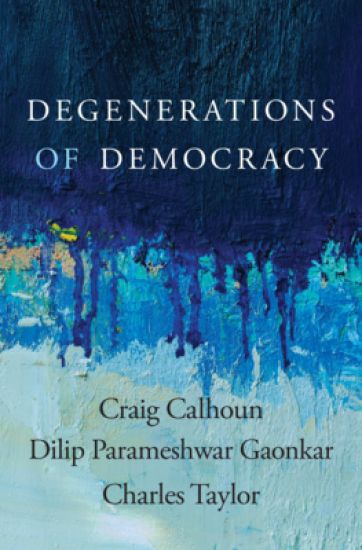
Degenerations of Democracy

Degenerations of Democracy

Craig Calhoun; Dilip Parameshwar Gaonkar; Charles Taylor

HARVARD UNIVERSITY PRESS
2022
sidottu
Three leading thinkers analyze the erosion of democracy’s social foundations and call for a movement to reduce inequality, strengthen inclusive solidarity, empower citizens, and reclaim pursuit of the public good. Democracy is in trouble. Populism is a common scapegoat but not the root cause. More basic are social and economic transformations eroding the foundations of democracy, ruling elites trying to lock in their own privilege, and cultural perversions like making individualistic freedom the enemy of democracy’s other crucial ideals of equality and solidarity. In Degenerations of Democracy three of our most prominent intellectuals investigate democracy gone awry, locate our points of fracture, and suggest paths to democratic renewal. In Charles Taylor’s phrase, democracy is a process, not an end state. Taylor documents creeping disempowerment of citizens, failures of inclusion, and widespread efforts to suppress democratic participation, and he calls for renewing community. Craig Calhoun explores the impact of disruption, inequality, and transformation in democracy’s social foundations. He reminds us that democracies depend on republican constitutions as well as popular will, and that solidarity and voice must be achieved at large scales as well as locally. Taylor and Calhoun together examine how ideals like meritocracy and authenticity have become problems for equality and solidarity, the need for stronger articulation of the idea of public good, and the challenges of thinking big without always thinking centralization. Dilip Parameshwar Gaonkar points out that even well-designed institutions will not integrate everyone, and inequality and precarity make matters worse. He calls for democracies to be prepared for violence and disorder at their margins—and to treat them with justice, not oppression. The authors call for bold action building on projects like Black Lives Matter and the Green New Deal. Policy is not enough to save democracy; it will take movements.