Kirjojen hintavertailu – 12 903 725 kirjaa ja 27 kauppaa

Kirjailija

Charles Taylor

Kirjat ja teokset yhdessä paikassa: 117 kirjaa, julkaisuja vuosilta 1973–2026, suosituimpiin kuuluu Neutrality and Impartiality. Vertaile teosten hintoja ja tarkista saatavuus suomalaisista kirjakaupoista.

117 kirjaa

Kirjojen julkaisuvuodet: 1973–2026.

Multikulturalismus und die Politik der Anerkennung
Charles Taylor greift in seinem Essay eines der brennenden Gegenwartsprobleme liberaler Demokratien auf: Gleichbehandlung der Individuen bei Achtung kultureller und ethnischer Identitäten. Die prekäre Dialektik von Universalismus und Partikularismus, die auch im Schlagwort von der ?multikulturellen Gesellschaft? widerhallt, analysiert er ideengeschichtlich sowie politisch-praktisch an den zeitgenössischen westlichen Gesellschaften. Er beschreibt den Wertewandel, die Selbstbehauptungswünsche von Minderheiten und die rechtlichen Widersprüche in den Autonomiebestrebungen von Volksgruppen. Taylors Analyse ist ein Glücksfall und das Buch mit den Kommentaren von führenden Sozialphilosophen einer der wichtigsten Diskussionsbeiträge zum Thema ? Multikulturalismus?.
Secularism, Religion and Multicultural Citizenship

Secularism, Religion and Multicultural Citizenship

Charles Taylor

Cambridge University Press
2008
pokkari
The Islamist attacks of 9/11, the Danish cartoon affair and rioting by Muslim youths in France are just some of the events that have caused the 'Muslim question' to become a key issue of public debate in many western democracies. Secularism, Religion and Multicultural Citizenship argues that the Muslim case raises important questions about how we understand western secularism and respond to new religious claims in multicultural democracies. The contributors challenge prevailing assumptions about the history and practice of western secularism and recover the pragmatism behind liberal principles in negotiating new conditions. By situating the Muslim experience in relation to western secularism and liberal democratic practice, and through examining a variety of national contexts (including Britain, Germany, France, Denmark, the United States, Australia and India), this book extends thinking about our contemporary condition and considers the broader significance for multicultural liberal democracies.
Secularism, Religion and Multicultural Citizenship

Secularism, Religion and Multicultural Citizenship

Charles Taylor

Cambridge University Press
2008
sidottu
The Islamist attacks of 9/11, the Danish cartoon affair and rioting by Muslim youths in France are just some of the events that have caused the 'Muslim question' to become a key issue of public debate in many western democracies. Secularism, Religion and Multicultural Citizenship argues that the Muslim case raises important questions about how we understand western secularism and respond to new religious claims in multicultural democracies. The contributors challenge prevailing assumptions about the history and practice of western secularism and recover the pragmatism behind liberal principles in negotiating new conditions. By situating the Muslim experience in relation to western secularism and liberal democratic practice, and through examining a variety of national contexts (including Britain, Germany, France, Denmark, the United States, Australia and India), this book extends thinking about our contemporary condition and considers the broader significance for multicultural liberal democracies.
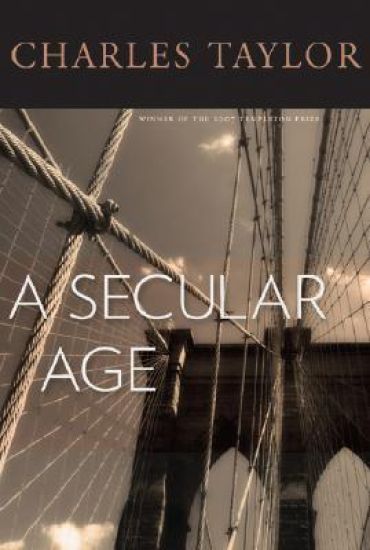
A Secular Age

A Secular Age

Charles Taylor

The Belknap Press
2007
sidottu
“One finds big nuggets of insight, useful to almost anybody with an interest in the progress of human society.” —The EconomistWhat does it mean to say that we live in a secular age? Almost everyone would agree that we—in the West, at least—largely do. And clearly the place of religion in our societies has changed profoundly in the last few centuries. In what will be a defining book for our time, Charles Taylor takes up the question of what these changes mean—of what, precisely, happens when a society in which it is virtually impossible not to believe in God becomes one in which faith, even for the staunchest believer, is only one human possibility among others. Taylor, long one of our most insightful thinkers on such questions, offers a historical perspective. He examines the development in “Western Christendom” of those aspects of modernity which we call secular. What he describes is in fact not a single, continuous transformation, but a series of new departures, in which earlier forms of religious life have been dissolved or destabilized and new ones have been created. As we see here, today’s secular world is characterized not by an absence of religion—although in some societies religious belief and practice have markedly declined—but rather by the continuing multiplication of new options, religious, spiritual, and anti-religious, which individuals and groups seize on in order to make sense of their lives and give shape to their spiritual aspirations. What this means for the world—including the new forms of collective religious life it encourages, with their tendency to a mass mobilization that breeds violence—is what Charles Taylor grapples with, in a book as timely as it is timeless.

Autentisitetens etikk

Autentisitetens etikk

Charles Taylor

Cappelen Damm akademisk
2007
nidottu
Et sentralt kjennetegn ved Moderniteten er idéen om individualisme. Men med den har det moderne selvet havnet i et paradoks - autentisitetskulturen, med dens idé om at vi alle kan finne kilden til et verdifullt liv i vår egen private subjektivitet, forstår ikke at det moralske rom er et kollektivt rom. Man finner ikke frem til hva som er verdifullt ved å rote på soveværelset, derimot finner man det ved å analysere de historisk frembragte, kollektive forestillinger det moderne selvet har om seg selv. Charles Taylor er professor ved McGill University, Canada og leverer med Autentisitetens etikk (The Malaise of Modernity) et viktig bidrag til debatten om det moderne samfunnets grunnlag og fremtidsutsikter. Oversatt av Petter Nafstad. Nr. 33 i Cappelens upopulære skrifter.