
Kirjailija
Charles W. Chesnutt
Kirjat ja teokset yhdessä paikassa: 127 kirjaa, julkaisuja vuosilta 1968–2026, suosituimpiin kuuluu Graphic Classics Volume 22: African-American Classics. Vertaile teosten hintoja ja tarkista saatavuus suomalaisista kirjakaupoista.
Nimi esiintyy myös muodoissa: Charles W Chesnutt
127 kirjaa
Kirjojen julkaisuvuodet: 1968–2026.
Inspired by the 1898 Wilmington Riot and the eyewitness accounts of Charles W. Chesnutt’s own family, Chesnutt’s The Marrow of Tradition captures the astonishing moment in American history when a violent coup d’état resulted in the subversion of a free and democratic election. The Norton Critical Edition text is based on the 1901 first edition. It is accompanied by a note on the text, Werner Sollors’s insightful introduction, explanatory annotations, and twenty-four photographs and illustrations. “Contexts” connects the novel to the historical events in Wilmington and includes a wealth of newspaper articles, editorials, and biographical sketches of the central players. The account of riot instigator Alfred Moore Waddell, published just weeks after the event, is reprinted, along with three rarely seen letters: W. E. B. Du Bois’s and Booker T. Washington’s comments on the novel and Walter Hines Page’s letter to Chesnutt. Rounding out the historical record is a selection of 1890s sheet music, a poem, and newspaper articles on the Cakewalk, a popular dance of the period with roots in slavery. “Criticism” begins with twelve contemporary reviews, including those by Hamilton Wright Mabie, Katherine Glover, William Dean Howells, and Sterling A. Brown. Fifteen recent assessments focus on the novel’s characters, history, realism, and violence. As scholarship on The Marrow of Tradition and on Wilmington in 1898 has been especially active since the 1990s, ten assessments are from this period. A Chronology and Selected Bibliography are also included.
This Norton Critical Edition of The Conjure Stories arranges the tales chronologically by composition date, allowing readers to discern how Chesnutt experimented with plots and characters and with the idea of the conjure story over time. With one exception, the text of each tale is that of the original publication. (The text of “The Dumb Witness” was established from two typescripts held at the archives of Fisk University.) The stories are accompanied by a thorough and thought-provoking introduction, detailed explanatory annotations, and illustrative materials. “Contexts” presents a wealth of materials chosen by the editors to enrich the reader’s understanding of these canonical stories, including a map of the landscape of the conjure tales, Chesnutt’s journal entry as he began writing fiction of the South, as well as writings by Chesnutt, William Wells Brown, and Paul Laurence Dunbar, among others, on the stories’ central motifs—folklore, superstition, voodoo, race, and social identity in the South following the Civil War. “Criticism” is divided into two parts. “Early Criticism” collects critical notices for The Conjure Woman that suggest the volume’s initial reception, assessments by William Dean Howells and Benjamin Brawley, and a biographical excerpt by the author’s daughter, Helen Chesnutt. “Modern Criticism” demonstrates rich and enduring interest in The Conjure Stories with ten important essays by Robert Hemenway, William L. Andrews, Robert B. Stepto, John Edgar Wideman, Werner Sollors, Houston A. Baker, Eric J. Sundquist, Richard H. Brodhead, Candace J. Waid, and Glenda Carpio. A Chronology of Chesnutt’s life and work and a Selected Bibliography are also included.
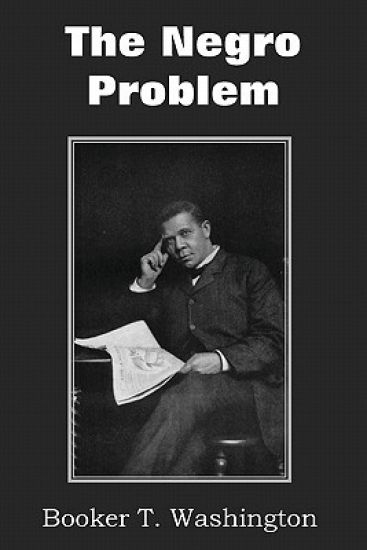
The Negro Problem
Booker T Washington; Charles W Chesnutt; T Thomas Fortune
Bottom of the Hill Publishing
2011
pokkari
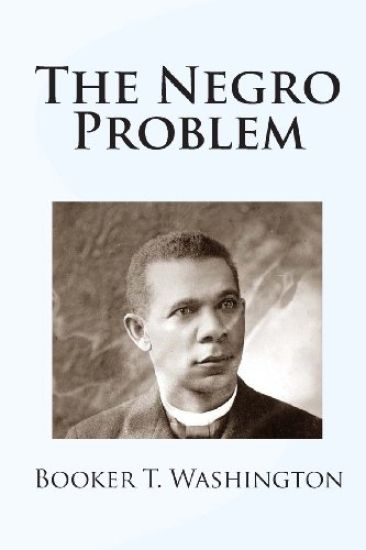
The Negro Problem
W. E. B. Du Bois; Charles W. Chesnutt; Wilford H. Smith
Createspace Independent Publishing Platform
2010
nidottu
Published in paperback for the first time, A Business Career is the story of Stella Merwin, a white woman entering the working-class world to discover the truth behind her upper-class father's financial failure. A ""New Woman"" of the 1890s, Stella joins a stenographer's office and uncovers a life-altering secret that allows her to regain her status and wealth. When Charles W. Chesnutt died in 1932, he left behind six manuscripts unpublished, A Business Career among them. Along with novels of Paul Laurence Dunbar, it is one of the first written by an African American who crosses the color line to write about the white world. It is also one of only two Chesnutt novels with a female protagonist. Rejecting the novel for publication, Houghton Mifflin editor Walter Hines Page encouraged Chesnutt to try to get the book in print. ""You will doubtless be able to find a publisher, and my advice to you is decidedly to keep trying till you do find one,"" he wrote. Page clearly saw that in A Business Career Chesnutt had written a successful popular novel grounded in realism but one that exploits elements of romance.
The critique of white male society that Charles W. Chesnutt launched in A Marrow of Tradition continues in Evelyn's Husband, one of six manuscripts left unpublished when this highly regarded African American innovator died. Set in Boston society, on a deserted Caribbean island, and in Brazil, Evelyn's Husband is the story of two men-one old, one young-in love with the same young woman. Late in his career Chesnutt embarked on a period of experimentation with eccentric forms, finishing this hybrid of a romance and adventure story just before publishing his last work, The Colonel's Dream. In Evelyn's Husband, Chesnutt crafts a parody examining white male roles in the early 1900s, a time when there was rampant anxiety over the subject. In Boston, the older man is left at the altar when his bride-to-be flees and marries a young architect. Later, trapped on an island together, the jilted lover and the young husband find a productive middle ground between the dilettante and the primitive. Along with A Business Career, this novel marks Chesnutt's achieve-ment in being among the first African American authors to defy the color barrier and write fiction with a white cast of main characters. Matthew Wilson, Bainbridge, Pennsylvania, introduces both A Business Career and Evelyn's Husband. He is associate professor of humanities and writing at Penn State University, Harrisburg. Marjan van Schaik, Bainbridge, Pennsylvania, edited both novels along with Wilson and is a part-time instructor at Millersville University.
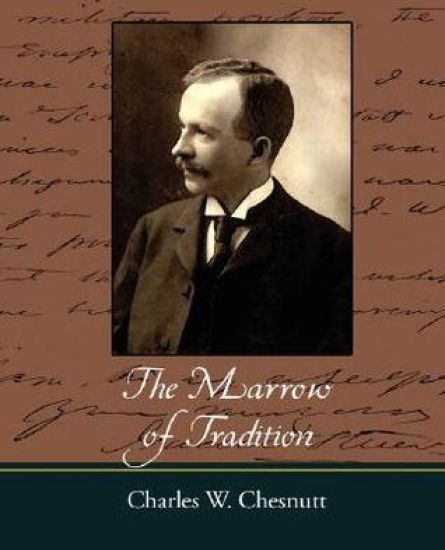
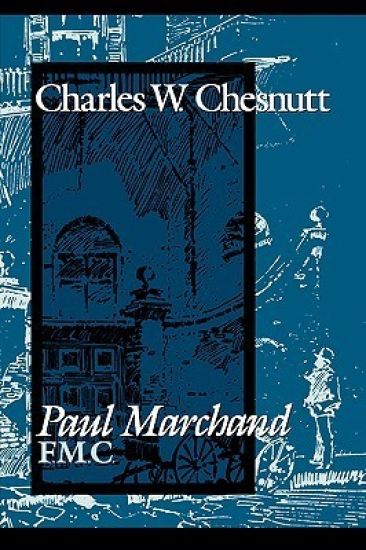
Chesnutt wrote this novel at the beginning of the Harlem Renaissance, but set it in a time and place favored by George Washington Cable. Published now for the first time, Paul Marchand: Free Man of Color examines the system of race and caste in nineteenth-century New Orleans. Chesnutt reacts, as well, against the traditional stance that fiction by leading American writers of the previous generation had taken on the issue of miscegenation. After living for many years in France, the wealthy and sophisticated Paul Marchand returns to his home in New Orleans and discovers through a will that he is white and is now head of a prosperous and influential family. Since mixed-race marriages are illegal, he must renounce his mulatto wife and bastardize his children. Chesnutt resolves Marchand's dilemma with a surprising plot reversal. Marchand, although white, chooses to pass as a black so that he can keep his wife and children. Thus by altering the traditional narrative that Cable, Twain, and Howells had developed for their fiction on mixed-race themes, he exposes the issue of race as a social and legal fabrication. Moreover, Chesnutt shows Marchand's awareness that traits of inferiority and superiority are not based on ""blood"" but on other factors. In him Chesnutt has created an admirable male character responsive to human needs and civility rather than to artificial institutions. Books by Charles W. Chesnutt (1858-1932) include Baxter's Procrustes, Hot-Foot Hannibal, The Conjure Woman, The House Behind the Cedars, The Marrow of Tradition, and The Colonel's Dream. Matthew Wilson is an associate professor of humanities and writing at Pennsylvania State University, Harrisburg.

Wife Of His Youth And Other Stories Of The Color Line And Selected Essays
Charles W. Chesnutt
KESSINGER PUBLISHING CO
2004
pokkari
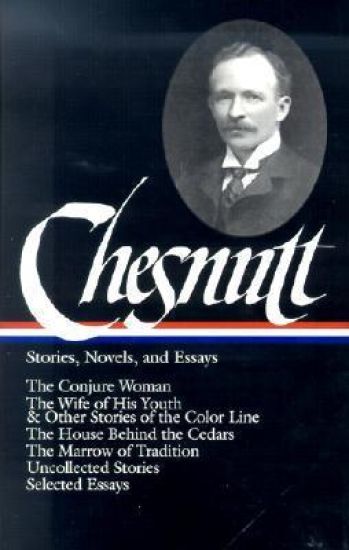
Charles W. Chesnutt: Stories, Novels, and Essays (LOA #131)
Charles W. Chesnutt
The Library of America
2002
sidottu
Rejecting his era's genteel hypocrisy about miscegenation, lynching, and passing, Charles W. Chesnutt broke new ground in American literature with his innovative explorations of racial identity and use of African-American speech and folklore. Chesnutt exposed the deformed logic of the Jim Crow system-creating, in the process, the modern African-American novel. Here is the best of Chesnutt's fiction and nonfiction in the largest and most comprehensive edition ever published, featuring a newly researched chronology of the writer's life. The Conjure Woman (1899) introduced Chesnutt to the public as a writer of conjure tales, stories that explore black folklore and supernaturalism. That same year, he published The Wife of His Youth, and Other Stories of the Color Line, stories set in Chesnutt's native North Carolina that dramatize the legacies of slavery and Reconstruction at the turn of the century. His first novel, The House Behind the Cedars (1900), is a study of racial passing. The Marrow of Tradition (1901), Chesnutt's masterpiece, is a powerful and bitter novel about the harsh reassertion of white dominance in a southern town at the end of the Reconstruction era. Nine uncollected short stories round out the volume's fiction, including conjure tales omitted from The Conjure Woman and two stories that are unavailable in any other edition. Eight essays highlight his prescient views on the paradoxes of race relations in America and the definition of race itself. LIBRARY OF AMERICA is an independent nonprofit cultural organization founded in 1979 to preserve our nation's literary heritage by publishing, and keeping permanently in print, America's best and most significant writing. The Library of America series includes more than 300 volumes to date, authoritative editions that average 1,000 pages in length, feature cloth covers, sewn bindings, and ribbon markers, and are printed on premium acid-free paper that will last for centuries.
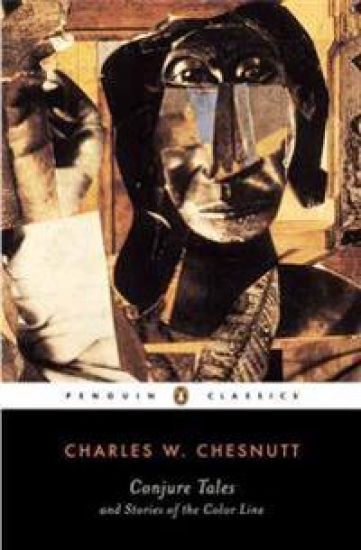
Unlike the popular "Uncle Remus" stories of Joel Chandler Harris, Charles W. Chesnutt's tales probe psychological depths in black people unheard of before in Southern regional writing. They also expose the anguish of mixed-race men and women and the consequences of racial hatred, mob violence, and moral compromise. This important collection contains all the stories in his two published volumes, The Conjure Woman and The Wife of His Youth, along with two uncollected works: the tragic "Dave's Neckliss" and "Baxter's Procustes", Chesnutt's parting shot at prejudice. For more than seventy years, Penguin has been the leading publisher of classic literature in the English-speaking world. With more than 1,700 titles, Penguin Classics represents a global bookshelf of the best works throughout history and across genres and disciplines. Readers trust the series to provide authoritative texts enhanced by introductions and notes by distinguished scholars and contemporary authors, as well as up-to-date translations by award-winning translators.