Kirjojen hintavertailu – 12 859 827 kirjaa ja 27 kauppaa

Kirjailija

Charles W. Chesnutt

Kirjat ja teokset yhdessä paikassa: 127 kirjaa, julkaisuja vuosilta 1968–2026, suosituimpiin kuuluu Graphic Classics Volume 22: African-American Classics. Vertaile teosten hintoja ja tarkista saatavuus suomalaisista kirjakaupoista.

Nimi esiintyy myös muodoissa: Charles W Chesnutt

127 kirjaa

Kirjojen julkaisuvuodet: 1968–2026.

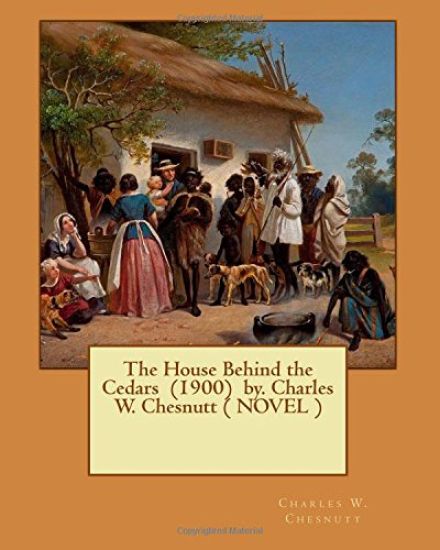
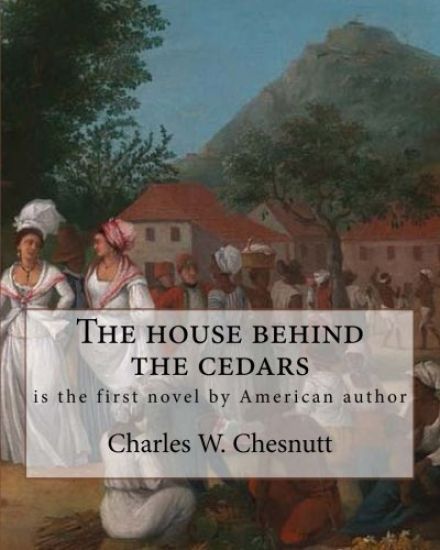
The House Behind the Cedars (1900). By: Charles W. Chesnutt: Novel

The House Behind the Cedars (1900). By: Charles W. Chesnutt: Novel

Charles W. Chesnutt

Createspace Independent Publishing Platform
2017
nidottu
The House Behind the Cedars is the first novel by American author Charles W. Chesnutt. It was published in 1900 by Houghton, Mifflin and Company. The story occurs in the southern American states of North and South Carolina a few years following the American Civil War. Rena Walden, a young woman of mixed white and black ancestry, leaves home to join her brother, who has migrated to a new city, where he lives as a white man. Following her brother's lead, Rena begins living as a white woman. The secret of her identity leads to conflict when she falls in love with a white aristocrat who learns the truth of her heredity. The ensuing drama emphasizes themes of interracial relations and depicted the intricacies of racial identity in the American south. Chesnutt's autobiography informed the novel's themes. Being of predominantly European ancestry, Chesnutt was light skinned enough to pass as a white man, although he openly identified with his African-American roots. Additionally, his portrayal of interracial romantic relations in The House Behind the Cedars was controversial. Although the novel was critically well received, its controversy contributed to poor financial performance. Plot: The novel opens "a few years after the Civil War" 3] with John Warwick, from Clarence, South Carolina, leaving a hotel in Patesville, North Carolina. He walks around the town in which he used to live, and tries to visit Judge Archibald Straight, but he is not in his office. Warwick's attention is captured by a striking young woman, who he does not recognize as Rena, and follows her to the house behind the cedars. Warwick cautiously approaches the house, worried about being seen, and is invited in by Molly Walden. He says that he has a message for Walden from her son, but she then realizes that Warwick is her son who she has not seen in years. Warwick joyfully reunites with his mother and his sister Rena, and tells them what his life has been like since leaving home. He reveals that he has become a successful lawyer, and that he was married, but his wife died and left him with a baby boy. Warwick asks Rena if she would come live with him and help take care of his son Albert. Molly is reluctant to send off her only daughter and Rena does not want to leave her mother alone, but John ultimately convinces his mother that Rena will have a better life with him. The next morning, Warwick visits Judge Straight, his mentor for whom he used to work as an office-boy under the name John Walden. Straight warns him not to stay in town for too long or else people may start to question his presence. He then contemplates that it would have been better for John to move further away from home than South Carolina "even though the laws were with him."... Charles Waddell Chesnutt (June 20, 1858 - November 15, 1932) was an African-American author, essayist, political activist and lawyer, best known for his novels and short stories exploring complex issues of racial and social identity in the post-Civil War South. Many families of free people of color were formed in the colonial and early Federal period; some attained education and property; in addition there were many mixed-race slaves, who as freedmen after the war were part of the complex society of the South. Two of his books were adapted as silent films in 1926 and 1927 by the African-American director and producer Oscar Micheaux. Following the Civil Rights Movement during the 20th century, interest in the works of Chesnutt were revived. Several of his books were published in new editions, and he received formal recognition. A commemorative stamp was printed in 2008. During the early 20th century in Cleveland, Chesnutt established what became a highly successful court reporting business, which provided his main income. He became active in the National Association for the Advancement of Colored People, writing articles supporting education as well as legal challenges to discriminatory laws.
The House Behind the Cedars

The House Behind the Cedars

Charles W. Chesnutt

Createspace Independent Publishing Platform
2016
nidottu
The House Behind the Cedars, which many consider Charles Chesnutt's finest novel, tells of John and Lena Walden, mulatto siblings who pass for white in the postbellum American South. The drama that unfolds as they travel between black and white worlds constitutes a riveting portrait of the shifting and intractable nature of race in American life. This edition revitalizes a much-neglected masterpiece by one of our most important African-American writers. As Werner Sollors writes, "William Dean Howells did not overstate his case when he compared Chesnutt's works with those by Turgenev, Maupassant, and James . . . and Chesnutt] has become one of the most important 'crossover' authors from the African-American tradition."
Paul Marchand, F.M.C.

Paul Marchand, F.M.C.

Charles W. Chesnutt

Princeton University Press
2016
sidottu
Evoking the atmosphere of early-nineteenth-century New Orleans and the deadly aftermath of the San Domingo slave revolution, this historical novel begins as its protagonist puzzles over the seemingly prophetic dream of an aged black praline seller in the famous Place d'Armes. Paul Marchand, a free man of color living in New Orleans in the 1820s, is despised by white society for being a quadroon, yet he is a proud, wealthy, well-educated man. In this city where great wealth and great poverty exist side by side, the richest Creole in town lies dying. The family of the aged Pierre Beaurepas eagerly, indeed greedily, awaits disposition of his wealth. As the bombshell of Beaurepas's will explodes, an old woman's dream takes on new meaning, and Marchand is drawn ever more closely into contact with a violently racist family. Bringing to life the entwined racial cultures of New Orleans society, Charles Chesnutt not only writes an exciting tale of adventure and mystery but also makes a provocative comment on the nature of racial identity, self-worth, and family loyalty. Although he was the first African-American writer of fiction to gain acceptance by America's white literary establishment, Charles W. Chesnutt (1858-1932) has been eclipsed in popularity by other writers who later rose to prominence during the Harlem Renaissance. Recently, this pathbreaking American writer has been receiving an increasing amount of attention. Two of his novels, Paul Marchand, F. M. C. (completed in 1921) and The Quarry (completed in 1928), were considered too incendiary to be published during Chesnutt's lifetime. Their publication now provides us not only the opportunity to read these two books previously missing from Chesnutt's oeuvre but also the chance to appreciate better the intellectual progress of this literary pioneer. Chesnutt was the author of many other works, including The Conjure Woman & Other Conjure Tales, The House Behind the Cedars, The Marrow Tradition, and Mandy Oxendine. Princeton University Press recently published To Be an Author: Letters of Charles W. Chesnutt, 1889-1905 (edited by Joseph R. McElrath, Jr., and Robert C. Leitz, III). Originally published in 1999. The Princeton Legacy Library uses the latest print-on-demand technology to again make available previously out-of-print books from the distinguished backlist of Princeton University Press. These editions preserve the original texts of these important books while presenting them in durable paperback and hardcover editions. The goal of the Princeton Legacy Library is to vastly increase access to the rich scholarly heritage found in the thousands of books published by Princeton University Press since its founding in 1905.
The Quarry

The Quarry

Charles W. Chesnutt

Princeton University Press
2016
sidottu
Was Donald Glover really what he seemed--a handsome, dedicated, and clever African-American star of the Harlem Renaissance, whose looks made him the "quarry" of a variety of women? Or could the secrets of his birth change his destiny entirely? Focusing on the culture of Harlem in the 1920s, Charles Chesnutt's final novel dramatizes the political and aesthetic life of the exciting period we now know as the Harlem Renaissance. Mixing fact and fiction, and real and imagined characters, The Quarry is peopled with so many figures of the time--including Booker T. Washington, W. E. B. DuBois, and Marcus Garvey--that it constitutes a virtual guide to this inspiring period in American history. Protagonist Glover is a light-skinned man whose adoptive black parents are determined that he become a leader of the black people. Moving from Ohio to Tennessee, from rural Kentucky to Harlem, his story depicts not only his conflicted relationship to his heritage but also the situation of a variety of black people struggling to escape prejudice and to take advantage of new opportunities. Although he was the first African-American writer of fiction to gain acceptance by America's white literary establishment, Charles W. Chesnutt (1858-1932) has been eclipsed in popularity by other writers who later rose to prominence during the Harlem Renaissance. Recently, this pathbreaking American writer has been receiving an increasing amount of attention. Two of his novels, Paul Marchand, F. M. C. (completed in 1921) and The Quarry (completed in 1928), were considered too incendiary to be published during Chesnutt's lifetime. Their publication now provides us not only the opportunity to read these two books previously missing from Chesnutt's oeuvre but also the chance to appreciate better the intellectual progress of this literary pioneer. Chesnutt was the author of many other works, including The Conjure Woman & Other Conjure Tales, The House Behind the Cedars, The Marrow Tradition, and Mandy Oxendine. Princeton University Press recently published To Be an Author: Letters of Charles W. Chesnutt, 1889-1905 (edited by Joseph R. McElrath, Jr., and Robert C. Leitz, III). Originally published in 1999. The Princeton Legacy Library uses the latest print-on-demand technology to again make available previously out-of-print books from the distinguished backlist of Princeton University Press. These editions preserve the original texts of these important books while presenting them in durable paperback and hardcover editions. The goal of the Princeton Legacy Library is to vastly increase access to the rich scholarly heritage found in the thousands of books published by Princeton University Press since its founding in 1905.