Kirjojen hintavertailu – 12 859 819 kirjaa ja 27 kauppaa

Kirjailija

Charles Williams

Kirjat ja teokset yhdessä paikassa: 217 kirjaa, julkaisuja vuosilta 1949–2026, suosituimpiin kuuluu Wan in Heaven. Vertaile teosten hintoja ja tarkista saatavuus suomalaisista kirjakaupoista.

217 kirjaa

Kirjojen julkaisuvuodet: 1949–2026.

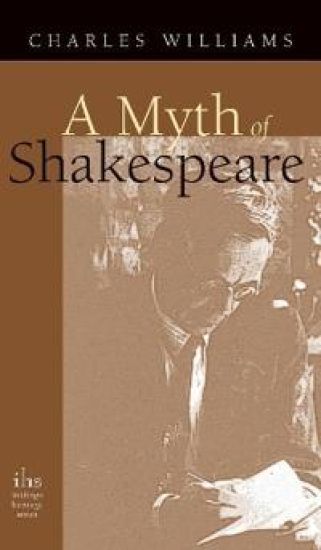
Myth of Shakespeare

Myth of Shakespeare

Charles Williams

Apocryphile Press
2010
sidottu
This play contains no thesis of Shakespeare's life, character, or genius, except that he was a born poet and working dramatist. The scenes included were intended, quite mythically, to represent barely possible incidents in his life, passages read to or by his friends, or performances in his theatre.-adapted from the Note Charles Williams was one of the finest-not to mention one of the most unusual-theologians of the twentieth century. His mysticism is palpable-the unseen world interpenetrates ours at every point, and spiritual exchange occurs all the time, unseen and largely unlooked for. His novels are legend, his poetry profound, and as a member of the Inklings, he contributed to the mythopoetic revival in contemporary culture.
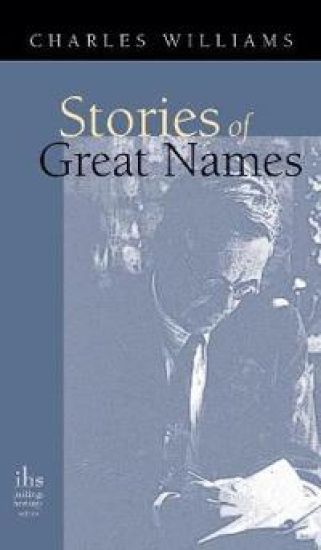
Stories of Great Names (Apocryphile)

Stories of Great Names (Apocryphile)

Charles Williams

Apocryphile Press
2010
sidottu
The purpose of this book is to provide brief biographies of certain historical figures whose names have for long been prevalent in English literature. These names are used not only in correct historical allusions, but as imaginative ideas; myths, one might almost say, of the English mind.-from the Preface Charles Williams was one of the finest-not to mention one of the most unusual-theologians of the twentieth century. His mysticism is palpable-the unseen world interpenetrates ours at every point, and spiritual exchange occurs all the time, unseen and largely unlooked for. His novels are legend, his poetry profound, and as a member of the Inklings, he contributed to the mythopoetic revival in contemporary culture.
Queen Elizabeth

Queen Elizabeth

Charles Williams

Apocryphile Press
2010
sidottu
The life of Elizabeth represents, in English history, the longest and most spectacular period of a change in society. That change began before her. It was the change from a society directed, at any rate in theory, by a metaphysical idea, to a society directed, both in theory and practice, by nothing but he continual pressure of events. It is a change completed in our day. -from the first chapter Charles Williams was one of the finest-not to mention one of the most unusual-theologians of the twentieth century. His mysticism is palpable-the unseen world interpenetrates ours at every point, and spiritual exchange occurs all the time, unseen and largely unlooked for. His novels are legend, his poetry profound, and as a member of the Inklings, he contributed to the mythopoetic revival in contemporary culture.
Descent into Hell

Descent into Hell

Charles Williams

Faber Faber
2010
nidottu
Those who have read Williams's earlier novels will not want to be told anything about Descent into Hell except that it is one of his best. Those who do not know the author's work will find that when they have read this novel, they will want to read all the others. Highly acclaimed writer of the thriller with a supernatural element, Williams's novels can be read for pure excitement. However, there is also a comedy of manners and acute analysis of human relationships, and finally, exploration of abysses of beauty and horror beyond the borders of the material world. This book, as the title may suggest, is not recommended reading for hyper-sensitive people alone at night in an empty house.
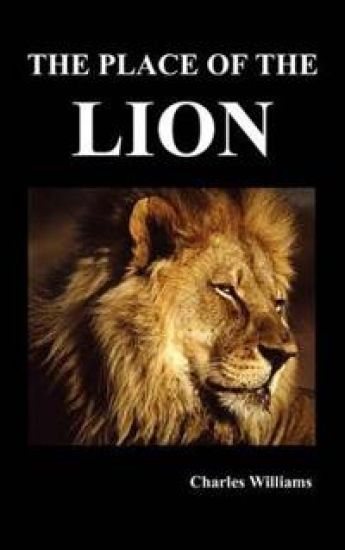
The Place of the Lion

The Place of the Lion

Charles Williams

Faber Faber
2010
nidottu
If ideas are more dangerous than material things, what happens when ideas become matter? Near a crossroad in the country town of Smetham, a retired philosopher is felled by what appears to be a huge lion. The lion vanishes, leaving the seemingly untouched man in a coma. But over the next few days, more creatures start to appear - Platonic archetypes stalk the English countryside, and the inhabitants of Smetham begin to display unsettlingly animalistic traits. The worlds of matter and ideas are colliding. It is down to two unlikely heroes to banish the ideas back to the spiritual realm and save the world. First published in 1933, The Place of the Lion is the third supernatural thriller by Charles Williams, a member of the Inklings whose theological interests embraced Rosicrucianism as well as mainstream Christianity.
The Place of the Lion

The Place of the Lion

Charles Williams

BENEDICTION CLASSICS
2010
sidottu
The Place of the Lion is a fantasy novel written by Charles Williams. The book was first published in 1931 by Victor Gollancz. Platonic archetypes begin to manifest themselves outside a small Hertfordshire town, wreaking havoc and drawing to the surface the spiritual strengths and flaws of individual characters. Their focus is the home of Mr Berringer, the leader of a group interested in magical symbolism who falls into a coma after contact with the first archetype unloosed, the lion of the title. Other powers follow this one and cut off the town from the rest of the world that they will inevitably absorb and reshape. Among those overcome and destroyed by the raw powers they encounter are two members of the group, Mr Foster and Miss Wilmot, whose motivation is ultimately selfish. A chance visitor to the group, the academic author Damaris Tighe, narrowly escapes the same fate but is saved at the last moment by her cousin and fianc , Anthony Durrant. She then sets out to locate Anthony's friend, Quentin Sabot, who had been with Anthony when the lion first appeared and has now fled into the countryside, overcome with terror. Meanwhile, with the help of another group member, Mr Richardson, who also has the inner strength to withstand the angelical archetypes, Anthony is enabled to understand the process that has been unleashed by Berringer. Together they plan to counter it and reverse the threat. Its next phase has already started and some of the town's buildings begin to collapse as Berringer's house is swallowed in a column of unquenchable flame. Armed with the secret names of the archetypes from a grimoire, Anthony summons them back to their point of focus while Richardson neutralizes the fire by walking into it. (wikipedia.org)

War in Heaven

War in Heaven

Charles Williams

Faber Faber
2010
pokkari
'There are no novels anywhere quite like them . . . He really believes in what he is talking about.' That was T. S. Eliot writing about the seven novels of Charles Williams. How to describe them? Again, probably in T. S. Eliot's words, 'They may be described as supernatural thrillers; ''popular'' novels in the best sense, by a man who had something important and quite individual to say. When we say ''thrillers'' we mean that their plots are adventurous and breathless, their scenes sometimes entrancing and sometime horrifying; and when we say ''supernatural'' we mean that Williams had a real experience of the supernatural world to communicate. He had a kind of extended spiritual sense: he was like a man who can perceive shades of colour, or hear tones beyond the ordinary range. The theme of all his novels is the struggle between good and evil; and as an interpreter of the mystical experience he was unique in his generation. He excels in descriptions of strange experiences such as many people have had once or twice in their lives and have been unable to put into words. There are pages also which describe, with a frightful clarity, the deterioration and damnation of a human soul; and pages which describe the triumphant struggle towards salvation. War in Heaven was the first in the sequence, published in 1930, and the most conventional of them. It relates the discovery of The Holy Grail in a country church and of the struggle between good and evil forces to possess it. There are detailed and convincing accounts of black magic. The author belonged to A. E. Waite's Christian Rosicrucian order, The Fellowship of the Rosy Cross and was therefore conversant with esoteric rites. All seven novels are being reissued in Faber Finds: War in Heaven, Many Dimensions, The Place of the Lion, The Greater Trumps, Shadows of Ecstasy, Descent into Hell and All Hallows' Eve.
Many Dimensions

Many Dimensions

Charles Williams

Faber Faber
2010
pokkari
First published in 1931, this fascinating story is one of Charles Williams' early 'metaphysical' novels. Set in London, Sir Giles, the nefarious cousin of The Chief Justice of England, Lord Arglay, has obtained by not entirely fair means the ancient gold Crown of King Solomon the Wise. The White Stone of the Tetragrammaton, embedded in the crown, was the key to his wisdom and riches and fame. Sir Giles means to research it and unlock its powers, but lacking the courage to take all the risks himself, he must include others in his plans. Made of the First Matter from the Garden of Eden, the Stone's power grows with the experience of the user and can heal all sicknesses, allow the user to travel in time, in addition to seeing the minds of others. This provoking supernatural thriller shows Williams at his very best.
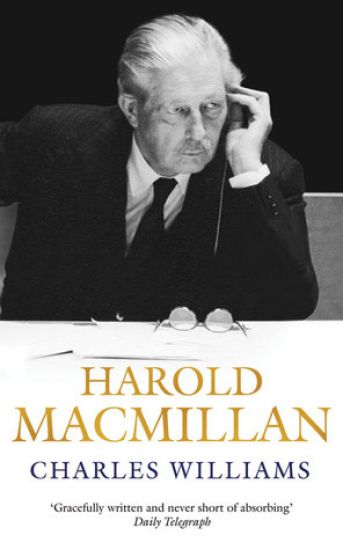
Harold Macmillan

Harold Macmillan

Charles Williams

Weidenfeld Nicolson
2010
nidottu
A masterly biography of a great Conservative Prime Minister (and publisher) - Harold Macmillan (1894-1986). Harold Macmillan was a figure of paradox. Outwardly, it was Edwardian elegance and civilised urbanity. Inwardly, it was emotional damage from his wife's open adultery and his progressive perplexity at the onward march of time. The First World War showed the courageous soldier. From then on, it was politics, rather than the family business of publishing, which was to be his future. Nevertheless, although he supported Churchill in the 1930s he was deemed boring - and certainly not ministerial material. All changed with the Second World War. Appointed Minister in Residence in North Africa, Macmillan's career flowered. After the War he became indispensable to Conservative Cabinets and as Churchill's Minister of Housing in the early 1950s he achieved the target, against all expectations, of 300,000 houses annually. Thereafter, he was Eden's Foreign Secretary and Chancellor but by then Macmillan had become openly ambitious. Over the Suez affair in 1956 he played a difficult - and somewhat devious - hand. Eden's resignation left him as the clear choice of his Cabinet colleagues to become Prime Minister. From 1957 to 1962, Macmillan was a good - some would say a great - Prime Minister. By 1962, however, his government was looking tired. The Profumo affair in 1963 was particularly damaging, and in the autumn of 1963 his health forced him to retire.