Kirjojen hintavertailu – 12 859 824 kirjaa ja 27 kauppaa
Kirjailija
Charlotte Lennox
Kirjat ja teokset yhdessä paikassa: 56 kirjaa, julkaisuja vuosilta 1995–2026, suosituimpiin kuuluu The Female Quixote; or, The Adventures of Arabella, V. 1-2 (Cram Edition). Vertaile teosten hintoja ja tarkista saatavuus suomalaisista kirjakaupoista.
The 18th century was a wealth of knowledge, exploration and rapidly growing technology and expanding record-keeping made possible by advances in the printing press. In its determination to preserve the century of revolution, Gale initiated a revolution of its own: digitization of epic proportions to preserve these invaluable works in the largest archive of its kind. Now for the first time these high-quality digital copies of original 18th century manuscripts are available in print, making them highly accessible to libraries, undergraduate students, and independent scholars. Western literary study flows out of eighteenth-century works by Alexander Pope, Daniel Defoe, Henry Fielding, Frances Burney, Denis Diderot, Johann Gottfried Herder, Johann Wolfgang von Goethe, and others. Experience the birth of the modern novel, or compare the development of language using dictionaries and grammar discourses. ++++The below data was compiled from various identification fields in the bibliographic record of this title. This data is provided as an additional tool in helping to insure edition identification: ++++British LibraryT009992Dedication signed: Charlotte Lennox, and dated Nov. 20, 1757. London: printed for A. Millar, 1758. 48p.; 8
The 18th century was a wealth of knowledge, exploration and rapidly growing technology and expanding record-keeping made possible by advances in the printing press. In its determination to preserve the century of revolution, Gale initiated a revolution of its own: digitization of epic proportions to preserve these invaluable works in the largest archive of its kind. Now for the first time these high-quality digital copies of original 18th century manuscripts are available in print, making them highly accessible to libraries, undergraduate students, and independent scholars. Western literary study flows out of eighteenth-century works by Alexander Pope, Daniel Defoe, Henry Fielding, Frances Burney, Denis Diderot, Johann Gottfried Herder, Johann Wolfgang von Goethe, and others. Experience the birth of the modern novel, or compare the development of language using dictionaries and grammar discourses. ++++The below data was compiled from various identification fields in the bibliographic record of this title. This data is provided as an additional tool in helping to insure edition identification: ++++British LibraryT073522London: printed for T. Cadell; and J. Evans, 1790. 4v.; 12
The 18th century was a wealth of knowledge, exploration and rapidly growing technology and expanding record-keeping made possible by advances in the printing press. In its determination to preserve the century of revolution, Gale initiated a revolution of its own: digitization of epic proportions to preserve these invaluable works in the largest archive of its kind. Now for the first time these high-quality digital copies of original 18th century manuscripts are available in print, making them highly accessible to libraries, undergraduate students, and independent scholars. Western literary study flows out of eighteenth-century works by Alexander Pope, Daniel Defoe, Henry Fielding, Frances Burney, Denis Diderot, Johann Gottfried Herder, Johann Wolfgang von Goethe, and others. Experience the birth of the modern novel, or compare the development of language using dictionaries and grammar discourses. ++++The below data was compiled from various identification fields in the bibliographic record of this title. This data is provided as an additional tool in helping to insure edition identification: ++++British LibraryT088670Also issued as part of 'The novelists' magazine' vol.12, London, 1780-88. London: printed for Harrison and Co., 1783. 219, 1]p., plates; 8
The 18th century was a wealth of knowledge, exploration and rapidly growing technology and expanding record-keeping made possible by advances in the printing press. In its determination to preserve the century of revolution, Gale initiated a revolution of its own: digitization of epic proportions to preserve these invaluable works in the largest archive of its kind. Now for the first time these high-quality digital copies of original 18th century manuscripts are available in print, making them highly accessible to libraries, undergraduate students, and independent scholars. Western literary study flows out of eighteenth-century works by Alexander Pope, Daniel Defoe, Henry Fielding, Frances Burney, Denis Diderot, Johann Gottfried Herder, Johann Wolfgang von Goethe, and others. Experience the birth of the modern novel, or compare the development of language using dictionaries and grammar discourses. ++++The below data was compiled from various identification fields in the bibliographic record of this title. This data is provided as an additional tool in helping to insure edition identification: ++++British LibraryT088672Also issued as part of 'The novelists' magazine', vol.23, London, 1780-88. London: printed for Harrison and Co., 1787. 160p., plates; 8
The 18th century was a wealth of knowledge, exploration and rapidly growing technology and expanding record-keeping made possible by advances in the printing press. In its determination to preserve the century of revolution, Gale initiated a revolution of its own: digitization of epic proportions to preserve these invaluable works in the largest archive of its kind. Now for the first time these high-quality digital copies of original 18th century manuscripts are available in print, making them highly accessible to libraries, undergraduate students, and independent scholars. Western literary study flows out of eighteenth-century works by Alexander Pope, Daniel Defoe, Henry Fielding, Frances Burney, Denis Diderot, Johann Gottfried Herder, Johann Wolfgang von Goethe, and others. Experience the birth of the modern novel, or compare the development of language using dictionaries and grammar discourses. ++++The below data was compiled from various identification fields in the bibliographic record of this title. This data is provided as an additional tool in helping to insure edition identification: ++++British LibraryT088672Also issued as part of 'The novelists' magazine', vol.23, London, 1780-88. London: printed for Harrison and Co., 1787. 160p., plates; 8
This work has been selected by scholars as being culturally important, and is part of the knowledge base of civilization as we know it. This work was reproduced from the original artifact, and remains as true to the original work as possible. Therefore, you will see the original copyright references, library stamps (as most of these works have been housed in our most important libraries around the world), and other notations in the work. This work is in the public domain in the United States of America, and possibly other nations. Within the United States, you may freely copy and distribute this work, as no entity (individual or corporate) has a copyright on the body of the work. As a reproduction of a historical artifact, this work may contain missing or blurred pages, poor pictures, errant marks, etc. Scholars believe, and we concur, that this work is important enough to be preserved, reproduced, and made generally available to the public. We appreciate your support of the preservation process, and thank you for being an important part of keeping this knowledge alive and relevant.
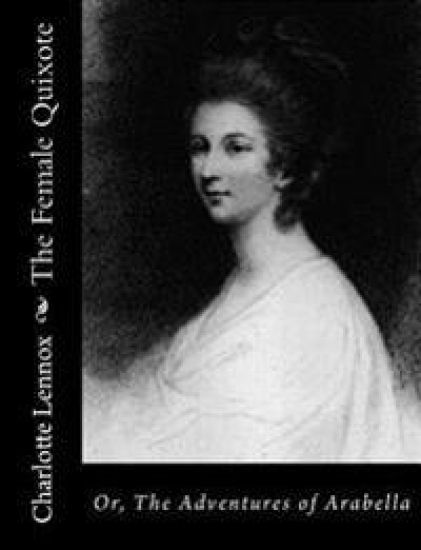
The Female Quixote Chapter 1. Contains a Turn at Court, neither new nor surprising. - Some useless Additions to a fine Lady's Education. - The bad Effects of a whimsical Study, which some will say is borrowed from Cervantes. The Marquis of -- for a long Series of Years, was the first and most distinguished Favourite at Court: He held the most honourable Employments under the Crown, disposed of all Places of Profit as he pleased, presided at the Council, and in a manner governed the whole Kingdom. This extensive Authority could not fail of making him many Enemies: He fell at last a Sacrifice to the Plots they were continually forming against him; and was not only removed from all his Employments, but banished the Court for ever. The Pain his undeserved Disgrace gave him, he was enabled to conceal by the natural Haughtiness of his Temper; and, behaving rather like a Man who had resigned, than been dismissed from his Posts, he imagined he triumphed sufficiently over the Malice of his Enemies, while he seemed to be wholly insensible of the Effects it produced. His secret Discontent, however, was so much augmented by the Opportunity he now had of observing the Baseness and Ingratitude of Mankind, which in some Degree he experienced every Day, that he resolved to quit all Society whatever, and devote the rest of his Life to Solitude and Privacy. For the Place of his Retreat he pitched upon a Castle he had in a very remote Province of the Kingdom, in the Neighbourhood of a small Village, and several Miles distant from any Town. The vast Extent of Ground which surrounded this noble Building, he had caused to be laid out in a Manner peculiar to his Taste: The most laborious Endeavours of Art had been used to make it appear like the beautiful Product of wild, uncultivated Nature. But if this Epitome of Arcadia could boast of only artless and simple Beauties, the Inside of the Castle was adorned with a Magnificence suitable to the Dignity and immense Riches of the Owner. While Things were preparing at the Castle for his Reception, the Marquis, though now advanced in Years, cast his Eyes on a young Lady, greatly inferior to himself in Quality, but whose Beauty and good Sense promised him an agreeable Companion. After a very short Courtship, he married her, and in a few Weeks carried his new Bride into the Country, from whence he absolutely resolved never to Return. The Marquis, following the Plan of Life he had laid down, divided his Time between the Company of his Lady, his Library, which was large and well furnished, and his Gardens. Sometimes he took the Diversion of Hunting, but never admitted any Company whatever; and his Pride and extreme Reserve rendered him so wholly inaccessible to the Country Gentry about him, that none ever presumed to solicit his Acquaintance. In the Second Year of his Retirement, the Marchioness brought him a Daughter, and died in Three Days after her Delivery. The Marquis, who had tenderly loved her, was extremely afflicted at her Death; but Time having produced its usual Effects, his great Fondness for the little Arabellaintirely engrossed his Attention, and made up all the Happiness of his Life. At Four Years of Age he took her from under the Direction of the Nurses and Women appointed to attend her, and permitted her to receive no Part of her Education from another, which he was capable of giving her himself. He taught her to read and write in a very few Months; and, as she grew older, finding in her an uncommon Quickness of
The 18th century was a wealth of knowledge, exploration and rapidly growing technology and expanding record-keeping made possible by advances in the printing press. In its determination to preserve the century of revolution, Gale initiated a revolution of its own: digitization of epic proportions to preserve these invaluable works in the largest archive of its kind. Now for the first time these high-quality digital copies of original 18th century manuscripts are available in print, making them highly accessible to libraries, undergraduate students, and independent scholars. Western literary study flows out of eighteenth-century works by Alexander Pope, Daniel Defoe, Henry Fielding, Frances Burney, Denis Diderot, Johann Gottfried Herder, Johann Wolfgang von Goethe, and others. Experience the birth of the modern novel, or compare the development of language using dictionaries and grammar discourses. ++++The below data was compiled from various identification fields in the bibliographic record of this title. This data is provided as an additional tool in helping to insure edition identification: ++++Bodleian Library (Oxford)T174751Dublin: printed for Richard Smith, 1758. 36p.; 12