Kirjojen hintavertailu – 12 859 818 kirjaa ja 27 kauppaa

Kirjailija

Charlotte Perkins Gilman

Kirjat ja teokset yhdessä paikassa: 508 kirjaa, julkaisuja vuosilta 1892–2026, suosituimpiin kuuluu Förfärande kvinnor : gotisk skräck från Brontë till Gilman i urval och översättning av KG Johansson. Vertaile teosten hintoja ja tarkista saatavuus suomalaisista kirjakaupoista.

Nimi esiintyy myös muodoissa: Charlotte Perkins-Gilman

508 kirjaa

Kirjojen julkaisuvuodet: 1892–2026.

The Yellow Wall-Paper

The Yellow Wall-Paper

Charlotte Perkins Gilman

Penguin Classics
2015
nidottu

Halvin toimitettuna 9,90 €

'The color is hideous enough, and unreliable enough, and infuriating enough, but the pattern is torturing.'Written with barely controlled fury after she was confined to her room for 'nerves' and forbidden to write, Gilman's pioneering feminist horror story scandalized nineteenth-century readers with its portrayal of a woman who loses her mind because she has literally nothing to do. Introducing Little Black Classics: 80 books for Penguin's 80th birthday. Little Black Classics celebrate the huge range and diversity of Penguin Classics, with books from around the world and across many centuries. They take us from a balloon ride over Victorian London to a garden of blossom in Japan, from Tierra del Fuego to 16th-century California and the Russian steppe. Here are stories lyrical and savage; poems epic and intimate; essays satirical and inspirational; and ideas that have shaped the lives of millions. Charlotte Perkins Gilman (1860-1935). Gilman's work is available in Penguin Classics in The Yellow Wall-Paper, Herland and Selected Writings.
Die Gelbe Tapete (Translated)

Die Gelbe Tapete (Translated)

Charlotte Perkins Gilman

Createspace Independent Publishing Platform
2015
nidottu
Beste f r die 1892 Titelgeschichte dieser Sammlung bekannt, eine ersch tternde Geschichte der Abstammung der Frau in den Wahnsinn, Charlotte Perkins Gilman schrieb mehr als 200 anderen Kurzgeschichten. Sieben ihrer besten sind hier abgedruckt . Geschrieben aus feministischer Perspektive, oft mit Schwerpunkt auf dem untergeordneten Status von Frauen in der Gesellschaft gew hrt, geh ren die Geschichten " gedreht ", eine ironische Geschichte mit einer berraschenden Wendung, in der ein Mann verf hrt und impr gniert eine naive Diener; " Cottagette ", ber die Romantik eines jungen K nstler und ein Mann, der offenbar zu gut um wahr zu sein ist; "Mr. Peebles 'Heart ", eine befreiende Geschichte eines um die f nfzig Ladenbesitzer, deren Schwester -in-law, ein Arzt, berredet ihn, eine Solo- Reise nach Europa zu nehmen, mit belebenden Ergebnisse; "The Yellow Wallpaper"; und drei weitere hervorragende Geschichten. Diese charmanten Geschichten sind nicht nur sehr gut lesbar und voller Humor und Erfindung, bieten aber auch gen gend Stoff zum Nachdenken ber die soziale, wirtschaftliche und pers nliche Beziehung von Mann und Frau - und wie sie verbessert werden k nnten.
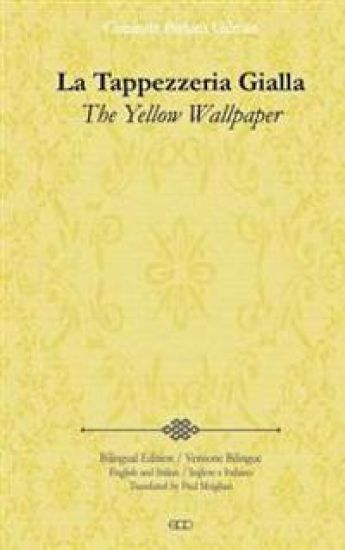
La Tappezzeria Gialla: The Yellow Wallpaper

La Tappezzeria Gialla: The Yellow Wallpaper

Charlotte Perkins Gilman

Createspace Independent Publishing Platform
2014
nidottu
Versione bilingue / Bilingual Version Inglese e Italiano / English and Italian Impara l'inglese leggendo / Learn Italian by reading Questo storia breve semiautobiografica considerata un'importante opera della prima letteratura femminista americana, illustrando i comportamenti nel XIX secolo riguardo alla salute fisica e mentale delle donne. This semi-autobiographical short story is considered an important early work of American feminist literature, illustrating the attitudes of the 19th century regarding the physical and mental health of women.
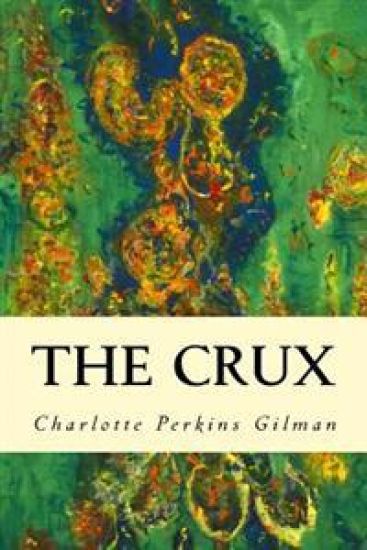
The Crux

The Crux

Charlotte Perkins Gilman

Createspace Independent Publishing Platform
2014
nidottu
The Crux is a classic work of feminist fiction by Charlotte Perkins Gilman that deals with issues of gender, citizenship, women pioneers, eugenics, and frontier nationalism, and is stated to be for: "first, for young women to read; second, for young men to read; after that, for anybody who wants to."
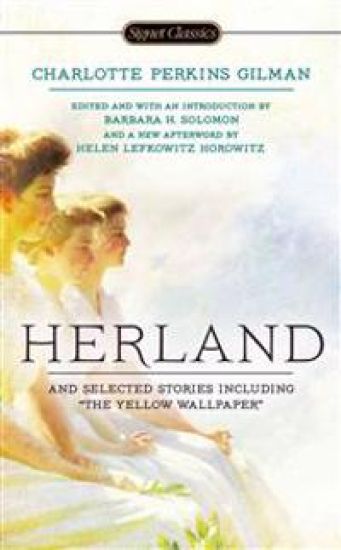
Herland and Selected Stories

Herland and Selected Stories

Charlotte Perkins Gilman

Signet
2014
pokkari
At the turn of the twentieth century, Charlotte Perkins Gilman was a celebrity--acclaimed as a leader in the feminist movement and castigated for her divorce, her relinquishment of custody of her daughter, and her unconventional second marriage. She was also widely read, with stories in popular magazines and with dozens of books in print. Her most famous short story, the intensely personal "The Yellow Wallpaper," was read as a horror story when first published in 1892 and then lapsed into obscurity before being rediscovered and reinterpreted by feminist scholars in the 1970s. Noted anthologist Barbara Solomon has put together a remarkable collection of Gilman's fiction, which includes twenty short stories and the complete text of Herland, the landmark utopian novel that remained unavailable for more than sixty years. From "The Unexpected," printed in Kate Field's Washington in 1890, to such later tales as "Mrs. Elder's Idea," published in Gilman's own periodical, The Forerunner, readers can again encounter this witty, original, and audacious woman who dared to challenge the status quo and who created fiction that continues to be fresh and timeless. Edited and with an Introduction by Barbara H. Solomon
The Yellow Wallpaper

The Yellow Wallpaper

Charlotte Perkins Gilman

Createspace Independent Publishing Platform
2014
nidottu
This edition of The Yellow Wallpaper, from Bennison Books, includes a new 700-word introduction and brief author biography, plus an additional story by the author: If I Were a Man. The archetypal 'mad woman in the attic' is surely Bertha who was confined and hidden away from the world by her husband Edward Rochester in Charlotte Bront 's Jane Eyre (1847). But Bertha's story did not end when she committed suicide; other women took her place. While Bertha is not allowed to speak for herself (until Jean Rhys gives her voice in Wide Sargasso Sea published in 1966), the narrator in The Yellow Wallpaper appears keen to have her ailments recognised. Although her husband is a physician, she asserts early on: 'You see he does not believe I am sick ' Is she sick? If so, in what way? Is sickness the only label available to characterise her nascent rebellion against society's strictures regarding the place of women in nineteenth century society? Or does her self-diagnosis foreshadow her later descent into psychological disorder?
Women on the Verge: American Women's Literature of the Progressive Era: Short Fiction & Poetry

Women on the Verge: American Women's Literature of the Progressive Era: Short Fiction & Poetry

Mary E. Wilkins Freeman; Charlotte Perkins Gilman; Edith Wharton

Special Edition Books
2014
nidottu
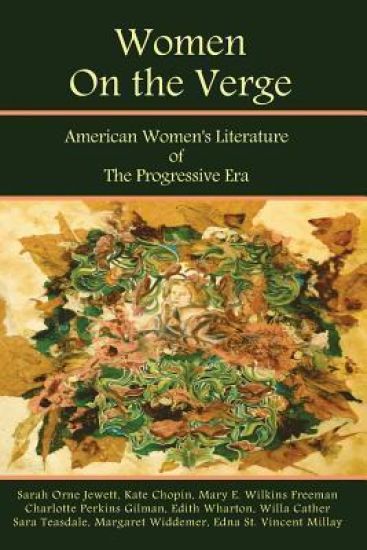
Women on the Verge: American Women's Literature of the Progressive Era presents a scholarly selection of some of the finest examples of Women's Literature from the late 19th and early 20th centuries, now known as The Progressive Era. Following the Victorian era, and on the heels of the twilight of the dominance of New England writers in American literature, Progressive era American women authors were starting to find their literary voices, unique from the rest of the world. Edited by Laura Bonds and Shawn Conners, and with cover art by Joan Turrell based on her series "Beyond the Yellow Wallpaper," this collection captures the essence of those voices, and includes the first American women authors to win the Pulitzer Prize for Poetry. Contents include short fiction and poetry by: Sarah Orne JewettKate ChopinMary E. Wilkins FreemanCharlotte Perkins GilmanEdith WhartonWilla CatherSara TeasdaleMargaret WiddemerEdna St. Vincent Millay
The Yellow Wallpaper

The Yellow Wallpaper

Charlotte Perkins Gilman

Createspace Independent Publishing Platform
2013
nidottu
"The Yellow Wallpaper" is a 6,000-word short story by the American writer Charlotte Perkins Gilman, first published in January 1892 in The New England Magazine. It is regarded as an important early work of American feminist literature, illustrating attitudes in the 19th century toward women's physical and mental health. Presented in the first person, the story is a collection of journal entries written by a woman whose physician husband has confined her to the upstairs bedroom of a house he has rented for the summer. She is forbidden from working and has to hide her journal from him, so she can recuperate from what he calls a "temporary nervous depression - a slight hysterical tendency," a diagnosis common to women in that period. The windows of the room are barred, and there is a gate across the top of the stairs, allowing her husband to control her access to the rest of the house. The story depicts the effect of confinement on the narrator's mental health and her descent into psychosis. With nothing to stimulate her, she becomes obsessed by the pattern and color of the wallpaper. "It is the strangest yellow, that wall-paper It makes me think of all the yellow things I ever saw - not beautiful ones like buttercups, but old foul, bad yellow things. But there is something else about that paper - the smell ... The only thing I can think of that it is like is the color of the paper A yellow smell." In the end, she imagines there are women creeping around behind the patterns of the wallpaper and comes to believe she is one of them. She locks herself in the room, now the only place she feels safe, refusing to leave when the summer rental is up. "For outside you have to creep on the ground, and everything is green instead of yellow. But here I can creep smoothly on the floor, and my shoulder just fits in that long smooch around the wall, so I cannot lose my way."
The Yellow Wallpaper

The Yellow Wallpaper

Charlotte Perkins Gilman

Createspace Independent Publishing Platform
2013
nidottu
"The Yellow Wallpaper" is a 6,000-word short story by the American writer Charlotte Perkins Gilman, first published in January 1892 in The New England Magazine. It is regarded as an important early work of American feminist literature, illustrating attitudes in the 19th century toward women's physical and mental health. Presented in the first person, the story is a collection of journal entries written by a woman whose physician husband has confined her to the upstairs bedroom of a house he has rented for the summer. She is forbidden from working and has to hide her journal from him, so she can recuperate from what he calls a "temporary nervous depression - a slight hysterical tendency," a diagnosis common to women in that period. The windows of the room are barred, and there is a gate across the top of the stairs, allowing her husband to control her access to the rest of the house. The story depicts the effect of confinement on the narrator's mental health and her descent into psychosis. With nothing to stimulate her, she becomes obsessed by the pattern and color of the wallpaper. "It is the strangest yellow, that wall-paper It makes me think of all the yellow things I ever saw - not beautiful ones like buttercups, but old foul, bad yellow things. But there is something else about that paper - the smell ... The only thing I can think of that it is like is the color of the paper A yellow smell." In the end, she imagines there are women creeping around behind the patterns of the wallpaper and comes to believe she is one of them. She locks herself in the room, now the only place she feels safe, refusing to leave when the summer rental is up. "For outside you have to creep on the ground, and everything is green instead of yellow. But here I can creep smoothly on the floor, and my shoulder just fits in that long smooch around the wall, so I cannot lose my way."